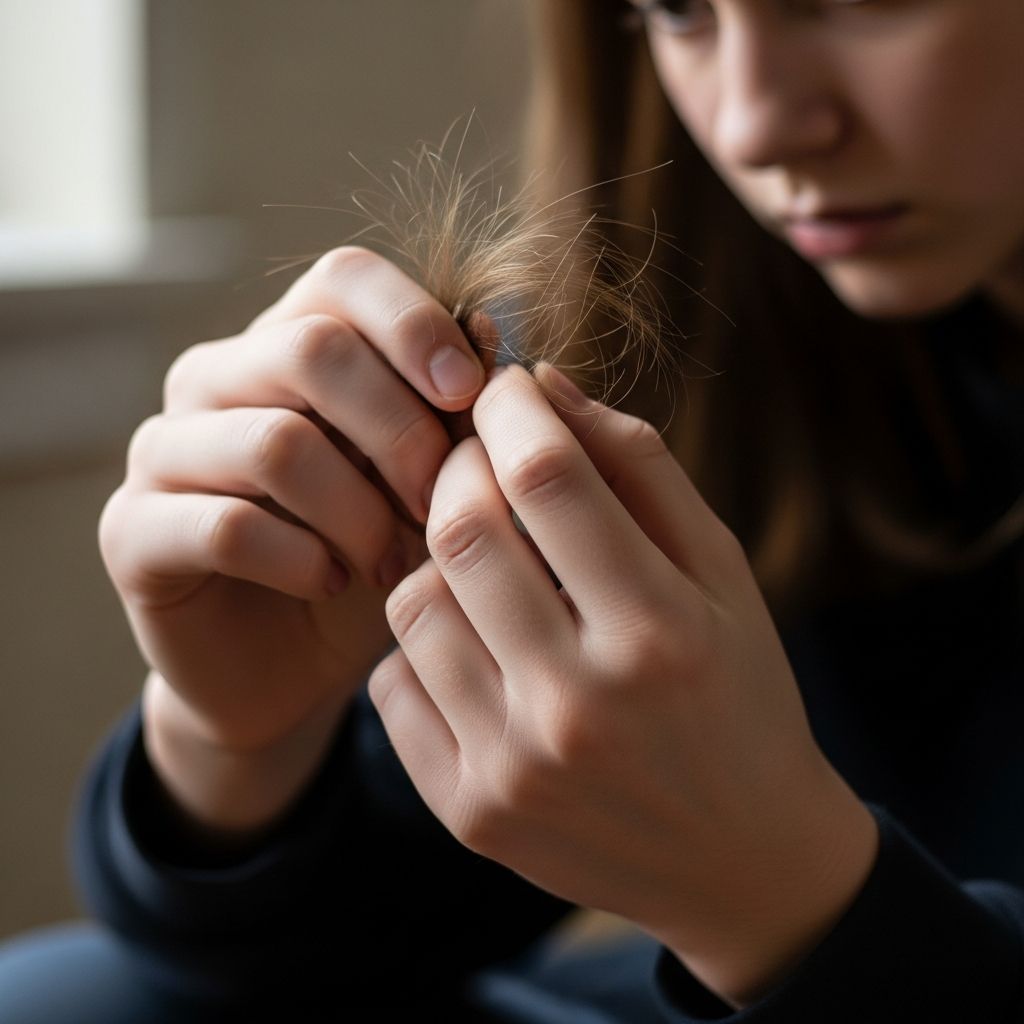
Trichotillomania, sometimes called hair-pulling disorder, is a mental health condition where a person feels strong, repeated urges to pull out their own hair. It is not a bad habit or a sign of weakness; it is a real health condition that can be treated and managed over time.
What Is Trichotillomania?
Trichotillomania (often shortened to TTM) is classified as an obsessive–compulsive and related disorder. People with TTM feel powerful urges to pull hair from areas such as:
- Scalp
- Eyebrows
- Eyelashes
- Beard or mustache area
- Arms, legs, or other body areas
The urge to pull can feel almost impossible to ignore. Many teens describe a feeling of tension or discomfort that eases after they pull out hair.
Common Signs and Symptoms
Trichotillomania can look different from person to person, but some patterns are very common.
Behavioral Signs
- Repeatedly pulling out hair from the same places
- Finding hair in the bed, desk, or sink without remembering pulling it
- Spending a lot of time feeling or searching for “just the right” hair to pull
- Playing with, biting, or rubbing pulled-out hairs
- Pulling more during quiet or relaxed activities (like watching TV, reading, or using a phone)
Physical Signs
- Noticeable thinning or bald patches on the scalp
- Missing or sparse eyelashes or eyebrows
- Broken hairs of different lengths in one area
- Sore, itchy, or irritated skin where hair has been pulled
- In rare cases, stomach pain if hair is swallowed, which can lead to hairballs in the digestive system (called trichobezoars)
Emotional and Social Effects
- Feeling ashamed, guilty, or embarrassed about hair loss
- Worrying about others noticing bald spots or missing hair
- Avoiding photos, swimming, wind, or bright lights that could show hair loss
- Hiding hair areas with hats, makeup, scarves, or creative hairstyles
- Feeling alone or misunderstood because it is hard to explain the urges
Why Do People Pull Their Hair?
Experts do not know a single exact cause, but research suggests that several factors work together.
| Type of Factor | How It May Contribute |
|---|---|
| Biological | Changes in brain circuits that control impulses, habits, and reward may make it harder to resist urges. |
| Genetic | TTM can run in families, suggesting there may be inherited risk factors. |
| Emotional | Stress, anxiety, or difficult feelings can trigger or increase hair pulling for some people. |
| Environmental | Boredom, being alone, or certain locations (like a bedroom or bathroom) can become linked with pulling. |
For many teens, hair pulling becomes a learned pattern: a trigger (like stress or boredom) shows up, hair is pulled, and there is brief relief. That relief makes the brain more likely to repeat the behavior, which slowly turns the urge into a powerful habit.
Who Can Develop Trichotillomania?
Trichotillomania can affect people of any gender, background, or age. It often starts in late childhood or early teen years.
- In young children, boys and girls are affected at similar rates.
- Among teens and adults, more girls and women seek help, though this may partly reflect who is more likely to talk to a doctor.
- TTM often occurs along with other conditions like anxiety disorders, depression, or other body-focused repetitive behaviors such as nail biting or skin picking.
How Trichotillomania Is Diagnosed
If you or someone you know might have trichotillomania, the first step is usually talking with a health professional, such as a pediatrician, family doctor, or mental health provider. They may:
- Ask about hair-pulling behaviors and when they started
- Check for bald patches or skin irritation
- Explore feelings or situations that seem to trigger pulling
- Ask about other symptoms like low mood, anxiety, or trouble concentrating
Trichotillomania is diagnosed based on specific criteria, including repeated hair pulling leading to noticeable hair loss and distress or problems in daily life because of the behavior.
Is Hair Pulling Dangerous?
Many people with TTM mainly struggle with the emotional and social impact, such as shame or worry about appearance. But there can also be physical complications.
Possible Physical Complications
- Skin infections or irritation where hair is pulled
- Scarring that might affect hair growth over time
- Eye irritation if eyelashes are removed
- Rarely, serious digestive problems if pulled hair is eaten and forms a hairball (trichobezoar), which can cause pain, vomiting, or blockage and may require surgery
Because of these risks, it is important to tell a trusted adult and seek help, even if you feel embarrassed.
Treatment Options That Help
Good news: there are evidence-based treatments that can greatly reduce hair pulling and its impact on daily life. Treatment usually includes therapy, and sometimes medication is added.
1. Behavioral Therapies
Behavioral therapies are considered the main approach for trichotillomania.
Habit Reversal Training (HRT)
Habit reversal training is one of the most studied therapies for TTM. It typically includes:
- Awareness training: Noticing when, where, and how pulling happens
- Competing response: Replacing pulling with another action that makes pulling harder, like:
- Clenching fists
- Squeezing a stress ball
- Sitting on hands
- Playing with a fidget toy
Therapists may also help you change your environment to make pulling more difficult, such as wearing gloves during high-risk times or altering lighting or mirrors.
Cognitive-Behavioral Therapy (CBT)
CBT focuses on changing unhelpful thoughts and patterns that keep hair pulling going. This may involve:
- Challenging thoughts like “I’ll never stop” or “I have to pull to feel calm”
- Building coping skills for stress, anxiety, or boredom
- Improving self-esteem and body image
Often, habit reversal training is used as part of a broader CBT plan.
Acceptance- and Mindfulness-Based Approaches
Some therapies, such as acceptance and commitment therapy (ACT), teach teens to notice and accept urges without acting on them. You learn to:
- Recognize urges as feelings that rise and fall
- Use breathing and mindfulness skills to ride out the urge
- Choose behaviors that fit your values (such as health, confidence, or connection with friends) instead of following urges
2. Medications
Medication is not always necessary but can be helpful for some people, especially if they also experience anxiety, depression, or very intense urges.
- Selective serotonin reuptake inhibitors (SSRIs) and other antidepressants may provide modest benefit, often when combined with therapy.
- Some research has examined other medications, such as N-acetylcysteine or certain antipsychotic medicines like olanzapine, in selected cases.
Medication decisions should always be made with a qualified health professional who can explain possible benefits and side effects.
Day-to-Day Coping Strategies for Teens
While professional treatment is important, there are also practical steps teens and families can use at home to support recovery.
Noticing Your Triggers
Keeping track of pulling episodes can help you and your therapist find patterns.
- Time of day (late at night, after school, before bed)
- Activities (homework, scrolling on your phone, watching TV)
- Body position (resting your chin on your hand, lying in bed)
- Feelings (stressed, bored, tired, anxious)
Some people use a simple notebook or a note-taking app to record when and where pulling happens.
Changing the Environment
- Wearing hats, hoodies, or headbands during high-risk times to make hair less accessible
- Using bandages or finger covers if certain fingers start the pulling
- Keeping mirrors covered during stressful periods like exam season
- Studying or relaxing in well-lit areas where others are nearby
Replacing the Urge
Instead of focusing only on “not pulling,” it can help to give your hands something else to do:
- Fidget toys (spinners, cubes, putty)
- Drawing, coloring, or doodling
- Knitting, crocheting, or beading
- Holding ice cubes or squeezing a stress ball when urges rise
Stress and Emotion Management
Because stress and strong emotions can fuel urges, calming strategies are useful tools.
- Deep, slow breathing exercises
- Short walks or stretching breaks
- Listening to calming music or guided meditations
- Talking to a trusted friend, family member, or counselor
Support from Family and Friends
Family and friends can make a big difference in how a teen manages trichotillomania.
Helpful Ways to Support
- Listening without judgment when the teen talks about urges or setbacks
- Encouraging, but not pressuring, them to use coping skills
- Attending therapy sessions if invited, to learn how to help
- Focusing on effort and progress, not perfection
- Remembering that TTM is a health condition, not a choice
What to Avoid
- Shaming, criticizing, or punishing for pulling
- Constantly pointing out bald spots or missing hair
- Making threats or ultimatums related to appearance
- Assuming that “just stopping” is easy
Living with Trichotillomania: Hope and Recovery
Many teens feel discouraged when they first learn they have trichotillomania, but research and experience show that with time and the right help, symptoms can improve greatly.
Recovery often looks like:
- Fewer episodes of pulling
- Less time spent thinking about hair
- More days or weeks between pulling episodes
- Feeling less shame and more control
Setbacks are common, especially during stressful times. They do not mean treatment has failed. Instead, they are chances to review which strategies help and to adjust the plan with your therapist or doctor.
Frequently Asked Questions (FAQs)
Is trichotillomania the same as a bad habit?
No. While hair pulling can become repetitive and automatic like a habit, trichotillomania is recognized as a mental health disorder with biological, psychological, and environmental influences. It usually cannot be stopped by willpower alone and often requires treatment.
Can trichotillomania go away on its own?
Some people notice that symptoms ease with time, but many continue to struggle without support. Early treatment gives the best chance of reducing pulling and preventing long-term problems.
Is it my fault if I pull my hair?
No. You did not cause trichotillomania, and you are not choosing to feel urges. You are responsible for seeking help and working on coping skills, but having TTM is not a character flaw or failure.
Will my hair grow back?
In many cases, hair grows back when pulling is reduced or stopped. However, long-term pulling can sometimes damage hair follicles and slow or prevent regrowth in certain spots. A doctor or dermatologist can give more specific information based on your situation.
Who should I talk to if I think I have trichotillomania?
You can start by telling a parent, caregiver, school counselor, or other trusted adult. They can help you schedule a visit with a pediatrician, family doctor, psychologist, or psychiatrist with experience in treating body-focused repetitive behaviors.
Can online resources help?
Online information and support communities can be helpful for learning and feeling less alone, but they do not replace professional care. Look for reputable mental health organizations, hospitals, and clinics for accurate information.
References
- Trichotillomania — StatPearls, NCBI Bookshelf. 2023-09-04. https://www.ncbi.nlm.nih.gov/books/NBK493186/
- Trichotillomania (hair-pulling disorder): Diagnosis and treatment — Mayo Clinic. 2023-11-22. https://www.mayoclinic.org/diseases-conditions/trichotillomania/diagnosis-treatment/drc-20355193
- Trichotillomania (hair-pulling disorder): Symptoms and causes — Mayo Clinic. 2023-11-22. https://www.mayoclinic.org/diseases-conditions/trichotillomania/symptoms-causes/syc-20355188
- Trichotillomania (hair pulling) — NHS. 2022-05-31. https://www.nhs.uk/mental-health/conditions/trichotillomania/
- Trichotillomania (Hair Pulling) — Mental Health America. 2023-01-01. https://mhanational.org/conditions/trichotillomania-hair-pulling/
- Trichotillomania (Hair Pulling): What It Is, Causes & Treatment — Cleveland Clinic. 2022-08-01. https://my.clevelandclinic.org/health/diseases/9880-trichotillomania
- Trichotillomania — UF Health. 2021-06-15. https://ufhealth.org/conditions-and-treatments/trichotillomania