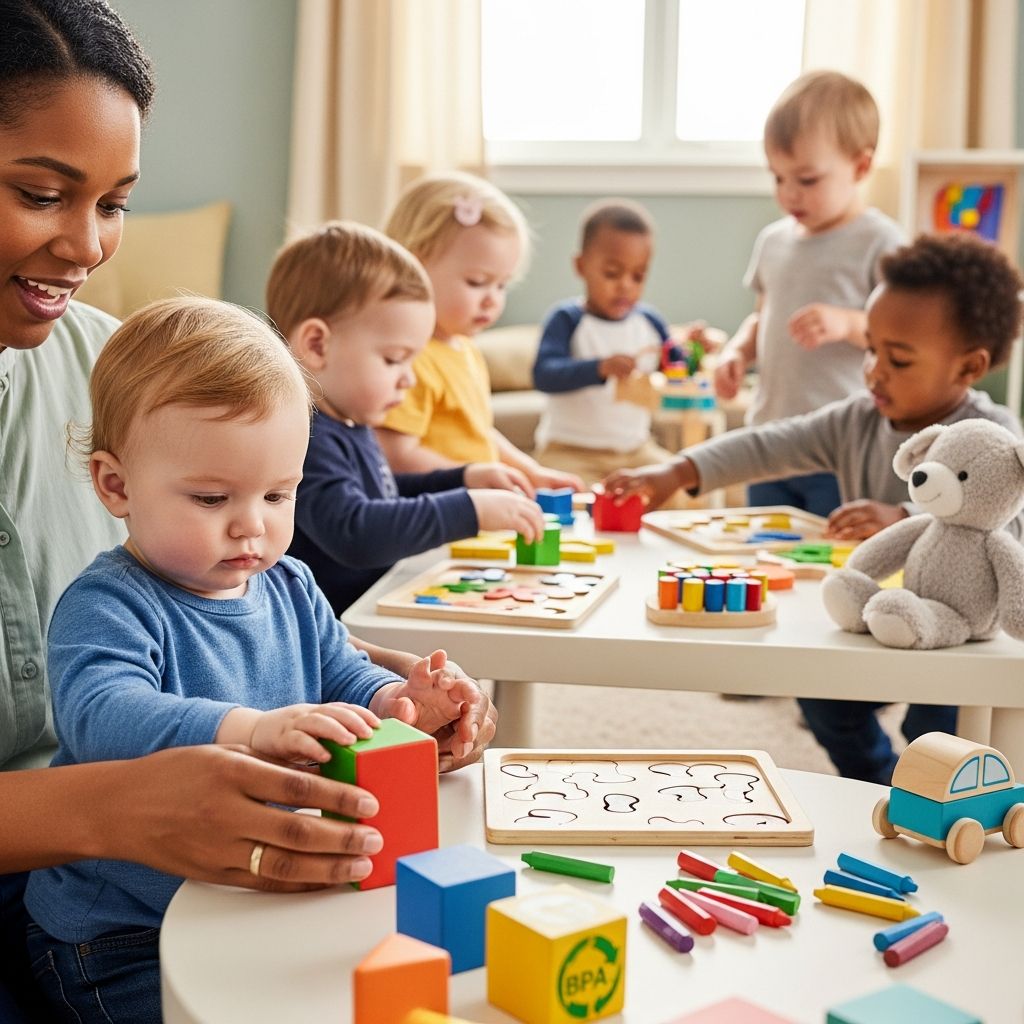
Toys are more than entertainment for toddlers and preschoolers; they are tools for learning, practicing new skills, and exploring the world. At the same time, poorly chosen or damaged toys can cause choking, falls, cuts, burns, or poisoning. Understanding how to evaluate and maintain toys helps parents and caregivers support safe, joyful play.
Why Toy Safety Matters So Much at This Age
Children from about 1 to 5 years old are curious, active, and still developing coordination and judgment. They explore by touching, tasting, pulling, and throwing, which means toys must be able to withstand rough use without breaking into dangerous pieces. Choosing toys with safety in mind helps prevent many common injuries that happen in seconds during everyday play.
During these years, kids’ airways, motor skills, and problem-solving abilities are still maturing. A small part that an older child ignores might be exactly what a toddler puts into their mouth, nose, or ear. Age-appropriate, well-designed toys give young children the freedom to explore while staying within safer limits.
Core Principles for Safe Toy Selection
Before looking at specific types of toys, it helps to keep a few core principles in mind. These guiding ideas can simplify decisions whether you are shopping in person, online, or sorting through hand-me-downs at home.
- Age and stage first: Match toys to your child’s current abilities, not what you hope they will do “soon.”
- Simple is usually safer: Fewer detachable parts, cords, or mechanisms often means fewer potential hazards.
- Sturdy construction: Toys should tolerate dropping, chewing, twisting, and pulling without breaking apart.
- Non-toxic materials: Paints, finishes, plastics, and art supplies should be clearly labeled as safe for children.
- Visible safety info: Check for age recommendations, safety warnings, and relevant standards on packaging.
Understanding Age Recommendations and Labels
Age recommendations on toy packaging are not just about interest level; they primarily reflect safety testing for choking, sharp edges, cords, and other risks. A toy marked for ages 3+ may contain small parts, long strings, or features that assume better coordination and impulse control than a toddler has.
Parents sometimes assume that a child who seems advanced can safely use toys meant for older kids. For safety, it is better to respect age labels even for children who appear more mature, especially if there are younger siblings in the home who may find and handle the same toys.
Choking Hazards: Small Parts, Big Risks
Choking is one of the most serious toy-related dangers for toddlers and preschoolers. Any object small enough to enter and block the airway can cause life-threatening emergencies. Children under 3, and older children who still explore by mouthing objects, are at highest risk.
When evaluating toys for choking hazards, focus on both the toy itself and any detachable parts, including accessories, eyes and noses on stuffed animals, wheels, buttons, and decorative pieces. Toys that seem big at first glance may still hide small components that loosen with use.
Quick Choking-Risk Checklist
- Avoid loose parts that can fit entirely into a child’s mouth.
- Skip toys with small balls, beads, marbles, or coin-shaped pieces for young children.
- Inspect toys regularly for loose screws, snapped pieces, or peeling decorations.
- Keep older siblings’ small-part sets stored away from toddlers.
Hidden Dangers: Batteries, Magnets, and Strings
Some of the most dangerous toy components are not obvious at first glance. Button batteries, strong magnets, and long cords may be hidden inside otherwise harmless-looking toys, books, or accessories.
Internal parts often cause the worst injuries when they escape the toy. That means parents should pay close attention to how securely these features are enclosed and whether a child can realistically open battery doors or pull out magnets.
Safety Table: High-Risk Toy Features
| Feature | Why It’s Dangerous | Safer Alternatives or Actions |
|---|---|---|
| Button or coin batteries | Can lodge in the throat or cause internal burns if swallowed. | Choose toys with screwed-shut battery compartments and store spare batteries out of reach. |
| Small strong magnets | If more than one is swallowed, they can attract inside the body and damage tissues. | Avoid magnetic sets with tiny pieces for young children; choose larger, encased magnets. |
| Long cords, strings, or ribbons | Can wrap around the neck, wrists, or limbs, leading to strangulation or circulation problems. | Prefer short, fixed attachments for toddlers; remove or shorten hanging strings on toys when possible. |
| Projectile toys | Items that launch pieces can injure eyes and faces, especially at close range. | Use foam or soft projectiles with eye protection and close supervision, or skip them for younger kids. |
| Sharp edges and points | Can cut skin or eyes if a toy breaks or is poorly finished. | Inspect toys before use; reject any with rough seams, exposed metal, or breakable plastic. |
Materials and Finishes: What to Look For
Young children frequently chew or suck on toys, so the materials and finishes used are especially important. Fabrics, paints, and plastics should be designed for children and easy to clean. Many parents prefer simpler, natural materials when possible, but any toy that is clearly labeled as non-toxic and age-appropriate can be a safe choice when used properly.
Paying attention to how a toy is finished and labeled is just as important as its design. A well-shaped toy made with poor-quality paint or fabric may still pose health risks if it sheds fibers, peels, or contains unsafe chemicals.
Safe Toy Material Tips
- Choose washable fabric toys so drool, spills, and germs can be cleaned away.
- Look for non-toxic or child-safe markings on art supplies, paints, and modeling materials.
- Avoid toys with flaking or chipping paint, especially older items or hand-me-downs.
- Inspect stuffed animals for securely attached eyes, noses, and decorative parts.
Developmentally Smart and Safe by Age
Safe toys also support the skills children are building at each stage. Thinking about safety and development together makes it easier to choose toys that engage your child without overwhelming or endangering them.
Toddlers (About 1–3 Years)
Toddlers are learning to walk, stack, push, and imitate everyday activities. They benefit from toys that are simple, sturdy, and large enough that they cannot be swallowed or stuffed into the mouth.
- Look for chunky blocks, simple shape sorters, large nesting cups, and soft balls.
- Choose board books, soft dolls, and fabric animals with embroidered or firmly attached features.
- Avoid toys with detachable small parts, loose magnets, or complicated mechanisms.
Preschoolers (About 3–5 Years)
Preschoolers have better coordination and imagination, but they still need boundaries on small parts and high-speed or high-force toys. They start to enjoy pretend play sets, basic games, and beginner puzzles.
- Choose sturdy plastic or wooden building sets with pieces that are not tiny or easily swallowed.
- Introduce simple board games with large tokens and easy-to-understand rules.
- Be cautious with toy tools, projectile toys, and electronic gadgets, ensuring close supervision and clear safety rules.
Special Considerations for Ride-On and Active Toys
Ride-on toys, rocking horses, scooters, and similar items can be excellent for developing balance and coordination, but they also bring a higher risk of falls and collisions. Parents should consider both the design of the toy and where it will be used.
Stability is crucial. Ride-on toys should resist tipping and, for younger children, include safety features like harnesses or wide bases. Indoor use on flat surfaces away from stairs or sharp furniture edges reduces the risk of serious injuries.
Checklist for Safer Ride-On Toys
- Confirm your child can sit up steadily and control their head before using any ride-on toy.
- Check that wheels move smoothly and do not wobble or jam easily.
- Avoid ride-on use near stairs, pools, or driveways where vehicles may be present.
- Use appropriate protective gear, such as helmets, for bikes and scooters.
Hand-Me-Down, Homemade, and Secondhand Toys
Family treasures and secondhand finds can be special and budget-friendly, but they may not meet current safety standards. Older toys may have been designed before certain hazards were well understood, or they may have weakened over time.
Parents should inspect all used or homemade toys carefully before giving them to young children. Pay extra attention to paint quality, small detachable components, and any signs of cracks, rust, or loose hardware. If a toy raises doubts about safety, it is better reserved for display or older children.
Creating a Safer Play Environment at Home
Even when toys are chosen carefully, the way they are stored and used can influence safety. Shared spaces, multiple children of different ages, and busy routines all affect how well toys remain organized and in good condition.
Simple systems can help reduce risk. Separating toys by age group, routinely checking for damage, and teaching children basic rules about sharing and cleanup make it easier to maintain a safer play area without constant stress.
Home Toy Safety Habits
- Store toys with small parts on higher shelves or in containers that toddlers cannot open.
- Repair or discard broken toys instead of setting them aside “for later.”
- Teach children to put toys away to prevent tripping and falls.
- Regularly wipe toys that go in mouths, especially after illness or playdates.
Red Flags When Evaluating a Toy
Some warning signs suggest a toy may not be appropriate for toddlers or preschoolers, even if it looks appealing. Not all risks are obvious, especially when packaging emphasizes bright colors and exciting features.
- No clear age recommendation or safety warnings on packaging.
- Very small accessories, detachable decorations, or loose beads and sequins.
- Strong chemical or plastic odor when the package is opened.
- Paint that looks uneven, chipped, or scratched.
- Battery compartments that open easily without tools.
Working With Caregivers, Relatives, and Gift-Givers
Grandparents, friends, and other caregivers often love giving toys but may not be aware of the specific safety needs of young children. Sharing your guidelines kindly helps everyone support safer play without dampening their enthusiasm.
Consider keeping a simple list of toy types or brands that work well for your child. When people ask for gift ideas, suggest items in those categories and mention that your family prioritizes sturdy, age-appropriate toys without tiny parts for now.
Frequently Asked Questions About Toy Safety
How can I quickly tell if a toy is too small for my toddler?
A practical approach is to avoid any toy or part that can be fully hidden in your closed hand. If it can vanish inside your fist, it is likely too small for a child who still puts objects in their mouth. This guideline applies to accessories, game pieces, and decorative parts as well as the main toy.
Are electronic and light-up toys safe for young children?
Electronic toys can be safe when they are sturdy, not excessively loud, and have securely sealed battery compartments. The main concerns are noise levels that could hurt hearing, fragile casings that crack, and small batteries that might come loose. Parents may choose to limit electronic toys and balance them with open-ended options like blocks, books, and pretend play sets.
Is it okay to let my preschooler play with older siblings’ toys?
This depends on the type of toy and how closely you can supervise. Construction sets or games with many tiny pieces are best kept out of shared spaces if younger siblings are likely to grab them. If older children want to play with small-part toys, setting up a “big kid zone” at a table or in a separate room can help protect toddlers from choking hazards.
What should I do if a toy breaks during play?
Stop using the toy right away and remove it from the play area. Check for sharp edges, exposed wires, loose parts, or missing pieces that may now be scattered on the floor. If the damage is minor and can be safely repaired, do so before returning the toy to circulation; otherwise, dispose of it so that a child cannot retrieve it from the trash.
How often should I check toys for safety?
A brief regular check—weekly or every few weeks—can catch many issues early. Look for loose screws, torn seams, chipped paint, and any parts that wiggle when they should be firmly attached. After playdates, moves, or holidays with many new gifts, a quick review is especially helpful.
Building a Safe, Fun Toy Collection
A thoughtful toy collection does not need to be huge. A small set of sturdy, open-ended toys can offer endless possibilities without the clutter and risk that come with dozens of fragile or complex items. By focusing on age-appropriate design, solid construction, and regular maintenance, parents can create a play environment where curiosity thrives and preventable injuries are less likely.
When in doubt, favor simpler, well-made toys that invite imagination and active play. Combined with attentive supervision and clear family rules, these choices help toddlers and preschoolers explore, learn, and have fun in ways that support their safety and development.