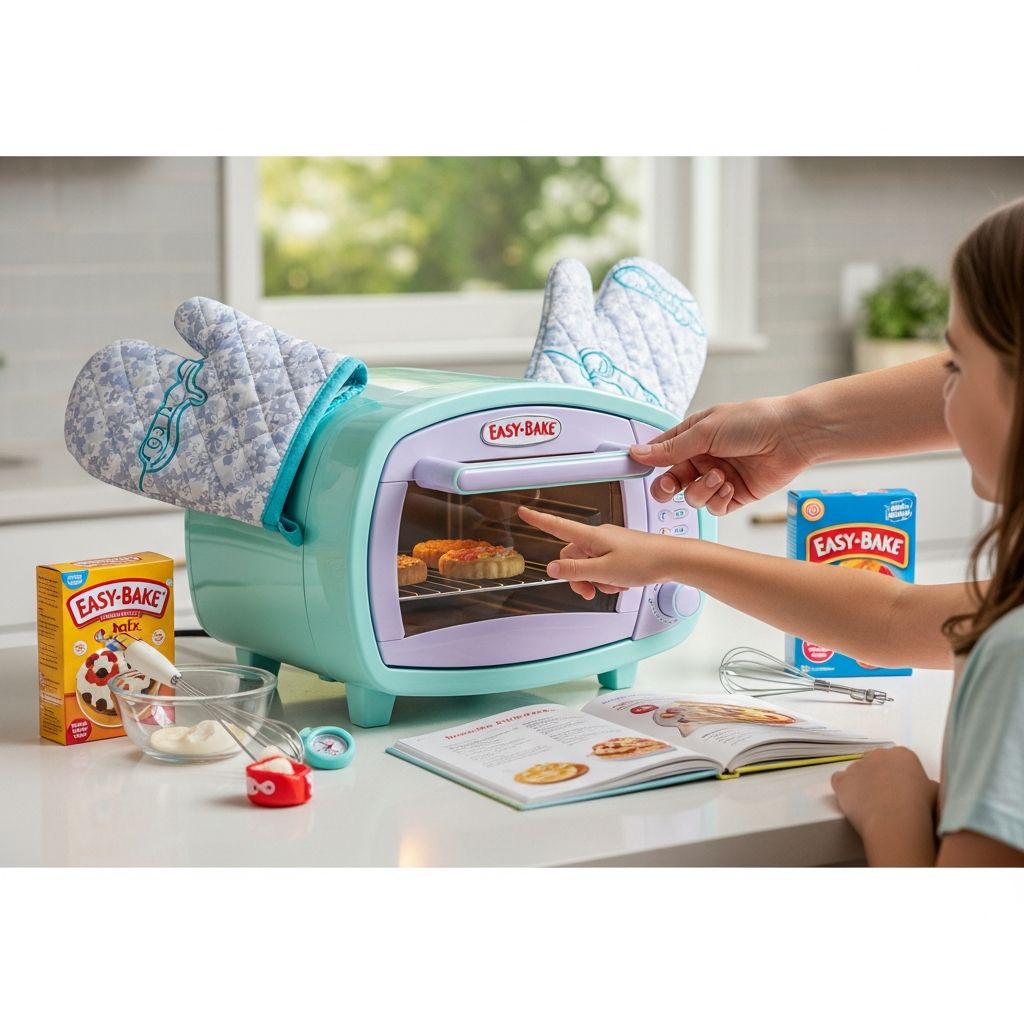
Easy-Bake–style toy ovens can be a fun way to introduce children to basic cooking skills, but they also involve real heat and real safety risks. This guide focuses on how parents and caregivers can keep kids safe while still enjoying miniature baking fun at home.
Why Toy-Oven Safety Matters
Even though toy ovens are designed for children, they use heating elements that can become hot enough to burn skin or overheat food. Parents often underestimate these risks because the toy looks cute and harmless.
- Heating elements can cause burns if a child touches them directly or reaches into the oven opening too quickly.
- Metal or rigid plastic accessories can stay hot for several minutes after baking and may burn small hands.
- Small spaces and narrow openings can trap fingers or food if used improperly.
Recommended Age and Readiness
Most toy ovens are labeled for children ages 8 and older, and this age guidance is based on both physical safety and developmental readiness. Parents should also consider the individual child’s temperament and ability to follow rules.
- If a child frequently ignores boundaries or rushes ahead without listening, extra supervision is crucial.
- Children with strong fine motor skills usually handle trays and tools more safely than younger siblings.
Essential Safety Rules for Kids
Before the first baking session, sit down together and agree on a short list of clear, non-negotiable rules. Keep the list posted near the toy oven as a visual reminder.
- Only use the oven when a trusted adult is in the same room.
- Never touch inside the oven with bare hands.
- Wait for an adult before inserting or removing trays.
- Keep hair tied back and loose sleeves rolled up.
- Do not use improvised tools or metal utensils that are not designed for the toy.
Setting Up a Safe Baking Space
A thoughtful setup can lower the chance of accidents before they happen. Treat the toy oven more like a small appliance than a regular toy.
- Place the oven on a flat, stable, heat-resistant surface away from edges.
- Keep it far from curtains, paper, and other flammable items.
- Make sure there is enough room around the oven for air circulation and easy access.
- Use child-sized oven mitts or silicone grips that fit small hands.
Supervision: What Adults Should Watch For
Adult supervision is about more than simply being nearby. Caregivers should actively watch each step of the process, especially when inserting and removing the baking tray.
- Guide children on how hard to push or pull the tray to avoid sudden slips.
- Remind them to keep fingers on the tray handle rather than near the opening.
- Model calm behavior and show how to wait patiently during the baking time.
Burn Prevention and First Aid Basics
Even with careful planning, minor burns can still happen. Knowing how to respond quickly and calmly can lower the chance of more serious injury.
- If a minor burn occurs, immediately remove the child’s hand from the heat source and cool the area under cool (not icy) running water for several minutes.
- Do not apply butter, oils, or home remedies; use clean, cool water and gentle, child-safe burn cream if advised by a healthcare professional.
- Seek medical care right away if the burn is deep, covers a larger area, blisters severely, or affects the face, joints, or genitals.
Using Mixes and Ingredients Safely
Many toy ovens come with proprietary baking mixes, but some families choose to use their own simple recipes. Safe food handling remains important at every step.
- Follow package instructions for the correct portions and baking time.
- Use clean utensils and wash hands before and after handling ingredients.
- Avoid raw egg in recipes if children may be tempted to taste the batter.
- Allow baked treats to cool completely on a plate before eating.
Power Cords and Electrical Safety
If the toy oven plugs into a wall outlet, caregivers should manage the cord and outlet access just as they would for any other small appliance. If the unit is battery-powered, proper battery handling is just as important.
- Keep cords out of walkways where kids can trip or pull the oven off the table.
- Ensure the outlet is in good condition and not overloaded with other devices.
- For battery models, store spare batteries out of reach and dispose of used ones safely.
Introducing Younger Siblings Safely
Younger brothers and sisters often want to join in when an older child is baking. Clear boundaries are vital to prevent accidents involving toddlers or preschoolers.
- Assign simple, no-heat tasks such as decorating cooled treats or handing over measuring spoons.
- Keep younger children behind a visual boundary like a taped line on the floor while the oven is hot.
- Store the oven and accessories out of reach when not in use.
Signs a Toy Oven May Not Be Safe Anymore
Over time, toy ovens can wear out, making them more likely to malfunction or cause injury. Periodic checks help families decide whether to repair, store, or retire the toy.
- Cracked or warped plastic near the opening or on the sides.
- Exposed wiring, loose parts, or an unusual burning smell during use.
- Trays that no longer slide smoothly or get stuck inside.
Quick Safety Inspection Checklist
| Area to Check | What to Look For | Action to Take |
|---|---|---|
| Plastic housing | Cracks, discoloration, soft or melted spots | Stop using until assessed; contact manufacturer if needed |
| Oven opening | Rough edges, warping, blocked track | Clean and test with an empty tray; retire if it still sticks |
| Cord or battery area | Frayed cord, loose plug, corroded battery contacts | Unplug immediately; do not allow children to use |
| Accessories | Bent trays, missing handles, sharp edges | Replace accessories; avoid makeshift replacements |
Talking to Kids About Risk
Children are more likely to follow safety rules when they understand the reasons behind them. Turn each baking session into a chance to talk about heat, patience, and responsibility in age-appropriate language.
- Explain that the oven is a real tool, not just a toy, and deserves respect.
- Use simple phrases like “Hot things can hurt, so we wait and use our mitts.”
- Praise kids when they remember to follow rules without being reminded.
Creating a Safety-Focused Baking Routine
Routine helps safety steps become automatic. Design a predictable beginning and end to each baking session so kids know what to expect and what is expected of them.
- Start every session with handwashing, reading the recipe, and reviewing one key rule.
- End with unplugging or turning off the oven, letting it cool, cleaning up, and putting everything away.
- Limit use to specific times, such as weekend afternoons, so kids do not treat it as a casual everyday toy.
When to Consider Alternatives
Some families decide that a traditional toy oven is not the best fit, especially for very young or highly impulsive children. There are still many ways to encourage a love of cooking without a heated toy.
- Use pretend kitchen sets with plastic food for imaginative play without heat.
- Invite children to help with no-cook recipes, such as assembling sandwiches or mixing yogurt parfaits.
- For older kids, supervised use of the real oven with clear ground rules can sometimes be safer than relying on a toy that may be treated too casually.
Frequently Asked Questions (FAQs)
1. At what age can my child safely use a toy oven?
Most manufacturers recommend their toy ovens for children ages 8 and up, mainly because older children can better understand safety rules and handle hot trays more carefully. However, adults should always supervise, and some children may need more maturity before using any heated toy.
2. Can my child use the toy oven alone in their bedroom?
Heated toys should not be used unsupervised or in bedrooms. The safest practice is to use the toy oven in the kitchen or dining area where an adult can watch closely, and to unplug or store it away when not in use.
3. Are homemade mixes safe to use?
Homemade mixes can be safe if they suit the oven’s baking time and temperature, but they should be simple and low in fat or sugar to reduce burning. Always test recipes with adult-only sessions first and watch carefully for extra browning or smoke.
4. What should I do if the tray gets stuck inside?
If a tray becomes stuck, turn off and unplug the oven, then wait for it to cool completely before troubleshooting. Do not let children reach inside, and avoid forcing the tray, which can damage the track or cause sudden release and potential injury.
5. How often should I inspect the toy oven?
A brief visual inspection before every session is a smart habit, and a more thorough check every few months helps catch wear and tear. If anything looks or smells unusual, stop using the oven until an adult can evaluate it and, if necessary, contact the manufacturer.
Helping Kids Bake Safely and Confidently
With thoughtful supervision, clear rules, and regular safety checks, a toy oven can support valuable skills like patience, measurement, and pride in completing a recipe. Families that approach these toys as real tools rather than simple playthings give children a safer path into the world of cooking.