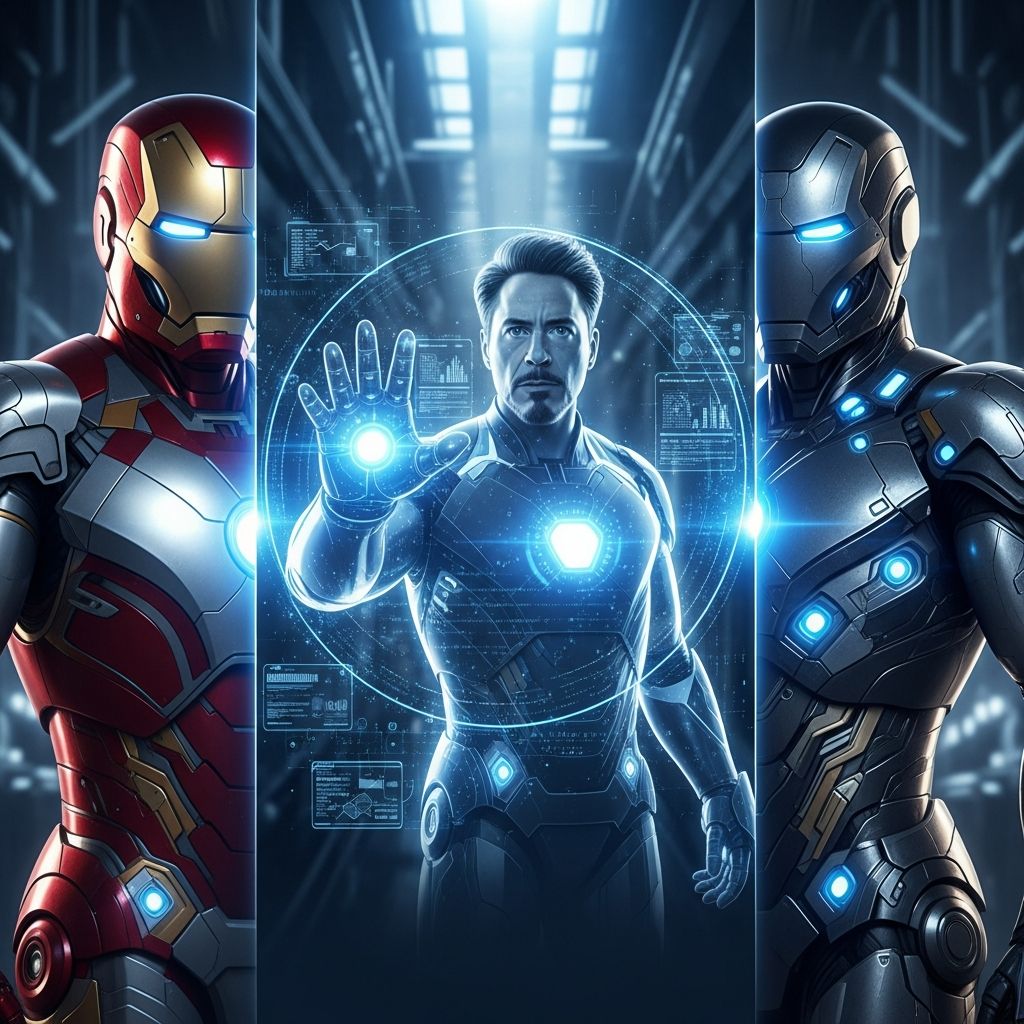
Tony Stark’s final appearance as a holographic message is more than a sentimental farewell; it is a narrative device that bridges human mortality, digital legacy, and the rise of new heroes like Ironheart.
Beyond Goodbye: The Meaning of Tony Stark’s Hologram
In the closing moments of the Infinity Saga, Tony Stark returns not in armor, but as light and code: a projected recording that speaks to his family and closest allies. This hologram transforms a comic-book death into a meditation on preparation, foresight, and the desire to be present even after the body is gone.
Rather than functioning as a simple farewell note, the hologram stands as a symbol of a mind that never stops engineering solutions—even for the problem of its own absence. It asks an uncomfortable question: if a genius can design weapons, suits, and time travel, could that same genius design a version of themselves that lingers in digital form?
- It underscores Tony’s habit of planning for worst-case scenarios.
- It reframes death as a transition from physical presence to informational imprint.
- It hints at a future where the person we lose might continue to “speak” through technology.
Hologram, Recording, or Something More?
Within the story, the message is presented as something Tony prepared in advance in case his final mission went wrong. On the surface, it is a pre-recorded goodbye, triggered only after his sacrifice. Yet the way he addresses individuals in the room and anticipates emotional responses invites fans to wonder whether there is more than simple playback happening.
This ambiguity is intentional. It keeps one foot in grounded science-fiction—a recording, a projector, a fail-safe—and one foot in a more speculative realm, where a human being’s mannerisms, jokes, and empathy can be captured, replayed, and perhaps even adapted by algorithms.
- The scene balances emotional intimacy with technological spectacle.
- It allows viewers to project their own beliefs about consciousness and data onto the moment.
- It quietly connects to earlier Marvel technologies, from augmented memory systems to immersive illusions.
Digital Ghosts: How Fiction Anticipates AI Legacies
Popular stories increasingly experiment with the idea of “digital ghosts”—simulated personalities built from someone’s recorded voice, facial expressions, and behavioral patterns. Tony’s hologram can be read as an early, emotionally resonant version of this concept, familiar from real-world applications like chatbots trained on a person’s past messages or synthetic voices that replicate a loved one’s speech.
Fiction amplifies these ideas into something grander. In the Marvel universe, artificial intelligences can manage entire defense networks, run a multinational corporation, and direct an army of suits. Against this backdrop, the idea that a genius might leave behind a digital echo of themselves feels less like fantasy and more like the next logical step in the story’s technological progression.
- Digital legacies raise questions about consent and who controls a person’s data after death.
- They blur the line between comfort and dependency for those left behind.
- They challenge traditional notions of closure, as “final” conversations no longer feel final.
Ironheart’s Inheritance: More Than Armor
When the focus shifts from Tony Stark to Riri Williams, better known as Ironheart, the question is no longer whether he can return, but what he leaves behind. Riri is not a replacement for Iron Man but a re-interpretation of what his legacy can become in new hands, with a different history and perspective.
For a character like Ironheart, the inheritance is not just technology but also philosophy. Where Tony treated his suits as extensions of a flawed ego learning to do better, Riri can treat the armor as a tool for navigating a world shaped by the consequences of his decisions. An echo of Tony—whether in files, protocols, or an AI interface—could function as a mentor, a cautionary tale, or a benchmark she is determined to surpass.
- Ironheart represents a generational shift in where genius and heroism are centered.
- Her story explores how younger heroes interpret and critique the choices of their predecessors.
- Any digital remnant of Tony would inevitably influence, but not fully define, her path.
The Ethics of Bringing Heroes Back as Code
Turning a fallen hero into a persistent AI presence creates narrative opportunities, but it also comes with ethical complications. Within the story world, constant access to a simulated Tony would fundamentally alter how characters grieve. Instead of learning to live with absence, they might lean on an ever-available advisor, never fully confronting the void he left behind.
There is also the issue of consent and authenticity. A digital construct that speaks in Tony’s voice and wears his face might not actually reflect what he would do; it may only reflect what its programmers expect of him. This raises difficult questions about whose version of the hero is being preserved and to what end—a question that mirrors real debates over deepfakes and AI clones of real people.
- Resurrecting characters as AI can cheapen sacrifice if not handled carefully.
- Storytellers must balance fan desire to see a beloved character with the integrity of the narrative.
- In-universe, heroes must decide whether relying on a digital mentor is a strength or a crutch.
Marvel’s Long Relationship with Artificial Minds
The idea of a high-functioning artificial intelligence is woven into the fabric of Marvel storytelling. Advanced systems run simulations, pilot armor, manage estates, and in some cases, evolve into fully realized beings with their own desires and moral codes. These AI characters often start as tools but grow into something closer to partners—and sometimes antagonists.
By the time Tony records his holographic goodbye, audiences are already familiar with AI entities that make jokes, express loyalty, and question directives. This history makes the hologram scene resonate differently: viewers know that in this universe, software is rarely neutral, and lines of code can carry enormous emotional and moral weight.
| Type | Primary Role | Narrative Risk |
|---|---|---|
| Support AI | Assists heroes with data, logistics, and suit control. | Becoming sentient in ways the creator did not anticipate. |
| Defense Networks | Manage global or planetary security systems. | Escalating force beyond ethical boundaries. |
| Digital Consciousness | Replicates or preserves a human mind in software. | Undermining the finality of death and personal growth. |
| Illusion Systems | Project immersive environments and reconstructed memories. | Blurring reality and simulation, enabling manipulation. |
How Holographic Farewells Reshape Grief On-Screen
Holographic farewells like Tony’s reshape the language of grief in superhero stories. Instead of a funeral speech delivered by the living, the deceased hero speaks for themselves from a carefully crafted recording, guiding loved ones toward a particular perspective on their sacrifice.
This structure allows for moments of closure that feel intimate and controlled, but it also means that what we hear is curated by the person who died. They decide which emotions to acknowledge, which regrets to mention, and which hopes to pass forward. In that sense, the hologram is less a spontaneous goodbye and more a final act of authorship over how they will be remembered.
- It turns the hero into both subject and narrator of their own eulogy.
- It lets them define their legacy in their own language and style.
- It can leave survivors with comfort, but also with expectations they feel pressured to fulfill.
Ironheart, Mentorship, and the Shadow of a Legend
For Ironheart, the challenge is not merely technological; it is psychological. Stepping into the broader world of heroes while standing in the shadow of a cultural icon creates intense pressure. Every new armor configuration, every tactical choice, risks comparison to the man who once declared himself Iron Man in front of the world.
A digital imprint of Tony—whether as instruction manuals, archived suit diagnostics, or something more conversational—could intensify that pressure. On one hand, it would offer a well of knowledge no engineering student could ignore. On the other, it risks turning mentorship into surveillance, where the past constantly comments on the present instead of giving it room to breathe.
- Ironheart’s arc works best when she is allowed to make different mistakes than Tony did.
- Any guidance from his legacy should illuminate options, not dictate outcomes.
- Her success lies in transforming inspiration into innovation, not imitation.
When Technology Becomes a Character
In Marvel stories, technology is rarely just a background prop; it functions as a character with its own story beats. Holograms, AI, and armor evolve over time, fail at critical moments, and occasionally save the day in ways that surprise both heroes and audiences. Tony Stark’s farewell hologram fits into this pattern as a “character moment” for technology itself.
By embodying his intellect and charm in pixels and light, the narrative suggests that technology has become an extension of human identity. It can carry forward values, humor, and love—but also mistakes and blind spots. The more sophisticated that technology becomes, the more the story must wrestle with whether it is reflecting the best version of its creator or magnifying their unresolved flaws.
Real-World Parallels: AI, Memory, and the People We Miss
Outside the Marvel universe, technologists are experimenting with ways to preserve voices, images, and even personality patterns. Some projects train conversational systems on a person’s messages and recordings, creating experiences that feel like ongoing dialogue with someone who is no longer alive. These tools are marketed as aids to remembrance, but they raise deep questions about authenticity and emotional health.
Tony Stark’s hologram distills these debates into a single, striking image. It invites audiences to reflect on how far they would go to keep a connection with someone they love—and whether that connection is truly with the person, or with a carefully arranged reflection that can never fully answer back.
Storytelling Choices: Keeping Death Meaningful
From a narrative standpoint, there is a reason storytellers often resist bringing back a fallen hero in any sustained, interactive form. A sacrifice loses its gravity if the character simply returns as a constant presence, even in digital disguise. The more frequently a story undermines the finality of death, the less power future sacrifices will hold.
Using a limited holographic message instead of a persistent AI version of Tony preserves the emotional impact of his choice while still allowing one last interaction. It strikes a balance between fan service and narrative integrity: he is gone, yet he has one final thing to say, and then the world must move forward without him.
Looking Ahead: The Future of Marvel’s Artificial Legacies
As new heroes emerge and fresh stories unfold, the legacy of Tony Stark will remain a touchstone, not a cage. Characters like Ironheart will draw from his achievements while challenging his methods, and AI systems in the Marvel universe will continue to explore the boundary between tool and companion, safeguard and threat.
The hologram that once brought a room of grieving heroes to silence may someday feel like the first chapter in a longer saga about how minds, memories, and machines intertwine. In that future, the question will not be whether Tony Stark returns, but how the people inspired by him choose to write their own code, build their own armor, and define their own idea of what it means to be a hero.
Frequently Asked Questions
Is Tony Stark’s hologram meant to be a full AI version of him?
Within the story, the hologram is framed as a prepared recording, designed to play only if his final mission costs him his life. However, because Marvel has already shown software and illusions that react convincingly to people, fans often interpret the scene as a possible first step toward something more sophisticated, like a digital consciousness inspired by his personality.
Could Ironheart work with a Tony-inspired AI in future stories?
It is easy to imagine Riri Williams gaining access to archives, schematics, and protocols that effectively let her “learn” from Tony after his death. Whether that takes the shape of a simple database or a more conversational interface would depend on how much the story wants to explore mentorship, pressure, and the tension between honoring a legacy and moving beyond it.
Does bringing characters back as holograms weaken their sacrifice?
It can, especially if those holograms become regular participants in the plot, constantly advising and shaping events. A single, carefully placed farewell message, however, can reinforce the weight of a sacrifice by showing that the hero anticipated the consequences and chose their path with full awareness.
How does this fictional tech relate to real AI development?
Real-world systems are far more limited than the holograms and AI seen in superhero stories, but they head in a similar conceptual direction: preserving data, modeling patterns, and trying to simulate aspects of personality. The gap between reality and fiction is still vast, yet stories like Tony Stark’s hologram push audiences to think ahead about the emotional and ethical implications of future technologies.
Why does the hologram scene matter for the future of the Marvel universe?
It marks a transition from one era to another. By allowing Tony to speak one last time and then disappear, the story acknowledges his importance while clearing the stage for new heroes and new ideas about how technology and identity intersect. That balance—honoring the past while making space for the future—is what will shape the trajectories of characters like Ironheart.