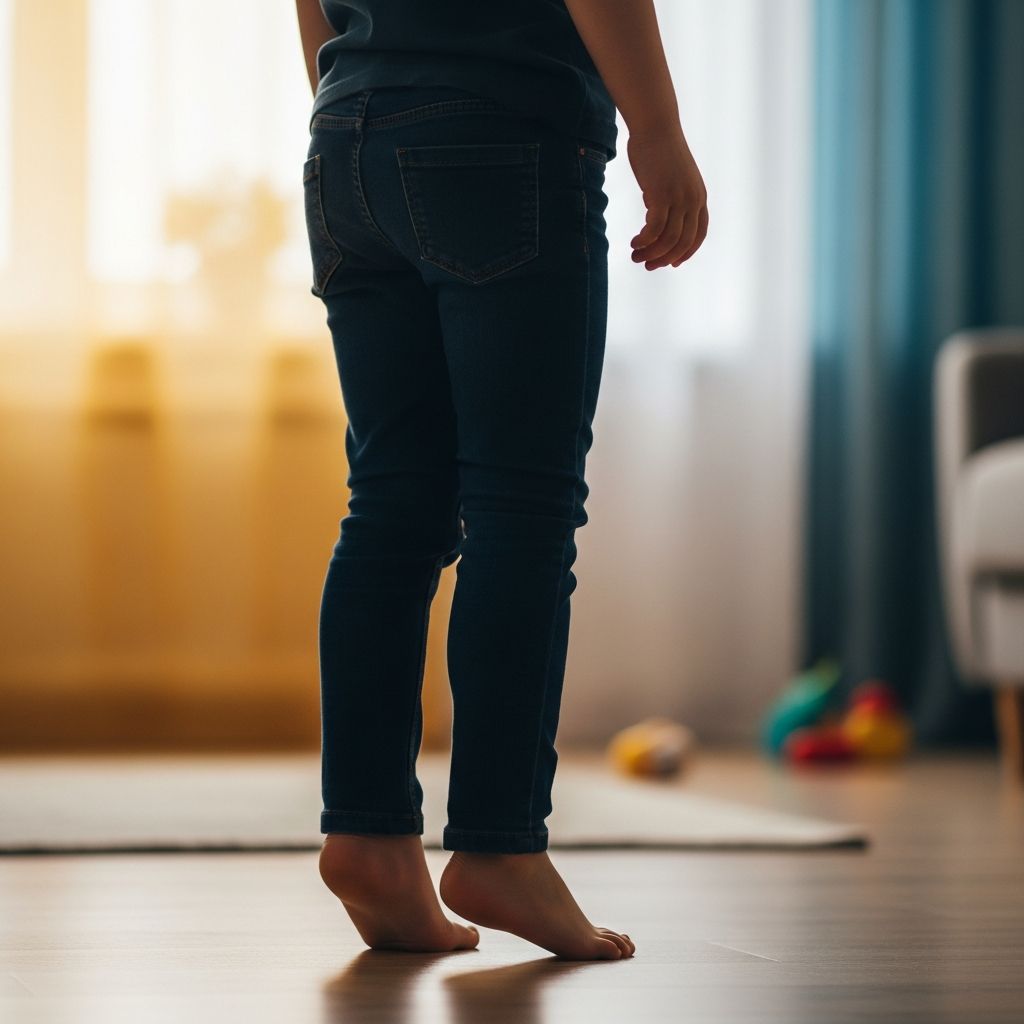
Toe walking occurs when a child habitually steps primarily on the balls of their feet or toes, keeping heels elevated off the ground. This gait pattern is frequent among toddlers learning to balance but typically resolves by age 2-3; persistence beyond this age warrants parental attention and potential medical review.
Recognizing the Habit in Early Childhood
In the initial stages of walking, many infants adopt a toe-walking stance as they build strength and coordination. This phase aids in stability during those first wobbly steps. Data indicates that up to 24% of young children exhibit this temporarily, reflecting normal neuromuscular maturation.
Parents often notice it during play or unstructured movement. The child may appear bouncy or eager, using toes for propulsion. If the family history includes similar patterns, it might simply be a learned familial trait. However, monitoring progression is key, as most outgrow it without intervention.
Potential Underlying Triggers
While idiopathic cases dominate, several factors can perpetuate toe walking. These range from benign to indicative of broader health concerns.
- Muscular Tightness: Contracted calf muscles or a shortened Achilles tendon physically limit heel descent, forcing reliance on forefoot.
- Neurological Influences: Conditions like cerebral palsy introduce spasticity, where muscles remain overly tense, altering gait mechanics.
- Genetic Muscle Disorders: Muscular dystrophy progressively weakens fibers, sometimes manifesting as compensatory toe propulsion after normal walking onset.
- Developmental Spectrum: Autism spectrum disorder correlates with toe walking in some instances, possibly tied to sensory processing differences.
- Habitual Persistence: Known as idiopathic toe walking (ITW), it affects 7-24% without clear pathology, potentially stemming from early reinforcement.
Prevalence studies show 2% of typically developing 5-year-olds and 41% of those with developmental delays continue this pattern, underscoring the need for differentiation.
Observable Signs and Daily Impacts
Beyond the visible heel lift, toe walking can yield secondary effects. Children might experience calf stiffness, knee or hip aches from compensatory postures, or lower back strain due to forward lean.
| Sign | Description | Potential Concern Level |
|---|---|---|
| Heel Never Touches Ground | Consistent during most activities | High if over age 3 |
| Can Walk Flat-Footed on Request | Briefly lowers heels when prompted | Low, likely idiopathic |
| Pain in Legs or Joints | Complaints during activity | Medium, check for tightness |
| Frequent Falls or Clumsiness | Unsteady balance | High, evaluate neurology |
| Shoe Wear Issues | Excessive forefoot breakdown | Medium, monitor progression |
Untreated, it risks permanent shortening of tendons, altered bone alignment, and functional limitations in sports or prolonged standing.
Steps for Professional Assessment
Consult a pediatrician if toe walking endures past age 2, especially with stiffness, coordination lags, or family worries. Initial evaluation includes:
- Developmental history review
- Gait observation in varied settings
- Range-of-motion tests for ankles and calves
- Neurological screening for reflexes and tone
Further diagnostics may involve imaging for tendon length or referrals to orthopedists, neurologists, or physical therapists. Virtual assessments can suffice for initial ITW diagnosis.
Conservative Management Approaches
Over 90% of cases respond to non-surgical methods, prioritizing stretching and habit correction.
Stretching and Physical Therapy
Daily calf stretches, held 30 seconds multiple times, target the gastrocnemius and soleus. Therapist-guided sessions teach parents techniques like wall pushes or towel pulls. Consistency yields flexibility gains within weeks.
Serial Casting
Plaster or fiberglass casts applied in gradual dorsiflexion positions stretch tissues over 4-8 weeks. Evidence supports its efficacy for ITW, with sustained benefits.
Orthotic Devices
Ankle-foot orthoses (AFOs) enforce heel contact during wear, though recurrence post-removal is common without adjunct therapy.
A multi-modal plan combining these often proves most effective, tailored to cause and severity.
Advanced Interventions When Needed
For refractory cases, options escalate:
- Botox Injections: Temporarily weaken calf muscles to enhance stretching, best with casting; no superior long-term edge alone.
- Surgical Lengthening: Achilles tendon procedures for fixed contractures, providing durable correction beyond one year.
Surgery is rare, reserved for when conservatives fail and function impairs.
Parental Strategies at Home
Empower correction through routine:
- Encourage barefoot play on varied surfaces to promote natural heel strike.
- Use verbal cues during walks: “Heels down!”
- Incorporate games like heel-toe races or balance beams.
- Select supportive shoes avoiding heel elevation.
- Track progress with weekly videos for provider sharing.
Patience is vital; abrupt demands may heighten resistance.
Long-Term Prognosis and Prevention
Early intervention fosters resolution in most, averting complications like equinus deformity. Monitored ITW kids often normalize by school age. Those with underlying conditions require ongoing management aligned to primary diagnosis.
Preventively, promote tummy time in infancy for motor foundations and routine pediatric checks catch deviations promptly.
Frequently Asked Questions
Is toe walking always a red flag?
No, it’s developmental in toddlers under 2, but persistent beyond 3-4 years merits evaluation to exclude issues.
Can my child outgrow it without help?
Many do, especially idiopathic cases, but therapy accelerates and ensures proper alignment if ongoing.
How does autism relate to toe walking?
Linked in some children, possibly via sensory or motor processing, though not diagnostic alone.
When is surgery considered?
Only after exhausting stretches, casts, and orthotics, typically for severe tendon shortness.
Does toe walking affect school activities?
Potentially, via fatigue, falls, or self-consciousness; addressing early preserves participation.
References
- Positive Insights on Toe Walking in Children: Causes & Care — Pediatric Foot & Ankle. Accessed 2026. https://pediatricfootankle.com/foot-conditions/toe-walking-in-children-causes-symptoms-and-treatment/
- Toe walking in children – Symptoms & causes — Mayo Clinic. 2023-10-12. https://www.mayoclinic.org/diseases-conditions/toe-walking/symptoms-causes/syc-20378410
- Idiopathic Toe-walking — Lurie Children’s Hospital. Accessed 2026. https://www.luriechildrens.org/en/specialties-conditions/idiopathic-toe-walking/
- Toe walking in children — UM Health-Sparrow. Accessed 2026. https://www.uofmhealthsparrow.org/departments-conditions-conditions/toe-walking-children
- Toe Walking — Rady Children’s Health. Accessed 2026. https://www.rchsd.org/health-article/toe-walking/
- Toe walking: causes, epidemiology, assessment, and treatment — PubMed (Curr Opin Pediatr). 2016-02. https://pubmed.ncbi.nlm.nih.gov/26709689/
- Toe Walking — American Academy of Orthopaedic Surgeons (OrthoInfo). Accessed 2026. https://orthoinfo.aaos.org/en/diseases–conditions/toe-walking/