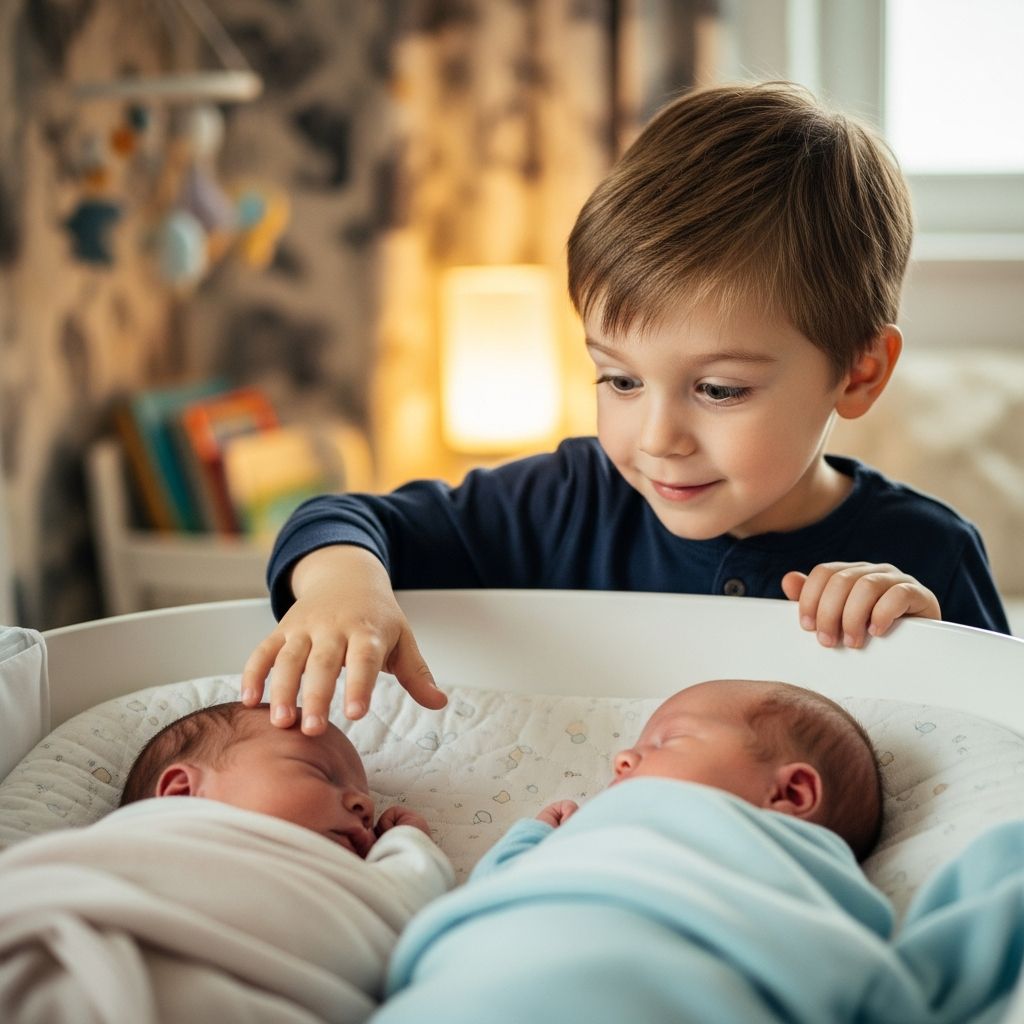
When a toddler walks into the hospital room to meet his newborn twin brothers for the first time, the moment starts out picture-perfect: smiles, cuddles, and parents capturing every second on camera. Then, almost out of nowhere, his expression changes as he realizes something huge — there are two babies, and they are both here to stay.
This sweet but slightly heartbreaking shift in his face is what made the video go viral and led so many parents to say, “My child would react exactly the same way.” The moment captures the complicated emotions older siblings can feel when twins arrive and suddenly their world is not just shared, but doubled.
The Viral Moment: Big Brother Meets the Twins
In the clip, a very young boy, still very much a baby himself, walks into a room where his mom is holding one of the newborn twins. At first, he looks delighted and curious, leaning in to see the tiny baby and staying close to his mother. The energy is calm and hopeful, and everyone seems excited to see how he will react.
Then someone shifts position and the second baby comes into view. The big brother’s face changes from mild confusion to something that looks a lot like concern. He glances from one baby to the other, clearly noticing there are two of them, and appears to have a sudden realization that his role in the family has just changed in a major way.
- At first, he seems happy to see the new baby and stays close to Mom.
- Once he notices the second baby, his expression becomes more serious and uncertain.
- The adults in the room gently laugh, recognizing the exact moment he understands there are two new siblings, not one.
Why His Reaction Feels So Relatable
Parents respond so strongly to this video because it captures real, unfiltered emotion. Even though the child is too young to put his feelings into words, his face tells the whole story: surprise, confusion, and maybe a little bit of loss as he realizes he will no longer be the only little one at home.
Many caregivers recognize that look from their own older children when a new baby arrives. Adding twins to the family can amplify those emotions, because instead of sharing attention with one more child, the big sibling is now sharing it with two — and both are completely dependent on the grown-ups.
What This Moment Reveals About Sibling Emotions
The toddler’s reaction is a reminder that big feelings in little kids are normal when the family grows. Even if they seem excited about a new baby, they may also feel unsure, replaced, or confused about their new role. Those mixed feelings are not a sign of a problem; they are part of a healthy adjustment process.
For twins in particular, the dynamic can feel intense for the older sibling. Instead of forming a tight pair with the new baby, the toddler might see that the two infants already come as a unit, which can make it harder initially to figure out where they fit in the family picture.
Key Feelings Big Siblings May Experience
- Jealousy: Noticing that a lot of time, touch, and attention is going to the babies.
- Confusion: Struggling to understand why the babies cry so often or why parents are so busy.
- Loss: Missing the old routine where they had more one-on-one time with caregivers.
- Curiosity and love: Wanting to help, touch, and hold the babies, even while feeling unsure.
How Parents in the Video Respond
One subtle but powerful part of the clip is how calm and gentle the adults remain as the child processes what he is seeing. They do not push him to act excited or force him to pose perfectly. Instead, they give him space to look, think, and react at his own pace.
Their laughter is soft and affectionate, more about recognizing the honesty of the moment than making fun of him. This kind of response models acceptance: it shows that his feelings are okay, even if they are not only happy ones. That tone matters, because kids quickly pick up on whether their emotional reactions are welcome.
Lessons for Parents Introducing Twins
Introducing an older child to newborn twins can feel overwhelming, but moments like this show that the goal is not perfection. The goal is to give your older child enough connection, context, and compassion to work through their emotions over time. A single meeting will not settle everything; adjustment is a process.
With some planning and empathy, parents can help an older sibling feel included instead of pushed aside. Even very young children benefit when adults acknowledge their feelings and build small rituals that remind them they are still deeply loved and needed in the family.
Practical Tips to Help Big Siblings Adjust
- Talk ahead of time about what babies are like (they cry, sleep, and need a lot of help).
- Use simple language to explain twins: “There are two babies, but you are our big helper.”
- Give the older child a special job that matches their age, like bringing a diaper or choosing a blanket.
- Preserve at least a small daily one-on-one moment with the older child, even if it is just a five-minute cuddle or story.
- Validate their feelings if they say they are sad, mad, or “don’t like” the babies sometimes.
Big Brother’s New Role in the Family
The video’s title frames his reaction as a “depressing” realization, but in many ways it is also the start of a new role. This little boy is not just losing his spot as the only child; he is gaining the chance to become a big brother who matters to two younger siblings at once.
Over time, big siblings often shift from shock and jealousy to pride and protectiveness. They learn that they are older, more capable, and uniquely important to the babies. That transformation does not happen in a single hospital visit, but moments like the one captured on camera are often the first step in that journey.
Typical Reactions When Older Kids Meet New Babies
Children react in many different ways when they first see new siblings. Some seem thrilled, others show no interest, and some look exactly like the boy in the video — stunned and a little overwhelmed. All of these responses can be part of a normal adjustment, especially in the early days.
What matters most is how the adults support the child over time. If the older sibling is allowed to feel what they feel while still receiving consistent love, structure, and attention, the relationship with the babies usually becomes warmer and more secure as everyone settles into the new family rhythm.
Common First-Meeting Reactions
| Reaction | What It Might Mean | How Parents Can Respond |
|---|---|---|
| Excitement and curiosity | The child feels secure and interested, but may still have big feelings later. | Encourage gentle touch, praise their kindness, and keep checking in over time. |
| Shyness or silence | The child might be overwhelmed or unsure of what to do. | Offer quiet closeness, do not force interaction, and let them join in when ready. |
| Jealousy or withdrawal | The child feels replaced or less important than before. | Reassure them of their special place, increase one-on-one time, and validate their feelings. |
| Mixed expressions like in the video | The child is trying to process a big change very quickly. | Stay calm, keep the moment light but respectful, and continue conversations later at home. |
Why Twins Can Intensify Sibling Feelings
When a single baby arrives, the older child often sees one clear newcomer. With twins, the situation is more dramatic: everything from crying to feeding to visitors can feel multiplied. That can leave the big brother or sister feeling like their place in the family is shrinking faster than they can adjust.
On the other hand, twins can also create unique opportunities for the older child to take on a meaningful role. They might develop special games, help tell the twins apart, or act as a bridge between the babies and the outside world as they grow. Those deeper bonds often begin with messy, emotional first impressions like the one shared in the viral video.
Supporting the Big Sibling Long-Term
Adjusting to life with newborn twins is not a one-week challenge; it is a long-term transition. For the older child, the feelings that show up in that first hospital visit might return in new forms over months or even years, especially during developmental leaps or stressful times.
Parents can help by staying observant, inviting conversation, and building regular rituals that keep the older sibling feeling seen. A small but steady pattern of attention often matters more than occasional big gestures.
Ideas for Ongoing Support
- Create a daily “big kid moment” like reading a special book, going for a short walk, or doing a simple puzzle together.
- Use positive language about their role: “You are the one they look up to” or “They are so lucky to have you.”
- Allow them to say when they need a break from the babies and respect that boundary when possible.
- Include them in simple decisions, such as choosing outfits, songs, or bedtime stories for the twins.
What Makes This Story So Powerful
The reason this short video resonates with so many people is that it captures the truth that joy and discomfort can coexist. The arrival of twin siblings is a celebration, but it also asks a lot of the child who just became a big brother. His face in that moment says what many kids cannot yet express with words.
For parents, it is a reminder to look beyond the cute photo-op and tune into the deeper emotions in the room. When caregivers honor those emotions rather than brushing them off, they lay the groundwork for stronger, more loving relationships among all the siblings in the years to come.
FAQs About Introducing a Toddler to Twins
1. Why did the big brother look so sad or worried?
His expression likely showed a mix of shock, confusion, and sudden understanding. He may have realized that his parents’ attention would now be shared with two tiny babies who need a lot of care, and that can feel scary for a young child even if they also feel love and curiosity.
2. Is it normal for an older child to have a negative reaction when meeting new siblings?
Yes, it is very common for older siblings to show some form of jealousy, sadness, or withdrawal when a new baby arrives. When the new arrivals are twins, those feelings can be even stronger because the change in family dynamics is more dramatic from the child’s point of view.
3. How can parents prepare a toddler before the twins are born?
Parents can read simple picture books about new babies, talk about what newborns do, and explain in very concrete terms that there will be two babies. It also helps to reassure the child that they will still have special time with their caregivers and that being the big sibling is an important and valued role.
4. What should parents do if the older child seems uninterested in the babies?
Some kids cope by ignoring the babies at first, and that can be a normal part of adjustment. Rather than forcing interaction, adults can keep inviting the child to join in gently while making sure they still receive affection, attention, and reassurance that they are loved.
5. When should parents worry about the older child’s reaction?
Occasional outbursts, clinginess, or moodiness are expected. However, if the older child shows persistent aggression toward the babies, extreme regression in behavior, or ongoing distress that does not ease with support, it may help to talk with a pediatrician or child therapist for extra guidance.