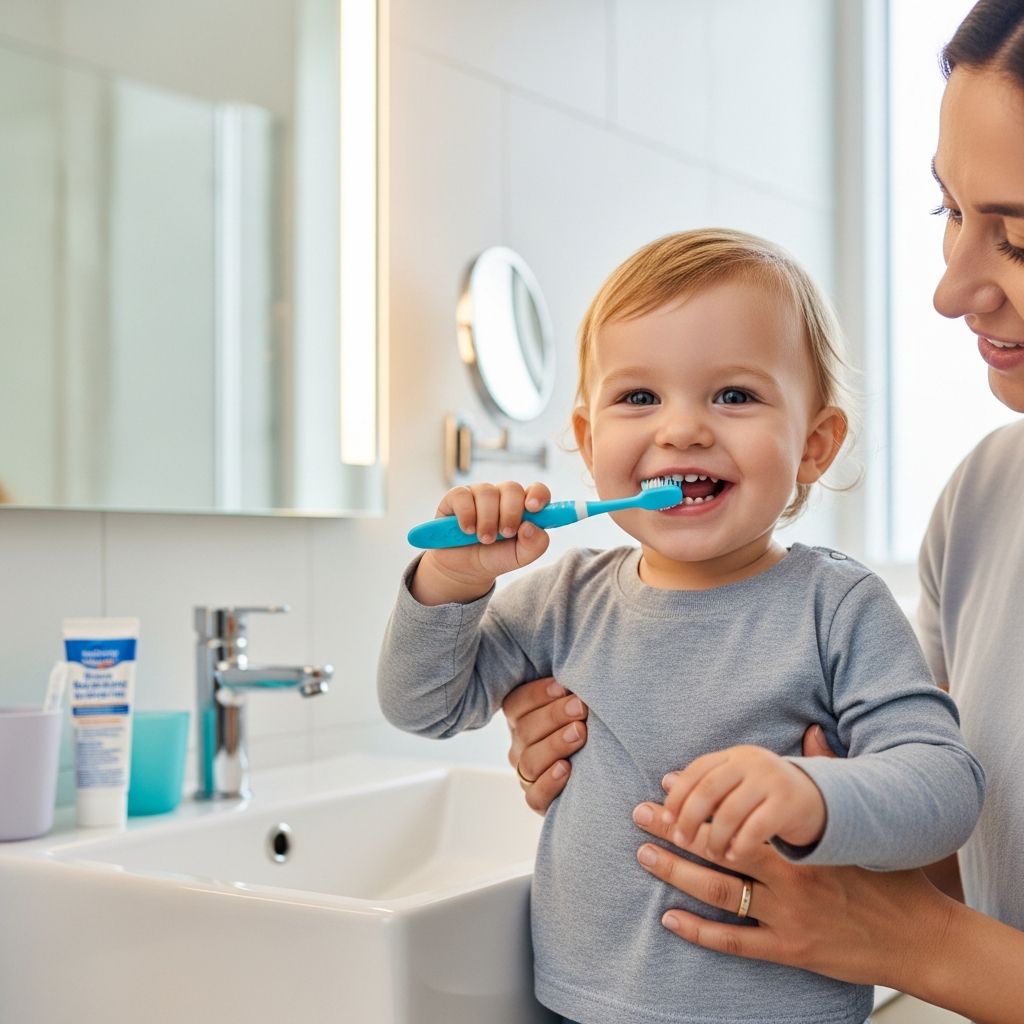
Why Toddler Toothbrushing Matters
Establishing good oral hygiene habits early sets the foundation for lifelong dental health. Toddlers are at a critical stage where their baby teeth are developing, and proper brushing helps prevent cavities, gum disease, and other oral issues that can affect their overall well-being .
Choosing the Right Tools
- Opt for a small-headed, soft-bristled toothbrush designed for toddlers. This fits comfortably in their mouth and is gentle on sensitive gums .
- Use fluoride toothpaste in the correct amount: a rice grain-sized smear for children under 3, and a pea-sized amount for ages 3–6 .
- Replace toothbrushes every 3 months or after illness to maintain hygiene .
Effective Brushing Techniques
Proper technique ensures thorough cleaning without causing discomfort. Dentists recommend a gentle circular or elliptical motion, brushing at a 45-degree angle to the gum line . Focus on all surfaces: outside, inside, and chewing surfaces. Spend about two minutes covering every tooth, and don’t forget the tongue and cheeks to remove bacteria .
Positioning for Success
Comfortable positioning makes brushing easier and less stressful for both parent and child:
- Kneeling Behind: Stand your toddler in front of a mirror while you kneel behind. This allows you to reach all teeth and keeps your child engaged with their reflection .
- Lap Position: Have your toddler lay their head in your lap, either on the floor or couch. This provides a stable, relaxed environment for brushing .
- Knee-to-Knee Cradle: For extra support, sit knee-to-knee with a partner. Your toddler lies back with their head on the other person’s lap, allowing one adult to brush while the other comforts .
Overcoming Resistance and Tantrums
Toddlers often resist brushing due to sensory sensitivities or a desire for independence. Try these strategies:
- Offer Limited Choices: Let your child pick their toothbrush or toothpaste flavor. This gives them a sense of control and makes the process more enjoyable .
- Take Turns: Use the “you do it, I do it” method. Let your toddler brush for a short time, then take over to ensure thorough cleaning .
- Address Sensory Issues: If your child is sensitive, try different textures (soft, extra-soft, or silicone brushes), adjust toothpaste amount, or start with water before introducing toothpaste .
- Make It Fun: Sing songs, use a timer, or watch a short brushing video together to create a positive association .
Building a Consistent Routine
Consistency is key to making toothbrushing a habit:
- Brush twice daily, ideally after breakfast and before bedtime .
- Establish a predictable sequence: undress, brush, rinse, and praise. This routine helps toddlers anticipate and accept the process .
- Use positive reinforcement, such as stickers or praise, to celebrate successful brushing sessions .
When to Introduce Flossing
Once teeth start touching, flossing becomes essential. Use child-friendly floss picks or traditional floss, guiding your child gently and supervising closely .
Common Challenges and Solutions
| Challenge | Solution |
|---|---|
| Toddler refuses to open mouth | Try different positions, use distraction, or let them brush first |
| Sensitive to toothpaste taste | Start with water, try milder or fruity flavors |
| Wants to brush alone | Use the “you do it, I do it” method |
| Dislikes brushing sensation | Experiment with brush textures, temperature, or gradual introduction |
FAQs
- How much toothpaste should I use for my toddler?
Use a rice grain-sized amount for children under 3, and a pea-sized amount for ages 3–6 . - How often should I brush my toddler’s teeth?
Brush twice daily, after breakfast and before bedtime . - What if my toddler hates brushing?
Try different positions, offer choices, use distraction, and make it fun with songs or videos . - When should I start flossing my toddler’s teeth?
Begin flossing once teeth start touching, usually around age 2–3 . - How can I make toothbrushing a positive experience?
Use positive reinforcement, create a routine, and let your child participate in choosing tools .
Final Thoughts
With patience, creativity, and the right techniques, toothbrushing can become a positive, bonding experience for both parent and toddler. By making oral care enjoyable and consistent, you set the stage for a lifetime of healthy smiles .