Many parents worry when their toddler seems quiet, uses only a few words, or prefers pointing over speaking. At the same time, toddlers develop at very different speeds, which can make it hard to know what is truly concerning and what is a normal variation. This guide explains how speech and language typically unfold, how you can gently encourage more talking, and when it makes sense to ask for extra support.
Why Toddlers Talk on Their Own Timeline
Language development depends on many factors, including hearing, brain development, temperament, and how much meaningful interaction children experience each day. Some toddlers focus first on physical skills like climbing or running and then suddenly “explode” with new words a bit later. Others are quietly absorbing language for months before they feel ready to speak more.
Instead of comparing your child to every other toddler at the playground, it is more useful to look at broad patterns: understanding words, using gestures, trying to imitate, and gradually adding sounds and words over time. A child who shows steady progress in these areas is typically moving in a healthy direction, even if speech is not yet clear or plentiful.
What Typical Toddler Speech Often Looks Like
Every child is unique, but there are general patterns many toddlers follow from about age one to three. These are not strict rules; they are guideposts that help you notice whether your child is broadly on track.
| Age range (approx.) | Understanding | Talking & communication |
|---|---|---|
| 12–18 months | Recognizes their name and familiar people; follows simple requests like “come here”; responds to words for everyday objects such as cup, ball, or shoe. | Uses gestures (pointing, waving), makes many sounds, and may say a handful of simple words like names or favorite objects. |
| 18–24 months | Understands many more words than they can say; can typically follow simple one-step instructions without gestures. | Vocabulary often grows into dozens of words; begins to combine two words such as “more milk” or “mama up,” though pronunciation may be unclear. |
| 24–36 months | Follows two-step directions like “get your shoes and come here” and understands simple questions such as “where is your ball?” | Speech becomes easier to understand; uses longer phrases or short sentences, asks simple questions, and talks about what they see and do. |
If your child is a little ahead in one area or a little behind in another, that can still be within a wide range of normal. What matters most is whether there is gradual progress, new attempts, and interaction with people and surroundings.
Understanding Words Comes Before Saying Them
Parents often focus on how many words a toddler can say, but comprehension usually develops first. A toddler might understand dozens of words and follow directions long before they are ready to say those words clearly. This is a positive sign, showing that their brain is building a foundation for later speech.
Signs of growing understanding include turning toward their name, reacting to common words like “bath” or “snack,” and following simple requests. Gestures such as pointing, clapping, or nodding also show that your child is actively communicating, even if spoken words are limited.
Why Some Toddlers Seem Reluctant to Talk
There are many reasons a toddler might be quieter than expected. Some children are naturally cautious and prefer to be confident before trying new skills. Others might rely on pointing or pulling a parent’s hand because it works quickly, so they feel less motivated to use words.
Environmental factors can also play a role. Constant background noise, frequent screen use, or rushed routines may reduce opportunities for back-and-forth conversation. In some cases, underlying hearing issues or developmental differences can affect how easily a child learns and uses speech, which is why paying attention to patterns over time is so important.
Creating a Conversation-Friendly Home
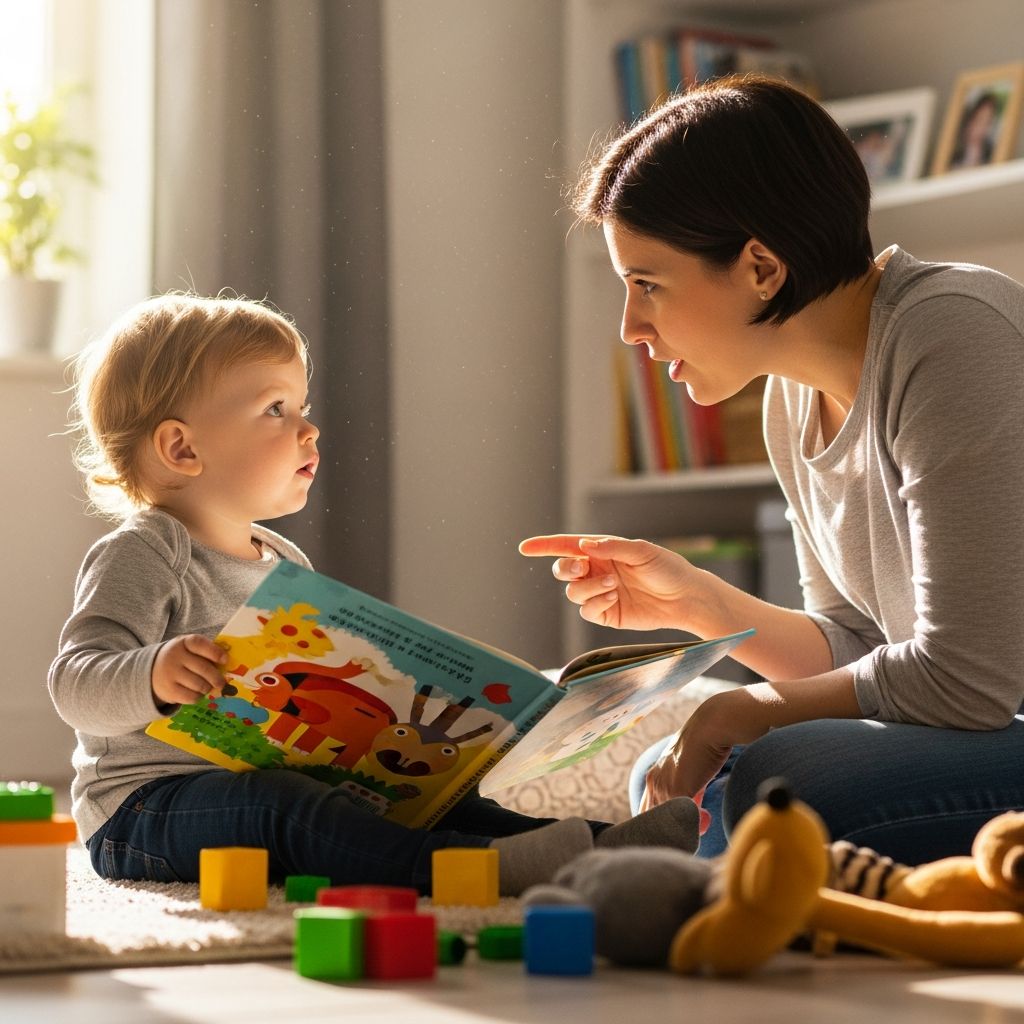
One of the most powerful ways to support your toddler’s speech is simply to build a rich, calm, and responsive language environment. This means talking with your child, not just around them, and inviting them to participate in everyday interactions.
- Turn down background noise such as TV or radio during playtime so your child can clearly hear your voice.
- Get down at your toddler’s eye level to make communication more engaging and less overwhelming.
- Pause in conversations and give your child time to respond with sounds, words, or gestures.
- Follow your child’s interests, talking about the toys, activities, or objects they are already focused on.
Talking “With” Your Toddler, Not “At” Them
It is easy to fall into a pattern of giving directions all day: “Come here, put that down, eat this.” While instructions are necessary, toddlers learn language best through conversational turns, where each person takes a turn communicating, even if the toddler’s turn is just a sound or a look.
- When your child points or makes a sound, respond as if they are starting a conversation and add a few simple words.
- Ask open-ended, but simple, questions such as “What did you find?” instead of only yes/no questions.
- Allow silence after you speak so your toddler has time to process and try to respond.
Using Everyday Moments to Build Words
You do not need special toys or flashcards to help your toddler talk. Daily routines are perfect language-learning opportunities because they are predictable, familiar, and full of repetition. Repeated phrases connected to actions help toddlers link words to experiences.
Try to choose a few ordinary activities and make them “speech-rich” parts of the day, using the same short phrases and comments every time. Over time, your toddler will begin to anticipate the words and may start to join in.
Language-Rich Routine Ideas
- Mealtime: Name foods, talk about colors and temperatures, and describe actions such as scoop, pour, bite, or drink.
- Bath time: Label body parts, toys, and actions like splash, wash, and pour; sing simple, repetitive songs.
- Getting dressed: Talk through each step: socks on, shirt over, zipper up; offer choices like “red shirt or blue shirt?”
- Outdoor walks: Point out cars, dogs, birds, or buses; label sounds such as honk, woof, or beep.
How to Model Words Your Toddler Can Copy
One of the most effective strategies for encouraging speech is modeling slightly more advanced language than your child currently uses. This is sometimes called “expansion” or “building up,” and it gives your toddler a clear, simple template to imitate.
- If your toddler uses a gesture, add a word: they point to the fridge; you say, “Milk?”
- If they say one word, add one more: your child says, “Ball”; you say, “Big ball.”
- Keep your sentences short and natural, about one step beyond what your child can already do.
The Power of Repetition and Routine Phrases
Toddlers need to hear words many times in meaningful contexts before they stick. Repeating simple, predictable phrases during routines makes it more likely that your child will eventually join in. Over time, familiar patterns become invitations to speak.
Instead of trying to introduce dozens of new words at once, pick a small set of useful words and phrases that fit your daily life. When your toddler begins to copy these, you can gradually add new vocabulary in the same way.
Play-Based Strategies to Spark More Words
Play is the natural language of toddlers. When you join your child in play, you tap into their curiosity and motivation, making it easier for them to experiment with sounds and words. The key is to follow their interests instead of directing everything yourself.
- Imitate your toddler’s sounds and actions so they see that their communication has an impact.
- Use simple sound effects—like vroom, beep, or splash—which are often easier to copy than full words.
- Introduce pretend play slowly, such as feeding a doll, driving cars, or cooking with toy food, and narrate what is happening.
Screen Time and Its Impact on Talking
Short, high-quality video calls with family or occasional educational programs watched together can sometimes be helpful, but passive screen time generally does not build language skills. Toddlers learn best from real people who respond to their signals in real time.
If screens are part of your day, try to make them interactive. Sit with your child, comment on what you see, and encourage pointing or naming. It is usually helpful to protect plenty of screen-free time for play, reading, and conversation.
Supporting Bilingual Toddlers
Growing up with two or more languages is not harmful to speech development. It is normal for bilingual toddlers to mix words from different languages in the same sentence or to take slightly longer to show strong skills in each language, but they are building a rich combined language system.
Caregivers can support bilingual development by consistently using the language they are most comfortable with, offering lots of conversation, songs, and stories in both languages over time. If there are concerns about delays, it is important that any evaluation considers all languages the child hears regularly, not just one.
When Quiet Might Signal Something More
While many late talkers catch up on their own, there are situations where extra attention is wise. Early support can prevent future frustration and make communication easier for everyone in the family. Listening to your instincts as a parent is important; you know your child’s typical behavior better than anyone.
Concerns can include limited sound-making as a baby, not responding to their name, few or no gestures such as pointing or waving, or a sudden loss of skills that were previously present. In these cases, checking in with a health professional or speech-language specialist can provide clarity.
Key Signs to Discuss with a Professional
Every child follows a unique path, but certain patterns tend to prompt further evaluation. These are not diagnoses; they are signals that a closer look could be helpful. If you notice several of these, consider bringing them up at your child’s next health visit.
- By around 12 months, little to no babbling, lack of response to sound, or no attempts to communicate through gestures or voice.
- By around 18 months, no clear single words at all, limited eye contact, or no pointing to show interest in things.
- By around 24 months, no simple two-word combinations, difficulty understanding basic instructions, or very limited interest in interacting with others.
- At any age, loss of words or skills that were previously used, or concerns about hearing such as not reacting to loud sounds.
Working with Professionals Without Panic
If you decide to seek help, that step reflects care, not failure. Speech-language pathologists and related professionals are trained to understand communication challenges and to teach families practical strategies. Early guidance can make home life smoother, reduce worry, and give children more tools to express themselves.
Evaluations often include questions about your child’s history, observations of play and interaction, and simple activities to check understanding and expression. Many therapy approaches are play-based, involve caregivers directly, and can be woven into normal routines rather than feeling like formal lessons.
Encouraging Speech Without Pressure
Pushing a toddler to “say it” repeatedly or showing visible anxiety around their speech can sometimes backfire, making communication feel stressful. Children learn best when they feel safe, connected, and accepted exactly where they are, even as you gently invite them to stretch their skills.
- Avoid shaming language such as “You’re too big not to talk” or comparing your child to siblings or peers.
- Celebrate small steps, like new sounds, attempts to imitate, or creative gestures.
- Remember that effort matters as much as clarity; reward the attempt, not just the perfect word.
Sample Daily Plan to Boost Talking
You do not need a rigid schedule to support language. Instead, think of sprinkling short, intentional moments throughout your day. The following example shows how a typical day might include several opportunities for talking without adding extra chores.
| Time of day | Activity | Simple language strategy |
|---|---|---|
| Morning | Getting dressed | Label clothes and body parts; offer simple choices (“blue shirt or red shirt?”). |
| Mid-morning | Snack time | Pause before giving food to allow requests; model short phrases like “more banana.” |
| Afternoon | Playtime | Follow your child’s play, imitate their sounds, and add one or two new words. |
| Late afternoon | Outdoor walk | Point to and name things you see; use fun sound effects like beep or woof. |
| Evening | Bath and bedtime | Repeat familiar songs or rhymes and read short books, encouraging your child to turn pages and point. |
Frequently Asked Questions About Toddler Talking
Is it my fault if my toddler is not talking much?
No. Many factors influence speech and language development, and parents cannot control all of them. What you can do is provide a warm, responsive environment, offer plenty of chances to communicate, and seek guidance when something feels off. Choosing to learn and adjust now is a positive step, not a sign of failure.
Does teaching my toddler sign language or gestures delay speech?
Using simple signs or gestures usually supports, rather than delays, spoken language. When toddlers can communicate wants and feelings more easily through gestures, frustration decreases, and they remain more open to learning words. Over time, many children naturally shift from signs to spoken words as their speech skills grow.
Should I correct my toddler’s pronunciation?
Instead of directly correcting or asking your child to repeat a word “the right way,” it is often more helpful to simply say the word clearly yourself. For example, if your toddler says “wawa” for water, you might respond, “Yes, water,” while handing them the cup. This keeps the interaction positive while still providing a good model.
How many words should my toddler know?
There is a wide range of normal, and exact numbers can vary from one child to another. It is more useful to watch whether your toddler is adding new words over time, using a mix of sounds, gestures, and attempts to communicate, and becoming easier to understand overall. If you are unsure, bringing specific observations to a health professional can be very helpful.
When should I ask for a professional evaluation?
Trust your instincts if something consistently worries you. Consider an evaluation if your child seems to understand very little of what is said, uses almost no gestures, is not developing new sounds or words over several months, or has lost skills that were already present. An early check does not lock you into anything; it simply gives you more information and options.
Supporting Your Toddler—and Yourself
Helping a toddler learn to talk can be both joyful and challenging, especially when progress feels slow or uneven. Focusing on connection, play, and small daily language habits tends to be more effective than drilling or comparing. Your calm presence, responsive listening, and willingness to celebrate tiny steps can make a powerful difference in how your child experiences communication.
Over time, most toddlers build a growing toolbox of sounds, gestures, and words. With patience, realistic expectations, and support when needed, you can create an environment where your child feels safe to experiment, make mistakes, and gradually find their own voice.