Understanding the Foundation of Toddler Emotional Attachment
The early years of childhood represent a critical window for emotional development, during which children form the foundational patterns that will influence their relationships throughout life. When toddlers display resistance to separation or hesitation around unfamiliar individuals, these behaviors are not signs of defiance or weakness—they are actually indicators of healthy developmental progression. Young children naturally gravitate toward their primary caregivers because this bond provides them with a secure base from which to explore the world.
The attachment relationship serves as more than just a source of comfort; it functions as an internal working model that teaches children how to navigate trust, connection, and belonging. When children feel securely attached to their parents or primary caregivers, they develop the confidence necessary to venture into new situations and form relationships with other trusted individuals. Understanding this fundamental truth allows parents to reframe their child’s anxiety not as a problem to eliminate, but as a signal that the child recognizes the importance of their primary relationship.
Recognizing the Difference Between Attachment Hunger and Behavioral Challenges
Many parents mistakenly interpret their toddler’s clinginess, resistance to separation, or wariness of strangers as behavioral problems requiring discipline. In reality, these manifestations often reflect what experts describe as attachment hunger—a child’s genuine need to feel close to their caregivers and to have their relational needs met. When a toddler follows a parent from room to room, resists bedtime separations, or refuses interaction with a new babysitter, the child is communicating fundamental needs for connection and security.
The distinction between attachment hunger and misbehavior is crucial because the solutions for each are fundamentally different. Behavioral challenges typically respond well to clear boundaries and consistent consequences, but attachment hunger requires increased connection, warmth, and presence. When parents attempt to address attachment hunger through disciplinary measures such as timeouts or consequences that create further distance, they inadvertently amplify the child’s anxiety and make behavioral management more difficult. Instead, the focus must shift toward deepening the relationship and ensuring the child feels their emotional needs are being acknowledged and met.
Investing in Quality Connection Time
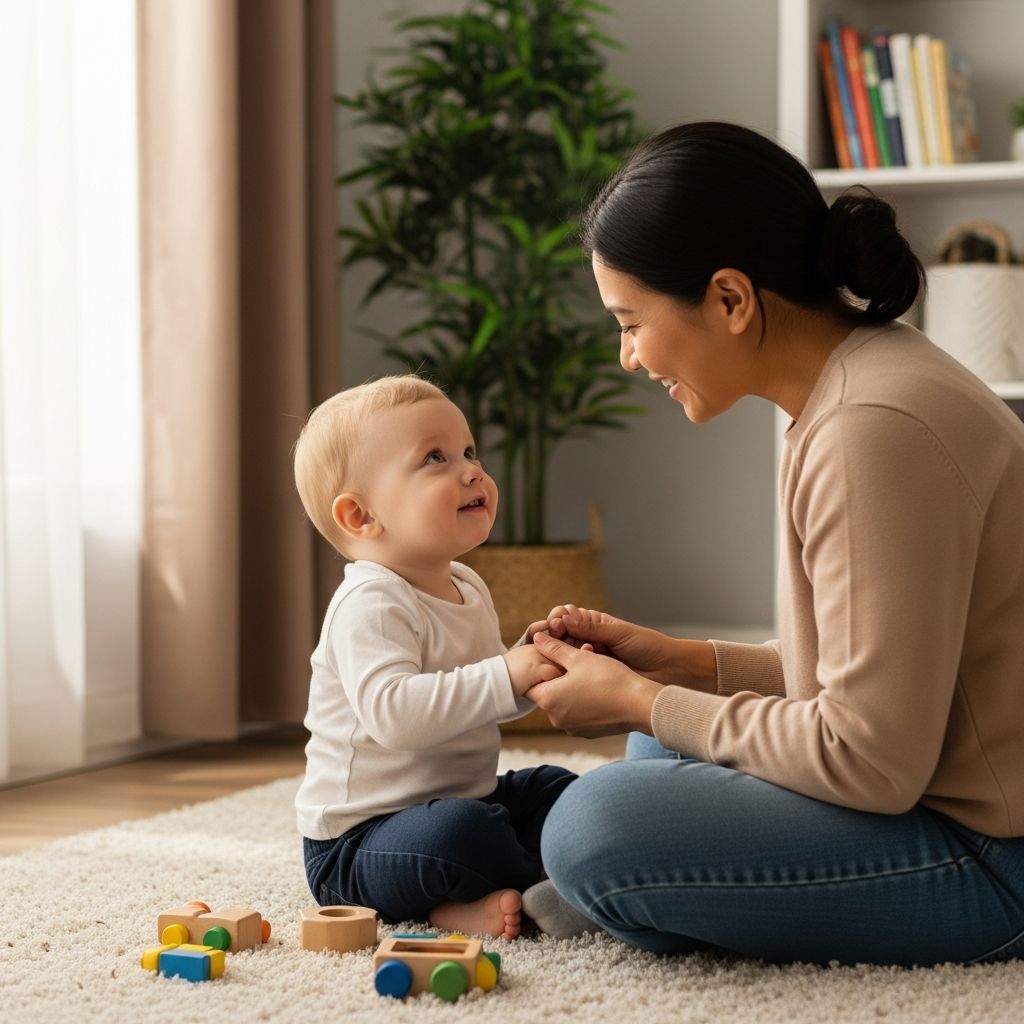
One of the most powerful tools parents possess for building secure attachment and reducing separation anxiety is the deliberate investment of focused, undivided attention. This goes beyond simply being in the same physical space as your child; it involves actively engaging with them in ways that communicate genuine interest and delight in their presence and personality.
Quality connection time operates on the principle that children develop a sense of security proportional to the depth and warmth of their interactions with primary caregivers. During these periods of focused engagement, parents can:
- Participate in activities your child chooses, following their lead rather than directing the play
- Offer genuine praise and acknowledgment of their efforts and accomplishments
- Create moments of physical affection such as hugs, cuddles, and playful physical interaction
- Engage in conversation that demonstrates you value their thoughts and feelings
- Minimize distractions from phones, work, or other competing demands
Research indicates that when children experience consistent periods of warm, attentive interaction with their caregivers, they develop greater emotional resilience and adaptability to separation. Furthermore, a child who feels genuinely connected to their parent experiences less desperation during necessary separations and responds more readily to alternative caregivers who have been intentionally introduced into their life.
Reframing Separation Through Connection Rather Than Distance
Traditional approaches to managing separation anxiety often focus on the moment of departure—making the goodbye quick, distancing emotionally, or even sneaking away while the child is distracted. However, contemporary child development research suggests that a more effective approach involves reframing separation in terms of the reunion that will follow. Rather than emphasizing the goodbye, parents can shift the narrative to highlight the hello.
This reframing strategy works because it acknowledges the child’s legitimate experience of missing their parent while simultaneously providing reassurance about reconnection. Practical applications of this approach include:
- Before leaving your child with a caregiver, discuss what you will do together when you reunite—perhaps a special snack, outdoor time, or a game you both enjoy
- At bedtime, talk about when you will check on them during the night or how you will see them in the morning
- Provide your child with a photograph or small memento they can hold or look at during your absence
- Use language your child understands to describe the timing of your return—for example, “after snack time” rather than “in two hours”
- Create opportunities for connection during the day, such as a lunch video call if your work schedule permits
By maintaining the emotional thread of connection even during physical separation, parents help their children develop the understanding that separation is temporary and reunion is guaranteed. This consistency teaches children that they can survive and even thrive during periods apart from their primary caregiver.
Supporting Your Child’s Emotional Processing Through Tears
Tears are a physiological response that serves an important function in children’s emotional regulation. When a child cries about missing a parent or feeling anxious about separation, the tears themselves represent the child’s brain working to process and release emotional energy. Unfortunately, many parents interpret tears as a sign of failure, either in the child’s ability to cope or in the parent’s ability to prevent distress.
A more constructive perspective views tears as the solution rather than the problem. When a child experiences emotions that feel too large to contain internally, the physical release that crying provides actually facilitates emotional regulation and stress relief. The critical element is not preventing tears but ensuring the child has a trusted person present to provide comfort and support during their emotional expression.
Parents can support healthy emotional processing by:
- Validating the child’s feelings rather than dismissing or minimizing them—for example, “I know you miss Mommy and that makes you sad”
- Remaining physically close and offering comfort through touch, presence, and calm reassurance
- Allowing adequate time for the child to process their emotions without rushing them toward resolution
- Providing simple language that helps the child understand their feelings and experience
- Modeling emotional regulation by maintaining calm body language and tone yourself
When children develop confidence that their emotional expression will be met with support rather than dismissal or punishment, they build trust with their caregivers and develop greater capacity to navigate future separations with resilience.
Cultivating Relationships Between Your Child and Alternative Caregivers
Many parents recognize intellectually that their children will benefit from relationships with alternative caregivers—whether grandparents, babysitters, teachers, or childcare providers—yet may not deliberately facilitate these connections. Children do not automatically transfer their attachment and trust to new individuals simply because a parent declares that person trustworthy. Instead, caregivers must intentionally build bridges between their child and substitute caregivers through conscious introduction and relationship-building.
The process of helping a child accept and trust an alternative caregiver involves several key elements:
| Strategy | Implementation | Expected Outcome |
|---|---|---|
| Demonstrate parental confidence | Display warmth and friendliness toward the caregiver; use positive language when discussing their qualifications and character | Child observes and mirrors parent’s comfort level, gradually warming to the caregiver |
| Identify commonalities | Point out shared interests, talents, or characteristics between your child and the caregiver | Child feels understood and recognized by the caregiver; sense of connection develops |
| Create positive associations | Ensure early interactions involve enjoyable activities, games, or treats rather than difficult tasks | Child develops positive expectations about time with the caregiver |
| Gradual responsibility transfer | Start with the caregiver assisting with specific tasks like feeding or getting dressed while parent remains present | Child becomes accustomed to receiving care from this person and develops trust over time |
| Consistent presence | Ensure the same caregiver is present regularly; avoid frequent rotation of care providers | Repeated exposure and predictability build familiarity and trust |
Children will naturally follow and trust those to whom their primary caregiver demonstrates trust and affection. By actively facilitating the relationship between your child and their alternative caregivers, you create a network of secure relationships that reduces anxiety and provides your child with multiple sources of comfort and support.
Establishing Predictability Through Goodbye Rituals and Consistency
Children thrive with predictability and routine. One of the most effective tools parents can employ is the establishment of a brief, consistent goodbye ritual that occurs each time a separation takes place. This ritual need not be elaborate—it might be a special handshake, a particular song, a certain number of kisses, or a specific phrase you exchange with your child.
The value of a goodbye ritual lies not in its complexity but in its consistency and brevity. When a child knows exactly what to expect when a parent leaves, the goodbye becomes a manageable, predictable event rather than an overwhelming surprise. Additionally, the act of completing a ritual together reinforces the child’s sense of agency and control, which paradoxically reduces anxiety around separation.
Beyond the goodbye ritual itself, parents should establish consistency in their communication about separations and reunions. Using the same language to describe timing, the same location for goodbyes, and the same patterns of return helps children develop trust in the predictability of their world. When a child can reliably expect that a parent will return when they said they would, that separations follow a known pattern, and that reunions will occur, the child’s overall anxiety diminishes significantly.
Navigating Wariness of Unfamiliar Individuals
Many toddlers exhibit what is commonly called stranger anxiety or fear of unfamiliar people. Rather than interpreting this as shyness or a social deficit, parents should understand it as a developmentally appropriate protective instinct. This caution around unfamiliar individuals actually demonstrates that a child has developed the capacity to distinguish between known and unknown people, which is a sign of cognitive development.
When introducing your child to new individuals, effective strategies include:
- Choosing home or a familiar environment for initial introductions whenever possible, as children feel most secure in spaces they know
- Introducing one new person at a time rather than overwhelming the child with multiple unfamiliar individuals simultaneously
- Staying physically present and close to your child during the introduction, providing reassurance through your proximity
- Allowing your child to approach the new person at their own pace rather than forcing interaction or proximity
- Engaging in a group activity such as playing with toys, drawing, or enjoying a snack together, which provides a natural way for the child to become comfortable without direct, face-to-face scrutiny
- Bringing a comfort item such as a favorite toy or blanket that provides security during the uncertain interaction
Parents should also maintain their own composure and calm demeanor during these introductions, as children are highly attuned to parental emotional cues. When a parent appears anxious or uncertain about a new person, children pick up on this hesitation and may interpret it as a reason to be wary. Conversely, when parents project confidence and ease, children gradually absorb this sense of safety.
Building Resilience Through Gradual Separation Practice
Like any skill, the ability to navigate separation successfully improves with practice and repetition. Parents need not wait until a child enters formal education or childcare to begin practicing separations. Instead, starting early with very brief, low-stress separations allows children to gradually build confidence and competence in their ability to manage time apart from their parent.
Progression of separation practice might look like this:
- Week 1-2: Step into another room for a few minutes while your child plays nearby; let them know you’re leaving and return promptly
- Week 3-4: Leave your child in a trusted caregiver’s care for 30 minutes while you run a brief errand in your neighborhood
- Week 5-6: Extend time to one hour; ensure the caregiver engages your child in an enjoyable activity
- Week 7-8: Increase to two or three hours as your child demonstrates comfort with the routine
The key to successful separation practice is maintaining low-stress conditions and ensuring that each experience ends positively with your return and enthusiasm about reunion. Over time, this progressive exposure helps children develop an internal sense of competence—the understanding that they have managed separation successfully in the past and can therefore manage it in the future.
Avoiding Common Missteps in Separation Management
Well-intentioned parents sometimes inadvertently engage in practices that exacerbate rather than alleviate separation anxiety. One significant misstep is sneaking away while the child is distracted or preoccupied. Though this might seem to avoid an immediate difficult goodbye, it actually teaches the child that parents can disappear without warning, which increases hypervigilance and anxiety about being left alone even when the parent is present.
Another common error involves using separation or temporary abandonment as a consequence for misbehavior. When a child receives the message that separation occurs as punishment for behavior, it reinforces the connection between separation and negative emotion rather than helping the child develop healthy understanding of necessary separations.
Additionally, parents should avoid overcomplicating goodbyes. Extended farewells, multiple returns for last hugs, or lingering at the drop-off location actually amplify the child’s distress and extend the transition period. Brief, warm, and consistent goodbyes are significantly more effective than elaborate, emotionally charged partings.
Frequently Asked Questions
At what age does separation anxiety typically begin to emerge?
Separation anxiety and stranger anxiety typically emerge around six to eight months of age, peak during the toddler years (12-24 months), and gradually diminish as children reach preschool age, though some children continue to experience difficulties well into the early school years.
Is it normal for my toddler to prefer me over all other caregivers?
Yes, this is completely normal. Young children naturally prefer their primary attachment figure, and this preference actually indicates a secure attachment relationship. However, with intentional relationship-building between your child and alternative caregivers, children can develop multiple secure relationships over time.
How long should I expect my child to cry when I leave them with a caregiver?
Most children settle down within a few minutes to a few hours once their caregiver engages them in an enjoyable activity. The crying itself is not harmful; what matters is that the child has a trusted person present to provide comfort and distraction during the transition.
Should I return to comfort my child if I hear them crying after I’ve left?
Returning to comfort your child immediately teaches them that crying prompts your return, which can reinforce separation anxiety. Instead, trust your caregiver to provide comfort. The caregiver can report to you afterward if your child needed significant time to settle.
What should I do if my toddler refuses to interact with a new caregiver?
Avoid forcing interaction. Instead, allow the child to observe the caregiver from a safe distance, engage your child in a preferred activity alongside the caregiver, and gradually assign the caregiver small tasks like pouring juice or reading a book. Over time, repeated positive exposure builds comfort.
How can I build my toddler’s confidence in their ability to manage separation?
Start with very brief separations in low-stress situations, celebrate your child’s successful management of these experiences, provide genuine praise for their courage, and gradually increase separation duration as confidence builds. Each positive experience contributes to your child’s internal sense of competence.
References
- How To Ease your Toddler’s Separation Anxiety — Motherly. Accessed April 2026. https://www.mother.ly/toddler/toddler-milestones/stranger-separation-anxiety-your-toddler-5-tips-to-better-attachment/
- Separation Anxiety in Babies and Toddlers — Huckleberry. Accessed April 2026. https://huckleberrycare.com/blog/separation-anxiety-in-babies-and-toddlers
- Fear of Strangers: Babies and Young Children — Raising Children. Australian Institute of Family Studies. Accessed April 2026. https://raisingchildren.net.au/toddlers/behaviour/common-concerns/fear-of-strangers
- Helping Kids with Separation Anxiety — Child Mind Institute. Accessed April 2026. https://childmind.org/article/separation-issues-in-young-children/
- Separation Anxiety and Stranger Anxiety — Merck Manuals. Accessed April 2026. https://www.merckmanuals.com/home/children-s-health-issues/symptoms-in-infants-and-children/separation-anxiety-and-stranger-anxiety
- How to Ease Your Child’s Separation Anxiety — HealthyChildren.org, American Academy of Pediatrics. Accessed April 2026. https://www.healthychildren.org/English/ages-stages/toddler/Pages/Soothing-Your-Childs-Separation-Anxiety.aspx
- Tips to Support a Child Who Struggles With Separation Anxiety — New York-Presbyterian Health Matters. Accessed April 2026. https://healthmatters.nyp.org/tips-to-support-a-child-struggling-with-separation-anxiety/