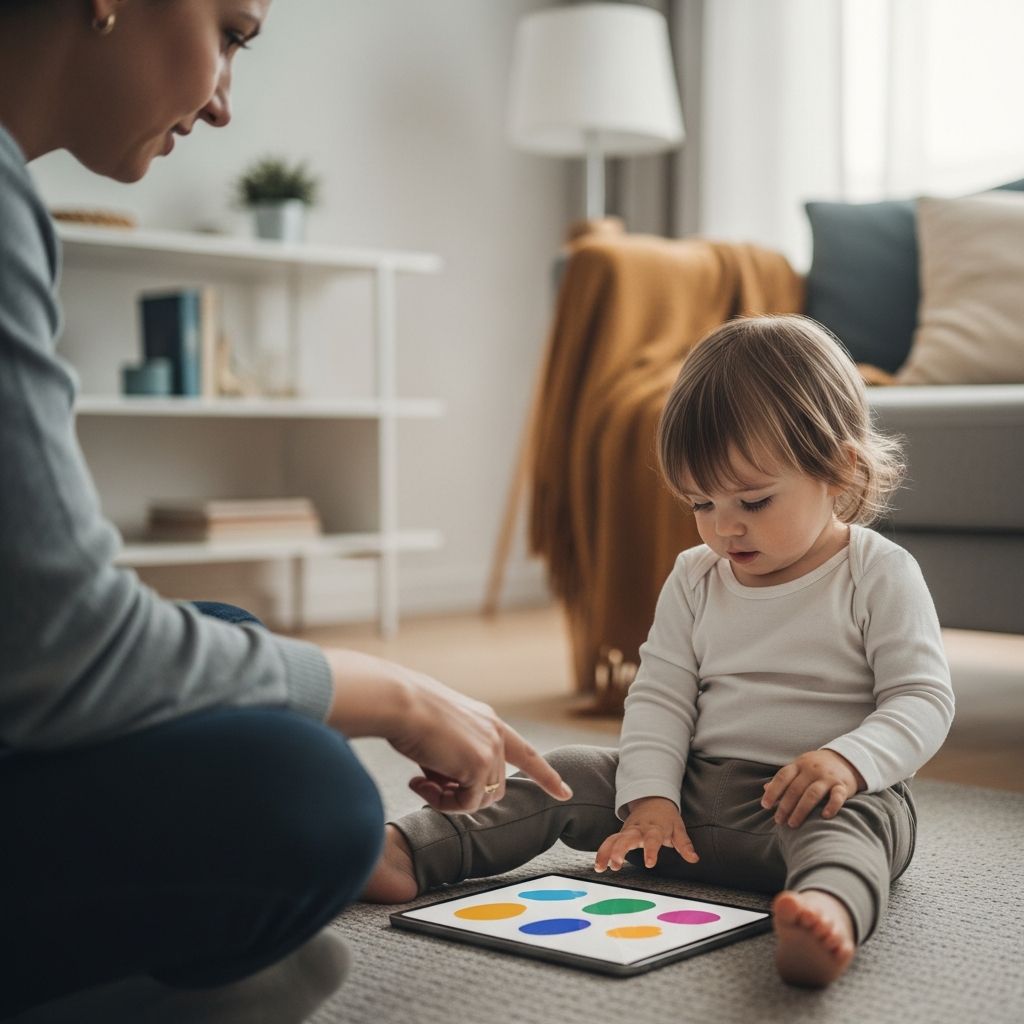
Television, tablets, and smartphones are woven into everyday life, which makes it hard to know when – or whether – to invite them into your toddler’s world. This guide helps you make a thoughtful, values-based decision about screen time, and offers practical steps for introducing TV and other screens in a way that supports healthy development.
Why This Decision Feels So Hard
Parents of toddlers often feel torn between warnings about screen time and the reality that digital media is everywhere. You may hear that screens are harmful, yet also see toddlers learning songs, letters, or languages from favorite shows and apps. The tension between fear and convenience makes this one of the most emotionally loaded decisions in early parenting.
Understanding what your toddler really needs at this stage – attention, movement, language, and connection – can turn a confusing topic into a manageable set of choices. Instead of striving for perfection, you can aim for intentional, structured use of screens that fits your family’s life and values.
What Toddlers Need More Than Screens
Before deciding when to introduce TV, it helps to remember what drives toddler development. Children in the 1–3 year range grow fastest through hands-on exploration, face-to-face talk, and physical play, not through passive watching. Their brains are built to light up when they touch, climb, carry, imitate, and engage with real people.
Screens can sometimes complement these needs, but they cannot replace them. Any screen routine works best when it is designed around the non-negotiables of toddlerhood: sleep, movement, language-rich interactions, and free play.
- Sleep: Regular naps and early bedtimes are more powerful for learning and behavior than any educational program.
- Movement: Running, climbing, dancing, and rough-and-tumble play support motor skills and emotional regulation.
- Language: Back-and-forth conversations, book reading, and songs build vocabulary and social understanding.
- Play: Simple toys, pretend games, and boredom-driven creativity grow problem-solving and independence.
Is Your Toddler Ready for Screens?
There is no single magic age when TV suddenly becomes “safe.” Instead, you can look for readiness signs in your child and in your household. These clues suggest that your toddler can handle a carefully limited introduction to screens without them overwhelming daily life.
Child readiness signs
- Your toddler can focus on a short story, song, or quiet activity for several minutes.
- They understand simple instructions like “wait,” “all done,” and “one more.”
- They recover reasonably well when a favorite activity ends, even if they protest at first.
- They show curiosity about pictures, books, or family video calls.
- They are generally well-rested and not constantly overtired or overstimulated.
Family readiness signs
- Caregivers have discussed values and limits beforehand (for example, “no screens during meals” or “only one short show a day”).
- There is a basic daily rhythm in place – meals, naps, outdoor time, and wind-down routines.
- Adults can stay nearby and pay partial attention, at least at first, instead of using screens as unsupervised babysitters.
- Parents are prepared to preview or choose content rather than letting autoplay or algorithms decide.
Benefits and Risks: A Balanced View
Screens are neither pure poison nor pure magic. Used thoughtfully, they can offer learning opportunities and connection. Used without boundaries or context, they can displace the experiences toddlers need most. Seeing both sides helps you design a plan instead of reacting out of guilt or panic.
Potential benefits of moderate, intentional use
- Exposure to songs, stories, and vocabulary that enrich language, especially when adults talk about what is on the screen.
- Shared viewing time that becomes a cozy ritual – for example, cuddling together for one short show after a long day.
- Occasional, strategically used quiet time for parents to handle urgent tasks while the child is safely occupied.
- Opportunities to see diverse families, cultures, and experiences that may not be present in daily life.
Possible downsides of overuse
- Reduced physical activity and outdoor play, which are essential for healthy growth and sleep.
- Increased meltdowns around turning screens off, especially if they are used too frequently or without consistent limits.
- Less time for free play and imagination when screens fill every quiet moment.
- Potential exposure to fast-paced, violent, or advertising-heavy content that toddlers are not ready to process.
Guiding Principles for Toddler Screen Time
Instead of chasing universal rules, it can be more useful to adopt a few guiding principles. These act as guardrails for any choice you make about TV, tablets, or phones, regardless of your toddler’s exact age or the specific programs involved.
| Principle | What It Looks Like in Practice |
|---|---|
| Real life comes first | Meals, naps, outdoor play, and family time are scheduled before screens. Shows fit into the day, not the other way around. |
| Less is more | Short, predictable viewing windows (for example, 15–30 minutes) instead of scattered, constant access. |
| Co-viewing whenever possible | Adults stay nearby, comment, and connect the content to real life: “Look, that’s a red ball like yours.” |
| Slow, gentle content | Simple stories, minimal flashing, and characters that speak clearly and calmly. |
| Clear endings | One episode at a time, with a simple routine for turning the screen off and moving to the next activity. |
How to Introduce TV and Screens Step by Step
If you decide your toddler is ready, starting slowly and predictably can prevent many common struggles. Think of this as a small experiment, not a permanent commitment. You can always step back, adjust, or pause if the early signs suggest that your child needs more time.
- Clarify your goal.
Decide why you are introducing screens: a shared family ritual, occasional help during a sibling’s bedtime, or brief independent viewing while you prepare dinner. Having a clear purpose helps you say “yes” and “no” more confidently.
- Choose a specific time of day.
Select a consistent window when your toddler is not overly tired or hungry, such as mid-morning after active play, or late afternoon before dinner. Avoid right before naps and bedtime to protect sleep.
- Start with very short sessions.
Begin with one short segment (for example, 10–20 minutes). Set a visual timer or use a single-episode rule so your child can learn that screens have clear beginnings and endings.
- Sit together the first few times.
Watch with your toddler, name what you see, and link it to their world: “They’re jumping in puddles, just like you in your boots.” This turns passive watching into interactive learning and allows you to notice if the content feels too intense.
- Plan the transition away from the screen.
Have a next activity ready – a snack, bath, puzzle, or short walk. Give a simple warning (“One more minute”) and then follow the same phrase every time you switch it off (“Show is over, time for…”) so the pattern becomes predictable.
- Observe and adjust.
Watch how your toddler behaves during and after screen time for a few weeks. If sleep worsens, tantrums explode, or they demand more and more, you can shorten sessions, change content, or pause screens for a while.
What Counts as Healthy Content for Toddlers?
Not all shows and apps are created equal. For young children, the content itself matters as much as – and sometimes more than – the number of minutes watched. A short, calm, clearly spoken program is often more valuable than a longer, fast-paced cartoon packed with gags and rapid cuts.
Qualities of toddler-friendly content
- Simple plots that your child can follow without constant explanation.
- Warm, gentle characters who solve problems through talking, turn-taking, and empathy rather than shouting or slapstick.
- Language that is clear, not too fast, and free of sarcasm or adult in-jokes.
- Limited on-screen advertising and no pressure to buy products or unlock extra content.
- Opportunities for participation, such as singing, dancing, or answering simple questions.
Whenever possible, preview a new show or app on your own first, or watch the first episode alongside your child. Trust your instincts: if you feel anxious, annoyed, or overstimulated by a program, it is likely too intense for a toddler.
House Rules That Make Screens Easier to Live With
Written or spoken family rules about technology take pressure off daily decision-making. When everyone knows the expectations, you spend less time negotiating and more time enjoying the media you do choose to use.
Examples of helpful house rules
- No screens during meals, at the table, or in restaurants (unless this is a deliberate, rare exception).
- No TVs or tablets in the toddler’s bedroom to keep sleep more predictable.
- Adults use headphones or another room for their own shows or social media when the toddler is playing nearby.
- Screens stay off during the first hour after waking and the hour before bedtime.
- A parent or caregiver must approve all new apps, channels, or videos.
Rules can flex during illness, travel, or major life changes, but having a clear baseline makes it easier to “reset” once life stabilizes again. Consistency, more than perfection, teaches toddlers what to expect.
Smart Alternatives for Screen-Heavy Moments
Certain parts of the day almost beg for screens: long car rides, cooking dinner with toddlers underfoot, or waiting rooms without toys. Planning a menu of screen-free options for these situations makes it less tempting to default to TV every time.
Ideas for tricky situations
- In the car: Music, audiobooks for young children, simple guessing games, or a small bag of special car-only toys.
- While cooking: A low drawer of safe kitchen tools, a step stool so your toddler can “help,” or a small bin of blocks nearby.
- Waiting rooms: A tiny backpack with crayons, a notebook, stickers, and a favorite small figure or stuffed animal.
- Early mornings: A basket of quiet toys, board books, or a soft-light corner where toddlers can play while adults wake up.
Having alternatives ready does not mean you must reject screens entirely. It simply gives you options, so screens become one tool among many rather than the automatic answer to every hint of boredom.
When Screen Time Becomes a Struggle
Even in thoughtful families, screen time can slip from “occasional helper” to “constant battle.” Clues include relentless begging for shows, frequent meltdowns when devices are removed, or a steady increase in hours watched without deliberate choice. If this sounds familiar, it may be time for a reset.
Steps for a gentle reset
- Gradually shorten screen sessions or reduce the number of daily viewing windows.
- Move devices out of sight when they are not in use to reduce constant reminders.
- Increase outdoor time, rough-and-tumble play, and one-on-one attention during the transition.
- Use the same calm, repeated phrase at the end of screen time: “Show is finished; now it’s time for…”
- Expect some protest and cling to the new routine for at least a week before deciding whether it is working.
If conflict remains intense or you are concerned about your child’s sleep, behavior, or development, consider talking with a pediatric provider or child development specialist. Screen use is only one piece of a much larger picture of family life and child well-being.
Frequently Asked Questions About Toddlers and TV
1. Is any TV okay before age two?
Many experts suggest avoiding routine entertainment TV for the very youngest toddlers, especially under about 18 months. Video calls with relatives and brief, slow-paced programs watched together can be exceptions, but real-life interaction and play remain more valuable than any show at this stage.
2. How much screen time is reasonable for a two- or three-year-old?
For most toddlers, keeping daily entertainment screen time on the low side – often around a single short show or limited window – helps preserve energy for movement, exploration, and sleep. Some families allow a bit more on weekends or during special circumstances, but still aim to keep screens as a small part of a rich, varied day.
3. Are educational apps better than TV?
Interactive apps can offer chances to practice skills, but they are not automatically better than a well-designed show. What matters most is whether the content is age-appropriate, gentle, and used in moderation, and whether adults are occasionally present to connect the dots between screen and real life.
4. What if my toddler screams when TV time ends?
Protest is common, especially if screens are exciting and abrupt endings feel surprising. Predictable routines, simple warnings, and having a next activity ready make transitions smoother over time, even if there are still occasional tears.
5. Is it terrible to use TV when I am exhausted?
Short, intentional use of screens while a parent recovers from illness, handles a crisis, or simply takes a breather does not erase otherwise loving, responsive care. If you notice that this emergency strategy is becoming the default every day, that is a sign to revisit routines and supports, not a reason for shame.
Finding a Screen Routine That Fits Your Family
There is no single correct answer to the question of when to introduce TV to a toddler. What matters most is aligning screen use with your child’s developmental needs, your family’s values, and the realities of your daily life. A clear plan, simple rules, and ongoing observation make it easier to keep screens in their place.
By treating TV and other devices as tools – sometimes helpful, never essential – you can give your toddler the benefits of modern media without letting it crowd out the experiences that matter most: loving relationships, open-ended play, and a world that is still wonderfully three-dimensional.