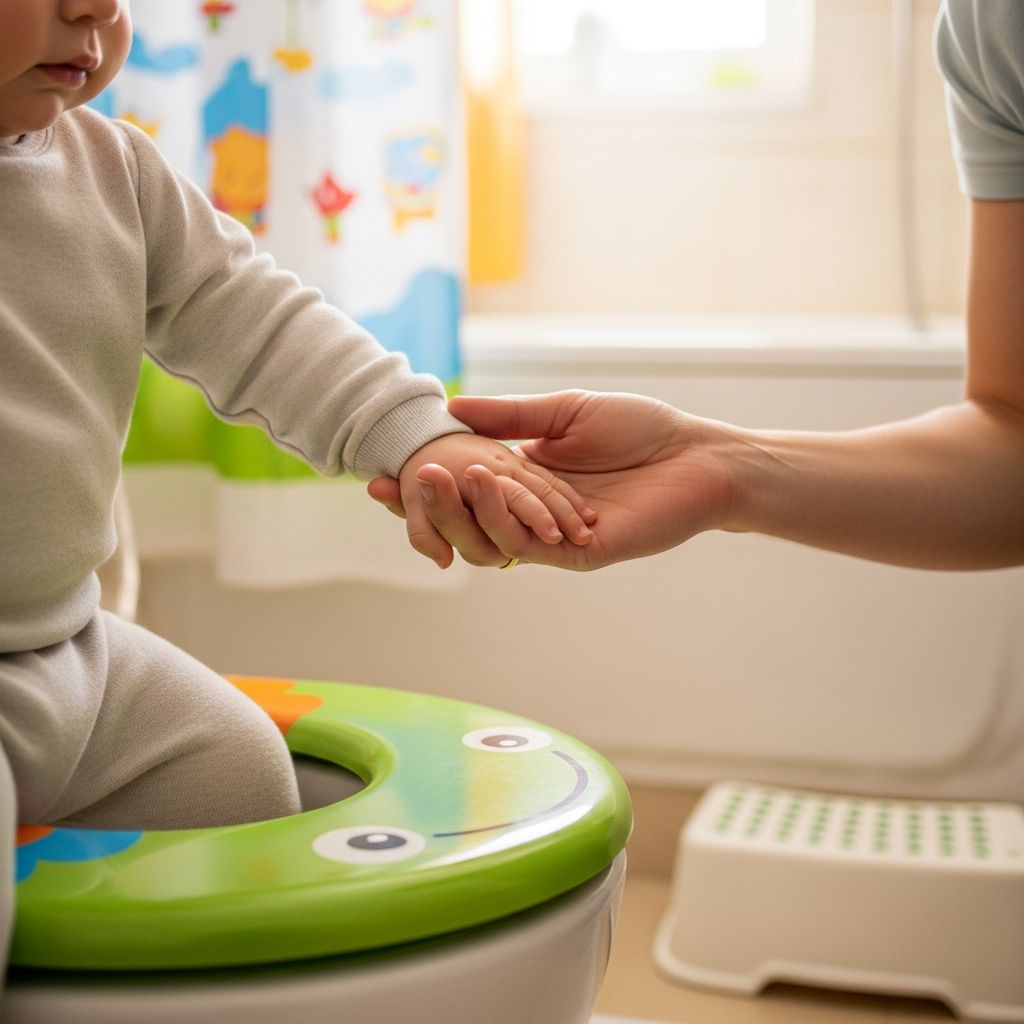
Potty training can feel like a never-ending standoff: your toddler says “no,” your patience shrinks, and every accident feels like a setback. This guide offers a calmer way forward, helping you move from daily battles to gradual, sustainable success.
Why Potty Training Feels So Hard
Using the toilet is a major developmental leap for toddlers: it requires body awareness, muscle control, communication, and a willingness to change a familiar habit. At the same time, it is one of the first areas where young children realize they can say “no” and control something adults care deeply about, which is why it so easily becomes a power struggle.
When adults are anxious for quick results, they may push too fast, talk about the potty constantly, or show visible frustration after accidents. That pressure can make a child cling harder to diapers, resist sitting on the potty, or even regress after initial success. Reframing potty training as a long-term learning process—not a race—immediately takes some of the pressure off everyone.
Check for True Readiness, Not Just Age
Age alone is a poor predictor of potty training success. Some toddlers show interest around 18 months, while others are closer to 3 years before they reliably use the toilet. Instead of the calendar, rely on signs that your child is physically, cognitively, and emotionally ready to start.
- Physical signs: Staying dry for longer stretches, predictable bowel patterns, being able to walk steadily and sit comfortably.
- Cognitive signs: Understanding simple directions, recognizing the feeling of needing to go, being able to pause play briefly.
- Emotional signs: Showing curiosity about the bathroom, wanting to imitate older children, or expressing discomfort with dirty diapers.
If several of these signs are missing, consider slowing down instead of pushing harder. A short pause now can prevent months of resistance and conflict later.
Build a Potty Plan That Fits Your Child
Every toddler’s temperament is different, so there is no single correct method. Some children respond well to intensive, short-term training, while others need a slower, low-pressure approach. The best plan is one you can stay consistent with and your child can tolerate without meltdowns.
Core elements of a simple plan
- Choose equipment wisely. A small floor potty may feel more secure to a toddler than a large toilet; a child seat with a step stool can work well for older or more confident kids.
- Introduce the potty gradually. Let your child explore it, sit on it fully clothed, and use it as a chair during story time before expecting them to use it for pee or poop.
- Set predictable potty times. Common starting points are after waking, after meals, before baths, and before bed, so the routine becomes familiar and not a surprise interruption.
- Use simple, consistent language. Pick one or two words for pee and poop and use them every time so your toddler understands what you mean.
Replacing Power Struggles With Cooperation
When toddlers sense that adults are desperate for them to use the potty, they often test that power. The goal is to remove the emotional “tug of war” by shifting from control to cooperation. Instead of forcing, bribing, or pleading, invite your child into the process as an active participant.
One practical way to do this is to offer structured choices within firm limits. Rather than asking, “Do you want to go potty?”—which invites a refusal—try, “It’s potty time. Do you want to walk or hop like a bunny to the bathroom?” The message is that the potty is non-negotiable, but your child still gets to make decisions.
- Use playful prompts rather than commands.
- Avoid long lectures after accidents; keep comments brief and neutral.
- Stay calm if your child refuses; quietly try again at the next routine time.
Positive Reinforcement That Actually Helps
Rewards can be useful when they highlight effort and build confidence, but they can backfire if they become the only reason a child uses the potty. Think of reinforcement as a temporary tool to support an internal sense of pride, not a permanent bargaining chip.
Ideas for gentle rewards
- Verbal praise that focuses on the process: “You listened to your body and hurried to the potty—that was hard work.”
- Sticker charts or simple check marks that track attempts, not just successful pee or poop.
- Small, non-food treats used sparingly, such as an extra story, a special song, or a chance to pick the next game.
If motivation seems to fade, check whether your child feels pressured or fearful. Re-emphasizing that accidents are okay and that grown-ups still love them regardless often restores willingness more effectively than adding bigger rewards.
Handling Accidents Without Shaming
Accidents are an inevitable part of toilet learning. Treating them as misbehavior can create anxiety and resistance; treating them as information—your child’s body is still learning—keeps the process emotionally safe. A neutral, efficient response works best.
Think of each accident as a practice opportunity for cleanup skills, not as a failure. Many toddlers feel empowered when they are calmly guided to participate in the solution instead of being scolded or rushed.
- Involve your child in changing clothes and putting wet items in the laundry basket.
- Use a matter-of-fact tone: “Your pants are wet. Let’s get you dry and try the potty.”
- Avoid public criticism, jokes at their expense, or comparisons to siblings or peers.
When Your Toddler Flat-Out Refuses
Refusal is common, especially with strong-willed or anxious children. The more adults push in these moments, the more firmly the child usually digs in. The key is to lower the emotional temperature while quietly protecting the routine.
If your child screams or arches away from the potty, it may help to temporarily separate sitting practice from performance expectations. Allow very short, low-pressure sits with no demand to actually pee or poop, then build on that comfort over time.
| Child behavior | What it might mean | Adult response |
|---|---|---|
| Runs away at the word \”potty\” | Associates potty time with conflict or pressure | Pause the push, reset with playful invitations and short, positive visits |
| Holds it and waits for a diaper | Feels safer eliminating in a familiar way | Offer diapers only in the bathroom, then gradually shift to the potty nearby |
| Will sit but not release | Needs more relaxation and privacy | Try books, songs, or leaving briefly while they sit safely |
Regression: When Progress Suddenly Disappears
Many families experience a phase where a previously trained child starts having frequent accidents or asks for diapers again. This regression often coincides with stressors such as a new sibling, a move, a change in childcare, or illness. In those moments, toileting skills can temporarily slide backward while the child focuses on coping with change.
Rather than viewing regression as failure, see it as a signal that your child needs extra emotional support. Keeping routines familiar, offering more one-on-one time, and reducing expectations in other areas can free up energy for potty success to return.
- Quietly increase reminders and scheduled potty trips without shaming.
- Reintroduce simple rewards and lots of encouragement for small wins.
- If accidents are constant and your child seems distressed, consider a brief return to training pants and a fresh start later.
Special Considerations: Nighttime, Constipation, and Health
Daytime dryness and nighttime dryness develop on separate timelines. Many children stay in nighttime diapers or training pants long after they are dry during the day, and this is usually related to physiological maturity, not effort or willpower. Protecting sleep and avoiding blame makes this stage less stressful.
Constipation and painful bowel movements can strongly influence potty resistance. If pooping hurts, a child may avoid the toilet entirely, hold stool, or insist on a diaper. In such cases, addressing diet, hydration, and medical advice can be just as important as behavioral strategies.
- Use waterproof mattress covers and keep spare pajamas and bedding ready to make nighttime clean-ups easier.
- Encourage fiber-rich foods and plenty of fluids; consult a health professional if stools are consistently hard or painful.
- Rule out urinary tract infections or other medical issues if your child suddenly has pain or unusual frequency.
Practical Daily Routine Example
Every family’s schedule looks different, but having a simple, repeatable structure keeps toilet learning predictable. Use the outline below as a template you can adjust to your reality, rather than a rigid set of rules.
- Morning: Potty trip right after waking; fresh underwear or training pants; brief reminder that the potty is available any time.
- During the day: Potty opportunities before leaving the house, upon returning, before and after naps, and roughly every 2–3 hours.
- Evening: Potty before bath and again before bed; talk briefly about what went well that day rather than focusing on accidents.
As your child becomes more reliable, gradually reduce scheduled trips and hand over more responsibility by asking whether they feel their body needs the potty before specific transitions.
Frequently Asked Questions
How long should potty training take?
There is wide variation, but many toddlers learn the basics of daytime toileting over several weeks, followed by months of fine-tuning. Expect a mix of successes and setbacks rather than a straight line; what matters most is a gradual trend toward more independence and fewer accidents.
Should I ever punish for accidents?
Punishment usually increases fear and secrecy without improving control. A child who worries about making adults angry may hide soiled clothes or hold in pee and poop, which can lead to discomfort or medical issues. Firm, predictable routines combined with calm, consistent responses are more effective than any punishment.
What if my toddler only cooperates with one caregiver?
It is common for children to respond differently to different adults. Instead of forcing uniform behavior right away, let the more successful caregiver model their calm tone, language, and routine for others. Over time, gently align expectations across homes and childcare settings so your child experiences similar patterns everywhere.
Is it okay to take a complete break?
Yes. If every potty attempt ends in tears or battles, a short break of a few weeks can reset the dynamic. During that pause, keep the potty visible, read occasional potty-themed stories, and talk positively about trying again when everyone is ready, including the adults.
When should I talk to a professional?
Seek guidance from a healthcare or child development professional if your child shows persistent pain, severe constipation, intense fear of the toilet that does not improve with gentle approaches, or if there is no progress at all over many months despite patient practice. Expert support can rule out medical concerns and offer individualized strategies.
Focusing on Connection Over Perfection
Toilet learning is only one part of your relationship with your child, but it can easily overshadow everything else when it turns into a chronic struggle. Returning your attention to connection—shared play, affection, and calm conversations—often reduces resistance in the bathroom as well.
Measuring success by the quality of your interactions, not just the number of dry days, helps keep this milestone in perspective. Your toddler will not remember exactly when they mastered the potty, but they will remember how safe and supported they felt while they learned.