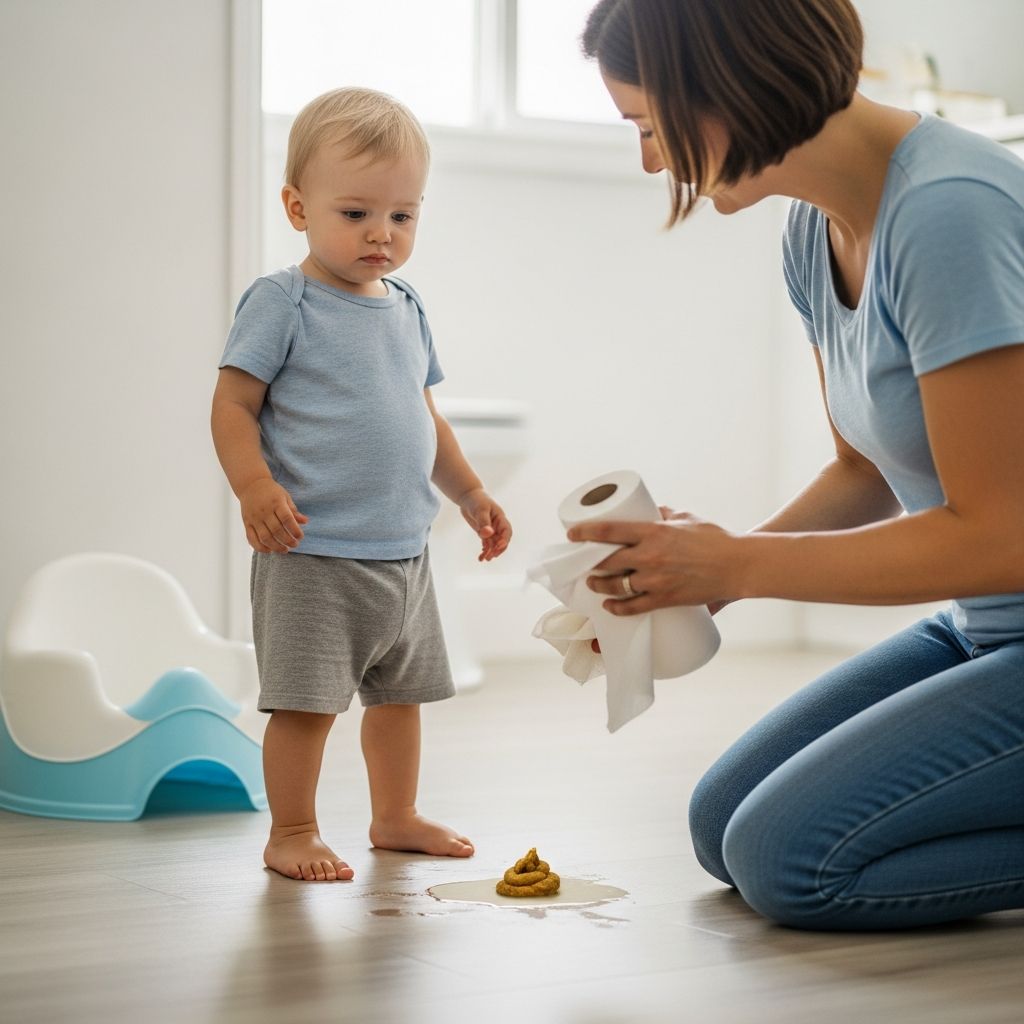
Few parenting moments feel as frustrating as walking into a room and discovering that your potty-training toddler has, yet again, pooped on the floor instead of using the toilet. It feels messy, it feels confusing, and it can easily feel personal. This guide reframes those accidents as part of the learning process and gives you practical strategies to respond calmly and effectively.
Why Floor Poops Happen (And Why It’s Not Personal)
When a toddler poops on the floor, it usually has far more to do with development than defiance. Potty training asks a young child to notice body cues, interrupt what they are doing, remember where to go, and manage clothing — a lot of steps for a still-developing brain.
Common reasons toddlers poop on the floor include:
- They feel the urge too late and simply do not make it to the potty in time.
- They are curious about their poop and want to see or touch it outside of the diaper.
- They are scared of the toilet or the sound of flushing and feel safer going elsewhere.
- They are deeply focused on play and ignore or miss their body’s signals.
- They are adjusting to big changes (new sibling, new home, daycare, etc.) and their routines are disrupted.
Understanding that these behaviors are usually developmental missteps, not calculated rebellion, helps you stay calm and consistent instead of slipping into shame or power struggles.
Staying Calm in the Moment
The hardest part of any accident is often the first 10 seconds — the moment you notice the mess. Your reaction here can either build your child’s confidence or make them feel scared, ashamed, or sneaky about bodily functions.
Try these principles when you catch or discover a floor poop:
- Neutral face, neutral voice: Take a breath before speaking so your tone stays calm and matter-of-fact.
- Simple description, no lectures: Briefly state what happened without adding judgment.
- Focus on the next step: Move straight to cleanup and a quick potty sit rather than long explanations.
- Offer reassurance: Remind your child that learning to use the potty takes practice and that you will help.
If you did yell or react strongly at some point, you can still repair the moment later by acknowledging your feelings (“I was surprised and frustrated”) and reinforcing that your child is not bad for having accidents.
A Simple Step-by-Step Response Plan
Having a set routine for what to do each time an accident happens prevents overthinking and keeps you from reacting purely out of emotion. You can adapt this step-by-step plan to fit your home and parenting style.
- Notice and name: Calmly say what you see in simple words, such as “There’s poop on the floor.” Avoid labels like “naughty” or “gross.”
- Guide to the bathroom: Gently lead your child to the bathroom and invite them to sit on the potty, even if just for a few seconds, to connect the sensation with the correct place.
- Quick cleanup with limits: Handle most of the messy cleanup yourself for hygiene, but allow your child a small, age-appropriate job (for example, handing you wipes or dropping toilet paper into the toilet).
- Reset calmly: Once everything is clean, help your child into fresh clothes and briefly remind them where poop goes: “Poop goes in the potty; your body is learning.”
- Move on: Return to normal activities without repeatedly mentioning the accident.
Using the same simple process every time reduces drama and sends a clear message that accidents are manageable, not emergencies.
Creating a Toddler-Friendly Potty Setup
Sometimes repeated floor poops are a clue that your child’s bathroom environment is not working for them. Making the setup more inviting and accessible can make a big difference.
| Challenge | What Your Toddler Might Feel | Practical Adjustment |
|---|---|---|
| Toilet seems big and scary | Fear of falling in or losing control | Use a small potty chair or a child-size seat insert with a secure step stool. |
| Feet dangle while sitting | Body feels unstable and tense | Provide a footstool so their feet rest flat, making pushing and relaxing easier. |
| Bathroom feels cold or echoey | Space feels unwelcoming or overwhelming | Add a soft rug, a familiar book basket, and warm lighting to create a cozy vibe. |
| Potty is far from play area | Hard to get there quickly during urgent moments | Keep a portable potty in or near main play spaces temporarily. |
Think of the bathroom as a mini learning station, not just a functional space. When your child feels safe and comfortable there, using the potty becomes far less intimidating.
Using Routines to Prevent Accidents
Many toddlers do not yet have the skills to recognize every urge and act on it independently. Instead of waiting for them to speak up, build predictable potty breaks into the day.
Helpful routine ideas include:
- Offering potty time right after waking, after meals, and before leaving the house.
- Pairing potty sits with existing routines, like brushing teeth or putting on pajamas.
- Using a gentle timer or “potty song” every 60–90 minutes as a reminder to check in.
- Choosing short, relaxed potty sits (one to three minutes) instead of long, pressured sessions.
Routines reduce the number of times your child must switch from intense play to urgent bathroom trips, which is a very difficult transition for many toddlers.
Talking About Poop in a Healthy Way
The way adults talk about bodily functions shapes how children feel about their own bodies. If poop is always described as disgusting or shameful, a child may try to hide it — which often leads to secretive floor accidents or withholding.
Focus on language that is:
- Neutral: Use everyday phrases that treat poop as a normal body function.
- Respectful: Avoid mocking or teasing your child for smells, mess, or timing.
- Informative: Briefly explain that poop is how the body gets rid of what it does not need from food.
- Reassuring: Emphasize that everyone poops and that learning to use the potty takes practice.
This kind of language helps your child stay open and honest about when they need to go instead of hiding or delaying.
When Your Toddler Seems to Prefer the Floor
Some children repeatedly choose a favorite spot in the house to poop — behind the couch, in a corner, next to a toy bin. This can be deeply frustrating, but it can also reveal what your child needs to feel safe.
To gently shift this pattern, you can:
- Notice any patterns in timing, location, or activities just before the accident.
- Place a portable potty closer to that “favorite” spot and encourage your child to use it when they head there.
- Offer privacy while keeping some supervision, such as standing just outside the door or curtain.
- Practice “pretend potty play” with dolls or stuffed animals so the new habit feels familiar and fun.
Instead of trying to eliminate the behavior overnight, you are gradually shifting where it happens, bringing it closer and closer to the toilet.
Praise, Rewards, and Natural Motivation
Positive reinforcement can help some toddlers stay engaged with the potty training process, but it works best when it emphasizes effort and body awareness rather than perfection. Overly elaborate reward systems can backfire by adding pressure or making kids feel like failures on “off” days.
Consider these low-pressure ideas:
- Celebrate small steps like sitting on the potty, telling you they need to go, or staying dry between routine breaks.
- Use simple verbal praise, high-fives, or a small sticker chart instead of big toys or candy.
- Talk about how proud your child might feel when they notice their body signals and get to the potty in time.
- Share age-appropriate books about potty training that show characters succeeding after practice.
The goal is to help your child feel capable and connected, not pressured or evaluated.
Handling Setbacks and Regression
Even when things are going well, life changes can trigger new floor poops and other accidents. Travel, illness, fatigue, new caregivers, or emotional stress can all temporarily disrupt progress.
When this happens:
- Assume the regression is temporary, and avoid declaring potty training a failure.
- Quietly return to more frequent, low-pressure potty breaks and extra reminders.
- Check that your child is not constipated, since hard stools can make children avoid pooping.
- Offer extra cuddles and one-on-one time, especially if big changes are happening at home.
A short stretch of going back to basics is normal and often all that is needed to get things moving in the right direction again.
When to Pause Potty Training
Sometimes the most productive step is to take a break. If every attempt ends in tears, power struggles, or daily floor poops, it may be a sign that your child is not quite ready for full training or that the current approach is too stressful.
Consider pausing if:
- Your child is consistently distressed, hiding, or fighting every potty attempt.
- Accidents are constant despite calm, consistent routines and an inviting environment.
- There are big life changes happening (new baby, move, divorce, daycare transition) and everyone seems overwhelmed.
Taking a two- to four-week break from active training, while still talking about the potty in a positive way, can help reset the emotional tone. You can then restart gently when your child shows renewed interest.
Health and Safety Considerations
Most floor poops are simply messy parts of learning, but there are times when it is wise to check in with a healthcare professional. Persistent problems may be a sign that something physical is contributing to the behavior.
Reach out to your child’s doctor if you notice:
- Very hard, painful stools, blood streaks, or frequent straining.
- Long stretches (several days) without a bowel movement, especially with discomfort or bloating.
- Sudden, extreme changes in behavior around poop, such as intense fear or pain.
- Any developmental concerns that make toilet use physically difficult.
A quick conversation can help rule out constipation, infections, or other medical issues and give you tailored guidance for your child.
FAQs: Common Questions About Toddlers Pooping on the Floor
Is my child doing this on purpose to make me mad?
It might look intentional, especially if your child seems calm or even amused, but most toddlers are not choosing accidents as a way to upset you. They may be testing boundaries, enjoying your attention, or simply following strong impulses they do not yet know how to manage. Responding calmly and consistently, without turning every incident into a big show, removes the drama and supports learning.
Should I make my child help clean up the poop?
It is reasonable for children to take a small part in cleaning up as a natural consequence, but cleanup should not feel like punishment or shaming. You might invite your child to help in simple ways, like bringing wipes, placing used paper in the trash, or wiping up a small non-hazardous spot with your guidance. The goal is to teach responsibility and body awareness, not to embarrass or disgust them.
What if my child will pee in the potty but only poops on the floor or in a diaper?
Pee and poop are separate challenges for many kids, and it is common for stool to take longer. Some children feel more vulnerable while pooping or dislike the different sensation of sitting and pushing. You can ease the transition by offering the potty during times they usually poop, using a stable seat and footrest, and allowing a preferred book or toy so they feel relaxed. Gradual steps, like pooping in a diaper while sitting on the potty, can also help bridge the gap.
How long should I expect this phase to last?
There is a wide range of normal when it comes to potty training timelines. Some toddlers settle into reliable potty use within a few weeks, while others cycle through progress and setbacks for months. Consistency, low pressure, and paying attention to your child’s cues tend to matter more than the exact calendar timeline. If you have ongoing worries, talking with a pediatrician can provide reassurance and specific next steps.
Is it okay to go back to diapers after multiple floor accidents?
Switching back to diapers does not mean you have failed; it can be a thoughtful reset if everyone is stressed and overwhelmed. If you choose to pause, explain the change in simple, non-shaming language, and keep talking positively about the potty. You can continue reading books, encouraging bathroom visits before baths, and letting your child observe older siblings using the toilet so the concept stays familiar.
Helping Your Child — and Yourself — Through the Messy Middle
Potty training is less like flipping a switch and more like hiking a trail with ups, downs, and a few muddy patches along the way. Floor poops feel big in the moment, yet they are usually a temporary and workable part of the process. Each time you respond with calm, clear guidance, you teach your child that their body is nothing to be ashamed of and that problems can be solved together.
With patience, a supportive setup, and realistic expectations, the occasional pile on the floor will eventually become just another “remember when…” story from the toddler years — and your child will carry forward not only toilet skills, but also a deeper sense of trust and confidence in your relationship.