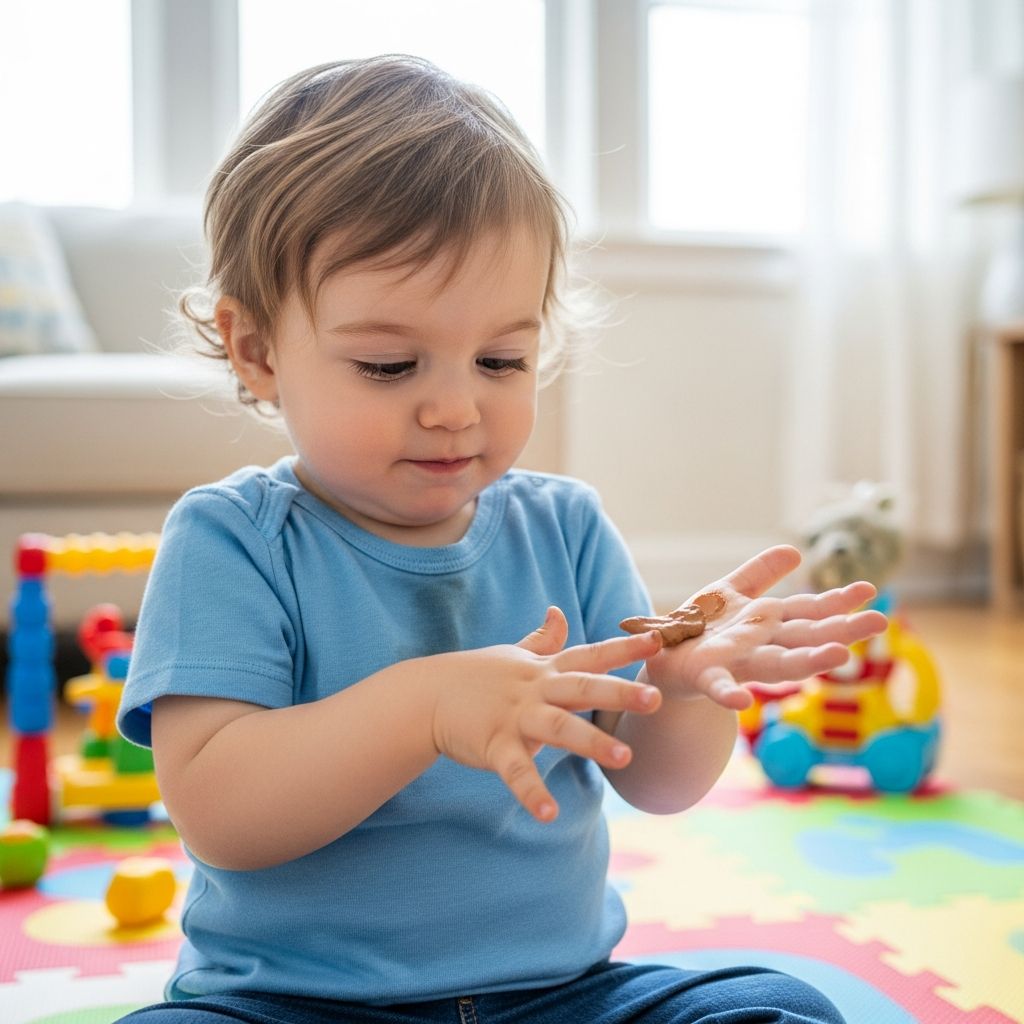
Finding your toddler covered in feces can feel shocking, disgusting, and overwhelming. Yet for many young children, touching or smearing poop is a phase of exploration, not a sign that anything is fundamentally wrong. This article offers a calm, respectful roadmap to understand the behavior, clean up without shame, and guide your child toward healthier habits.
Why Toddlers Sometimes Play With Poop
From an adult perspective, poop is dirty and off-limits. For toddlers, it can be another strange and fascinating substance they are driven to explore. Young children learn through hands-on sensory experiences, using touch, sight, and smell to understand their world.[10]
| Common Toddler Reasons | What It Can Mean |
|---|---|
| Curiosity about their body | They notice poop coming out and want to investigate what it is. |
| Sensory exploration | They are exploring textures, temperatures, and cause-and-effect. |
| Boredom | A child in a crib or their room with little to do may experiment with what is available.[10] |
| Seeking attention | They discover that poop play predictably brings big reactions from adults. |
| Discomfort | Constipation, diarrhea, or a sore bottom can lead them to touch or remove stool. |
In most otherwise healthy toddlers, touching or smearing poop is a behavior choice tied to curiosity, boredom, or a desire for sensory experiences, not an automatic sign of serious medical or psychological problems.[10]
First Priorities: Safety and Hygiene
Once you discover the mess, prioritize health and safety before you address behavior. Feces can carry germs that cause illness, so gentle but thorough cleaning is important.
- Stay as calm as you can. Take a breath before responding so you do not yell or shame.
- Move your child to a clean area. Carry them to the bathroom or near a sink if possible.
- Use disposable gloves if available. This protects you from germs and can make you feel less stressed.
- Wash your child’s hands first. Use warm water and soap, scrubbing for at least 20 seconds.
- Clean skin gently. Use mild soap and water or baby wipes, paying attention to skin folds.
- Disinfect solid surfaces. Clean and then disinfect crib rails, doorknobs, and other hard surfaces following product instructions.
- Wash fabrics in hot water. Bedding, clothing, or stuffed animals may need a hot-water wash and, if possible, a hot dry cycle.
Try to keep your words simple and neutral as you clean. You can say something like, “Poop makes us sick. We keep poop in the toilet,” without criticizing your child’s character or intentions.
Responding Without Shame
The way adults react in the moment can shape how a toddler feels not just about poop, but about their body and toilet learning in general. Harsh reactions may lead to fear, secrecy, or withholding stools, which in turn can cause constipation and more toileting problems.
What to Say in the Moment
Use short, clear, kind messages:
- “Poop is not for playing. Poop goes in the toilet.”
- “I’m going to help you get clean now.”
- “Hands are for toys, books, and hugs; not for poop.”
Avoid statements that label your child as “gross” or “naughty.” Focus on the behavior (“playing with poop”), not who your child is.
Why Staying Calm Matters
- Emotional safety: Toddlers depend on adults to regulate big feelings; calm responses help them feel secure.
- Prevention of power struggles: Intense reactions can accidentally make the behavior more interesting or powerful.
- Healthier toilet learning: Children who feel shamed about stool may start resisting using the toilet or holding in stool, which can contribute to constipation and fecal soiling.
Looking Beneath the Behavior
Once the immediate mess is handled, the next step is becoming a detective: Why might this be happening now, in this way, with this child?
Check for Physical Discomfort
Fecal play can sometimes be linked to medical or comfort issues. While a one-time episode may simply be curiosity, consider physical factors if it recurs:
- Constipation: Hard, painful stools can make children more likely to resist toileting and touch or remove stool.
- Diarrhea or frequent stools: More opportunities for contact and more discomfort can increase the chance of smearing.
- Rashes or irritation: A sore bottom may lead to more touching as the child tries to relieve discomfort.
If your child is having frequent accidents, hard or very large stools, or seems to be holding in stool, discuss this with your pediatrician. Persistent soiling or stool leakage can be a sign of constipation-related fecal soiling that needs medical and behavioral care.
Sensory and Developmental Factors
For some children, especially those with developmental differences, poop play may serve a sensory or communication function.
- Sensory seeking: The texture, warmth, or smell of feces may provide strong sensory input they are drawn to, particularly if they crave touch-based experiences.
- Sensory avoidance: Other children are highly bothered by the feeling of a dirty diaper and grab stool in an effort to remove the discomfort.
- Communication challenges: A child who cannot easily use words may use smearing as a way to signal distress, boredom, or need for attention.
Fecal smearing is reported more often in some children with autism or significant developmental delays, where it may relate to sensory processing differences and limited communication options. If you have broader concerns about your child’s communication, play, or social interaction, it is appropriate to bring these to your pediatrician as well.
Practical Strategies to Prevent Repeat Episodes
Once you have a sense of possible triggers, you can make simple changes to reduce opportunities for poop play and help your child succeed.
1. Adjust the Environment
- Plan more frequent diaper checks. Change diapers promptly after bowel movements to limit time with accessible stool.
- Use clothing as a barrier. During nap or bedtime, consider using onesies, pajamas with zippers on the back, or snug-fitting layers that are harder to remove.
- Remove extra temptations. If boredom is a factor, offer safe bedtime toys or board books instead of leaving your child with nothing to do.
2. Offer Sensory Alternatives
If your child seems to enjoy the sensory aspects of poop (squishing, smearing), give them more appropriate materials during the day:
- Finger paints or washable paint
- Playdough or modeling clay
- Foam, shaving cream (supervised), or slime
- Water play with cups, sponges, and funnels
When your child uses these materials, notice and name what they are doing: “You like squishing the playdough! It’s soft and sticky.” This helps them connect their sensory needs with acceptable outlets.
3. Strengthen Connection and Attention
Some children discover that poop play guarantees a big reaction and focused attention. To reduce that motivation:
- Provide regular positive attention: Build in small moments of one-on-one play, shared reading, or cuddling each day.
- Use neutral clean-up: Aim for low-drama responses when accidents occur, while cheering for positive behaviors like using the potty or telling you they are dirty.
- Notice and praise helpful behavior: “You told me you needed a diaper change—that’s so helpful!”
4. Support Gentle Toilet Learning
For a toddler nearing potty-training age, poop play may signal growing awareness of their body. The American Academy of Pediatrics encourages a relaxed, child-centered approach to toilet training to avoid power struggles and constipation.
- Invite your child to sit on the potty at regular times, such as after meals.
- Let them watch you empty poop from the diaper into the toilet and flush, saying, “Poop goes in the toilet.”
- Celebrate small steps (sitting on the potty, telling you they pooped), not just full success.
- Avoid forcing, shaming, or punishing around the potty; these increase anxiety and resistance.
When Behavior Is Persistent or Intense
Occasional curiosity-driven poop play is common in toddlerhood. However, certain patterns suggest it is time to seek professional guidance.
Signs You Should Talk to a Professional
- The smearing occurs frequently over weeks or months, despite consistent prevention efforts.
- Your child seems extremely preoccupied with feces, using it to decorate walls, toys, or their body on a regular basis.
- There are signs of chronic constipation, painful stools, or stool leakage into underwear (which can indicate fecal soiling).
- You have concerns about your child’s development (speech delays, limited eye contact, repetitive behaviors, or sensory extremes).
- There are major stresses at home (family conflict, big transitions) and you notice many new behavior changes.
Your pediatrician can screen for medical causes such as constipation or other gastrointestinal issues, provide guidance on toilet training, and help decide if referrals to specialists (such as a developmental pediatrician, child psychologist, or occupational therapist) are needed.
Teaming Up With Helpers
If the behavior is complex or tied to developmental or sensory differences, multiple professionals may work together to support your child:
- Pediatrician: Rules out medical problems, treats constipation, and coordinates referrals.
- Gastroenterologist: Evaluates persistent gastrointestinal symptoms.
- Child psychologist or behavior specialist: Helps analyze what happens before (triggers) and after the behavior and designs a plan to reduce it.
- Occupational therapist: Assesses sensory processing and suggests appropriate sensory activities and environmental adjustments.
Behavior specialists often use an ABC approach: identifying the Antecedent (what happens before), the Behavior itself, and the Consequence (how adults respond). This makes it easier to design consistent, effective strategies.
Supporting Yourself as a Parent
Poop play presses many emotional buttons for adults—disgust, embarrassment, anger, even shame. Taking care of your own feelings is essential so that you can show up calmly for your child.
- Normalize it for yourself: Many parents quietly navigate this phase; it is not a reflection of your worth or your child’s future.
- Prepare a clean-up kit: Keep wipes, gloves, trash bags, and disinfectant in one place to reduce overwhelm when surprises happen.
- Talk to a trusted friend or professional: Sharing the story with someone supportive can reduce isolation and judgment.
- Notice progress: Keep track of small improvements (fewer incidents, quicker clean-ups, better communication) to remind yourself that your efforts matter.