Toddlers between 1 and 3 years old experience rapid growth and development, making proper nutrition crucial for building strong bones, muscles, and immune systems. This guide draws from the latest federal recommendations to help parents provide balanced meals that fuel energy needs while establishing positive eating behaviors.
Understanding Toddler Nutritional Needs
During the toddler years, children require approximately 1,000 to 1,400 calories daily, depending on activity levels and size. Key nutrients include iron for brain development, calcium for bones, protein for tissue repair, and healthy fats for energy and absorption of vitamins. The 2025-2030 Dietary Guidelines emphasize whole foods like proteins, full-fat dairy, fruits, vegetables, and healthy fats over processed items.
Unlike infants, toddlers transition from milk-heavy diets to family foods, but their small stomachs mean frequent, smaller meals are ideal—three meals and two snacks daily. Hydration comes primarily from water, with milk limited to support appetite for solids.
Building a Toddler-Friendly Food Pyramid
Focus on variety to meet micronutrient needs. Prioritize:
- Proteins: Eggs, poultry, fish, beans, and nut butters for growth (1.2-1.6g per kg body weight recommended).
- Dairy: Full-fat options like yogurt and cheese for calcium and vitamin D.
- Fruits and Vegetables: Whole forms for fiber and vitamins, aiming for half the plate.
- Whole Grains: Oats, quinoa, and brown rice for sustained energy.
- Healthy Fats: Avocados, seeds, and olive oil to aid brain development.
Avoid ultra-processed foods, added sugars (zero recommended for under 4), and excessive sodium to prevent obesity and chronic issues.
Daily Serving Recommendations
Use this table to gauge appropriate portions for 1-3-year-olds, adjusted for individual needs.
| Food Group | Daily Servings (1-2 years) | Daily Servings (2-3 years) | Examples |
|---|---|---|---|
| Grains | 3 oz equivalents | 4 oz equivalents | 1/2 slice whole wheat bread, 1/4 cup oatmeal |
| Vegetables | 1 cup | 1-1.5 cups | 1/2 cup cooked carrots, handful spinach |
| Fruits | 1 cup | 1-1.5 cups | 1 small apple, 1/2 banana |
| Dairy | 2 cups | 2 cups | 1 cup whole milk, 1/2 cup yogurt |
| Protein | 2 oz equivalents | 2-4 oz equivalents | 1 oz chicken, 2 tbsp hummus |
These align with guidelines promoting nutrient-dense choices.
Meal Planning and Sample Menus
Plan meals around family schedules, involving toddlers in simple prep to build interest. Sample day for a 2-year-old:
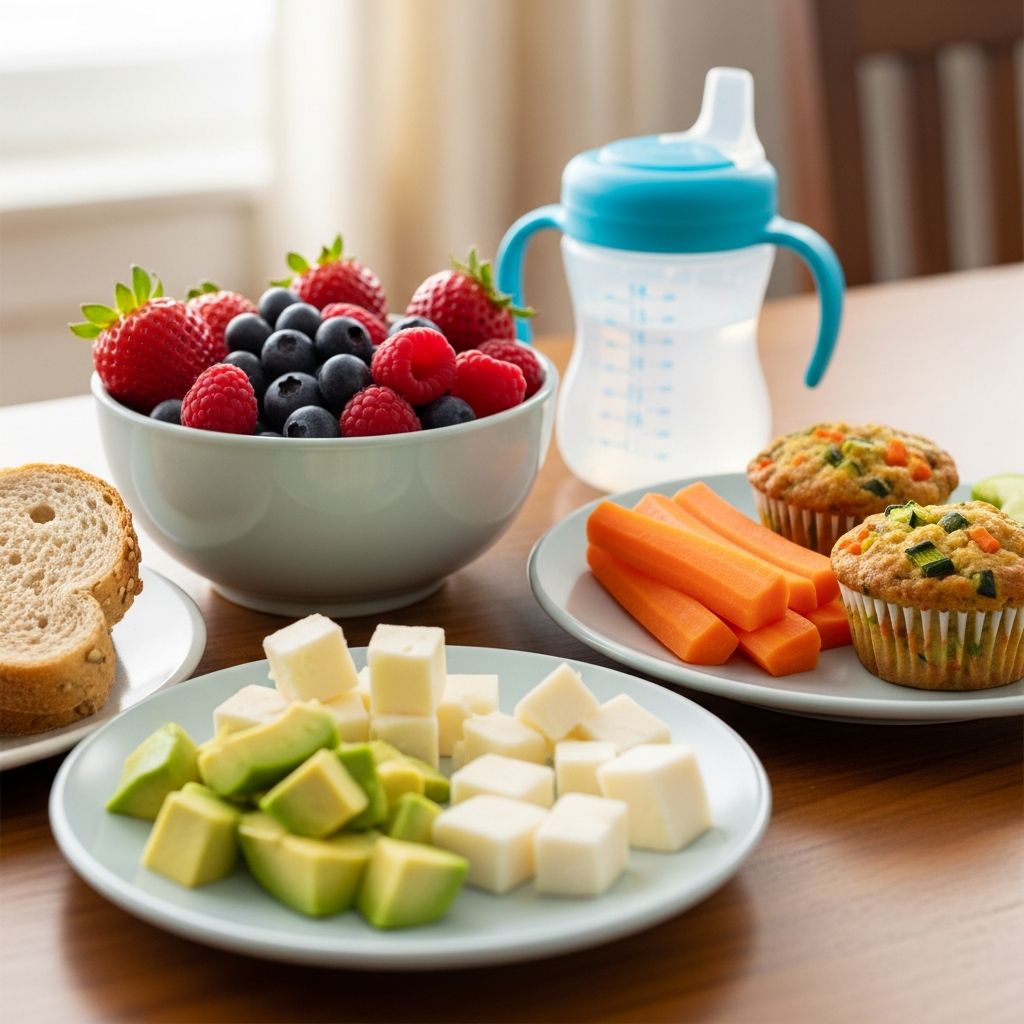
- Breakfast: Oatmeal with mashed banana and a splash of whole milk.
- Morning Snack: Full-fat yogurt with diced berries.
- Lunch: Mini turkey meatballs, steamed broccoli, and quinoa.
- Afternoon Snack: Apple slices with almond butter.
- Dinner: Baked salmon, sweet potato wedges, and peas.
- Evening: Small glass of whole milk or cheese stick.
Rotate proteins and produce weekly for diversity. Batch-cook grains and chop veggies ahead for ease.
Navigating Picky Eating Challenges
Picky phases are common as toddlers assert independence. Offer new foods 8-10 times patiently; pair with favorites. Maintain routine mealtimes without screens to focus attention. If refusal persists, consult a pediatrician to rule out sensory issues or deficiencies.
Texture matters: Start smooth, progress to mashed, then chopped. For allergies, introduce peanuts and eggs around 6 months under guidance, but for toddlers, monitor reactions.
Fluids and Hydration Essentials
Water is the go-to drink: 2-4 cups daily. Whole milk provides 16-24 oz, switching from formula by 12 months. Skip juice, sugary beverages, or caffeine to protect teeth and weight.
Special Considerations for Growth Spurts
Active toddlers may need extra calories from fats and proteins. Vegetarians can use eggs, dairy, legumes; vegans require fortified foods or supplements for B12, iron, and omega-3s. Always prioritize whole foods per guidelines.
Foods to Limit or Avoid
- Added sugars: None for under 4 years.
- Highly processed snacks: Chips, sodas.
- Choking hazards: Whole grapes, hot dogs (cut properly).
- Raw honey, unpasteurized items: Botulism risk.
- Excessive cow’s milk: Over 24 oz suppresses appetite.
Encouraging Healthy Habits Long-Term
Model balanced plates, eat together, and let toddlers self-feed to develop skills. Praise efforts over cleanliness. These practices align with guidelines supporting lifelong patterns.
Frequently Asked Questions
When should toddlers stop using sippy cups?
By age 2-3, transition to open cups to promote oral development and reduce over-reliance.
Is full-fat dairy safe for toddlers?
Yes, recommended until age 2 for brain growth; switch to low-fat after if no issues.
How to handle food jags?
Continue offering variety without pressure; jags typically last 1-2 weeks.
What if my toddler won’t eat vegetables?
Hide in smoothies/sauces initially, then expose repeatedly in fun shapes.
Are snacks necessary?
Yes, every 2-3 hours to maintain energy without overeating at meals.
Monitoring Growth and When to Seek Help
Track via well-child visits using growth charts. Signs needing advice: Persistent refusal leading to weight loss, extreme selectivity, or family history of deficiencies. Pediatricians can recommend fortified foods or tests.
This approach ensures toddlers thrive, setting foundations for health into adolescence.
References
- New dietary guidelines emphasize whole foods and child nutrition — Contemporary Pediatrics. 2026-01-07. https://www.contemporarypediatrics.com/view/new-dietary-guidelines-emphasize-whole-foods-and-child-nutrition
- What the New Dietary Guidelines Mean for Your Child’s Health — Healthy Kids Happy Kids. 2026-01-13. https://healthykidshappykids.com/2026/01/13/new-dietary-guidelines-childrens-health/
- Dietary Guidelines for Americans, 2025-2030 — NCIT. 2026. https://ncit.org/dietary-guidelines-for-americans-2025-2030/
- Dietary Guidelines for Americans, 2020-2025 — USDA. 2020-12. https://www.dietaryguidelines.gov/sites/default/files/2020-12/Dietary_Guidelines_for_Americans_2020-2025.pdf
- HHS, USDA release updated dietary guidelines — American Heart Association. 2026-01-07. https://www.aha.org/news/headline/2026-01-07-hhs-usda-release-updated-dietary-guidelines
- New dietary guidelines include AAP recommendations — American Academy of Pediatrics. 2026. https://publications.aap.org/aapnews/news/34132/New-dietary-guidelines-include-AAP-recommendations
- Kennedy, Rollins Unveil Historic Reset of U.S. Nutrition Policy — USDA. 2026-01-07. https://www.usda.gov/about-usda/news/press-releases/2026/01/07/kennedy-rollins-unveil-historic-reset-us-nutrition-policy-put-real-food-back-center-health