Between 16 and 24 months, toddlers experience a remarkable surge in language abilities, often reaching a spoken vocabulary of around 200 words while understanding far more. This period marks the transition from babbling to meaningful communication, laying the foundation for complex expression later on.
Understanding the Language Explosion
The brain’s rapid neural connections during this age fuel an explosion in word learning. Toddlers typically comprehend 5 times more words than they produce, grasping instructions, routines, and object names long before uttering them fluently.
By 18 months, most follow simple directives like ‘give me the ball’ without cues. At 24 months, this evolves to two-step commands, such as ‘pick up the toy and bring it here,’ showcasing growing cognitive-linguistic links.
Key Speech Milestones by Age
| Age Range | Spoken Words | Comprehension | Key Phrases |
|---|---|---|---|
| 16-18 Months | 10-50 words (e.g., mama, dada, ball) | Points to body parts; follows 1-step directions | Single words with gestures |
| 18-21 Months | 50-100 words | Identifies pictures; understands actions like ‘sit’ | Early two-word combos (e.g., more milk) |
| 21-24 Months | 200+ words | Two-step directions; simple questions | 2-3 word sentences (70% understandable) |
These benchmarks vary; some toddlers hit 200 words by 24 months, others slightly later, but consistent progress signals healthy development.
From Babble to Words: The Progression
Early on, around 12-16 months, vocalizations mimic speech rhythms with melodic babbles like ‘ba-ba’ evolving into true words such as ‘woof’ for dog. Repetition reinforces consistency—praise ‘woof’ for any animal to cement meaning.
- Imitates sounds: Animal noises, songs, rhymes.
- Uses intonation for demands or attention.
- Combines gestures with emerging words for clarity.
By 18 months, ‘no’ and ‘mine’ dominate, reflecting independence. Vocabulary swells with names for people, objects, and actions, often imitating adult speech accurately.
Comprehension Outpaces Production
Toddlers point to named body parts (eyes, nose), fetch requested items from other rooms, and anticipate routines from cues like ‘bath’ time. They enjoy books, naming pictures and sustaining attention for 5-10 minutes with guidance.
This receptive language boom supports active vocabulary growth, as understood words become spoken ones through modeling and repetition.
Daily Strategies to Boost Vocabulary
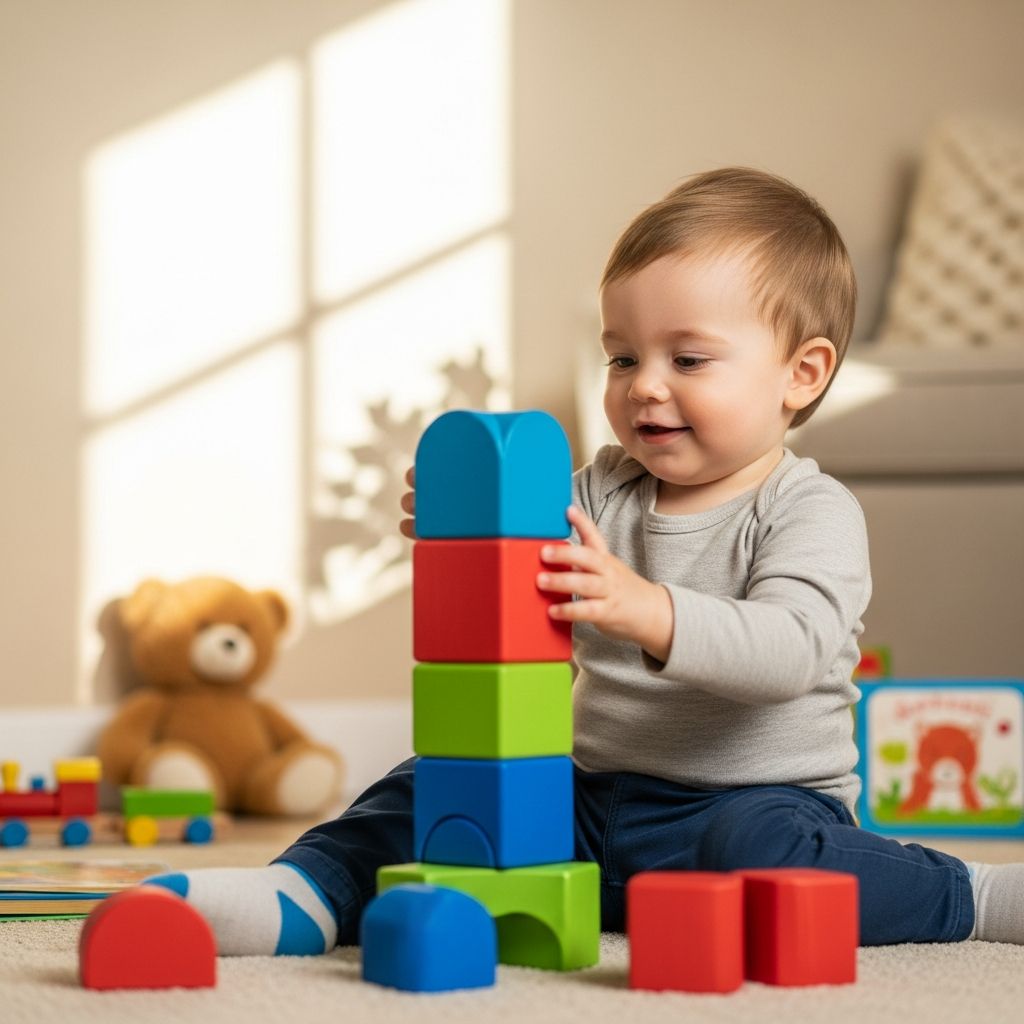
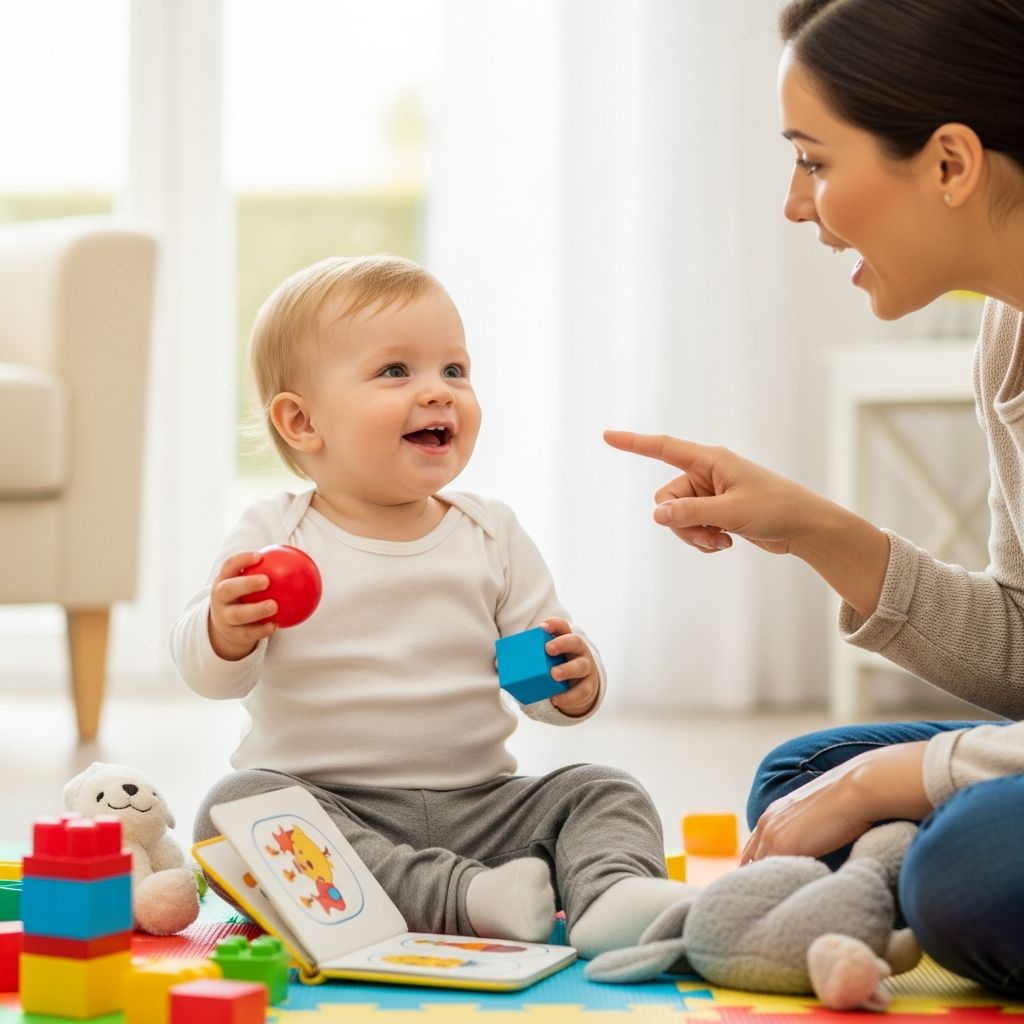
Parents play a pivotal role. Speak clearly in short sentences, expand on toddler utterances—turn ‘dog’ into ‘big dog running.’ Narrate actions: ‘You’re stacking blocks high!’
- Read daily: Point to pictures, ask ‘Where’s the cat?’ Familiar books build recognition and story retelling.
- Sing and rhyme: Pause for fill-ins in ‘Wheels on the Bus’ to encourage participation.
- Pretend play: Model phrases like ‘feed baby milk’ with dolls.
- Expand pronouns: Use ‘my turn,’ ‘your ball’ during play.
- Respond to questions: Simple answers to ‘What’s that?’ foster curiosity.
Incorporate gestures to pair with words, enhancing multi-word ideas. Repeat favorites endlessly—toddlers thrive on familiarity.
Play-Based Learning for Language
Toys spark expression: Balls prompt ‘throw ball,’ vehicles elicit ‘car go.’ Group play teaches turn-taking in ‘conversation,’ even if parallel.
Outdoor adventures add nature words: ‘Look, red leaf falling.’ Household items like spoons become props for ‘stir soup.’ This immersive approach accelerates the 200-word milestone.
Spotting Potential Delays Early
While variation is normal, consult a professional if by 24 months your child uses fewer than 50 words, no two-word phrases, or loses skills. Other red flags: no pointing, limited eye contact, or disinterest in communication.
- Late talkers may catch up with intervention.
- Monitor patterns, not perfection—clarity improves gradually.
- Bilingual homes: Milestones similar, but mixing languages is typical.
Effective gesturing or emotional cues often predict normal speech emergence.
Nutrition and Environment’s Role
A nutrient-rich diet supports brain growth—omega-3s from fish, iron from meats aid neural pathways for language. Limit screens; interactive talk trumps passive viewing.
Common Myths Debunked
Myth: Boys talk later than girls. Individual pace matters more than gender.
Myth: Correct every mispronunciation. Model correctly instead to avoid frustration.
Myth: More words mean smarter. Quality interactions build foundations over quantity.
Frequently Asked Questions
Is 200 words exact by 24 months?
No, ranges 50-250 are typical; track growth trajectory.
What if my 18-month-old says few words?
Boost with talking, reading; seek advice if stagnant.
How to handle tantrums over ‘mine’ phase?
Acknowledge feelings, model sharing: ‘My turn next.’
Does TV help language?
Minimal benefit; live interaction is superior.
When does three-word speech start?
Often post-24 months, understandable 70% by 30.
Long-Term Benefits of Early Language
Strong 16-24 month foundations predict literacy success, social skills, and academic readiness. Invest now for lifelong communicators.
References
- Speech and language development (from 12 to 24 months) — Great Ormond Street Hospital. 2023. https://www.gosh.nhs.uk/conditions-and-treatments/procedures-and-treatments/speech-and-language-development-12-24-months/
- Speech and Language Development: 24 to 30 Months — Children’s Minnesota. 2022. https://www.childrensmn.org/images/pdf/speech24to30.pdf
- A Quick Guide to Your Toddler’s Speech and Language Development – 18 to 24 Months — Eastern Ontario Health Unit. 2024. https://eohu.ca/en/my-health/a-quick-guide-to-your-toddler-s-speech-and-language-development-18-to-24-months
- Language Development Between 12 and 24 Months of Age — Alberta Health Services. 2023. https://myhealth.alberta.ca/Health/Pages/conditions.aspx?hwid=ue5419
- Communication Milestones: 19 to 24 Months — American Speech-Language-Hearing Association (ASHA). 2024. https://www.asha.org/public/developmental-milestones/communication-milestones-19-to-24-months/