Many toddlers go through a phase where their favorite foods seem to be crackers, cheese, and plain pasta. While these foods can fit into a balanced diet, they do not offer much fiber, which is critical for healthy digestion and long-term wellness. A fiber-rich diet helps keep your toddler regular, supports gut health, and lays the foundation for lifelong eating habits.
This guide explains what fiber is, how much your toddler needs, and how to easily add kid-friendly, high-fiber foods to everyday meals and snacks—without turning mealtimes into a battle.
Why Fiber Matters So Much in the Toddler Years
Fiber is a type of carbohydrate that the body cannot fully break down. Instead of being absorbed, it travels through the digestive tract and helps keep everything moving along smoothly. For toddlers, this can mean fewer episodes of painful constipation and less straining on the potty.
Beyond regularity, fiber can also help stabilize energy by slowing how quickly sugars from food enter the bloodstream. That can translate into fewer dramatic hunger swings and more even moods throughout the day. Over time, a higher-fiber pattern of eating can support a healthy weight, a strong immune system, and a thriving gut microbiome.
Types of Fiber: Soluble vs. Insoluble
When planning meals, it helps to understand that not all fiber behaves the same way. Soluble fiber absorbs water and forms a gel-like texture in the gut, which softens stools and slows digestion. This type of fiber is found in foods like oats, beans, lentils, apples, and pears.
Insoluble fiber does not dissolve in water. Instead, it adds bulk to the stool and helps food move more quickly through the intestines. Whole grains, many vegetables, and fruit skins are rich in this type of fiber. Toddlers benefit from a mix of both, but most families naturally cover both types by offering a variety of fruits, vegetables, and whole grains.
How Much Fiber Does Your Toddler Need?
Health professionals often use a simple guideline: start with your child’s age in years and add about five grams to estimate a daily fiber goal. For example, a two-year-old might aim for roughly seven grams of fiber per day, while a four-year-old might need around nine grams.
This is a rough estimate, not a strict rule. Every child is different, and some kids tolerate more or less fiber better than others. The aim is not perfection but a gradual increase toward more fiber-rich foods spread throughout the day, always paired with plenty of fluids to keep stools soft.
Fiber-Rich Foods Toddlers Are Likely to Accept
When toddlers reject vegetables but love snack foods, it can feel impossible to get enough fiber into their diet. The key is to build on what they already like and gently upgrade familiar favorites rather than replacing everything at once.
- Soft fruits: pears, apples with peel (thinly sliced or grated), berries, bananas, peaches, and plums.
- Vegetables: carrots, peas, sweet potatoes, broccoli florets, pumpkin, and butternut squash.
- Whole grains: oatmeal, whole grain bread, brown rice, quinoa, whole wheat tortillas, and barley.
- Legumes: lentils, black beans, chickpeas, and kidney beans, well-cooked and mashed or served as finger foods.
- Nuts and seeds (age-appropriate forms): ground flaxseed, chia seeds, smooth nut butters spread thinly on bread or stirred into yogurt.
Sample Fiber Content of Toddler-Friendly Foods
This table offers approximate fiber amounts to help you imagine how daily intake can add up. Exact values vary by brand and preparation, so use these as general estimates, not precise numbers.
| Food | Approximate Portion for Toddlers | Approximate Fiber (grams) |
|---|---|---|
| Cooked oatmeal | 1/2 cup | 2–3 g |
| Small apple with skin, finely sliced | 1 small apple | 3–4 g |
| Pear with skin, diced | 1/2 medium pear | 2–3 g |
| Cooked lentils | 1/4 cup | 3–4 g |
| Steamed broccoli florets | 1/2 cup | 2–3 g |
| Whole grain bread | 1 small slice | 2–3 g |
| Chia seeds | 1 tablespoon (mixed into food) | 4–5 g |
| Green peas, cooked | 1/4–1/2 cup | 2–4 g |
High-Fiber Breakfasts That Start the Day Right
Breakfast is often the easiest time to add fiber, because many toddler-friendly foods like fruits and oats already lend themselves well to morning meals. Aim to pair a fiber source with a bit of protein and healthy fat so your toddler stays satisfied until snack time.
- Warm oat bowl: Cook oats until very soft and stir in mashed banana or pear, a sprinkle of ground flaxseed, and a splash of milk or fortified plant drink.
- Fruit-and-yogurt bowl: Mix plain yogurt with diced skin-on apples or berries and a spoonful of unsweetened whole-grain cereal or oat clusters for crunch.
- Whole grain toast toppers: Serve thin slices of whole grain toast topped with smooth nut butter and a thin layer of mashed berries or applesauce.
- Make-ahead mini muffins: Bake mini muffins with whole wheat flour, grated carrot or zucchini, and fruit puree as a sweetener for an easy grab-and-go option.
Fiber-Focused Lunches They Will Actually Eat
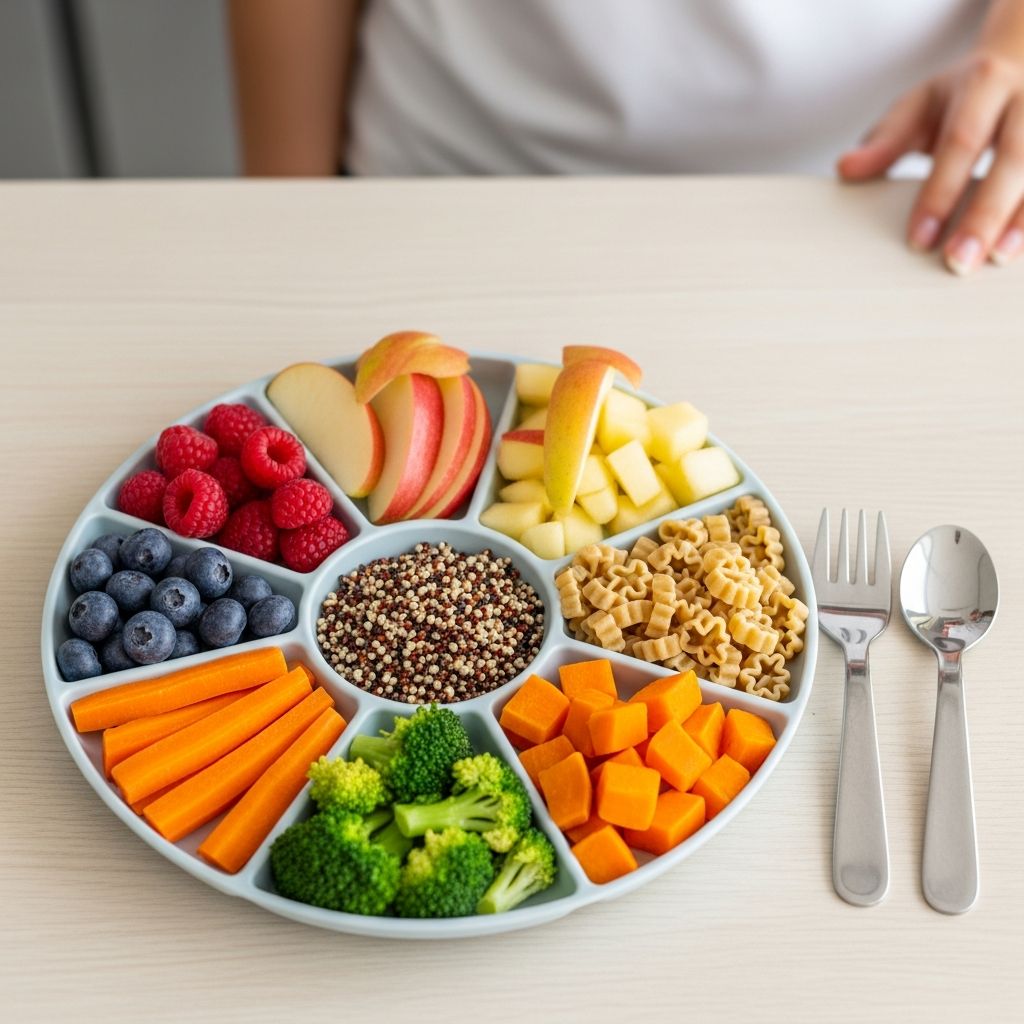
Lunchtime can be rushed, especially on daycare or preschool days, so think of fiber as something you scatter across several small items rather than trying to pack it all into one dish. Finger foods and compartment-style plates offer a natural way to showcase variety.
- Rainbow snack plate: Offer whole grain crackers, hummus or mashed beans, cucumber sticks, cherry tomatoes cut into quarters, and a few berries or sliced grapes.
- Soft grain bowls: Combine brown rice or quinoa with finely chopped steamed vegetables and small pieces of chicken or tofu, lightly seasoned.
- Bean and cheese roll-ups: Spread refried beans on a whole wheat tortilla, sprinkle with cheese, roll, and slice into pinwheels for easy nibbling.
- Soup-and-bread combo: Serve a mild vegetable or lentil soup with a side of whole grain bread fingers for dipping.
Dinner Ideas to Round Out Daily Fiber
Dinner does not need to be complicated to include fiber. Simply swapping refined grains for whole grains and ensuring at least one vegetable is on the plate can make a meaningful difference over time.
- Veggie-loaded pasta: Use whole wheat or legume-based pasta and toss with a sauce that includes pureed carrots, tomatoes, and finely chopped spinach.
- Soft taco night: Fill small whole wheat tortillas with seasoned black beans, avocado, grated cheese, and finely chopped lettuce or tomato.
- Baked sweet potato boats: Serve baked sweet potato halves lightly mashed with a little butter or olive oil and top with a spoonful of beans or lentils.
- One-pan tray dinners: Roast bite-sized pieces of chicken or fish alongside carrot coins, broccoli florets, and cubes of potato or squash, all seasoned gently.
Smart High-Fiber Snacks for Little Appetites
Snacks are powerful opportunities to add fiber, especially for toddlers who prefer nibbling to big meals. Focus on simple, minimally processed options that are easy to prepare and easy for small hands to manage.
- Fresh fruit slices or berries paired with cheese sticks or yogurt.
- Whole grain crackers with hummus, guacamole, or bean dip.
- Homemade trail mix with low-sugar whole grain cereal and a few raisins (for older toddlers who can chew well).
- Chilled overnight oats or chia pudding served in small cups.
Transitioning Gently: How to Increase Fiber Without Tummy Upset
Jumping from a very low-fiber pattern to a very high-fiber one overnight can sometimes cause gas, bloating, or discomfort for toddlers. A gradual approach gives their digestive system time to adapt and reduces the chances of resistance at the table.
- Increase fiber slowly over one to two weeks, adding a little more fruit, vegetables, or whole grains each day.
- Offer water regularly throughout the day so the added fiber can work properly and stools remain soft.
- Keep portions small and repeat foods often so they feel familiar rather than overwhelming.
Dealing with Constipation: Practical Food Strategies
If your toddler already struggles with constipation, diet changes can help, but they should be part of a broader plan that may include guidance from your pediatrician. Reducing very low-fiber, processed foods and adding more fluid and fiber is often a helpful first step.
- Offer high-water fruits such as pears, peaches, and plums along with fiber-rich whole grains.
- Limit excessive cheese, refined crackers, and white bread, which can worsen constipation for some children.
- Encourage active play, as movement stimulates the digestive tract and can make bathroom trips more productive.
Making High-Fiber Foods Fun and Toddler-Friendly
Toddlers are more likely to try new foods when they look appealing and feel playful rather than pressured. Small changes in presentation can transform basic ingredients into something your child wants to taste.
- Use cookie cutters to create fun shapes from whole grain toast, sandwiches, and melon slices.
- Serve vegetables and fruits on skewers made from child-safe sticks or as rainbow patterns on the plate.
- Involve your toddler in simple tasks, like washing produce, stirring batter, or sprinkling seeds on top of oatmeal.
Balancing Fiber with Other Nutrients
Fiber is important, but it is only one piece of the nutrition puzzle. Toddlers also need adequate protein, healthy fats, iron, calcium, and a variety of vitamins and minerals. A plate that combines fiber-rich foods with good sources of protein and fat will better support growth and development.
For instance, pairing whole grain bread with nut butter and fruit, or serving lentil soup with a side of cheese and avocado, creates meals that are more satisfying and nutritionally complete. Strive for variety across the day rather than perfection at every single meal.
Frequently Asked Questions About Fiber and Toddlers
Can toddlers get too much fiber?
Yes, it is possible for toddlers to get more fiber than their bodies can comfortably handle, especially if their intake increases very rapidly. Signs may include gas, bloating, or a sudden decrease in appetite. To avoid this, introduce new high-fiber foods slowly, make sure your child drinks enough water, and discuss any concerns with a healthcare provider.
Do I need fiber supplements for my toddler?
Most toddlers can meet their fiber needs through a varied diet that includes fruits, vegetables, whole grains, and legumes. Supplements are rarely necessary and should only be used under the guidance of a pediatrician or pediatric dietitian. Focus first on small, realistic changes to everyday meals and snacks before considering supplemental products.
What if my child refuses vegetables?
Many toddlers go through a strong preference phase where vegetables are the first thing pushed aside. You can still boost fiber by leaning on fruits, beans, lentils, whole grains, and seeds while continuing to offer small portions of vegetables without pressure. Over time, gentle exposure—seeing vegetables on the table, helping prepare them, or tasting tiny bites—can slowly increase acceptance.
How can I track fiber intake without obsessing?
You do not need to count every gram to support your toddler’s health. Instead, think about how many meals and snacks include at least one fiber-rich food, such as fruit, vegetables, beans, or whole grains. If most eating occasions include one or two of these, your child is likely moving in the right direction.
Is juice a good way to add fiber?
Fruit juice, even 100% juice, typically contains much less fiber than whole fruit and can add a lot of sugar in a small volume. Offering whole fruits or smoothies that blend the entire fruit, including the pulp, is usually a better option for increasing fiber. If your child drinks juice, keep portions small and focus on water and milk or fortified plant drinks as the main beverages.
Simple Steps to Get Started This Week
Creating a higher-fiber pattern of eating for your toddler does not require an overnight kitchen overhaul. Choose one or two changes that feel manageable, like switching to whole grain bread, adding fruit to breakfast most days, or offering beans twice a week. Once those habits feel automatic, add another small change.
- Pick one breakfast idea and repeat it several times this week.
- Add a fruit or vegetable to at least one snack each day.
- Replace one refined grain (such as white rice or plain pasta) with a whole grain version.
By building fiber gradually into meals and snacks your toddler already likes, you support their digestion, overall health, and relationship with food—without turning the table into a battleground.