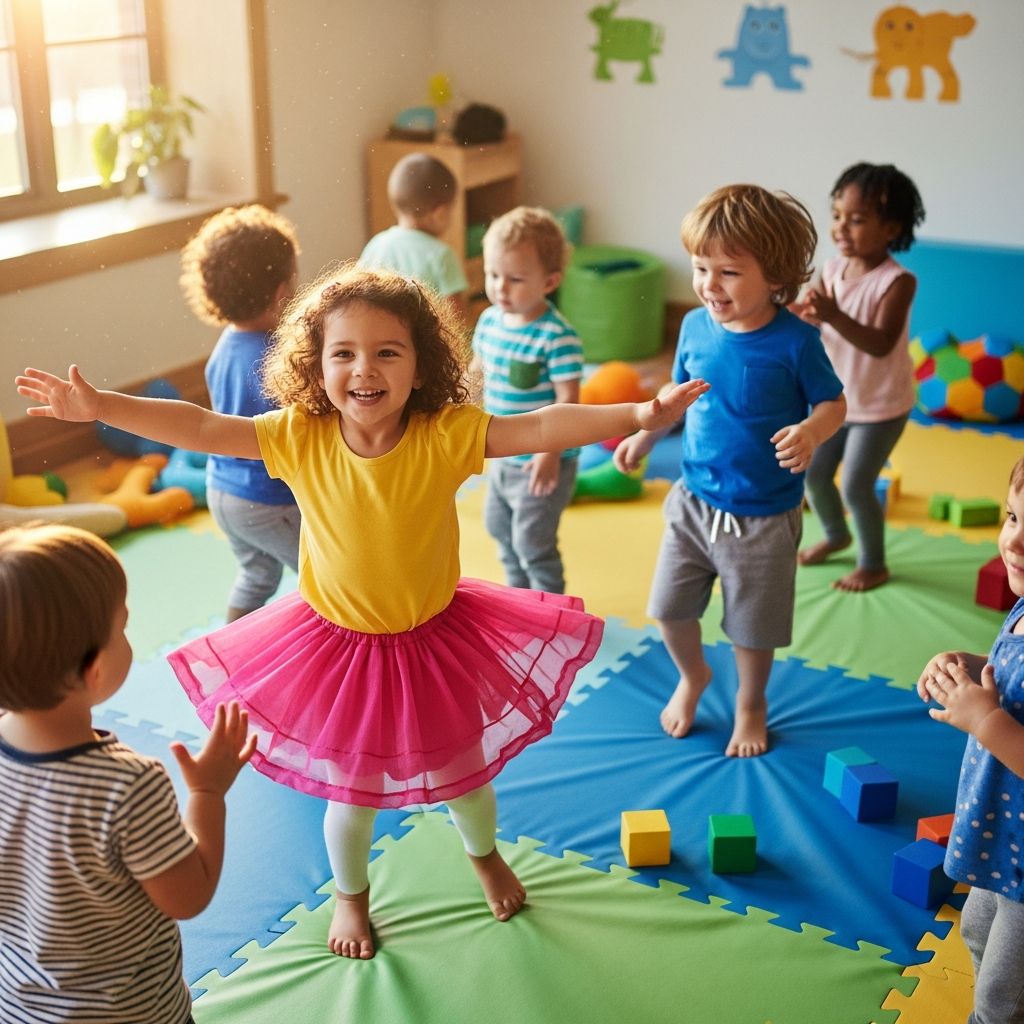
Turning up the music and dancing with your toddler might seem like a spontaneous burst of fun, but it serves as a powerhouse for their holistic development. These lively sessions build essential skills that shape their physical abilities, emotional world, and social interactions in profound ways.
Physical Foundations Built Through Rhythm
Dance activities lay the groundwork for robust physical health in toddlers. Engaging in movements like jumping, spinning, and clapping strengthens muscles, improves coordination, and enhances balance, all critical during these formative years.
Regular participation leads to better heart and lung function, increased flexibility, and heightened spatial awareness. Toddlers who dance frequently demonstrate superior gross motor skills, enabling them to navigate their environment with greater confidence and agility.
- Gross Motor Enhancement: Activities such as stomping and twirling develop large muscle groups, supporting milestones like running and climbing.
- Fine Motor Refinement: Clapping rhythms and finger movements to beats sharpen smaller muscle control.
- Balance and Posture: Shifting weight during dances corrects posture and stabilizes core strength.
These gains extend beyond the dance floor, aiding everyday tasks and reducing injury risks as children explore actively.
Emotional Regulation Via Expressive Movement
One of the most remarkable aspects of toddler dance is its role in emotional mastery. Young children often struggle to articulate feelings, but dance provides a non-verbal channel to process joy, frustration, or excitement.
Movement synchronized with music allows toddlers to release pent-up energy, transforming potential tantrums into constructive expression. Slow, soothing dances calm overstimulation, while upbeat tracks channel hyperactivity into positive outlets.
Research underscores how such activities boost endorphin levels, promoting happiness and resilience more effectively than many other exercises. Parents observe toddlers shifting from cranky moods to cheerful states after just a few minutes of rhythmic play.
| Emotion | Dance Response | Benefit |
|---|---|---|
| Frustration | Stomping or shaking | Energy release without words |
| Joy | Twirling and jumping | Amplified positive feelings |
| Overstimulation | Slow swaying | Calming and re-centering |
This emotional toolkit fosters intelligence, helping children recognize and manage feelings early on.
Social Skills Blooming in Group Grooves
Dance parties, whether at home or in classes, cultivate vital social competencies. Toddlers learn to share space, mimic peers, and take turns during group rhythms, building foundational friendship skills.
Studies show children in group movement activities form lasting bonds 55% more readily, as shared experiences create empathy and cooperation. Even shy toddlers open up through motion, bypassing verbal barriers.
These interactions teach patience, listening, and leadership naturally. For instance, following a partner’s lead in a simple routine mirrors real-life teamwork.
Cognitive Sparks from Musical Patterns
Beyond body and heart, dance ignites the mind. Memorizing steps and sequences hones memory, focus, and pattern recognition—key cognitive pillars.
Exposure to diverse rhythms introduces cultural awareness, enhancing listening skills and problem-solving. Toddlers repeating dance phrases process information faster, laying tracks for academic success.
- Memory Boost: Recalling routines strengthens neural pathways.
- Attention Span: Sustained engagement with beats improves concentration.
- Creativity: Improvising moves sparks innovative thinking.
Cognitive growth accelerates as music and movement integrate brain functions holistically.
Deepening Family Connections Through Shared Steps
Parent-toddler dance sessions forge unbreakable bonds. Physical closeness and eye contact during dances build trust and security, vital for emotional development.
Touch and synchronized movement soothe distress, much like rocking, validating the child’s world and encouraging exploration. Mommy-and-Me classes amplify this, blending fun with structured bonding.
These moments create joyful memories, boosting parental confidence in nurturing growth. Families report stronger communication and mutual understanding post-dance.
Practical Ways to Launch Your Dance Revolution
Incorporating dance need not be complicated. Start with household tunes, progressing to themed parties or classes.
- Home Setup: Clear space, play favorites, join in freely for 10-15 minutes daily.
- Themed Sessions: Animal dances or color-matched moves add variety.
- Class Exploration: Seek age-appropriate groups for social immersion.
- Props Fun: Scarves or balls enhance sensory engagement.
Consistency yields compounding benefits; even short bursts transform routines profoundly.
Long-Term Impacts: A Lifetime of Movement Joy
The seeds planted in toddler dance parties yield enduring fruits. Early movers exhibit sustained physical fitness, emotional steadiness, and social ease into later years.
Habits formed now promote lifelong activity, countering sedentary risks. Creative expression persists, fueling artistic pursuits or stress relief.
Parents gift not just fun, but tools for a vibrant, resilient future.
Frequently Asked Questions
What age is best for starting dance parties?
Toddlers from 18 months thrive, as they balance basic motor control with boundless energy. Adapt to their cues for maximum engagement.
Do I need professional training to dance with my toddler?
No—authenticity trumps perfection. Your enthusiasm inspires them more than polished steps.
How often should we dance for optimal benefits?
Aim for 3-5 sessions weekly, 10-20 minutes each. Short, frequent bursts fit busy schedules effectively.
Can dance help with toddler tantrums?
Yes, redirecting energy through movement often de-escalates frustration, teaching regulation gently.
Are there risks to unstructured dancing?
Minimal—supervise to prevent bumps, ensuring a safe, padded area promotes worry-free fun.
References
- Unleash the Magic: Why Toddlers Need Dance in Their Lives — York Stage School. 2023-05-15. https://www.yorkstageschool.com/post/unleash-the-magic-why-toddlers-need-dance-in-their-lives-and-how-it-can-transform-their-world
- Explore The Amazing Benefits of Dancing for Toddlers — Rockstar Academy. 2024-02-10. https://www.rockstaracademy.com/blog/benefits-of-dancing-for-toddlers
- The Benefits of Mommy & Me Dance Classes for Toddlers and Parents — North Pointe Dance. 2023-11-20. https://northpointedance.com/the-benefits-of-mommy-me-dance-classes/
- Health Benefits of Dance for Preschoolers — Creative World School. 2024-01-08. https://creativeworldschool.com/health-benefits-of-dance-preschoolers/
- Dancing With Your Baby: the joy (and other benefits) — Michael Hogan Psychology. 2015-07-20. https://michaelhoganpsychology.com/2015/07/20/dancing-with-your-baby-the-joy-and-other-benefits-of-dancing-with-your-baby/
- Why a Toddler dance class? — Tappy Toes. 2023-09-12. https://www.tappytoes.com/choosing-an-activity/
- Benefits of Music, Art and Dance for Toddlers and Preschoolers — Kiddipedia. 2024-03-05. https://kiddipedia.com.au/benefits-of-music-art-and-dance-for-toddlers-and-preschoolers/