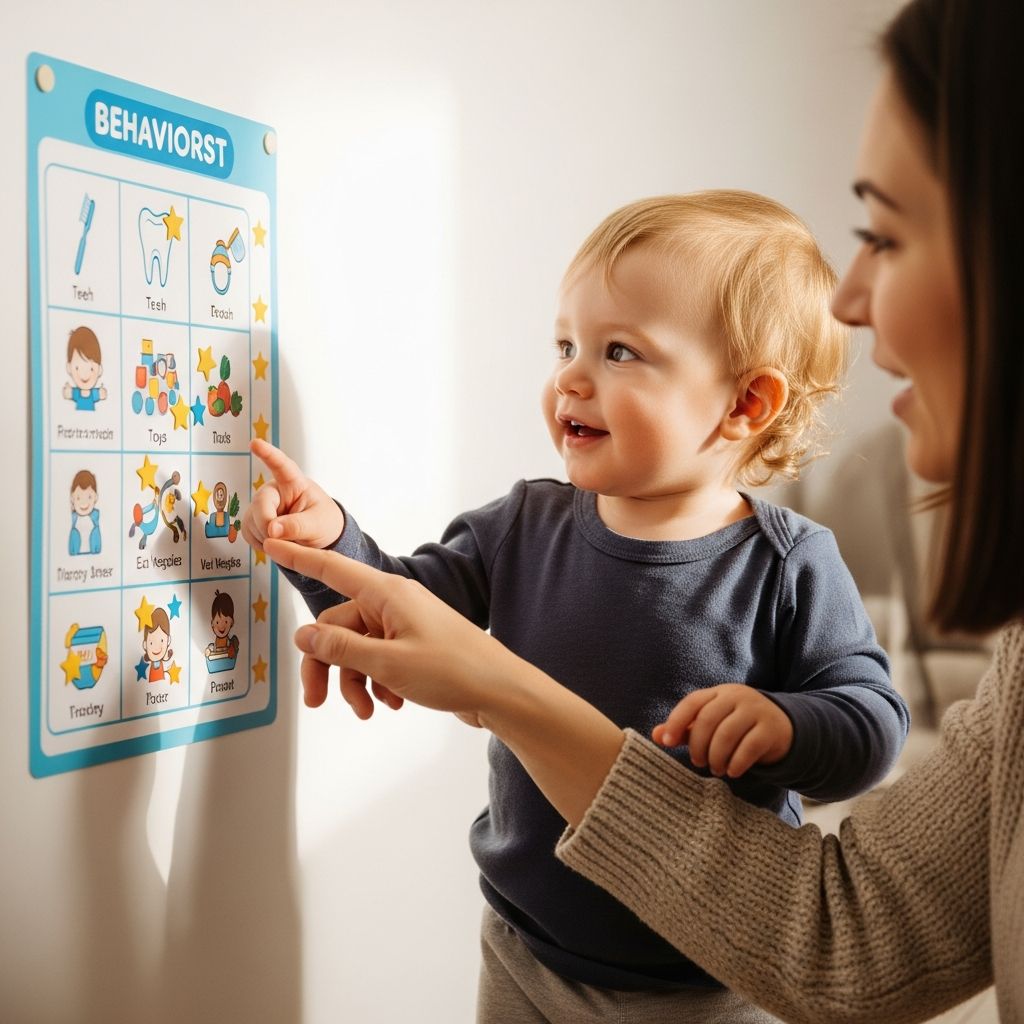
Behavior charts can be a helpful visual tool for toddlers when they are used thoughtfully, paired with warm connection, and focused on teaching rather than controlling. Instead of treating a chart as a bribe, it can become a roadmap that helps your child understand what is expected and feel proud of small steps forward.
Why Behavior Charts Appeal to Toddlers
Toddlers are visual learners. They understand pictures, colors, and simple patterns far better than long explanations, which is why a behavior chart can be easier for them to follow than a long list of rules.
When a chart is simple, colorful, and positive, it gives your child a concrete way to see progress, and it gives you a structure for noticing and praising the behaviors you want to grow.
- Charts make expectations visible instead of hidden in adult minds.
- Stickers or marks give immediate feedback, which toddlers need.
- Seeing progress builds confidence and motivation over time.
Rethinking Rewards: Motivation vs. Bribery
Many parents worry that behavior charts are the same as bribery: “If you do this, you get that.” The reality is more nuanced. Bribery usually happens in the moment of crisis to stop a meltdown, while a well-designed chart is a planned system that teaches consistency and responsibility.
The goal is not to make your child dependent on stickers forever. Instead, the chart should gradually shift focus from external rewards (stickers, small prizes) to internal rewards (pride, mastery, feeling grown-up).
| Aspect | Thoughtful Behavior Chart | Bribery |
|---|---|---|
| Timing | Planned in advance, explained calmly. | Offered in the heat of the moment to stop a behavior. |
| Focus | Teaches routines, effort, and skills. | Focuses on quick compliance only. |
| Tone | Encouraging, collaborative, and warm. | Desperate, pressured, or transactional. |
| Long-term goal | Phase out rewards and build intrinsic motivation. | Maintain control and avoid conflict. |
Is Your Toddler Ready for a Behavior Chart?
Behavior charts tend to work best for older toddlers (roughly ages two and up), because younger toddlers may not yet connect a small action with a delayed reward. That said, developmental readiness matters more than age on the calendar.
Ask a few questions before you begin. If you answer “yes” to most of them, your child is likely ready to experiment with a simple chart:
- Can my child follow at least one or two simple, one-step instructions?
- Does my child show delight in stickers, marks, or visual symbols of achievement?
- Can my child wait even briefly for something (for example, until after a song or a short activity)?
- Am I prepared to stay consistent with the chart for at least a couple of weeks?
Step-by-Step: How to Start a Toddler Behavior Chart
Launching a chart works best when you start small and make it feel like a fun, shared project rather than a punishment system. Think of it as inviting your toddler into a team game where both of you want the same outcome: more cooperation and less chaos.
1. Choose One Tiny, Clear Goal
The biggest mistake parents make is trying to fix everything at once. For a toddler, that is overwhelming and confusing. Instead, choose one specific behavior or routine to work on first.
Good first goals for toddlers include:
- Putting pajamas in the laundry basket each night.
- Coming to the table when called for meals.
- Putting one or two toys away before moving to the next activity.
- Sitting on the potty at agreed times (even if they do not go yet).
Frame the goal positively: focus on what you want the child to do rather than what you want them to stop doing. “Put toys in the bin” lands better than “stop making a mess.”
2. Design a Simple, Visual Chart Together
Your chart does not have to be fancy. A sheet of paper with boxes, a whiteboard, or a printed grid can all work as long as your toddler can clearly see and reach it. Let them help choose the colors, stickers, or symbols.
- Use large boxes or circles for each opportunity to practice the behavior.
- Choose one symbol (a star, a smiley face, a heart) and stick with it.
- Keep the total number of spaces manageable—a week or even just a few days at first.
Involving your toddler in decorating or setting up the chart gives them ownership, which translates into better cooperation.
3. Explain the Chart in Toddler-Friendly Language
Before you ever use the chart in real time, walk your child through how it works, using very simple phrases and lots of gestures. You might point to a picture of a toy bin and then point to a star box to show that when toys go in, the chart gets a star.
Keep it light and enthusiastic. The goal is for your child to see the chart as a fun tool that celebrates effort, not as a scoreboard of failure.
4. Pair the Chart with Immediate, Warm Praise
The real power of a chart is that it nudges you to notice and name the behavior you want more of, right when it appears. Every time your toddler moves toward the goal, respond quickly.
- Describe what you see: “You put your cup on the counter all by yourself.”
- Show visible excitement when you add a sticker or mark.
- Offer physical affection (a hug, high-five, or fist bump) alongside the chart mark.
The sticker or check mark is only part of the reward. Your positive attention and approval are often what motivates your child most.
5. Decide on Reasonable Rewards (If Any)
Some toddlers are satisfied with the sticker itself and your excitement. Others respond well to small, predictable rewards after a certain number of marks. These rewards can be simple and low-cost, especially if they center on quality time or special privileges.
Possible toddler-friendly rewards include:
- Choosing the family song for a short dance party.
- Picking a special bedtime story.
- Extra five minutes of one-on-one play with a caregiver.
- Getting to be the “helper” for a simple task (holding the grocery list, pushing the laundry basket).
Try to connect the reward loosely to the behavior, but do not worry about making it a perfect match. The main idea is to say, “Your effort matters and is noticed.”
Examples of Toddler Behavior Chart Focus Areas
Behavior charts can be used for many areas of toddler life, but they are especially helpful with routines and repeated small skills. Here are common areas where a chart can ease stress and help your child feel successful.
- Morning routine: Getting dressed, placing pajamas in the basket, brushing teeth with help.
- Mealtimes: Coming to the table, trying one bite of a new food, staying seated for a short period.
- Clean-up time: Putting a set number of toys into a bin before moving on.
- Potty learning: Sitting on the potty at certain times, washing hands afterward.
- Bedtime: Going to bed with one comfort item, staying in bed after lights out (within age-appropriate limits).
Common Pitfalls (and How to Avoid Them)
Even a well-intentioned behavior chart can backfire if it is too complicated, too negative, or used without empathy. Recognizing common traps ahead of time will help you keep the tool gentle and effective.
Too Many Goals at Once
When a chart tries to track every possible behavior—sharing, listening, potty, teeth, bedtime, chores—it becomes cluttered and stressful. Your toddler will lose track of what matters, and you will struggle to stay consistent.
Focus on one to three behaviors at most. Once your child regularly succeeds without much prompting, you can retire that goal and add a new one.
Withdrawing Stickers or Using Shame
It may be tempting to remove a sticker when your child has a tough moment, but that practice usually backfires. Toddlers are still learning self-control and are easily discouraged. Taking away a symbol of their earlier success can create shame and reduce motivation.
Instead of erasing progress, pause and calmly remind your child that they can earn future marks by trying again. The chart should tell the story of what went well, not punish them for what did not.
Ignoring Underlying Needs
Behavior charts are not magic. If your child is overtired, hungry, overwhelmed, or struggling with a major transition, no sticker will change that reality. In those moments, the priority is meeting the underlying need, not enforcing the chart.
When behavior suddenly worsens, ask yourself whether something in your child’s environment or routine has shifted before tightening expectations.
Blending Charts with Connection-Based Parenting
Charts are only one piece of the discipline puzzle. Toddlers need connection, safety, and predictable routines even more than they need any visual system. A behavior chart works best when it is grounded in a strong relationship.
- Spend daily one-on-one time playing at your child’s level without directing the activity.
- Use simple, respectful language even when you set limits.
- Offer plenty of chances to move, explore, and make age-appropriate choices.
When your child feels seen and secure, they are far more likely to cooperate with the framework that a chart provides.
Adjusting and Phasing Out the Chart
Behavior charts are meant to be temporary scaffolding, not a permanent fixture on your wall. As your toddler matures and routines become habits, you will gradually rely less on external symbols and more on internal motivation and routine memory.
When to Adjust the Chart
Consider tweaking your system if:
- Your child frequently maxes out the chart with no effort (it may be too easy).
- Your child rarely earns any marks (the goal may be too hard or unclear).
- The routine or challenge has changed (for example, starting preschool or dropping naps).
Adjustments can include reducing the number of steps, breaking one big task into two smaller ones, or lowering the threshold required for a reward.
How to Phase Out Gently
When your toddler consistently succeeds at a behavior with minimal reminders, celebrate the progress. Name the skill: “You are so good at putting your shoes on the shelf now. We do not need the chart for that anymore.”
You can then:
- Gradually increase the number of marks needed for a reward.
- Shift from material rewards to social rewards (praise, privileges, responsibilities).
- Retire the old chart and only introduce a new one if there is a fresh, specific skill to practice.
Sample Toddler Morning Routine Chart (Conceptual)
Below is a simple, conceptual example of how you might structure a morning routine chart for a toddler. Adapt the specific steps to your household and your child’s developmental stage.
| Step | Visual Icon | What Earns a Sticker |
|---|---|---|
| Take off pajamas | Picture of pajamas or shirt | Child removes pajamas and puts them on the bed or in the basket. |
| Get dressed | Picture of a shirt and pants | Child participates in putting clothes on (even with help). |
| Brush teeth with caregiver | Toothbrush icon | Child comes to the sink and lets caregiver brush. |
| Put shoes by the door | Shoe icon | Child places shoes in the designated spot (with guidance). |
Each completed step can earn one sticker, mark, or magnet. After a certain number (for example, five stickers), your child can choose a small reward, such as picking the song you play on the drive or helping to press the elevator button.
Frequently Asked Questions about Toddler Behavior Charts
Are behavior charts harmful for some children?
For most toddlers, a short-term, positive behavior chart used with warmth and flexibility is not harmful. However, a chart can feel hurtful if it is used to embarrass a child, constantly highlights failures, or is paired with harsh criticism.
If your toddler seems more anxious, clingy, or ashamed after you introduce a chart, step back. You may need to simplify expectations, remove public comparisons (for example, charts at school that compare kids), or pause the system altogether.
What if my toddler refuses to participate?
Resistance is information, not a sign that your child is “bad.” A toddler who avoids the chart may feel overwhelmed, confused, or pressured. They may also be in a developmental stage where autonomy (“No!”) is particularly strong.
Try lowering the bar, using fewer steps, or making the chart more playful. If refusal continues and the power struggles escalate, set the chart aside and focus on connection and gentle routines without external tracking for a while.
Can I use a chart for hitting or other aggressive behavior?
Behavior charts are generally better suited for building routines and positive habits than for handling unsafe behaviors like hitting, biting, or throwing. In moments of aggression, toddlers need immediate, calm boundaries and help regulating big feelings.
You can still use a chart to reinforce positive alternatives—for example, “gentle hands,” using words, or asking for help—but a chart should never replace supervision, safety limits, and emotional coaching.
How long should I keep a behavior chart going?
There is no universal timeline, but many families find that a few weeks are enough to establish a simple habit. If a chart lingers for months without change, it may lose its power and become visual noise on the wall.
Check in with yourself regularly: Is this still helping reduce stress and support learning, or has it become another task you resent? If it is the latter, either revise the system or gently retire it.
Do siblings need separate charts?
Separate charts are usually more effective, because each child has unique strengths, challenges, and developmental stages. A shared chart can create unhealthy comparisons and competition.
Even if the charts look similar, tailor the goals and rewards to each child’s needs. Make sure each child has private moments of praise and recognition, rather than constantly evaluating them against one another.
Using Charts as Tools, Not Tests
A toddler behavior chart is most powerful when it is treated as a flexible teaching tool instead of a rigid test your child must pass. The chart should reflect your child’s efforts, your family values, and your commitment to learning together over time.
When used in this spirit—gently, playfully, and with realistic expectations—behavior charts can reduce daily friction, highlight small victories, and give your toddler a sense of growing capability, all while keeping your relationship at the center of discipline.