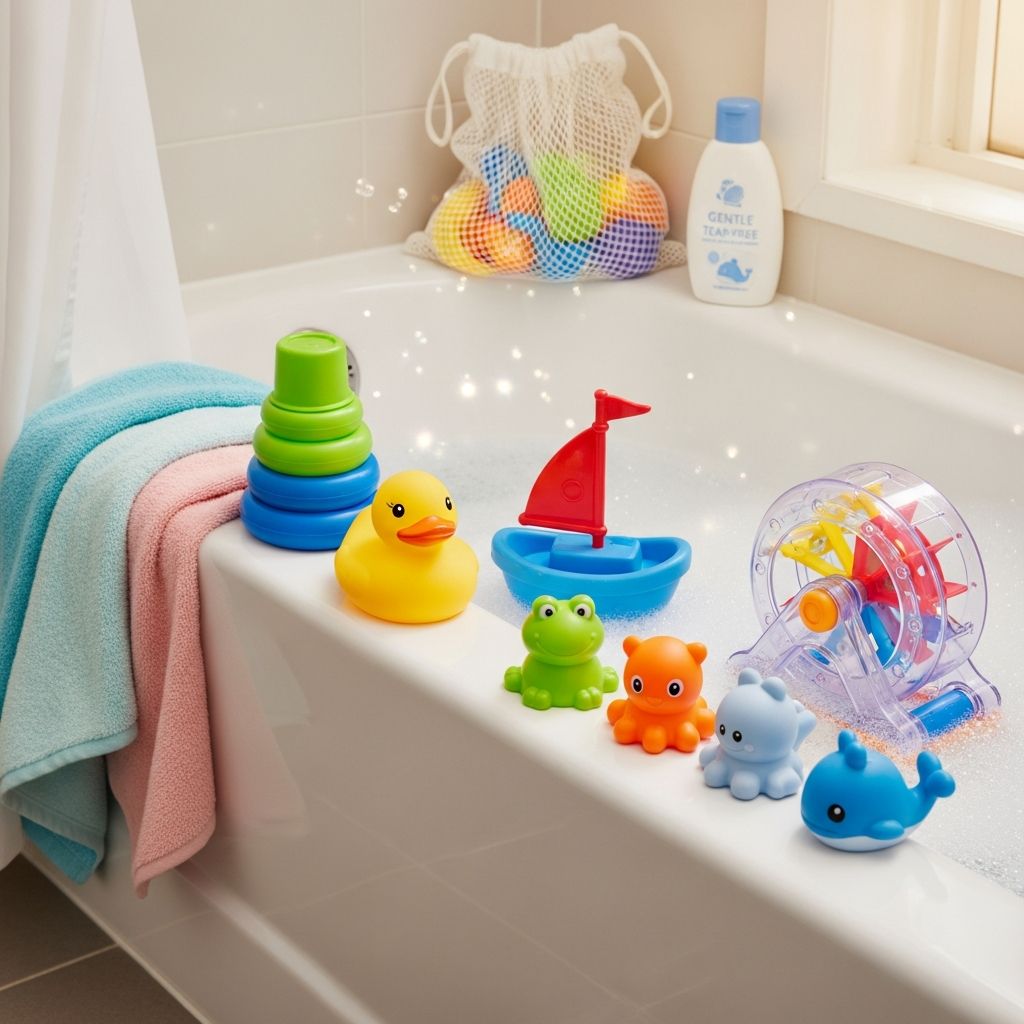
Bath time with a toddler can be a joyful daily ritual or a stressful struggle. The right bath toys turn a simple wash into a playful, soothing, and educational experience that toddlers look forward to.
Why Bath Toys Matter for Toddlers
Bath toys are more than colorful distractions; they are tools that support your child’s physical, emotional, and cognitive development while keeping them happily occupied in the tub.
- Sensory exploration: Water, bubbles, and different textures stimulate sight, touch, sound, and even temperature awareness.
- Fine motor practice: Squeezing, pouring, stacking, and scooping strengthen hand muscles and coordination.
- Emotional comfort: Favorite toys can reduce bath-time fears, creating a predictable and enjoyable routine.
Types of Toddler Bath Toys and What They Teach
Each style of bath toy offers a different kind of play and learning. Mixing a few categories gives your child variety without overwhelming the tub.
Floating and squirting toys
Simple animals, boats, or shapes that float or squirt are often a toddler’s first bath toys. They invite basic cause-and-effect play and imaginative stories.
- Encourage pretend play, like caring for sea animals or sailing a boat.
- Build hand strength and grip through squeezing and splashing.
- Help toddlers notice what sinks, what floats, and how water moves.
Cups, funnels, and pitchers
Pouring toys are simple, inexpensive, and endlessly useful. Even plastic kitchen measuring cups can become cherished bath tools.
- Teach volume concepts such as full, empty, and half.
- Support coordination as toddlers aim streams of water into containers.
- Help toddlers practice taking turns when siblings or caregivers join in.
Stacking and building toys
Stacking cups, foam blocks, and stick-on tiles allow toddlers to create towers and patterns on the side of the tub or tiles.
- Develop early problem-solving as children figure out how to balance pieces.
- Introduce size comparisons and basic sequencing.
- Encourage patience as structures fall and are built again.
Interactive wall toys and games
Wall-mounted spinners, water wheels, ball tracks, or hoop-and-ball sets attach to tiles and add a vertical play surface.
- Promote aim and coordination when toddlers toss balls or pour water.
- Keep toys contained against the wall, reducing clutter in the tub.
- Offer opportunities for simple rules and turn-taking games.
Foam letters, numbers, and shapes
Foam pieces that stick when wet are ideal for gentle early learning without pressure. Many toddlers enjoy simply peeling and re-sticking them.
- Introduce letters and numbers casually through naming and matching.
- Support color recognition and sorting activities.
- Encourage pattern-making and simple spelling for older toddlers.
Choosing Safe and Healthy Bath Toys
Safety is the first priority in the tub. Water and slippery surfaces increase risk, and toys spend a lot of time in a moist, warm environment where germs can grow.
Material and design considerations
Look for toys specifically labeled for water play and for the age range of your child. Avoid items not intended for baths, which may contain unsafe parts or coatings.
- Choose toys made from non-toxic, BPA-free, and phthalate-free materials.
- Avoid sharp edges, easily detachable small pieces, and fragile parts that can crack.
- Prefer solid toys or those that can open fully for drying to reduce hidden moisture.
Preventing mold and mildew
Standing water and dark interiors of toys create ideal conditions for mold. A simple cleaning routine keeps bath play safer and more pleasant.
- Drain toys completely after each bath and store them where air can circulate.
- Periodically soak toys in a mild cleaning solution, then rinse thoroughly.
- Replace toys that have stubborn discoloration, odor, or visible mold.
Supervision and water safety
Even with the best toys, bath time always requires close adult attention. No toy should ever substitute for direct supervision.
- Stay within arm’s reach of your toddler at all times in the bath.
- Use a non-slip mat and keep the water level shallow and comfortable.
- Store toys out of the tub when not in use to reduce slipping hazards.
Age-Appropriate Bath Toy Ideas
Different stages of toddlerhood come with new skills and interests. Matching toys to your child’s age and temperament keeps bath time engaging.
| Age Range | Recommended Toy Types | Primary Benefits |
|---|---|---|
| 12–18 months | Soft floating animals, simple cups, gentle squirters | Comfort, basic cause-and-effect, sensory exploration |
| 18–24 months | Stacking cups, floating boats, simple wall spinners | Fine motor skills, coordination, early problem-solving |
| 2–3 years | Foam letters and numbers, ball hoops, pouring sets | Language exposure, counting, aim and control |
| 3+ years (with supervision) | Simple building sets for water, themed character sets | Imaginative storytelling, more complex play sequences |
Turning Bath Time into Learning Time
Learning in the bath should feel like play, not a lesson. Simple prompts and open-ended questions are enough to support development.
- Count toys as you place them in the water or as your child throws them into a hoop.
- Sort toys by color, size, or type, such as all the boats together and all the animals together.
- Describe actions using simple language, such as “pour,” “float,” “sink,” and “splash.”
- Create short stories about the toys, inviting your child to fill in what happens next.
Minimizing Clutter with Smart Storage
Without a plan, bath toys can quickly take over the tub and bathroom. Good storage helps toys dry properly and keeps the space safe and tidy.
- Use mesh bags or caddies that hang from suction cups to allow for drainage and airflow.
- Rotate toys so only a few are available at each bath, reducing clutter and making old favorites feel fresh again.
- Involve your child in clean-up by turning toy collection into a brief game at the end of the bath.
FAQs About Toddler Bath Toys
How many bath toys does a toddler really need?
A small, well-chosen selection is usually enough. Aim for a mix of three to six toys that serve different purposes, such as one pouring toy, one pretend-play figure set, and one stacking or building option.
How often should bath toys be cleaned?
Lightly rinse and drain toys after every bath, and schedule a more thorough cleaning every week or two depending on how often they are used. High-use toys or those that look cloudy may need more frequent attention.
Are squeeze toys with holes safe?
Squeeze toys can be safe if they are cleaned carefully, but they can trap water inside, which may lead to mold growth. If you use them, consider ones that can be opened fully for drying or replace them regularly.
Can regular toys be used in the bath?
Most regular toys are not designed for extended exposure to water and may hold moisture, rust, or break down. It is generally safer to stick with toys made specifically for water play.
What if my toddler is afraid of bath time?
Introduce new toys slowly, keep water levels low, and join your child in gentle play. Singing songs, talking calmly, and letting your toddler explore the toys before water is added can also build comfort.