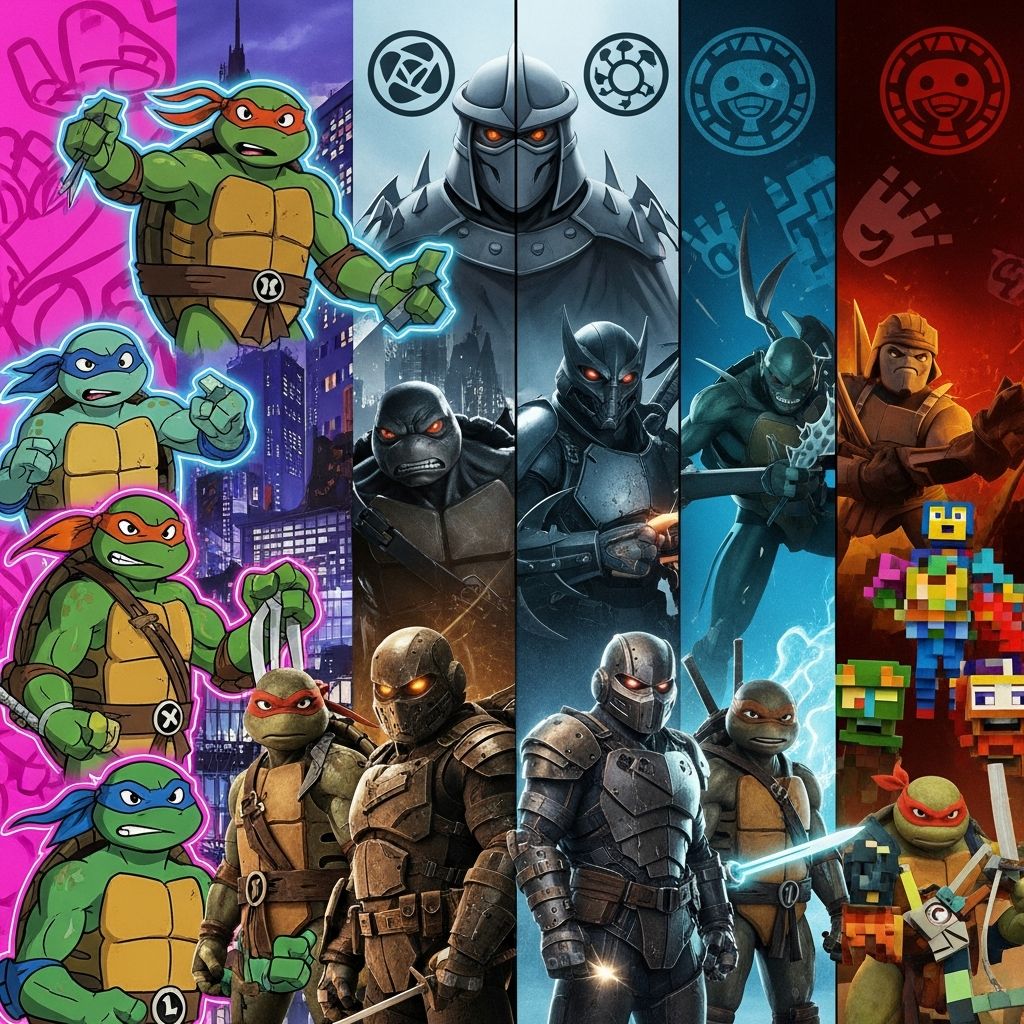
The Teenage Mutant Ninja Turtles began as a small indie comic in 1984 and have since mutated into one of pop culture’s most enduring screen franchises, jumping between cartoons, live-action movies, CG series, and reboots for four decades. This guide walks through every major TMNT screen era, what makes each version unique, and how to approach them in a logical order.
Why There Are So Many Different TMNT Versions
TMNT started as a parody of dark, gritty superhero comics and quickly evolved into a multimedia phenomenon with toys, TV, and films. Each new adaptation has tried to balance three things:
- Target audience: Some versions focus on very young kids; others lean into teenagers or nostalgic adults.
- Tone: The franchise swings between slapstick comedy and surprisingly serious storytelling.
- Visual style: From hand-drawn 2D animation to CGI and animatronic suits, every era looks different.
Because of that, there is no single “correct” order to watch everything. Instead, it helps to think in terms of eras and decide which style you want to start with.
High-Level TMNT Screen Timeline
The table below summarizes the major eras of TMNT in movies and television.
| Era | Years | Format | Notable Entries |
|---|---|---|---|
| Classic Cartoon Boom | Late 1980s – mid-1990s | 2D cartoon & live-action films | 1987 animated series, 1990–1993 film trilogy |
| Transitional Experiments | Late 1990s | Live-action TV | Ninja Turtles: The Next Mutation (1997–1998) |
| Comic-Accurate Revival | Early 2000s | 2D action cartoon | 2003 animated series (Fox, 7 seasons) |
| CGI & Nickelodeon Era | 2010s | CG series & films | 2012 CGI series, 2014 & 2016 live-action movies |
| Reinvention & Stylized Animation | Late 2010s – 2020s | 2D & CG reboots | Rise of the TMNT (2018–2020), Mutant Mayhem (2023) & follow-ups |
The 1980s–1990s: Turtlemania Takes Over
For many fans, TMNT truly begins with the 1987 animated series, the first major screen adaptation and the version that defined the turtles’ personalities for a global kids’ audience.
1987 Animated Series: The Saturday-Morning Standard
The 1987 show ran for ten seasons and nearly 200 episodes, introducing the brightly colored bandanas, catchphrases, and pizza obsession that became franchise trademarks. It leaned into humor and accessible action, softening the darker tone of the original Mirage comics for children.
- Best for: Viewers who want a light, nostalgic cartoon that feels like classic Saturday-morning TV.
- Key features:
- Goofy villains such as Krang and Bebop & Rocksteady
- Standalone episodes with simple plots
- Bright, toy-friendly visual design
1990–1993 Live-Action Film Trilogy
The first live-action movie, released in 1990, surprised studios by becoming a massive box office success and one of the highest-grossing independent films of its time. It used animatronic suits developed by Jim Henson’s Creature Shop, blending martial arts with practical effects.
- Teenage Mutant Ninja Turtles (1990): Darker and closer to the Mirage comics in tone, with grittier New York visuals.
- Secret of the Ooze (1991): A more comedic sequel, emphasizing slapstick fights and introducing new mutants.
- TMNT III (1993): Sends the turtles back in time to feudal Japan; critical reception was weaker and audience interest began to drop.
Together with the 1987 show, these films represent the height of “Turtlemania”, when toys, merchandise, and crossovers saturated kids’ media.
The 1997 Detour: Live-Action TV Experiments
Ninja Turtles: The Next Mutation (1997–1998)
After the original movie trilogy, the franchise shifted to Ninja Turtles: The Next Mutation, a live-action series that ran for one season and 26 episodes. It introduced a fifth turtle, Venus de Milo, and experimented with a more superhero-style narrative.
- Visual style: Similar suit-based approach as the films, but on a TV budget.
- Tone: Campy, kid-oriented stories with crossover potential (including a Power Rangers team-up outside this show).
- Why it matters: Even though it was short-lived, it showed how flexible the TMNT concept was and paved the way for future reboots.
The 2003 Revival: Back Toward the Comics
2003 Animated Series: Action-Heavy & Story-Driven
In 2003, a new animated series aired on Fox and ran for seven seasons, offering a tonal reset. This version followed the original Mirage comics more closely than the 1987 cartoon, bringing in darker story arcs, more serious character development, and longer-running plots.
- Audience: Aimed at older kids and early teens who could follow multi-episode arcs.
- Story focus:
- Deeper exploration of Shredder, the Foot Clan, and alien threats
- More complex moral choices for the turtles
- Why it’s important: For many, this series proved TMNT could handle serialized storytelling and compete with other action cartoons of the 2000s.
Nickelodeon & the CGI Turn
When Nickelodeon acquired global rights to the franchise, it launched a fresh CG-animated television series and later supported big-budget film reboots.
2012 CGI Series: A Modern Fan Favorite
The third major animated series premiered in 2012 on Nickelodeon and ran for five seasons. It mixed anime-inspired visuals, 3D animation, and a tone that could swing from comedic to emotional.
- Key elements:
- April O’Neil reimagined as a teenager close in age to the turtles
- Ongoing plotlines about mutagen and the Kraang’s plans
- Stylized action that leaned into the possibilities of CGI
- Why many recommend it: It captures the humor of the 1987 show and the stakes of the 2003 series, offering a balanced entry point for new fans.
2014 & 2016 Live-Action Movie Reboots
Nickelodeon Movies and Paramount Pictures released a new live-action/CGI hybrid film, Teenage Mutant Ninja Turtles, in 2014, produced by Michael Bay. It performed well at the box office but received generally negative critical reviews.
- Teenage Mutant Ninja Turtles (2014):
- Motion-capture CG turtles in a realistic New York setting
- Emphasis on large-scale action set pieces
- Out of the Shadows (2016):
- Brings in fan favorites like Bebop, Rocksteady, and Krang
- Despite fan-service elements, it underperformed financially and plans for a third film were dropped.
These films are often treated as a separate continuity, useful if you want a quick blockbuster take on the turtles without diving into long series.
Rise of the Turtles & Beyond
Rise of the Teenage Mutant Ninja Turtles (2018–2020)
Rise of the TMNT, the fourth animated series, premiered in 2018 and embraced a highly stylized 2D animation style with exaggerated action. It re-imagined core elements of the lore, giving each turtle a unique mystical weapon and shifting some character dynamics.
- Visual identity: Fast, kinetic action sequences with expressive character animation.
- Continuity: Stands apart from previous series with its own mythology and origin tweaks.
- Follow-up: A Netflix movie continuation released in 2022 further explored this version’s storyline.
Mutant Mayhem (2023) and the New Animated Continuity
The computer-animated film Teenage Mutant Ninja Turtles: Mutant Mayhem arrived in 2023 with a new visual style influenced by sketchy, hand-drawn aesthetics. Critics praised it as one of the best TMNT films, highlighting its focus on the turtles as actual teenagers with awkward, contemporary dialogue.
- Tone: Leans into coming-of-age comedy while still delivering inventive action.
- Franchise plan:
- A follow-up series, Tales of the Teenage Mutant Ninja Turtles, launched on streaming in 2024 as a bridge between films.
- It continues this new continuity rather than connecting to earlier series.
Recommended Watch Orders
Because TMNT continuities frequently reboot, you can choose a watch order based on your time and interests rather than strict chronology.
1. Classic Nostalgia Path
If you want to experience the original boom that turned TMNT into a global hit:
- Start with selected seasons or arcs from the 1987 animated series.
- Watch the 1990–1993 live-action film trilogy.
- Optionally sample The Next Mutation to see how the live-action approach translated to TV.
2. Story-Driven Animated Path
For viewers who want character arcs and more serialized plots:
- Begin with the 2003 animated series for a comic-faithful, action-oriented tone.
- Follow with the 2012 CGI series to see how Nickelodeon blended humor and drama.
- Add the Rise of the TMNT series and its movie if you enjoy stylized animation and experimental takes.
3. Movie-Only Fast Track
If you prefer to stick to major films for a quick overview:
- 1990 Teenage Mutant Ninja Turtles (classic origin with a darker edge)
- 1991 Secret of the Ooze (lighter, more comedic energy)
- 2014 Teenage Mutant Ninja Turtles and 2016 Out of the Shadows (modern blockbuster style)
- 2023 Mutant Mayhem (critically acclaimed animated reboot, good modern entry point)
How the Screen Versions Connect to the Comics
The turtles were created by Kevin Eastman and Peter Laird in a black-and-white indie comic published by Mirage Studios in 1984. The early issues were darker, featuring more graphic violence and satire of then-popular superhero trends.
- The 1987 series and early merchandising simplified this tone and color-coded the turtles, helping the franchise reach a mainstream children’s audience.
- The 2003 series brought back many elements from the Mirage comics, such as more complex plots and morally ambiguous conflicts.
- Modern iterations, including the IDW comic series (launched in 2011) and Mutant Mayhem, continue to reinterpret the mythology with new characters and altered origin stories while referencing classic lore.
For viewers who fall in love with any TV or film version, the comics offer parallel universes of the same core idea: four mutant turtles, their rat sensei, and their fight to defend a city that barely knows they exist.
Frequently Asked Questions (FAQs)
Do I have to watch TMNT in release order?
No. Most TMNT shows and films are self-contained reboots. You can start with whichever era’s tone and art style you prefer, such as the 2012 CGI series or Mutant Mayhem, without needing prior knowledge.
Which TMNT series is closest to the original comics?
The 2003 animated series is generally considered the closest in spirit to the early Mirage comics, with more serious plots and a darker tone, while still remaining accessible to younger audiences.
Is Mutant Mayhem connected to any previous TV show?
Mutant Mayhem launches its own continuity and is followed by the streaming series Tales of the Teenage Mutant Ninja Turtles, which continues that specific version of the characters rather than tying into earlier cartoons.
What’s a good starting point for kids today?
For younger viewers, the 2012 Nickelodeon CGI series and Mutant Mayhem are strong entry points. Both emphasize humor and heart while offering modern pacing and animation styles that resonate with contemporary kids.
Are the 2014 and 2016 movies part of the same universe as the cartoons?
No. The 2014 and 2016 films form their own live-action universe produced by Paramount and Nickelodeon Movies, separate from the TV continuities.
References
- Teenage Mutant Ninja Turtles (franchise overview) — Nickelodeon / Paramount (via franchise history summary). 2024-01-01. https://www.teenagemutantninjaturtles.com/2019/04/03/ranking-35-versions-of-the-teenage-mutant-ninja-turtles/
- Every Teenage Mutant Ninja Turtles Movie & Series (In Chronological Order) — Screen Rant. 2023-08-10. https://screenrant.com/every-movie-tv-adapatation-tmnt-chronological-order/
- Teenage Mutant Ninja Turtles — Wikipedia (franchise summary citing primary sources). 2024-06-01. https://en.wikipedia.org/wiki/Teenage_Mutant_Ninja_Turtles
- Teenage Mutant Ninja Turtles (franchise) — TMNTPedia (fan encyclopedia summarizing comic and media history). 2023-05-15. https://turtlepedia.fandom.com/wiki/Teenage_Mutant_Ninja_Turtles_(franchise)
- Ranking 35 Versions of the Teenage Mutant Ninja Turtles — TeenageMutantNinjaTurtles.com. 2019-04-03. https://www.teenagemutantninjaturtles.com/2019/04/03/ranking-35-versions-of-the-teenage-mutant-ninja-turtles/