Many families are rethinking what home looks like, especially when children reach the teen years and begin to crave space of their own. Tiny, separate living spaces on or near the family property are emerging as a creative way to combine independence, sustainability, and strong family connections. Instead of treating tiny houses as an escape, some parents are using them as intentional tools to raise responsible, eco-conscious young adults.
Why Parents Are Turning to Tiny Spaces
Traditional suburban homes often struggle to accommodate teenagers’ growing need for privacy, quiet, and autonomy. A small, self-contained space can relieve pressure on the main house while offering teens a tangible sense of ownership. When designed thoughtfully, these micro-homes also become laboratories for sustainable living, allowing families to model low-impact lifestyles without uprooting completely.
- Teens gain a sense of control over their environment without severing ties to their parents.
- Parents can foster responsibility through real-world tasks like cleaning, budgeting utilities, and managing personal belongings.
- The entire family can experiment with downsizing, reduced energy use, and shared outdoor spaces.
Core Principles of a Teen Tiny-Home Compound
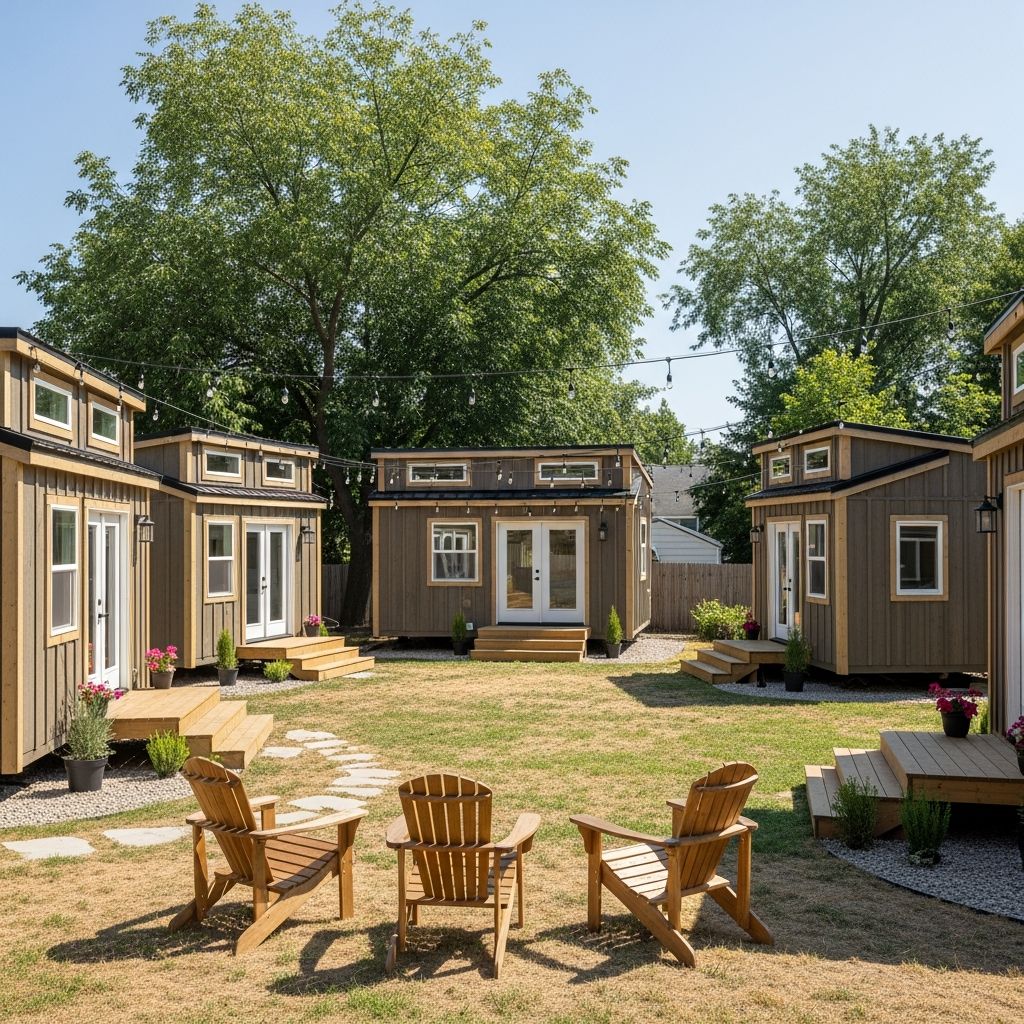
A “compound” in this context does not mean isolation or luxury; it simply describes a cluster of small, purpose-built structures sharing land and resources. For families with teenagers, this might include one or more tiny sleeping cabins, a shared bath house, a main family kitchen, and outdoor gathering zones. The key is to design the compound so that each structure serves a clear function and reinforces family values instead of creating distance.
- Proximity with boundaries: Teens are close enough for regular contact but have doors they can close.
- Shared responsibility: Outdoor paths, gardens, and common buildings require everyone to participate in upkeep.
- Modular growth: Additional tiny spaces can be added over time as children grow or needs change.
Designing the Site: From Backyard to Micro-Village
The starting point is the land itself—whether it is a large rural property or a generous backyard. Families should think in terms of a tiny “village” with safe footpaths, clear sightlines, and logical relationships between private and shared areas. Even a small urban lot can support one compact teen cottage if zoning allows.
- Place teen units within easy walking distance of the main house, with well-lit paths.
- Cluster noisy features (like pools or hangout decks) away from study-focused cabins.
- Preserve natural elements—trees, gardens, and open space—to reinforce outdoor living and connection to nature.
Key Structures in a Teen-Friendly Tiny Compound
Not every family needs multiple buildings, but thinking in terms of specific roles helps keep the layout intentional. Each structure can be small and simple while still dramatically improving how the household functions. Below is a basic framework that can be adapted to many budgets and climates.
| Structure | Main Purpose | Typical Features |
|---|---|---|
| Teen Cabin | Private sleeping and study space | Bed, desk, compact storage, possibly a kitchenette |
| Shared Bath House | Consolidated plumbing and hygiene | Showers, toilets, washer/dryer, utility storage |
| Main Family House | Primary kitchen and central gathering | Full kitchen, family dining, living room |
| Outdoor Commons | Socializing and recreation | Deck, fire pit, pool, seating, games |
| Work or Study Shed | Quiet workspace for parents and teens | Desks, bookshelves, office equipment |
Balancing Independence and Safety
One of the biggest questions parents wrestle with is how much autonomy is healthy. A free-standing mini-home can easily slide into emotional distance if parents step back too far. Healthy boundaries start with clear agreements that make the teen feel trusted while keeping adults in the loop.
- Set expectations for check-in times, communication, and overnight guests before anyone moves in.
- Require that key decisions—like significant layout changes or utility modifications—still involve parents.
- Discuss how technology will be used in the space, including quiet hours and screen-free zones.
Teaching Sustainability Through Daily Life
Tiny homes naturally use less energy and smaller quantities of building materials, but the greatest educational value comes from how teens interact with their space. When the living area is compact, every light left on, every long shower, and every new purchase is felt more immediately. Parents can use this to foster a concrete understanding of environmental impact.
- Install visible meters or simple dashboards that show electricity and water usage in real time.
- Encourage teens to help design systems for recycling, composting, or rainwater capture around their cabin.
- Use limited storage as a natural way to discuss mindful consumption and long-lasting purchases.
Design Ideas for Teen Micro-Homes
A teen-focused tiny house does not need to mimic a full-scale home. Instead, it can prioritize sleep, study, and personal expression while depending on shared structures for cooking and bathing. Good design helps the space feel generous and calm despite a small footprint.
- Choose a simple floor plan with a direct visual line from door to window to make the space feel larger.
- Elevate the bed on a loft or platform to free up room for a desk or seating underneath.
- Use built-in storage along walls to reduce clutter, with closed cabinets for messy items and open shelves for favorite books or decor.
Smart Zoning of Functions Inside the Cabin
Working, sleeping, and socializing all happen in a single room in many tiny houses. Teens are especially sensitive to how spaces influence mood and focus, so it helps to carve out distinct zones using furniture, lighting, and color instead of walls. This improves rest, concentration, and emotional well-being.
- Design a dedicated study corner with a proper desk, bright task lighting, and minimal distractions.
- Create a soft, low-light zone for sleep with warm lamps and thick curtains to block daylight during naps.
- Use a small couch or bench by a window as a friend-friendly social area, separate from the bed.
Budgeting for a Family Tiny-Home Project
Creating multiple small structures often costs less than building a large traditional home, but it still requires careful financial planning. Families can start with one modest unit and expand over time. Costs vary widely by region and whether you build yourself or hire professionals, so the focus should be on priorities rather than square footage alone.
- List must-have features (insulation, safe electrical work, weather-resistant exterior) before aesthetic extras.
- Consider repurposed materials for finishes, but do not cut corners on structural or safety components.
- Investigate options like small prefab shells that you can finish over weekends with your teen.
Legal, Safety, and Zoning Considerations
Before building or placing any tiny structure, families need to research local building codes, zoning rules, and utility regulations. Some areas restrict additional dwellings, limit off-grid setups, or require specific permits. Thinking ahead helps avoid expensive relocations or enforcement issues later.
- Check whether accessory dwelling units (ADUs) or backyard cottages are permitted on your lot size.
- Ensure electrical work, heating, and smoke alarms meet relevant safety standards.
- Plan safe access paths with lighting, railings for steps, and clear routes for emergency services if needed.
Emotional and Social Benefits for Teenagers
For many adolescents, having a place to retreat can reduce conflict at home and improve their sense of identity. A small, personal home naturally invites them to curate their possessions, express their style, and host friends in a controlled environment. Parents, in turn, can step more fully into a coaching role rather than policing every aspect of daily life.
- Teens often feel more motivated to keep a small space clean when it truly belongs to them.
- Learning to welcome guests courteously in a tiny house teaches social grace and hospitality.
- Daily experiences of managing a home—however small—build confidence for future college or work moves.
Potential Drawbacks and How to Address Them
As with any unconventional approach, giving teenagers their own micro-homes can bring challenges. Too much distance or too little oversight can create opportunities for secrecy, loneliness, or unhealthy habits. The goal should be greater maturity, not escape.
- Maintain regular family rituals—shared dinners, game nights, or weekend projects—to anchor connection.
- Discuss mental health openly and pay attention to shifts in sleep, social engagement, or school performance.
- Revisit rules and responsibilities at least once a year as teens age and circumstances change.
Using Shared Outdoor Spaces as a Social Anchor
Outdoor common areas help knit tiny structures into a cohesive family environment. A deck, fire pit, or simple picnic table can become the informal “living room” that everyone gravitates toward. These in-between zones give parents and teens opportunities to interact organically while still appreciating the privacy that tiny homes provide.
- Place seating areas so that paths from teen cabins naturally pass by, encouraging casual check-ins.
- Use outdoor projects—like garden beds, chicken coops, or a small greenhouse—as recurring shared responsibilities.
- Host extended family or friends in the outdoor commons to showcase the compound as a warm, welcoming place.
Integrating Food Growing and Animal Care
Many small-scale compounds weave in vegetable gardens, fruit trees, or small livestock as part of daily family life. Teens who step out their door and immediately encounter living systems are more likely to see the connection between their choices and the natural world. Caring for plants and animals can also be a powerful antidote to digital overload.
- Assign rotating garden tasks such as watering, weeding, harvesting, and seed saving.
- If local rules allow, consider a small flock of hens for eggs or a rabbit hutch for manure and companionship.
- Encourage teens to experiment with preserving food—drying herbs, freezing berries, or making simple pickles.
Habit-Building: Turning Tiny Living into Life Skills
The real power of a teen tiny-home compound lies in the habits it reinforces. When young people learn to live comfortably with less space and fewer possessions, they often develop a stronger sense of gratitude and adaptability. Parents can support this transformation by framing rules as training for adulthood rather than arbitrary constraints.
- Connect daily chores to long-term skills: “You are not just taking out compost; you are learning resource stewardship.”
- Encourage small experiments—like a month of tracking electricity use or a closet clean-out challenge—to build mindfulness.
- Celebrate milestones such as a year of successful independent living or a completed improvement project.
Frequently Asked Questions
Is it emotionally healthy for teens to live in a separate tiny house?
It can be very healthy when independence is paired with steady emotional support. The physical separation offers privacy and a sense of ownership, but parents still need to be highly engaged through daily conversations, shared meals, and clear boundaries around safety and communication.
How small is too small for a teen space?
The ideal size depends on local regulations and personal comfort, but a teen unit should comfortably fit a bed, desk, modest storage, and a small seating spot. Spaces that are so cramped they cannot accommodate friends, schoolwork, or quiet reflection may feel more like punishment than empowerment.
Should the teen unit include a full kitchen and bathroom?
Some families choose fully self-contained units, while others centralize cooking and bathing in shared buildings. Shared kitchens and bathrooms encourage more daily contact and keep infrastructure simpler, while partial or full facilities in the teen unit increase autonomy. The right balance depends on family dynamics and budget.
What if a teen misuses the freedom?
Missteps are part of learning. Families should treat rule-breaking as a chance to revisit agreements, adjust privileges, and reinforce expectations. Regular check-ins, gently enforced consequences, and modeling responsible behavior in the main house all help guide teens back on track.
Can this approach work in a suburban neighborhood?
In many suburbs, a single compact cottage or accessory dwelling unit is more realistic than a full compound. With the right permits and thoughtful placement, even one small teen-focused structure can offer many of the same benefits: privacy, responsibility, and a low-impact lifestyle connected to the family home.
Building a Future-Focused Family Culture
Tiny-home style compounds for teenagers are ultimately less about square footage and more about values. Families who embrace this model send a strong message: independence should grow alongside connection, and personal comfort should align with care for the planet. In a world of oversize houses and overflowing closets, a cluster of small, intentional spaces can teach teenagers that a meaningful life often fits beautifully into something much smaller than they imagined.