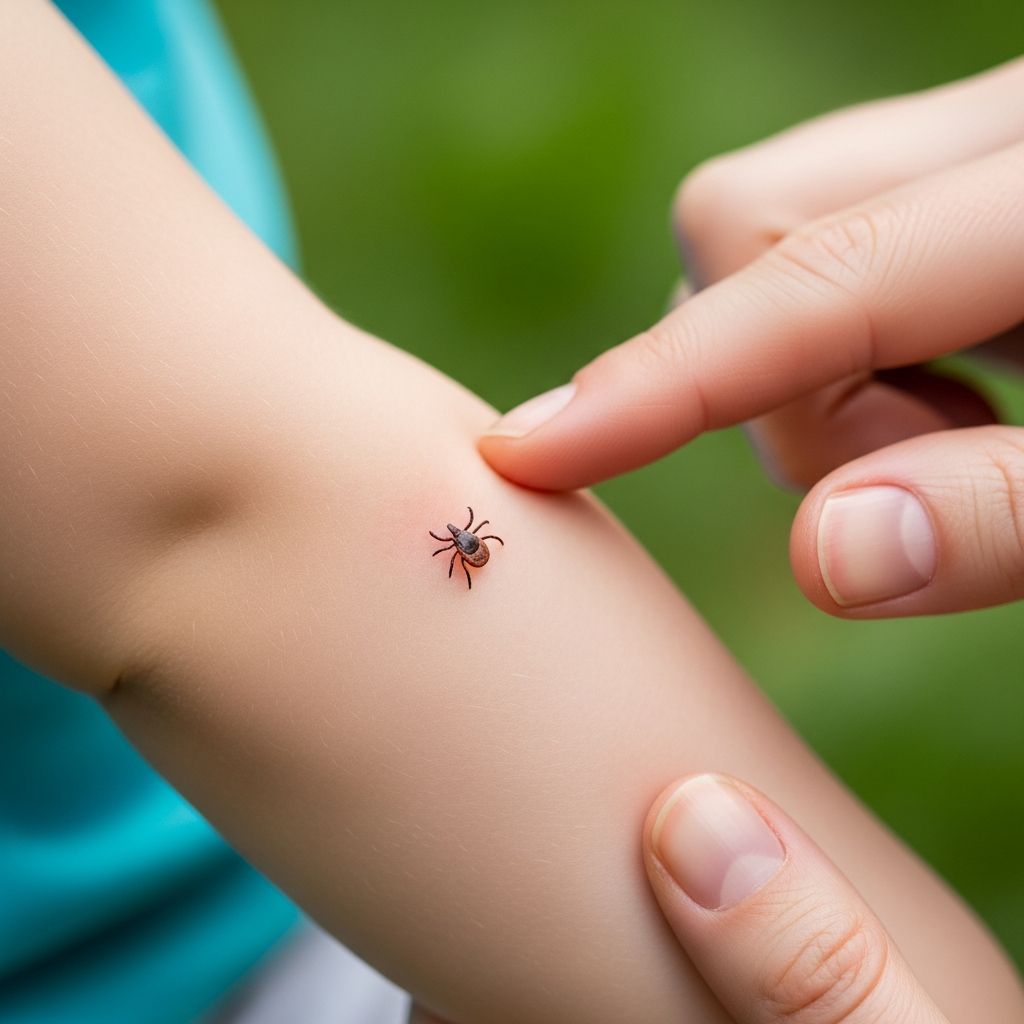
Spending time outdoors is healthy and fun for children, but it also increases their chances of encountering ticks. Understanding how to prevent, recognize, and manage tick bites helps parents protect their kids while still allowing them to enjoy nature.
What Parents Should Know About Ticks
Ticks are tiny, spider-like parasites that feed on blood from animals and humans. They often live in grassy, brushy, or wooded areas, waiting on leaves or tall grass for a passing host to latch onto. Many tick bites are harmless, but some ticks can transmit infections such as Lyme disease, Rocky Mountain spotted fever, or other tick-borne illnesses.
Because children often play close to the ground and may not notice when a tick attaches, parents play a key role in spotting ticks early and responding calmly and effectively. Knowing what ticks look like and how they behave helps you act quickly if your child is bitten.
Where Ticks Live and When They Are Most Active
Ticks prefer warm, humid environments and usually live in areas with tall grass, leaf litter, shrubs, and wooded trails. They do not jump or fly; instead, they wait on plants and grab onto people or animals that brush past. Even backyards can harbor ticks, especially if there are trees, brush piles, or visiting wildlife.
In many regions, ticks are most active from spring through early fall, although some species can bite year-round if temperatures are mild. This means families should stay alert during hiking, camping, picnics, sports events, and even ordinary playtime in the yard during these months.
| Environment | Risk Level for Tick Bites | Examples of Activities |
|---|---|---|
| Dense woods and forest edges | High | Hiking, camping, nature walks |
| Tall grass and brushy fields | Moderate to high | Playing in meadows, sports fields with long grass |
| Backyards with trees or leaf piles | Low to moderate | Trampoline, swings, gardening, playing with pets |
| Open, mowed lawns | Lower | Running, ball games, picnics on trimmed grass |
How to Check Your Child for Ticks
Regular tick checks are one of the simplest and most effective ways to prevent tick-borne diseases. Ticks are often very small, especially in their nymph stage, so a careful examination is important after outdoor activities in tick-prone areas.
Make tick checks part of your family’s routine when returning home from hikes, camping, sports, or play in wooded or grassy locations. A bright light and, if available, a magnifying glass can help spot tiny ticks.
Step-by-step tick check
- Have your child take a shower or bath soon after coming indoors to wash away loose ticks.
- Look over the entire body, paying close attention to warm, hidden areas where ticks like to attach.
- Run your fingers gently over the skin to feel for small bumps that might be ticks rather than specks of dirt.
- Check clothing, shoes, and hats, then wash and dry clothes on a warm or hot cycle when possible.
Common hiding places on a child’s body
- Scalp and hairline, especially at the back of the head and behind the ears
- Neck, around the collar area
- Armpits and groin
- Waistband areas and behind the knees
- Between fingers and toes
How to Recognize a Tick Bite
A tick attached to the skin often looks like a tiny dark dot or seed. As it feeds, it may become more swollen and easier to see. Many tick bites are painless, so children may not complain or even realize they have been bitten.
After a tick has been removed, there is usually a small red bump left behind, similar to a mosquito bite. Mild redness and slight swelling directly at the site are common and usually improve over a few days. The main concern is not the bite itself but the risk of infection if the tick carries disease-causing germs.
Safe Tick Removal at Home
Removing a tick as soon as you notice it helps lower the chance of disease transmission. The safest and most widely recommended method uses fine-tipped tweezers and gentle, steady pressure. Avoid home remedies like burning the tick, smothering it with petroleum jelly, or using chemicals, since these can cause more harm than good.
Step-by-step tick removal guide
- Stay calm. Explain to your child that you are going to remove the tick and that it should not hurt very much.
- Use clean tweezers. Wash your hands, then use fine-tipped tweezers to grasp the tick as close to the skin’s surface as possible, holding it by the head or mouth area, not the body.
- Pull straight out. Apply slow, steady pressure upward without twisting or jerking. The goal is to remove the entire tick in one motion.
- Do not crush the body. Squeezing the tick’s body can push its contents into the skin.
- Clean the area. After removal, wash the bite site and your hands with soap and water, then apply an antiseptic if available.
- Consider saving the tick. Place it in a sealed plastic bag or small container in case your child’s doctor wants to identify it or discuss testing options.
If a small part of the tick’s mouth remains in the skin, do not panic. Sometimes these tiny fragments work their way out on their own like a small splinter. If the area becomes very red, painful, or looks infected, contact your child’s healthcare provider for guidance.
Aftercare: What to Do Once the Tick Is Out
Once the tick has been removed, caring for the bite site is usually simple. Cleaning the area helps reduce the chance of a minor skin infection, and observation over the following weeks helps you pick up early signs of a tick-borne disease if one develops.
Immediate steps after tick removal
- Wash the bite area gently with soap and water.
- Apply a topical antiseptic or an over-the-counter antibiotic ointment if your child is not sensitive to it.
- Monitor the site daily for several days for increasing redness, swelling, warmth, or pus.
- Note the date of the bite and, if you saved the tick, where your child was when it likely attached.
Most children feel fine after a tick bite and never develop any illness. However, staying alert for new symptoms over the next few weeks is key, since many tick-borne diseases have a delay between the bite and the first signs of sickness.
Symptoms of Tick-Borne Illnesses in Children
Not every tick carries germs, and most bites do not lead to disease. When tick-borne illnesses do occur, early symptoms often resemble common viral infections, which is why awareness and timing are so important. Watching for symptoms in the weeks after a tick bite can help you decide when to call your child’s doctor.
General signs to watch for
- Fever or chills that appear days to weeks after a bite
- Headache, fatigue, or unusual sleepiness
- Muscle aches or joint pain
- Stiff neck or back discomfort
- Swollen lymph nodes
Skin changes that may be concerning
- A growing red area around the bite, especially if it expands over days
- Rashes that appear elsewhere on the body, including the trunk, arms, legs, wrists, or ankles
- Red or purple spots that do not fade when pressed
Some tick-borne infections can cause distinctive rashes or more serious symptoms, such as facial weakness, severe headache, confusion, or trouble breathing. Any dramatic or rapidly worsening symptoms should trigger urgent medical attention.
When to Call the Doctor or Seek Emergency Care
Many parents wonder whether every tick bite requires a visit to the doctor. In many cases, simple home care and observation are enough. However, there are clear situations in which medical advice or emergency care is important.
Call your child’s doctor if:
- You are unsure how long the tick was attached or believe it may have been attached for 24 hours or more.
- Your child develops fever, rash, headache, or body aches within a month of the bite.
- The bite site becomes increasingly red, swollen, warm, or starts to ooze.
- You were bitten in an area known for tick-borne diseases and your child feels unwell.
- You could not remove the entire tick or are worried about remaining parts in the skin.
Seek emergency care or call emergency services if:
- Your child has trouble breathing, wheezing, or swelling of the lips, tongue, or face.
- There is sudden confusion, severe headache, or difficulty speaking.
- Your child cannot move parts of the face, such as drooping on one side.
- There are signs of serious allergy, such as widespread hives, vomiting, or dizziness.
Healthcare providers may recommend observation, blood tests, or antibiotic treatment depending on the type of tick, how long it was attached, your location, and your child’s symptoms and age.
Antibiotics and Medical Treatment: What Parents Should Expect
If a tick bite occurs in a region where certain infections are common, or if your child shows symptoms suggesting a tick-borne illness, a doctor may prescribe antibiotics. In some cases, a single preventive dose is considered when specific criteria are met, such as the type of tick, how long it was attached, and the child’s age.
When a child is diagnosed with a tick-borne infection, a longer course of antibiotics is typically used. Most children recover fully when treatment begins early. It is important to:
- Follow the prescribed dose and schedule exactly as directed.
- Complete the entire course of antibiotics, even if your child feels better.
- Tell the doctor about any allergies, side effects, or new symptoms that appear during treatment.
Parents should not start leftover antibiotics or share medications between family members. Decisions about preventive or therapeutic antibiotics should always be made with a healthcare professional who understands your child’s medical history and local disease patterns.
Practical Ways to Prevent Tick Bites
Prevention strategies work best when they are layered: protective clothing, repellents, yard care, and regular tick checks all contribute to reducing risk. Teaching children simple habits, like staying on clear paths and avoiding tall grass, can also make a big difference.
Clothing and gear tips
- Dress children in long sleeves and long pants when walking through tall grass or wooded trails.
- Tuck pant legs into socks and shirts into waistbands to create fewer openings for ticks.
- Choose light-colored clothing to make it easier to spot ticks.
- Consider clothing pre-treated with tick repellent, or use products designed to be applied to fabric, following all safety directions.
Using insect repellents safely
- Use only repellents labeled for use on children, and follow age and usage instructions carefully.
- Apply repellent to your hands first, then gently spread it on your child’s exposed skin, avoiding eyes, mouth, and hands.
- Use the smallest amount needed to provide protection and avoid applying over cuts or irritated skin.
- When back indoors, wash treated skin with soap and water and change into clean clothes.
Yard and outdoor space management
- Keep grass trimmed, especially at the edges of lawns and around play areas.
- Remove piles of leaves, wood, and brush where ticks and small animals like to hide.
- Place playground equipment and seating away from wooded borders if possible.
- Discourage deer and other wildlife from wandering close to play spaces by using fencing or other barriers where appropriate.
Helping Children Cope with Tick Anxiety
News stories and online information can make children fearful of ticks and outdoor play. While it is important to take tick bites seriously, it is equally important not to let fear keep your family indoors. Educating children with age-appropriate facts can empower them to stay safe and confident.
Parents can emphasize that most tick bites do not cause serious illness and that simple steps—like wearing the right clothes, using repellent, and doing quick tick checks—go a long way toward staying healthy. Keeping your tone calm and matter-of-fact during tick checks helps kids see them as a normal part of outdoor fun, not something to dread.
Frequently Asked Questions About Tick Bites in Kids
1. Do all ticks carry disease?
No. Many ticks are not infected with disease-causing germs, and even an infected tick does not always pass infection to the person it bites. The risk depends on the tick species, how common certain infections are in your area, and how long the tick was attached.
2. How long does a tick need to be attached to cause illness?
The time needed for disease transmission varies by infection, but in many cases the risk increases when a tick has been attached for a day or longer. This is one reason daily tick checks are so helpful: finding and removing ticks promptly can significantly reduce the chance of illness.
3. Should a tick be tested for disease?
Some parents choose to save the tick in case a doctor is interested in seeing it. However, testing the tick itself is not always recommended as a routine step, because a positive result does not always mean your child will get sick, and a negative result does not completely eliminate risk. Decisions about testing and treatment are usually based more on symptoms, the type of tick, and local infection patterns.
4. Is it safe to use home remedies like burning a tick?
No. Using a hot object, essential oils, or chemicals to try to make the tick detach can actually increase the chance of saliva or other material being released into the skin. The safest method is steady, direct removal with fine-tipped tweezers, followed by careful washing of the area.
5. Can my child still play outside if there are ticks in our area?
Yes. Outdoor activity is beneficial for children’s physical and emotional health. The goal is not to avoid nature but to enjoy it safely by combining protective clothing, appropriate repellents, yard care, and consistent tick checks. With these strategies, most families can balance fun and safety effectively.
Tick bites can be unsettling, but with the right knowledge and preparation, parents can manage them calmly and confidently. By learning how to check for ticks, remove them safely, monitor for symptoms, and use prevention strategies, families can continue to enjoy the outdoors while minimizing risk.