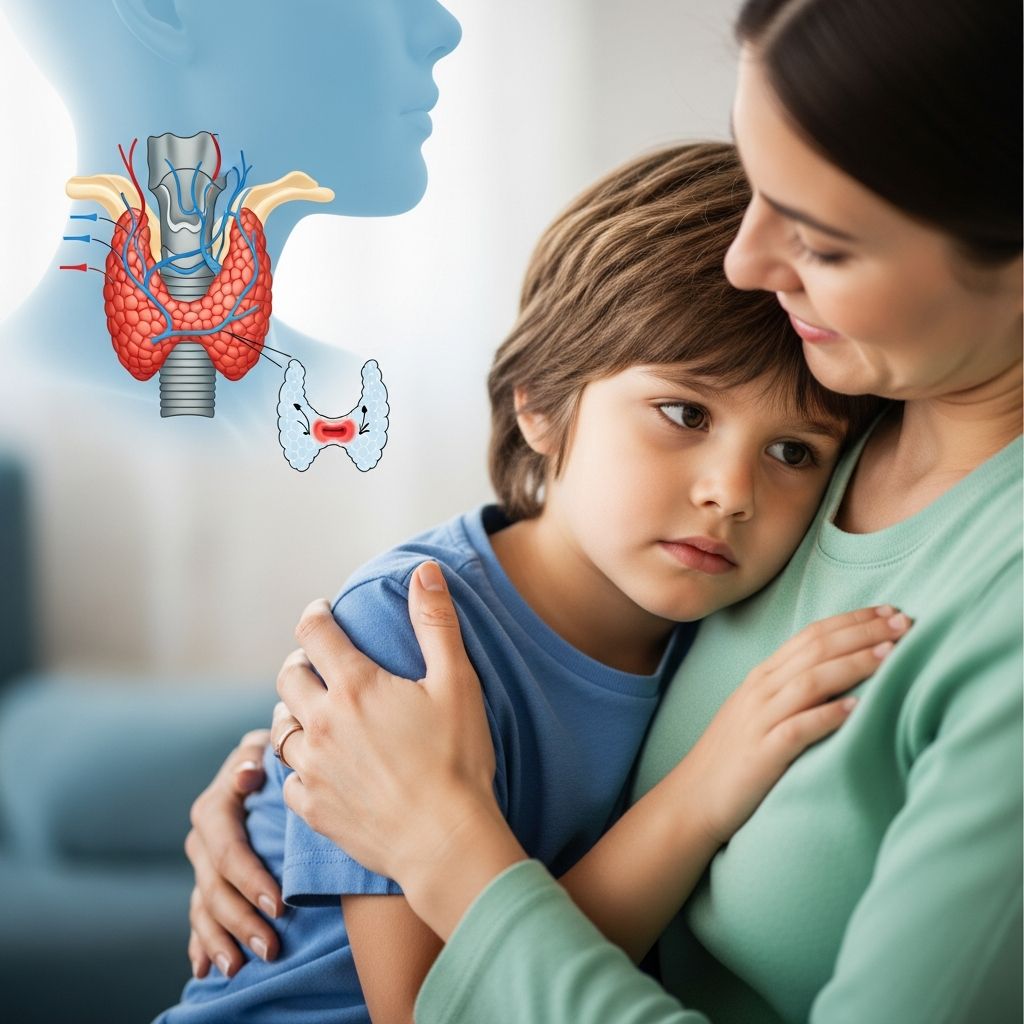
The thyroid is a small gland with a big impact on your child’s growth, learning, and everyday energy. When it is not working properly, even subtle changes in thyroid hormone levels can affect school performance, behavior, sleep, and physical development.
This guide explains what the thyroid does, the most common thyroid problems in children, how to recognize warning signs, what to expect from testing and treatment, and how parents can support a child living with a thyroid condition.
What the Thyroid Gland Does in a Child’s Body
The thyroid is a butterfly-shaped gland at the front of the neck. It makes hormones that are carried in the bloodstream to every organ and tissue. In children, these hormones are especially important for brain development, growth in height, weight regulation, and energy levels.
- Thyroxine (T4): The main hormone produced by the thyroid; it is converted into a more active form in the body.
- Triiodothyronine (T3): The active hormone that helps control how fast cells work and use energy.
- Thyroid-stimulating hormone (TSH): A hormone from the brain (pituitary gland) that tells the thyroid how much T4 and T3 to make.
When thyroid hormone levels are balanced, the body’s metabolism runs at the right speed. When levels are too low or too high, many body systems can be affected at once, which is why thyroid disorders can look like a mix of unrelated symptoms.
Why Thyroid Health Matters So Much in Childhood
Children’s bodies and brains are still developing, so thyroid hormones play a larger role than they do in most adults. Even mild thyroid imbalances, if they persist, can influence attention span, growth rate, and mood.
- Before and right after birth: Adequate thyroid hormone supports brain and nervous system development and helps babies reach early milestones.
- During school years: Thyroid hormones help maintain a healthy weight, support concentration and memory, and keep muscles, heart, and digestion working efficiently.
- Through puberty: Proper thyroid function is important for normal timing of puberty and menstrual cycles in girls.
Common Thyroid Disorders in Children
Most pediatric thyroid problems fall into two broad categories: too little hormone (hypothyroidism) or too much hormone (hyperthyroidism). Each affects the body in different ways, but both can be treated.
Overview Table: Thyroid Conditions in Kids
| Condition | Hormone Level | Metabolism Effect | Typical Onset |
|---|---|---|---|
| Hypothyroidism | Too little thyroid hormone | Body systems slow down | At birth or later childhood/teens |
| Hyperthyroidism | Too much thyroid hormone | Body systems speed up | Often school-age or adolescence |
| Thyroid nodules/cancer (less common) | Hormone levels may be normal or changed | Depends on type of nodule | Can appear in older children or teens |
Hypothyroidism in Children (Underactive Thyroid)
Hypothyroidism means the thyroid is not producing enough hormone. In children, it can be present from birth (congenital) or develop later (acquired). Both forms can be treated, but early detection is especially important in infants.
Types and Causes of Hypothyroidism
- Congenital hypothyroidism: A baby is born with a thyroid gland that is missing, underdeveloped, misplaced, or unable to make enough hormone.
- Autoimmune hypothyroidism: The child’s immune system attacks the thyroid (often called Hashimoto’s thyroiditis), gradually damaging the gland.
- Other causes: Certain medications, treatment for other diseases (like childhood cancer), or problems with the pituitary gland in the brain can also reduce thyroid hormone production.
Signs of Hypothyroidism in Infants
Most newborns are screened shortly after birth, so many cases are caught before obvious symptoms appear. When signs are present, they can be subtle, especially in the first weeks of life.
- Very sleepy or hard to wake for feeds.
- Poor feeding or difficulty gaining weight.
- Low muscle tone or a floppy feel when held.
- Persistent jaundice (yellowing of the skin or eyes) beyond the first week or two.
- A puffy face, large tongue, or hoarse cry.
Signs of Hypothyroidism in Older Children and Teens
In school-age kids and adolescents, symptoms usually build up slowly. They can easily be mistaken for other issues, such as stress, anemia, or simply “going through a phase.”
- Fatigue, low energy, or a desire to sleep more than usual.
- Modest weight gain despite no big change in eating habits.
- Feeling cold more than others or needing extra layers.
- Constipation that keeps coming back.
- Dry, rough skin or hair that becomes brittle and breaks easily.
- Slower growth in height or a drop on the growth chart.
- Delayed puberty or irregular periods in girls.
- Trouble concentrating, forgetfulness, or seeming mentally sluggish.
- Sadness, irritability, or mood changes.
Hyperthyroidism in Children (Overactive Thyroid)
Hyperthyroidism occurs when the thyroid releases too much hormone. In children, an overactive thyroid is most often caused by an autoimmune condition in which the body mistakenly stimulates the gland to work too hard.
Major Causes of Hyperthyroidism
- Autoimmune stimulation: The immune system produces antibodies that push the thyroid to make too much hormone (commonly referred to as Graves’ disease).
- Overactive nodules: Less commonly, a small lump in the thyroid can independently produce excess hormone.
- Thyroid inflammation: Temporary swelling of the thyroid may briefly release excess hormone into the blood.
Typical Signs of Hyperthyroidism in Kids
Because thyroid hormone speeds up the body, symptoms often look like everything is running in fast-forward. Some children appear nervous or overly energetic, while others simply feel unwell and tired out.
- Unexplained weight loss or failure to gain expected weight despite a big appetite.
- Feeling hot, sweaty, or intolerant of warm rooms.
- Fast heartbeat, pounding in the chest, or palpitations.
- Trembling hands or fine shaking fingers.
- Difficulty sitting still, restlessness, or hyperactivity.
- Increased anxiety, mood swings, or irritability.
- Trouble sleeping, frequent waking, or insomnia.
- More frequent bowel movements or diarrhea.
- Enlarged thyroid (a visible or palpable swelling in the front of the neck).
Less Common Thyroid Issues in Children
Most thyroid concerns in kids are related to hormone levels being too low or too high, but there are other conditions parents may hear about during an evaluation. These problems are far less common but still important to recognize.
- Thyroid nodules: Small lumps in the gland that may or may not affect hormone levels; they are often benign but may need imaging or a biopsy.
- Thyroid cancer: Rare in children but usually treatable; often presents as a painless neck lump or nodule discovered by the child, parent, or doctor.
- Central (secondary) thyroid problems: Disorders of the brain’s signaling glands can lead to abnormal thyroid function even when the thyroid gland itself is healthy.
When Parents Should Suspect a Thyroid Problem
Because thyroid disorders can mimic many other conditions, no single symptom confirms a problem. Instead, patterns and combinations of signs are more informative, especially when they persist over weeks or months.
Red Flags Worth Discussing With a Doctor
- Growth that slows noticeably or does not match earlier height patterns.
- Major changes in energy, either ongoing tiredness or constant restlessness.
- Unexplained change in weight or appetite.
- New concentration problems, declining school performance, or unusual forgetfulness.
- Menstrual cycles that are very irregular or stop for several months in a teen girl.
- Persistent constipation or frequent loose stools without a clear cause.
- A swelling or lump at the front of the neck.
If several of these signs appear together and don’t resolve with simple measures like sleep or diet changes, it is reasonable to ask the child’s health care provider about thyroid testing.
How Thyroid Problems Are Diagnosed in Children
Diagnosis usually starts with a thorough medical history and physical examination, followed by simple blood tests. In many cases, the blood tests alone are enough to make a diagnosis and plan treatment.
Key Steps in Evaluation
- History and symptom review: The clinician asks about growth trends, school performance, sleep, mood, appetite, and family history of thyroid or autoimmune disease.
- Physical examination: Includes checking the child’s height and weight patterns, heart rate, reflexes, skin and hair, and gently feeling the thyroid gland in the neck.
- Blood tests:
- TSH level, which reflects how hard the brain is working to stimulate the thyroid.
- Free T4 (and sometimes free T3), the active thyroid hormones in circulation.
- Thyroid antibodies, which can indicate autoimmune thyroid disease.
- Imaging and additional tests (if needed): An ultrasound can look at the size and texture of the thyroid or evaluate nodules; in rare cases, other imaging or specialized tests may be recommended.
Treatment Options for Pediatric Thyroid Disorders
Most thyroid problems in children can be controlled well with medical treatment. The specific plan depends on whether the thyroid is underactive, overactive, or structurally abnormal.
Treating Hypothyroidism
- Daily thyroid hormone replacement: A child usually takes a synthetic form of T4 as a pill or crushed tablet; in infants it may be given in liquid form.
- Regular blood tests: Levels are checked and the dose is adjusted as the child grows.
- Long-term outlook: Most children on appropriate treatment can grow, learn, and live like their peers, with no restrictions on normal activities.
Treating Hyperthyroidism
- Anti-thyroid medications: Drugs that reduce hormone production are often the first choice in children.
- Beta-blockers: These medicines do not treat the thyroid directly but can quickly calm symptoms such as fast heart rate or tremor.
- Definitive treatments: In some cases, older children or teens may be candidates for radioactive iodine treatment or surgery to remove part or all of the thyroid; this usually leads to hypothyroidism, which is then treated with replacement hormone.
Managing Nodules and Other Conditions
- Observation: Small, low-risk nodules may simply be monitored with periodic ultrasounds.
- Biopsy: A needle test may be used to determine whether a nodule is benign or suspicious.
- Surgery and follow-up: For confirmed cancer or high-risk nodules, surgery and long-term follow-up are planned by a pediatric specialist team.
Daily Life With a Child Who Has a Thyroid Condition
With consistent treatment and follow-up, most kids with thyroid disorders can participate fully in school, sports, and social activities. However, daily routines and family habits may need some adjustments.
Medication and Routine
- Give thyroid medicine at the same time each day, as directed by the care team.
- Ask about taking the medicine on an empty stomach or away from certain foods or supplements, such as high-calcium products or iron.
- Use pillboxes, reminder apps, or charts to help older children remember their dose.
Nutrition, Sleep, and Activity
- Encourage balanced meals with fruits, vegetables, whole grains, protein, and healthy fats.
- Maintain a regular sleep schedule; thyroid imbalance can worsen sleep issues, and poor sleep can amplify symptoms like irritability and fatigue.
- Support age-appropriate physical activity, which can improve mood, weight management, and energy.
School and Emotional Support
- Let teachers know about the diagnosis, especially if attention, energy, or mood have been affected.
- Monitor for signs of anxiety, depression, or frustration; consider counseling if your child struggles emotionally.
- Offer reassurance that having a thyroid condition does not define your child’s abilities or future.
How Parents Can Advocate for Their Child’s Thyroid Health
Parents play a central role in spotting early symptoms, following through with appointments, and supporting long-term treatment. A calm, informed approach can help children feel secure and involved in their own health.
- Keep a simple health journal noting changes in sleep, mood, school performance, and physical symptoms between visits.
- Bring growth records or questions to each appointment so you can track progress together with the clinician.
- As your child gets older, gradually include them in conversations about symptoms, test results, and self-care habits.
Frequently Asked Questions About Thyroid Problems in Children
1. Can a child outgrow a thyroid problem?
It depends on the cause. Some temporary thyroid imbalances related to illness or inflammation may resolve, while autoimmune thyroid disorders and congenital hypothyroidism typically require long-term or lifelong treatment. Your child’s specialist can explain the likely course based on the specific diagnosis.
2. Will thyroid medication stunt or boost my child’s growth?
When correctly dosed, thyroid medicine is intended to restore normal hormone levels, not to overshoot them. In a child with hypothyroidism, appropriate treatment often allows growth to return to a more typical pattern, which may actually improve height outcomes compared with leaving the condition untreated.
3. Does a thyroid condition mean my child cannot play sports or be very active?
Most children with well-managed thyroid disorders can fully participate in sports and physical activities. During periods when the thyroid is poorly controlled, a doctor may temporarily adjust activity guidelines, especially if there are heart rate or blood pressure concerns.
4. Are thyroid problems always inherited?
Family history can increase risk, especially for autoimmune thyroid diseases, but not all children with thyroid issues have relatives with the same problem. Environmental factors, other medical conditions, and random developmental variations also play a role.
5. How often will my child need blood tests?
Testing schedules vary by age and stability of the condition. Infants and younger children who are growing quickly may need more frequent checks, while older kids with stable levels may be monitored several times a year. The schedule is personalized by the care team.
6. What happens if my child misses a dose of thyroid medicine?
For a single missed dose, many clinicians recommend giving it as soon as you remember that day or skipping it if you remember very late and resuming the usual routine the next day. Occasional missed doses are usually not dangerous, but repeated skipping can throw hormone levels off, so it is important to ask for strategies that fit your family’s routine.
Key Takeaways for Parents
- The thyroid is a small gland that has large effects on a child’s growth, energy, mood, and development.
- Both underactive and overactive thyroid conditions are treatable, especially when identified early.
- Pay attention to patterns of symptoms rather than single complaints, and do not hesitate to ask for thyroid testing when something feels persistently off.
- With proper care and regular follow-up, children with thyroid disorders can thrive at home, in school, and in all aspects of life.