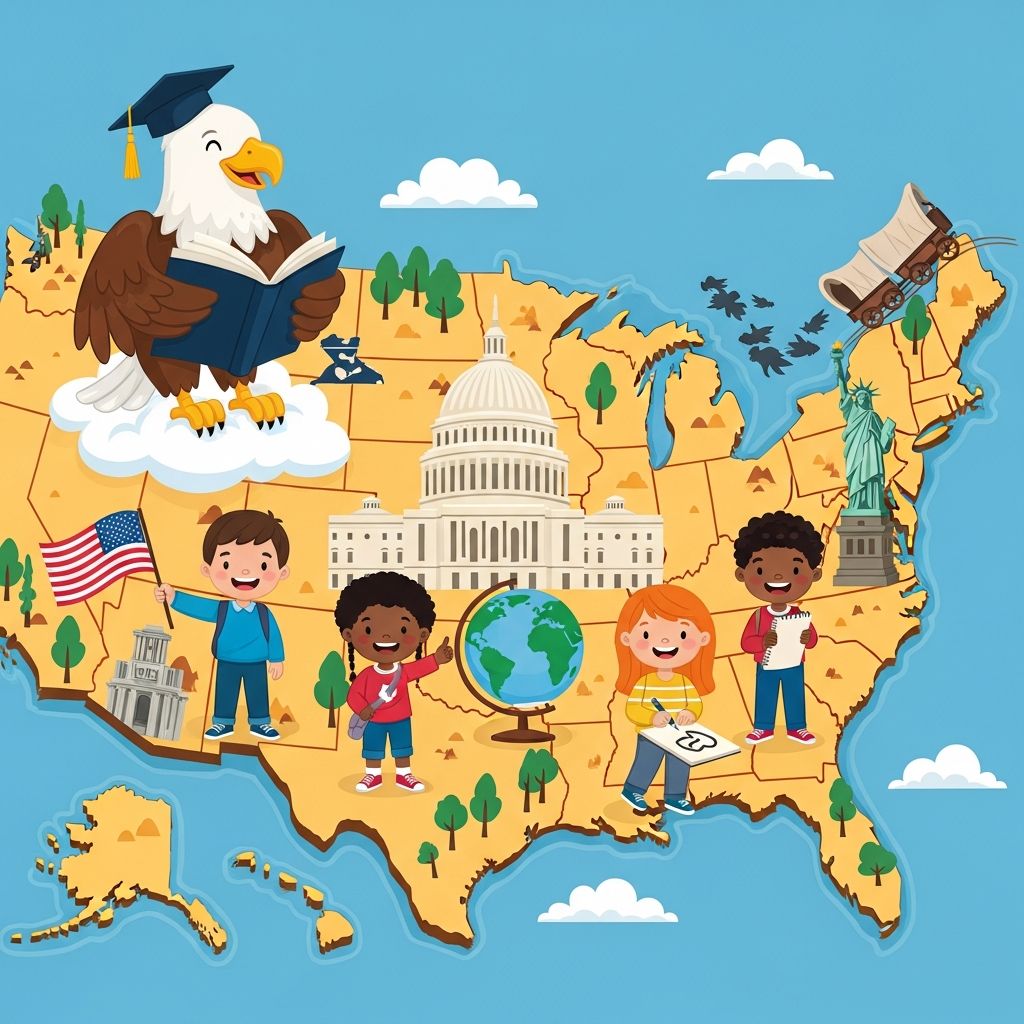
The United States is a big country with lots of people, many different landscapes, and a special way of running its government. This guide breaks everything into easy pieces so kids can understand how the country works and why it matters.
1. Where Is the United States and Who Lives Here?
The United States is located in North America, between Canada to the north and Mexico to the south. It stretches from the Atlantic Ocean on the east to the Pacific Ocean on the west, with many different kinds of environments along the way.
- 50 states plus several territories make up the country.
- Big cities like New York, Los Angeles, and Chicago are home to millions of people.
- Small towns and rural areas have farms, forests, and open spaces.
People in the United States come from many cultures, speak many languages, and celebrate many traditions. This diversity is one of the country’s greatest strengths.
2. A Quick Look at US History
The United States did not start as the country we know today. It grew and changed over hundreds of years. Knowing a little history helps everything else make more sense.
From Colonies to a New Nation
- In the 1600s and 1700s, many people from Europe started colonies on the east coast of North America.
- These colonies were ruled by the British king, even though the colonists lived far away.
- Over time, the colonists wanted more control over their own laws and taxes.
Arguments with Britain eventually led to the American Revolution, a war where the colonies fought for independence and the right to govern themselves.
Independence and Important Documents
- The leaders of the colonies declared independence and announced that the colonies were now the United States of America.
- They later wrote the Constitution, a rulebook for how the government should work.
- They added changes called amendments, including a list of important rights called the Bill of Rights.
These documents are still used today to guide laws and protect people’s freedoms.
3. What Does the Government Do?
The government is a group of people and institutions that make and enforce rules for the country. It is meant to keep people safe, protect rights, and organize services that everyone uses.
- Makes and enforces laws.
- Provides services like public schools, roads, and national parks.
- Works with other countries and handles national defense.
The US government is divided into three main branches so that no single person or group has too much power.
4. The Three Branches of Government
| Branch | Main Job | Key People/Groups |
|---|---|---|
| Legislative | Makes laws | Congress (Senate and House of Representatives) |
| Executive | Enforces laws | President, Vice President, and departments |
| Judicial | Interprets laws | Supreme Court and other federal courts |
Legislative Branch: Making the Rules
The legislative branch is also called Congress, and it is responsible for writing and passing new laws. Congress has two parts: the Senate and the House of Representatives.
- Senate: Each state, big or small, has two senators.
- House of Representatives: States with more people have more representatives.
- Members of Congress are elected by voters to speak and vote for them in the national government.
Executive Branch: Carrying Out the Laws
The executive branch makes sure that laws are followed and put into action. The president leads this branch and works with many departments and agencies.
- The president is the leader of the country’s executive branch.
- The vice president helps the president and can take over if the president cannot serve.
- Departments, such as those for education, defense, and health, help run different parts of the government’s work.
Judicial Branch: Understanding the Laws
The judicial branch is made up of courts that decide what laws mean and how they apply to different situations. The highest court is called the Supreme Court.
- Judges look at laws and cases to decide if actions are fair and legal.
- The Supreme Court can decide whether a law follows the Constitution.
- Lower courts handle many types of cases across the country.
5. National vs. State and Local Government
In the United States, there is not just one government. There are several levels that share responsibilities.
- National (federal) government: Handles big issues that affect the whole country, like national defense and trade with other countries.
- State governments: Make rules for each state, such as some school policies, state roads, and state parks.
- Local governments: Run cities, towns, or counties, taking care of things like local police, libraries, and parks.
All these levels work together to help communities function smoothly, even though they have different jobs.
6. Rights and Responsibilities
People in the United States have important rights, but they also have responsibilities. Rights are freedoms that are protected, and responsibilities are duties that help the community.
Examples of Basic Rights
- Freedom to express opinions respectfully.
- Freedom to practice a religion or not follow any religion.
- Right to a fair trial if accused of a crime.
- Right to vote when old enough and eligible.
Important Responsibilities
- Following the law, even when no one is watching.
- Respecting the rights and property of others.
- Staying informed about important issues.
- Serving on a jury as an adult when called.
- Voting in elections when old enough and able.
Kids cannot vote yet, but they can still practice good citizenship every day in school, at home, and online.
7. Symbols of the United States
Symbols are pictures, objects, or songs that stand for a country’s ideas and history. The United States has several symbols that people recognize around the world.
- Flag: Has stars and stripes representing the states and the original colonies.
- Bald eagle: A large bird that symbolizes strength and freedom.
- National anthem: A song that people stand for at important events and ceremonies.
- Monuments: Structures such as famous statues or memorials that honor leaders and important events.
Learning about these symbols helps kids feel more connected to their country and its story.
8. How Elections Work (Kid-Friendly View)
Elections are the way people choose leaders and make decisions about laws. Adults who are citizens and meet certain rules can vote in these elections.
- Local elections: Choose mayors, city leaders, and school board members.
- State elections: Choose governors and state lawmakers.
- National elections: Choose members of Congress and, at certain times, the president.
Before voting, people listen to candidates’ ideas, watch debates, and talk about what matters to them. Voting is both a right and a responsibility.
9. Being a Good Citizen as a Kid
Kids might not be old enough to vote or run for office, but they can still make a big difference. Good citizenship starts with small, everyday choices.
Everyday Habits of Good Citizens
- Following rules at school and at home.
- Being honest and telling the truth.
- Helping classmates and including others.
- Taking care of shared spaces such as classrooms and playgrounds.
- Recycling and not littering to protect the environment.
Helping Your Community
- Joining service projects like food drives or clean-up days.
- Donating gently used toys or clothes to families in need.
- Writing thank-you notes to community helpers, such as firefighters and nurses.
Even small actions can help make neighborhoods safer, kinder, and more welcoming for everyone.
10. Comparing Levels of Government
| Level | Examples of Jobs | Where You See It |
|---|---|---|
| National | Military, printing money, dealing with other countries | National parks, mail, airport security |
| State | State highways, some school rules, driver’s licenses | State roads, state universities, state police |
| Local | Libraries, local roads, trash pickup | City buses, neighborhood parks, local police and firefighters |
This table shows how different levels of government focus on different tasks, but all aim to serve the people.
11. Fun Ways to Learn More About the United States
Learning about your country does not have to be boring. There are many fun ways to explore history, government, and culture.
- Read kid-friendly books about presidents, famous events, or important leaders.
- Visit museums or historic sites in your city or state if possible.
- Watch educational videos that explain how laws are made or how elections work.
- Play games and quizzes about US symbols, states, and government facts.
Using different activities keeps learning interesting and helps information stay in your memory longer.
12. Quick Review Checklist for Kids
Use this checklist to see how much you remember about the United States and its government.
- Can you name at least three branches of government and their main jobs?
- Can you explain one difference between national and local government?
- Can you list two rights and two responsibilities of people in the United States?
- Can you name at least two national symbols and what they stand for?
- Can you think of one way you already act like a good citizen?
If there are questions you are not sure about, that is a great reason to keep learning more.
Frequently Asked Questions (FAQs)
Why does the US government have three branches?
The government has three branches so that power is shared and balanced. Each branch can limit the others, which helps prevent any one person or group from becoming too powerful.
What is the difference between a right and a responsibility?
A right is a freedom that people are allowed to have and that the government protects, such as freedom of speech. A responsibility is something people should do, like follow laws and respect others, to help their community stay safe and fair.
Can kids help the government?
Kids do not make laws, but they can still help by learning how the system works, following rules, and speaking respectfully about what they care about. They can also join school councils, clubs, and community projects that improve their neighborhoods.
Why do states have their own rules?
The United States is a large country with many different needs, so states are allowed to make some of their own laws. This helps each state handle local issues while still following the overall rules of the national government.
How old do you have to be to vote?
In national elections, citizens can vote starting at age 18, as long as they meet other requirements such as registration rules. While kids cannot vote yet, they can watch how elections work and talk with trusted adults about important issues.
Final Thoughts
Understanding the United States—its history, government, and values—helps kids see how they fit into a bigger story. Even small actions, like being kind, learning the facts, and caring about others, are powerful ways for young people to be good citizens now and in the future.