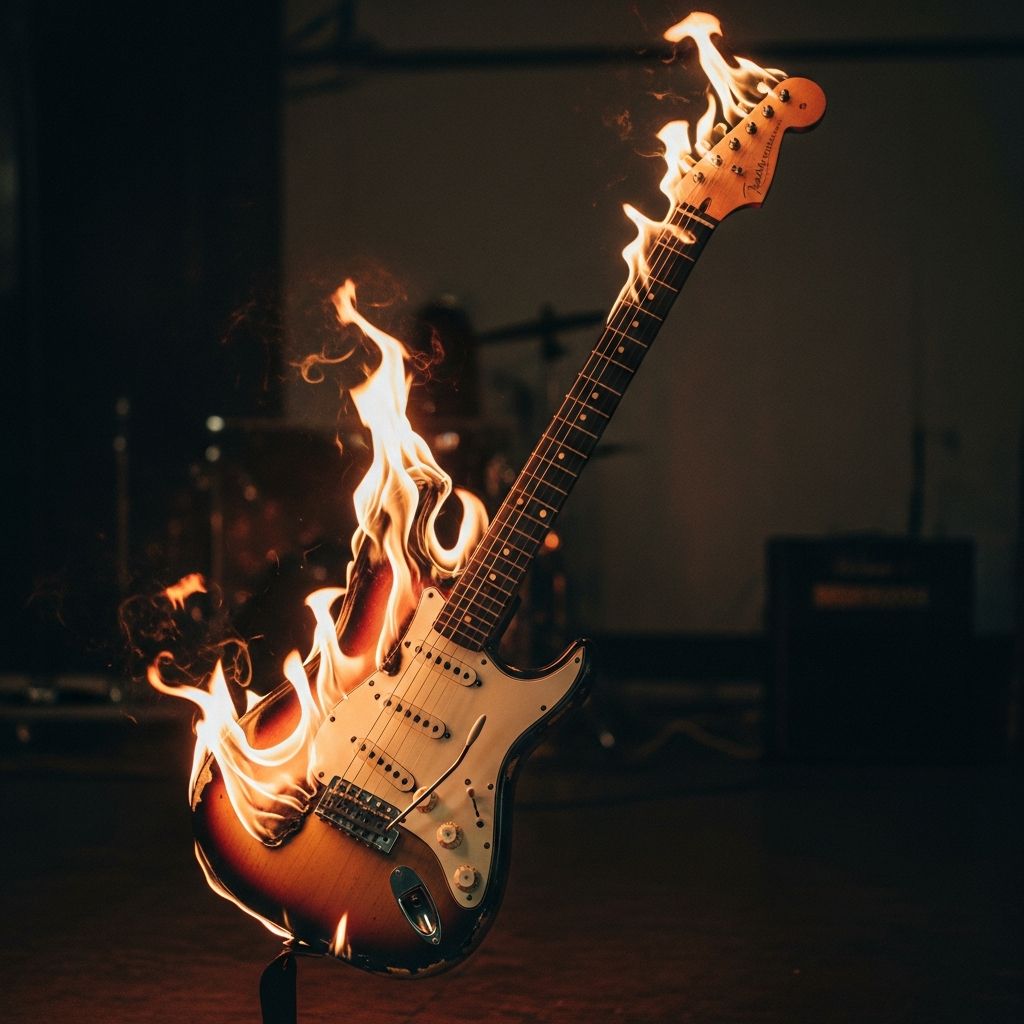
When The Strokes released Room on Fire in 2003, they were facing one of the hardest challenges in rock: following a debut that had already been hailed as era-defining. Rather than reinvent themselves, they doubled down on sharp songwriting, tight arrangements, and a distinctly New York cool that would outlast the initial hype cycle.
Setting the Stage: Post-Millennium New York Rock
The early 2000s rock landscape looked very different from the grunge-heavy 1990s. A new generation of bands emerged from New York City clubs, reviving jagged guitars, short songs, and unpolished attitude just as mainstream radio leaned heavily on polished pop and nu-metal. The Strokes were pushed to the front of that wave, often framed as the band that made stripped-down rock cool again.
By the time Room on Fire arrived, the band was no longer an underground secret. Their debut had been celebrated, imitated, and scrutinized, placing enormous pressure on whatever they released next. The follow-up would be judged not just as a collection of songs but as a referendum on whether The Strokes were a fleeting trend or a band with staying power.
The Weight of a Breakthrough Debut
Few rock groups in the 21st century experienced a rise as sudden as The Strokes. Their first full-length burst into critics’ lists and fan conversations with the confidence of a seasoned act, not a young band’s first attempt. That success created a classic dilemma: how does a group evolve without losing the directness that first drew listeners in?
For many fans and observers, there was a fear that any drastic change in direction would be interpreted as chasing trends, while a similar-sounding record might be dismissed as a repeat. The band had to walk a tightrope between development and continuity, crafting songs that felt familiar yet not stagnant.
Inside the Making of “Room on Fire”
Room on Fire was written and recorded in the shadow of heavy touring, industry expectations, and internal growth. The band had spent years perfecting a collaborative chemistry in cramped stages and studios, and that experience carried directly into the sessions for their second album.
Rather than building the record around studio experiments, the songs were shaped by live energy and clear structures. Guitars lock together in interwoven lines, bass and drums stay taut and insistent, and vocals sit slightly rough around the edges. That approach gives the album a feeling of precision without sacrificing spontaneity.
Signature Sound without Standing Still
Sonically, Room on Fire keeps many of the hallmarks people associate with The Strokes: concise songs, punchy tempos, and a mix of detachment and desperation in the vocals. Yet careful listening reveals small but meaningful shifts, especially in how melodies and textures are handled. The record has more pronounced rhythmic twists and more deliberate contrasts between verses and choruses.
Instead of dramatic stylistic departures, the album refines what came before. Guitar tones vary from scraping, treble-heavy riffs to more fluid, melodic lines, and some songs lean into almost pop-leaning hooks without losing the band’s downtown grit. It is evolution by tightening and sharpening, not by abandoning what works.
Track-by-Track Highlights and Themes
While every listener gravitates to different cuts, several songs have become touchstones for how Room on Fire is remembered. They illustrate the range the band found within its seemingly narrow sonic palette.
- Hook-Driven Singles: The record’s best-known tracks use immediate guitar motifs and singable vocal lines to draw the listener in within seconds.
- Deeper Album Cuts: Mid-album songs often explore slightly darker moods and layered arrangements, showing that the band’s interests extended beyond radio-friendly bursts.
- Closing Statements: The final songs offer a sense of unresolved tension, fitting for a band wrestling with newfound fame and shifting personal lives.
Lyrically, many tracks circle around strained relationships, miscommunication, and the alienation that can accompany rapid success. The words are often fragmentary and conversational, hinting at stories rather than spelling them out. That style allows listeners to project their own experiences onto the music, which helps explain the album’s staying power.
Lyric Themes: Disconnection in the Spotlight
One of the most intriguing aspects of Room on Fire is how resigned and weary some lines sound, despite the confident playing behind them. There is an ongoing tension between swaggering instrumentals and vocal delivery that suggests boredom, regret, or emotional fatigue. That contrast captures the feeling of being surrounded by excitement while feeling detached from it.
Recurring themes include:
- Romantic relationships strained by lifestyle changes.
- A desire to escape old patterns while seeming stuck in them.
- Frustration with expectations from others, whether personal or professional.
This blend of glamorous surface and restless interior life mirrors the band’s public image at the time: an effortlessly cool group wrestling privately with pressure, conflict, and uncertainty.
How “Room on Fire” Compares to Its Peers
The early-2000s rock revival produced multiple high-profile follow-up albums from bands suddenly placed in the spotlight. Comparing these second records helps show where Room on Fire fits within that moment and why it has aged particularly well.
| Band & Album | Follow-Up Strategy | Initial Reaction | Long-Term View |
|---|---|---|---|
| The Strokes – Room on Fire | Refine and tighten their established sound with subtle experiments. | Mixed to positive, with some criticism for perceived similarity to the debut. | Widely seen as a strong, consistent record and one of their best. |
| Interpol – Antics | Build on the atmosphere of their debut with slightly broader dynamics. | Generally strong praise for maintaining quality. | Often treated as a companion piece to their first album. |
| Yeah Yeah Yeahs – Fever to Tell | Push from chaotic art-punk into more melodic territory. | Celebrated as a bold, emotional statement. | Considered a cornerstone of the era’s rock scene. |
In this context, Room on Fire stands out as a record that chose continuity over disruption, trusting that listeners would hear the nuance in what at first sounded familiar. That trust was not fully rewarded immediately, but subsequent years have been kinder than early reviews might suggest.
Critical Reception vs. Fan Devotion
Upon release, some critics praised the album’s efficiency and hooks, while others viewed it as too close in spirit and structure to the debut. That split reaction created a narrative that the band had played it safe, a storyline that would follow them into later projects. Yet the people who connected with the album early often developed a deep, long-term attachment to it.
As time passed, new listeners increasingly encountered the album outside the fevered hype around early-2000s rock. With expectations lowered and historical distance gained, the songs could be judged more on their own merits. Many fans who discovered the band later came to hear Room on Fire as one of their most replayable and consistent efforts.
The Album’s Evolving Legacy
Two decades on, Room on Fire occupies an interesting place in The Strokes’ catalog. It is not the origin story, nor is it the most radical departure. Instead, it acts as a bridge between the scrappy immediacy of their earliest days and the more varied experiments that would come later. That bridging role gives it a special appeal to longtime followers.
Among musicians and dedicated listeners, the record is often admired for its economy. Songs rarely overstay their welcome, parts lock together with near-mathematical precision, and there is little sense of filler. Aspiring guitarists and producers frequently study the interplay of the parts as a lesson in how to make a relatively narrow sound feel rich and engaging.
Influence on Indie and Alternative Rock
While the band’s debut tends to receive the lion’s share of credit for inspiring a wave of guitar-driven acts, Room on Fire contributed significantly to how those later bands structured albums and approached follow-up records. Many groups have followed a similar path: deliver a clear statement first, then refine and deepen it on the second outing rather than abruptly changing course.
Elements of the album’s approach—tight, interlocking guitars, melodic yet unflashy solos, and a rhythm section that prioritizes forward motion—can be heard in numerous 2000s and 2010s indie releases. The idea that a band can be both stylish and meticulous, both emotionally distant and quietly vulnerable, owes much to the template these songs helped reinforce.
Why It Still Resonates with New Listeners
Modern audiences discovering Room on Fire through streaming services or curated playlists often encounter it without the baggage of early-2000s rock discourse. To them, the album can feel surprisingly current: short, focused tracks align with contemporary listening habits, while the raw-but-controlled production contrasts sharply with heavily processed digital pop.
Several factors help the album remain fresh:
- Timeless Song Lengths: Most tracks deliver their ideas in a few minutes, never dragging.
- Distinct Guitar Voices: Each guitarist occupies a different sonic space, preventing the mix from feeling crowded.
- Emotional Ambiguity: The lyrics avoid neat resolutions, making the songs feel relevant to shifting life stages.
As a result, the record serves as a reliable entry point not just to The Strokes but to a broader era of rock that valued immediacy and character over glossy perfection.
Practical Takeaways for Musicians and Fans
Beyond its historical importance, Room on Fire offers a few concrete lessons about making and appreciating music. Artists and listeners alike can draw inspiration from how confidently it commits to its own limited palette.
- Refinement can be as bold as reinvention. The band showed that subtle evolution within a chosen style can yield lasting work.
- Constraints sharpen creativity. Working with a small set of sounds encouraged inventive arrangements.
- Emotion can live in the details. Tiny shifts in phrasing, tone, and rhythm carry much of the record’s feeling.
In a musical landscape that often rewards dramatic pivots, this album stands as a reminder that consistency, when paired with craftsmanship, can build a deeper legacy over time.
Frequently Asked Questions about “Room on Fire”
Is “Room on Fire” better than The Strokes’ debut?
The answer depends heavily on what listeners value. The debut is often seen as the more groundbreaking statement, but Room on Fire wins many fans over with its cohesion and replay value. Some people prefer the raw shock of the first record, while others gravitate to the slightly more polished and intricate feel of the second.
Where should a new listener start with the album?
Newcomers might begin with the most immediate, hook-driven tracks, then explore the deeper cuts that reveal more with repeated listens. Jumping between the singles and the moodier songs midway through the record can give a quick sense of its range.
How did the album affect The Strokes’ career?
Room on Fire did not completely escape the shadow of the debut, but it solidified the band’s identity and proved they could deliver another tightly written set of songs. That stability gave them the freedom to experiment more dramatically on later releases, knowing they had already created a strong core of material.
Why do some people call it underrated?
Because expectations were so high when it arrived, early reactions sometimes focused more on what it was not than on what it achieved. Over time, as the noise around the band faded, more listeners began to recognize how consistently engaging and carefully built the record actually is.
Does “Room on Fire” still matter today?
Yes. For many fans and musicians, it represents one of the clearest examples of how a rock band can refine its voice without surrendering energy or personality. Its influence echoes in countless later records that emphasize tight songwriting and focused arrangements over studio excess.
Final Thoughts: A Quietly Defining Second Act
Room on Fire may never fully escape comparisons to the debut that preceded it, but that comparison undersells what the album accomplishes on its own terms. It captures a band at a moment of intense pressure and responds not with grand gestures, but with a confident tightening of everything that once felt loose and accidental.
In doing so, The Strokes created a record that continues to draw in new listeners, inspire young bands, and reward longtime fans who return to it year after year. For anyone curious about how great rock records are built, this album remains a masterclass in doing more with less—and making it sound effortless.