When The Secret of NIMH arrived in 1982, it offered something startlingly different from the bright, musical cartoons that dominated American animation. Instead of a lighthearted romp, audiences found a story about a widowed field mouse facing death, medical experimentation, and moral responsibility — all wrapped in lush, hand-drawn art and eerie, glowing magic.
Four decades later, this bold little film still feels unusual. It sits at the crossroads of family entertainment and gothic fantasy, earning a reputation as one of the most daring animated movies ever released.
The Story at a Glance: A Mouse Against Impossible Odds
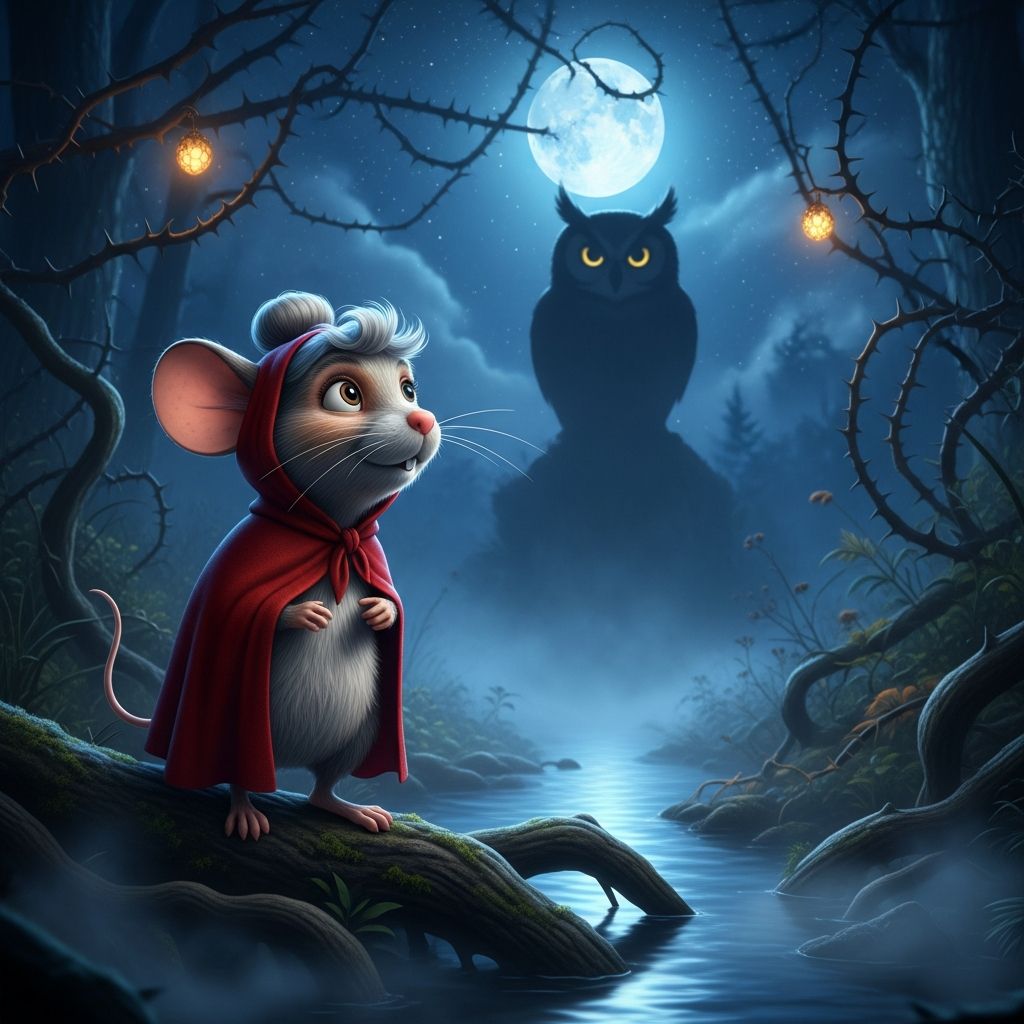
At its core, The Secret of NIMH is a story about a mother who will do anything to protect her children. Mrs. Brisby, a shy but determined field mouse, races against time to save her sick son Timmy, who cannot be moved from their home just as the farmer’s plow threatens to destroy their entire habitat.
- Protagonist: Mrs. Brisby, a timid but quietly brave widow.
- Immediate problem: Her son is gravely ill and too weak to be moved.
- Greater threat: The farmer’s plow is days away from tearing up the field.
- Mysterious past: Her late husband, Jonathan, had deep ties to a secretive group of super-intelligent rats.
- Hidden world: An underground civilization of escaped lab rats from the National Institute of Mental Health (NIMH).
The film slowly reveals that these rats were experimented on at NIMH, gaining heightened intelligence and forming a complex society beneath the farm. Mrs. Brisby’s personal struggle becomes entwined with their ethical dilemmas about technology, dependence on humans, and what it means to build a just community.
From Disney Dissenters to Don Bluth’s Bold Vision
Director Don Bluth and a group of animators famously left Disney in the late 1970s, frustrated with shrinking budgets, production shortcuts, and what they saw as a loss of artistic ambition in studio animation. They believed animation could be more cinematic, emotional, and adult without ceasing to be for families.
The Secret of NIMH was their first major theatrical test of that philosophy.
- Source material: Loosely adapted from the 1971 Newbery Medal–winning novel Mrs. Frisby and the Rats of NIMH by Robert C. O’Brien.
- Ambition: To prove that non-Disney animation could rival — or surpass — the studio’s golden-age classics in artistry and depth.
- Craft focus: Rich background painting, detailed character animation, and atmospheric lighting effects that recall early Disney features but skew darker and more intense.
While it was not a box-office juggernaut, the film quickly earned admiration from critics and animators for its craftsmanship and willingness to take risks.
Visual Style: Gothic Fantasy in Hand-Drawn Form
One of the reasons The Secret of NIMH still resonates is its look. Far from the flat, TV-inspired designs common at the time, the film embraces a layered, textured style and mood-drenched lighting.
- Painterly backgrounds: Fields, brambles, and interiors are rendered with a near-storybook richness, creating a sense of physical weight and danger.
- Atmospheric lighting: Magic scenes, the Great Owl’s lair, and the rats’ underground city are bathed in beams, glows, and shadow, more reminiscent of live-action cinematography than simple cel animation.
- Expressive character animation: Mrs. Brisby’s nervous gestures, the owl’s predatory movements, and Nicodemus’s frail dignity give each character a distinctive physical presence.
- Visual contrast: Harsh human-made spaces (laboratories, machinery) are often cold and angular, set against the organic curves and warm tones of the animal world.
| Visual Element | Effect on Audience |
|---|---|
| Deep shadows and glowing highlights | Creates tension, mystery, and a slightly haunted atmosphere. |
| Detailed backgrounds | Makes the world feel vast and lived-in, increasing immersion. |
| Hand-drawn effects (sparkles, light rays) | Gives the magic a tactile, analog feel that stands out today. |
| Subtle facial animation | Allows for nuanced emotions, particularly in Mrs. Brisby’s fear and resolve. |
Voice Performances: Mature Drama in a “Kids’ Cartoon”
The film’s emotional heft owes a lot to its cast of seasoned actors, whose performances are closer to serious drama than broad children’s comedy.
- Mrs. Brisby (Elizabeth Hartman): Hartman brings a fragile, tremulous warmth to the character, making her fear and courage deeply believable.
- Nicodemus (Derek Jacobi): His noble, weary voice gives the rat leader a mystical gravitas.
- Jenner (Paul Shenar): As the scheming rat antagonist, Shenar’s rich, menacing tone sharpens the film’s internal political conflict.
- The Great Owl (John Carradine): Carradine lends a chilling, ancient quality to one of the movie’s most memorable and terrifying sequences.
These performances elevate the story, aligning it more with classic fantasy cinema than with Saturday-morning cartoons.
Themes That Grow With the Viewer
Part of what makes The Secret of NIMH endure is the way its themes deepen as audiences age. Children may first remember the scary owl or the glowing amulet; adults tend to come back for its ethical questions and emotional complexity.
1. Courage Without Superpowers
Mrs. Brisby is not a warrior, a chosen one, or a trained hero. She is anxious, physically small, and often terrified. Yet she keeps moving forward for the sake of her children, which gives the film an unusually grounded kind of heroism.
- Her bravery is incremental: she survives one frightening encounter and then chooses to face another.
- The film suggests that parental love can fuel heroism more effectively than destiny or prophecy.
2. The Ethics of Science and Exploitation
The backstory of NIMH introduces a surprisingly blunt look at animal experimentation. The rats were captured, injected, and studied, their intelligence boosted at the cost of their freedom and safety.
- Their escape raises questions about what humans owe to beings they have altered.
- The rats struggle with whether to continue benefiting from human technology — electricity, tools — or to build a more self-sufficient society.
While the film simplifies issues that, in reality, are far more complex, it opens a door for families to talk about how modern research uses animals and why ethical guidelines exist in medicine and science.
3. Power, Responsibility, and Division
Inside the rat community, there is a split between those who want to cling to the relative comfort of the farm and those who believe they must leave to live ethically. This internal conflict, led in part by the ambitious Jenner, introduces political and moral tension often absent from family animation.
- Nicodemus and his supporters argue for sacrifice and long-term justice.
- Jenner seeks immediate control and status, even at the cost of others.
For older viewers, these struggles echo real-world debates about leadership, compromise, and the cost of doing the right thing.
Why It Felt So Different in 1982
In the early 1980s, mainstream American animation was in a comparatively quiet period. Even Disney was dealing with internal turmoil, box-office disappointments, and uncertainty about the medium’s future. Against that backdrop, The Secret of NIMH emerged as a passionate statement that hand-drawn cartoons could still be ambitious, serious filmmaking.
- Critical response: Reviewers praised the film’s striking visuals and mature storytelling, often highlighting it as a return to the lush, emotionally rich animation of earlier decades.
- Audience impact: It developed a following among children who were captivated — and sometimes genuinely frightened — by its mood and intensity.
- Industry influence: The movie helped keep interest in feature animation alive at a time when some questioned its relevance, paving the way for later resurgences in the late 1980s and 1990s.
How It Plays for Families Today
For modern families used to slick CGI and fast-paced humor, The Secret of NIMH can feel like a different species of animated film. That difference can be a strength — but it also calls for some preparation.
What Parents May Want to Know
- Intensity and scares: Scenes with the Great Owl, predatory animals, and violent confrontations between rats can be frightening for younger children.
- Onscreen death: The film does not shy away from mortality; death and sacrifice are openly depicted and discussed.
- Complex storytelling: The backstory about NIMH, experiments, and the rats’ political debates may go over the heads of very young viewers but offers rich material for older kids.
Many parents find that the film works best when watched together, with time afterward to talk through questions about fear, bravery, and fairness — especially around how animals are treated in scientific research, a topic that real-world ethics committees and regulations are designed to address.
Legacy: From Cult Favorite to Canon
While it never became the kind of merchandising powerhouse associated with some animated hits, The Secret of NIMH has steadily grown in reputation.
- Critical standing: It is frequently cited by critics and historians as one of the standout animated films of the 1980s.
- Influence on animators: Many artists who entered the field in the 1980s and 1990s point to Don Bluth’s early work as proof that animation could be atmospheric and adult without abandoning children.
- Cult status: For viewers who discovered it on VHS or television, the film became one of those “secret” childhood movies — less mainstream than Disney, but more haunting and unforgettable.
This enduring affection is evident in anniversary retrospectives, critical essays, and ongoing discussion of its artistry and themes.
Is It Still Worth Watching?
For anyone curious about animation history, fantasy storytelling, or films that challenge what family entertainment can look like, the answer is yes. The Secret of NIMH may feel slower and more somber than today’s kid-friendly blockbusters, but that difference is exactly what makes it valuable.
Its mix of emotional sincerity, ethical depth, and hand-crafted beauty makes it a powerful choice for parents who want to show their kids that cartoons can be strange, poetic, and genuinely moving.
Frequently Asked Questions (FAQs)
Is The Secret of NIMH too scary for young children?
It depends on the child. The film includes dark environments, predatory animals, and some violent scenes, which can be intense for very young or sensitive viewers. Many families choose to watch it with children around age eight or older and stay nearby to pause or discuss if needed.
Do I need to read the book before watching the movie?
No. The film stands on its own, though it is inspired by the novel Mrs. Frisby and the Rats of NIMH. The movie takes several creative liberties, especially with the use of magic, so reading the book later can be an interesting comparison rather than a requirement.
How accurate is the film’s portrayal of animal experimentation?
The depiction is highly fictionalized — real-world laboratory research is tightly regulated today and governed by ethical standards intended to minimize suffering and use alternatives where possible. The film uses experimentation mainly as a narrative device to explore questions of power, responsibility, and freedom.
What makes The Secret of NIMH different from Disney movies of the same era?
Compared with many Disney releases from the early 1980s, The Secret of NIMH leans into gothic visuals, morally complex characters, and a tone that is more somber and mystical than comedic. It also emphasizes detailed, atmospheric animation over broad musical numbers or comic relief.
Why do animation fans still talk about this film today?
Fans and critics continue to revisit The Secret of NIMH because it represents a turning point: a moment when independent animators challenged the status quo and demonstrated that feature animation could be artful, emotionally layered, and aimed at more than just laughs.
References
- Public Health Service Policy on Humane Care and Use of Laboratory Animals — U.S. National Institutes of Health (Office of Laboratory Animal Welfare). 2015-03-01. https://grants.nih.gov/grants/olaw/references/phspol.htm
- The Secret of NIMH — Rotten Tomatoes. Accessed 2025-12-06. https://www.rottentomatoes.com/m/secret_of_nimh
- 40 years later, “The Secret of NIMH” remains one of the greatest animated movies of all time — Chris Peterson, OnStage Blog. 2022-03-25. https://www.onstageblog.com/onscreenblog-features/2022/3/25/40-years-later-the-secret-of-nimh-remains-one-of-the-greatest-animated-movies-of-all-time
- The Don Of A New Era: Celebrating The 40th Anniversary Of “The Secret Of NIMH” — Animation Scoop. 2022-07-18. https://animationscoop.com/the-don-of-a-new-era-celebrating-the-40th-anniversary-of-the-secret-of-nimh/
- Mrs. Frisby and the Rats of NIMH (Newbery Medal acceptance information) — American Library Association. Accessed 2025-12-06. https://www.ala.org/alsc/awardsgrants/bookmedia/newberymedal/newbery75obrian