The Evolution of Size Inclusivity in Modern Fashion Retail
The fashion industry has undergone a significant transformation in recent years, with established retailers recognizing a critical gap between their traditional sizing offerings and the actual diversity of body types among American consumers. This shift represents more than a marketing strategy; it reflects a fundamental reimagining of how fashion brands conceptualize their customer base and product development. The movement toward comprehensive size ranges has become increasingly central to brand identity and business strategy, particularly among companies seeking to remain relevant in a rapidly changing retail landscape.
The push toward size inclusivity emerges from a simple yet powerful demographic reality: most American women do not fit into the historically narrow size ranges that dominated the fashion industry for decades. Retailers that once marketed exclusively to specific body types now recognize the substantial market opportunity and social imperative to broaden their offerings. This transition involves not just extending size ranges, but fundamentally rethinking design philosophy, manufacturing processes, and customer representation across all marketing channels.
Understanding Inclusive Sizing Philosophy
Inclusive sizing differs from traditional plus-size offerings in its underlying philosophy and execution. Rather than treating extended sizes as a separate category or afterthought, inclusive sizing integrates all body types into a unified design and manufacturing approach. This methodology requires collaboration with specialized fashion enterprises that have developed expertise in scaling garments across diverse proportions while maintaining fit, quality, and aesthetic consistency.
The technical aspects of inclusive sizing present genuine challenges for traditional apparel manufacturers. Each size requires distinct pattern grading that accounts for variations not just in overall dimensions, but in how different body types carry proportion. A garment scaled proportionally from a size 00 to a size 32 requires careful architectural thinking to ensure proper sleeve length, torso positioning, and hemline placement across the entire range. Companies pioneering this approach employ specialized micrograding technology that adjusts construction details at each size increment rather than applying uniform scaling formulas.
Strategic Partnerships Driving Change
Established fashion retailers have increasingly partnered with companies specializing in size-inclusive design to accelerate their transformation. These collaborations allow legacy brands to leverage decades of expertise in traditional manufacturing while incorporating innovative approaches developed by newer, more niche-focused enterprises. Such partnerships function as knowledge-transfer mechanisms, enabling larger companies to integrate best practices across their entire product lines rather than limiting inclusive sizing to isolated capsule collections.
These strategic alliances typically involve initial pilot programs featuring limited-edition collections that showcase the possibilities of size inclusivity. Through these introductions, retailers can assess customer response, refine their technical processes, and build internal expertise before rolling out expanded offerings across broader product categories. The collaborative model has proven particularly effective for companies seeking to transform their brand image while managing the operational and financial risks associated with large-scale manufacturing changes.
Expanding Size Ranges Across Product Categories
Contemporary size-inclusive initiatives extend far beyond a single product type or seasonal offering. Progressive retailers now offer comprehensive size ranges across multiple categories including denim, dresses, blazers, knitwear, and basic essentials. This comprehensive approach reflects recognition that customers shopping across different garment types expect consistent sizing availability throughout the brand’s portfolio.
Denim represents a particularly significant focus area for many retailers undertaking inclusive initiatives. The category presents unique technical challenges due to the precision required in waistband construction, inseam measurement, and overall fit architecture. Recognizing that well-fitting denim represents one of the most sought-after fashion staples, retailers prioritize expanding denim options across extended size ranges, often accompanying these launches with revised cuts and fits designed specifically for different body proportions rather than simple scaled versions of traditional styles.
The Business Case for Size Inclusivity
Beyond ethical and social considerations, size inclusivity addresses a significant untapped market opportunity. Industry analysis demonstrates that the majority of American women wear sizes larger than the traditional offerings historically available through mainstream retailers. By expanding size ranges, companies gain access to previously underserved customer segments, potentially increasing their addressable market substantially. This expansion creates opportunities for increased revenue, brand loyalty, and market share gains among demographics that previously felt excluded from these retailers.
The economic argument for inclusivity has become increasingly compelling as retailers recognize the spending power of underserved customer segments. Consumers who previously experienced limited options or poor fit across mainstream retailers exhibit high engagement and loyalty when presented with brands that genuinely accommodate their body types. This customer retention advantage compounds over time as satisfied shoppers consolidate their purchases with retailers offering reliable, well-fitting options.
Implementation Challenges and Operational Considerations
Transitioning to genuinely inclusive sizing requires substantial operational restructuring beyond simply producing additional sizes. Manufacturing facilities must adjust production planning, inventory management, and quality control processes to accommodate expanded size ranges. Supply chain complexity increases significantly when retailers shift from narrow size offerings to comprehensive ranges spanning 15 or more distinct sizes.
Pricing strategies become more nuanced in inclusive sizing environments. While some retailers maintain uniform pricing across the entire size spectrum, others implement modest price adjustments reflecting the varying material costs associated with different sizes. These pricing decisions carry implications for brand positioning and customer perception, requiring careful calibration to balance accessibility with sustainable business models.
Inventory distribution presents another significant operational challenge. Retailers must forecast demand across an expanded size range, particularly in early stages when historical sales data doesn’t exist for these extended offerings. Miscalculations in inventory allocation can result in either stock shortages for popular sizes or excess inventory in underestimated size categories, both scenarios presenting financial challenges.
Marketing and Brand Positioning Shifts
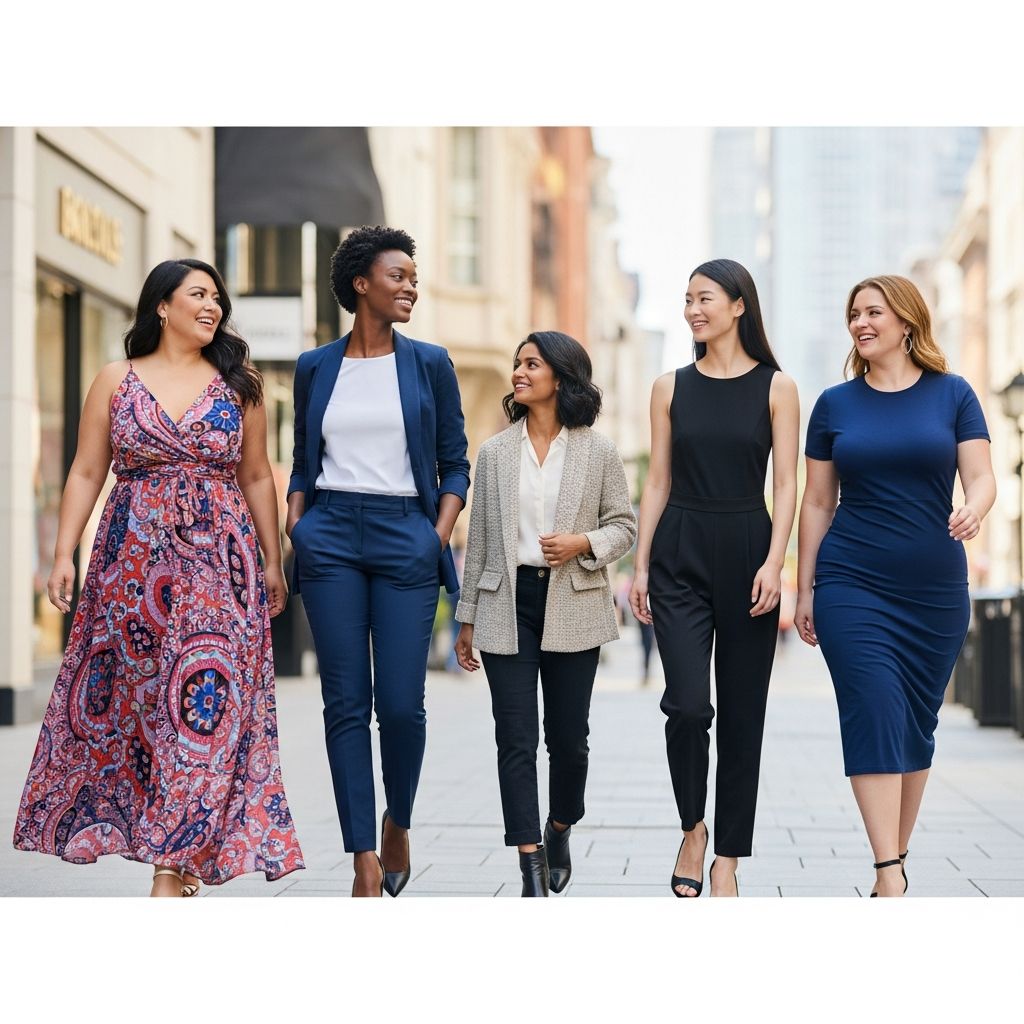
Successful size inclusivity extends beyond product offerings into comprehensive marketing and brand representation strategies. Forward-thinking retailers showcase their expanded size ranges through diverse model representation, ensuring that marketing imagery and fashion photography feature a variety of body types wearing their garments. This representation serves multiple functions: it demonstrates genuine commitment to inclusivity, provides customers with realistic expectations about fit and appearance, and reflects the actual diversity of the customer base.
Brand messaging around inclusivity must balance authenticity with avoiding performative activism. Customers increasingly distinguish between retailers making genuine operational changes and those merely adopting inclusive language without substantive product or representation adjustments. Successful brands communicate their sizing initiatives through specific details about available ranges, design philosophy, and the expertise informing their approach, rather than relying solely on aspirational messaging about diversity and belonging.
Industry Trends and Future Directions
The broader fashion industry shows clear momentum toward normalized size inclusivity. What began as innovative positioning by specialized startups has become competitive necessity for established retailers seeking to maintain market relevance. This shift reflects generational change in consumer values, with younger shoppers particularly prioritizing retailer inclusivity in their purchasing decisions.
Technology continues to support expanded sizing initiatives through tools like fit prediction algorithms, virtual try-on applications, and detailed size matching systems. These innovations help customers navigate expanded size ranges effectively while reducing return rates associated with fit problems. Augmented reality applications increasingly allow customers to visualize how garments will appear across different body proportions before purchase, improving decision-making confidence.
Key Drivers of Change in Fashion Retail:
- Recognition that average American clothing sizes exceed historically available ranges
- Substantial untapped market opportunity among underserved customer segments
- Younger consumer priorities emphasizing inclusivity and social responsibility
- Competitive pressure as leading retailers adopt comprehensive sizing strategies
- Technological advancements enabling efficient size expansion and inventory management
- Collaboration frameworks between established retailers and specialized sizing experts
Customer Response and Market Validation
Customer feedback regarding expanded sizing initiatives has been overwhelmingly positive, with social media engagement and customer testimonials reflecting genuine appreciation for improved accessibility. Shoppers express satisfaction not merely with size availability but with the design quality and aesthetic consistency maintained across extended ranges. This positive reception validates the business model while reinforcing the social and ethical imperative for continued expansion.
Repeat purchase rates and customer lifetime value metrics show improvement among customers who experience successful fit within expanded size ranges. This financial validation provides compelling evidence supporting further investment in inclusive sizing infrastructure and processes. Early adopters of comprehensive sizing strategies report increasing market share gains and improved brand reputation metrics compared to competitors maintaining traditional narrow size ranges.
Addressing Common Misconceptions About Size Inclusivity
Several misconceptions persist regarding size-inclusive initiatives, often promulgated by those resistant to industry transformation. Some argue that expanding sizes compromises design quality or aesthetic consistency; evidence from early adopters directly contradicts this concern, demonstrating that well-executed inclusive sizing maintains design integrity across all sizes. Others suggest that size expansion primarily serves marketing purposes rather than reflecting genuine commitment; however, the substantial operational and financial investments required for authentic sizing transformation indicate otherwise.
Additional skepticism centers on pricing and profit margins, with critics questioning whether inclusive sizing remains economically viable. Analysis of retailers successfully implementing comprehensive sizing demonstrates that inclusive offerings generate sufficient incremental revenue to offset increased complexity and production costs. The expanded customer base and improved retention metrics associated with well-executed inclusive sizing initiatives support long-term profitability.
The Role of Specialized Expertise in Transformation
Companies pioneering size-inclusive design have developed sophisticated technical expertise that established retailers recognize as valuable in their transformation efforts. This expertise encompasses advanced pattern grading, fabric behavior analysis across size ranges, and design principles that maintain aesthetic consistency while accommodating body diversity. Access to this knowledge base accelerates the learning curve for traditional retailers seeking to implement comprehensive sizing strategies.
Educational initiatives and knowledge-sharing within the industry continue expanding, with experienced practitioners publishing resources and offering consulting services to retailers undertaking inclusive sizing transformations. Industry conferences increasingly feature panels and workshops dedicated to implementation strategies, technical challenges, and best practices. This democratization of expertise accelerates industry-wide adoption of size inclusivity principles.
Sustainability Considerations in Inclusive Sizing
Expanded product ranges raise important sustainability questions regarding manufacturing efficiency, material usage, and inventory management. Retailers must balance inclusivity objectives with environmental responsibility, implementing systems that minimize waste while ensuring adequate size availability. Some companies address this through made-to-order options for extended sizes, reducing unnecessary inventory while maintaining availability. Others invest in predictive analytics to optimize inventory allocation across size ranges based on historical and demographic data.
The sustainability conversation also encompasses the employment and labor practices associated with expanded manufacturing. Inclusive sizing increases production complexity and labor requirements, making ethical manufacturing practices and fair labor standards even more critical. Progressive retailers address these concerns through transparent supply chain practices and commitments to manufacturing partnerships that prioritize worker welfare.
Frequently Asked Questions About Fashion Size Inclusivity
Does inclusive sizing cost more for consumers?
While some retailers implement modest price variations across size ranges reflecting material costs, many maintain uniform pricing throughout their inclusive offerings. The competitive landscape encourages pricing strategies that maximize accessibility.
How do retailers ensure consistent fit across expanded size ranges?
Specialized micrograding technology adjusts garment construction at each size increment rather than uniformly scaling a base pattern. This approach maintains proper proportions and fit quality across the complete size spectrum.
Will all fashion brands adopt inclusive sizing?
Industry trends strongly suggest movement toward comprehensive sizing as standard practice. However, adoption timelines vary based on company resources, supply chain capabilities, and business strategy priorities.
How can consumers advocate for greater inclusivity in fashion?
Customer feedback, purchasing decisions, and social media engagement directly influence retailer priorities. Consumers can support brands demonstrating genuine inclusive commitment while expressing expectations to retailers not yet offering comprehensive sizing.
What role do specialized fashion companies play in industry transformation?
Companies focusing specifically on size-inclusive design serve as experts and consultants, helping established retailers implement comprehensive sizing through partnerships, knowledge-sharing, and collaborative collections.
References
- J. Crew and Universal Standard Team Up to Make Inclusive Sizing Standard — Rockyt Style. 2018. https://www.rockyt.style/the-latest/jcrew-inclusive-sizing
- J.Crew’s Relaunch Is Focused On Inclusivity — NYLON. 2018. https://www.nylon.com/articles/j-crew-new-crew
- J.Crew Relaunches with an Emphasis on Inclusivity and Diversity — Fashion Network. 2018. https://www.fashionnetwork.com/news/J-crew-relaunches-with-an-emphasis-on-inclusivity-and-diversity,1011299.html
- J Crew Praised for Launching Sizing Up to 5X — The Independent. 2018. https://www.independent.co.uk/life-style/j-crew-clothes-sizes-shop-plus-large-universal-standard-a8441341.html
- Diversity, Equity And Inclusion — J.Crew. 2024. https://www.jcrew.com/s/diversity-equity-inclusion