The quiet game is one of those rare parenting tricks that’s free, easy to start, and surprisingly powerful. Used thoughtfully, it can calm noisy chaos, help kids practice self-control, and give everyone a breather—without nagging, yelling, or screens.
Rather than using it as a prank or a way to “shut kids down,” you can turn the quiet game into a playful skill-building tool that supports your child’s emotional and social development.
What Is the Quiet Game, Really?
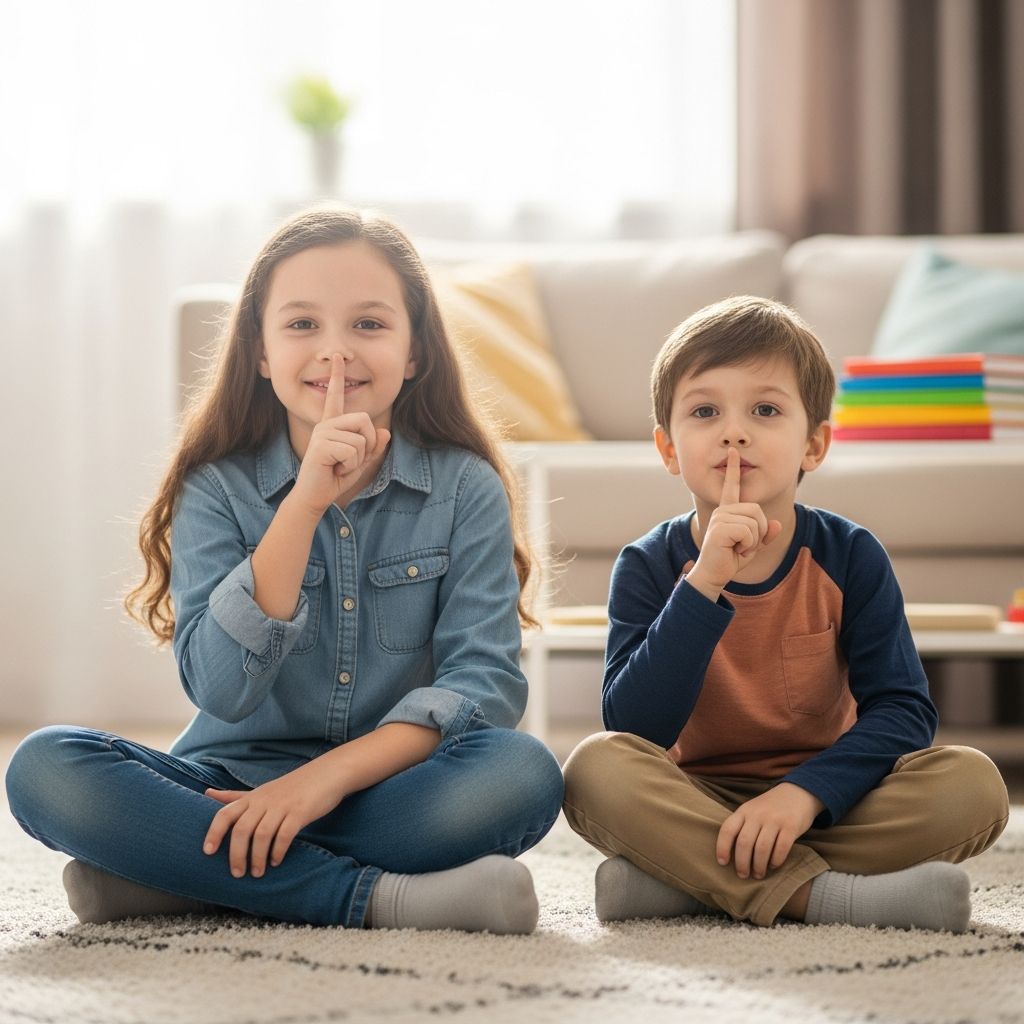
At its core, the quiet game is a simple challenge: everyone tries to stay silent for as long as possible. The first person to talk, laugh, or make a sound “loses,” and the last one staying quiet “wins.”
Parents often use it in the car, at restaurants, or at home when noise levels are sky-high. But beneath the silliness, kids are practicing:
- Self-regulation – stopping themselves from talking when they want to
- Impulse control – waiting, thinking, and choosing not to act immediately
- Listening skills – noticing what’s happening without jumping in
- Awareness of others – realizing how their noise affects people around them
Why the Quiet Game Works on Kids (and Adults)
Children learn best through play, not lectures. Structured games are a powerful way to build social and emotional skills because they wrap practice inside fun.
When you frame silence as a game instead of a command, several helpful things happen:
- Kids feel competent instead of controlled—they are doing something, not just being told to stop.
- Laughter and connection soften the moment, making cooperation more likely.
- Clear rules reduce power struggles and arguments.
- Short bursts of practice are more effective than long lectures for teaching self-control.
Quiet Game vs. “Be Quiet!”: A Helpful Comparison
| Traditional “Be Quiet” Approach | Quiet Game Approach |
|---|---|
| Often feels like scolding or criticism | Feels playful and cooperative |
| Focuses on stopping behavior | Focuses on building a skill (self-control) |
| Can create resistance or shame | Creates shared goals and teamwork |
| Relies on adult authority | Relies on clear rules and choice |
| Momentary silence, little learning | Practice in emotional regulation and patience |
Ground Rules for a Healthy Quiet Game
To keep the quiet game light, respectful, and effective, it helps to agree on a few basic rules with your kids in advance.
1. Make Participation Optional
The game works best when kids choose to join. You might say:
- “Want to try a round of the quiet game while we’re waiting for our food?”
- “We’re about to drive through busy traffic. Anyone up for a quiet game challenge?”
Choice supports autonomy, which is strongly linked to better motivation and cooperation in children.
2. Keep Rounds Short and Age-Appropriate
Children’s ability to wait and persist grows with age. Aim for brief rounds, especially with younger kids:
- Toddlers (2–3): 15–30 seconds
- Preschoolers (4–5): 30–60 seconds
- Early school age (6–8): 1–3 minutes
- Older kids (9+): 3–5 minutes, max
End before frustration sets in so kids associate the game with success, not failure.
3. Be Clear About What “Counts”
Explain the rules in simple terms:
- No talking, whispering, humming, or sound effects
- Smiling is allowed; laughing is not
- Hand motions are okay as long as they’re safe
- If you talk, you’re “out” for this round—but you can join the next one
4. Avoid Shaming or Public Embarrassment
The goal is practice, not humiliation. Instead of “You lost again,” try:
- “You stayed quiet for 20 seconds that time! That’s longer than before.”
- “It’s really hard not to laugh when Dad makes faces. You did great.”
Fun Variations on the Quiet Game
To keep things interesting—and developmentally appropriate—try remixing the classic quiet game with these variations.
1. The Statue Challenge
Combine stillness with silence.
- Everyone freezes like a statue on a countdown.
- No talking, moving, or giggling.
- The first person to move or make noise is “out.”
This variation builds body awareness and self-control, both important for school readiness and behavior regulation.
2. Silent Detective
This version turns listening into an adventure.
- Play a short round of silence.
- When time is up, ask: “What did you hear?”
- Kids list sounds—cars, birds, a ticking clock, someone’s footsteps.
You can award points for the most unusual sound noticed. It strengthens attention and observation skills.
3. Quiet Countdown Race
Instead of “who stays quiet the longest,” make silence playful but predictable.
- Set a timer for 30–60 seconds.
- Everyone must stay quiet until the timer beeps.
- When it goes off, everyone yells a silly word (like “banana!”) together.
This works well with younger children who might be discouraged by “losing” repeatedly.
4. Reverse Quiet Game
Once kids know the rules, flip them for fun and flexibility.
- For a set time, everyone speaks only in whispers.
- Or, everyone has to use slow-motion voices.
- Or, only one person at a time is allowed to talk.
This variation teaches turn-taking and respectful conversation, while still dialing the noise down.
When (and Where) to Use the Quiet Game
The quiet game can be especially helpful in certain situations where kids are expected to be calm but still have energy and feelings to manage.
- In the car – Long drives, traffic jams, or tense moments benefit from a playful reset.
- At restaurants – Waiting for food is hard; short games help kids cope with boredom.
- Before bedtime – A few quiet minutes can signal to the brain that it’s time to wind down.
- During transitions – Shifting from loud play to homework or from screen time to dinner.
- In public spaces – Waiting rooms, lines, or places where loud noise is stressful for others.
Common Mistakes to Avoid
Like any parenting tool, the quiet game can backfire if it’s used carelessly. Here are pitfalls to watch for—and how to sidestep them.
Using It as Punishment
If the quiet game becomes a consequence (“You’re too loud, now we’re doing the quiet game”), kids may associate silence with shame or rejection. Instead, offer it as a strategy:
- “We’re all getting a little overstimulated. Want to try a quiet round to reset?”
Overdoing the Competition
A little competition can be motivating, but constant winning and losing can create tension. Rotate the focus:
- Sometimes cheer for the longest silence.
- Sometimes celebrate team success (“We all stayed quiet for 45 seconds!”).
- Sometimes ignore winners and losers entirely—just notice effort.
Silencing Real Needs
Children still need to express discomfort, questions, and emotions. If a child is upset, afraid, or in pain, pause the game immediately. Emotional validation—listening to kids’ feelings and experiences—is essential for healthy development.
Making the Quiet Game Emotionally Smart
With a few tweaks, the quiet game becomes not just about silence, but about emotional intelligence.
Pair Silence With Reflection
After a round, ask simple questions:
- “How did your body feel when we were quiet?”
- “Was it easy or hard to stay still?”
- “What helped you stay quiet?”
Questions like these help kids name and understand their internal states—key for emotional regulation.
Use It to Practice Empathy
You can gently connect the game to consideration for others:
- “When we keep things quiet on the bus, it helps other people feel calm.”
- “The baby is trying to sleep. Let’s see if we can help by playing a quiet round.”
This encourages kids to notice how their actions affect people around them, a foundation of empathy.
Blending the Quiet Game with Other Calming Activities
The quiet game doesn’t have to stand alone. It can be combined with other simple, playful tools that help kids manage emotions and energy.
- Breathing challenges: After a silent round, try a “who can blow the slowest breath” game.
- Mindful listening: Use the Silent Detective variation to notice sounds of nature on a walk.
- Calm-down corners: Let kids add the quiet game to their own toolbox of strategies when they feel overwhelmed.
- Storytime: Follow a quiet round with reading together, which further supports language and connection.
Sample Quiet-Game Scripts for Parents
If you’re unsure how to introduce the game without sounding controlling, here are a few ready-to-use phrases you can adapt.
- In the car: “This traffic is stressful. Let’s play a 30-second quiet challenge and see who can stay silent the whole time. Ready?”
- Before bed: “Our bodies need to slow down for sleep. Want to try a quiet statue round, then I’ll read a story?”
- At a restaurant: “While we wait for our food, let’s try a quick quiet game. If we make it to the timer, we’ll all do a silly face at the same time.”
- After big emotions: “Our feelings are really big right now. Once you feel ready, we can try a short quiet round to help our bodies calm a little.”
Frequently Asked Questions (FAQs)
Q: Is the quiet game bad for kids if I use it often?
Used respectfully and with choice, the quiet game is not harmful. Problems arise when it is used to shut kids down, shame them, or replace real conversations about feelings. Keep it short, playful, and optional, and still make plenty of room for kids to talk, ask questions, and share emotions.
Q: What if my child can’t stay quiet at all?
Start with very short intervals—just a few seconds—and praise effort, not perfection. Many younger children are still learning impulse control, and research shows this ability improves gradually with age and practice. You can also remove the competitive element and simply notice, “We were quiet for 10 seconds that time!”
Q: Does the quiet game replace other discipline strategies?
No. The quiet game is a tool, not a full behavior plan. It can help in specific situations—like transitions, waiting, or calming down—but kids still need clear boundaries, routines, and warm, consistent guidance from caregivers.
Q: Can I play the quiet game with toddlers?
Yes, as long as your expectations match their stage of development. For toddlers, think in terms of a few seconds, not minutes, and focus more on having fun than on “winning.” Smiles, gentle praise, and quick rounds keep it positive.
Q: What if one sibling always wins and the others get upset?
Rotate the focus from individual winning to team goals. For example, set a family target (“Can we all stay quiet for 20 seconds together?”) or give playful rewards for effort (“Most improved,” “Funniest almost-laugh,” etc.). This keeps the game cooperative instead of divisive.
References
- Center on the Developing Child: Executive Function & Self-Regulation — Harvard University. 2023-05-01. https://developingchild.harvard.edu/science/key-concepts/executive-function/
- Social and Emotional Learning (SEL) and Student Benefits: Implications for the Safe Schools/Healthy Students Core Elements — Collaborative for Academic, Social, and Emotional Learning (CASEL) / U.S. Department of Education. 2010-01-01. https://www.casel.org/wp-content/uploads/2020/04/nelp-sel-research.pdf
- Parents and Families: Building Strong Relationships With Children — U.S. Department of Health and Human Services, Child Welfare Information Gateway. 2021-07-15. https://www.childwelfare.gov/pubpdfs/famstrengths.pdf
- Play and Children’s Learning — National Association for the Education of Young Children (NAEYC). 2020-03-10. https://www.naeyc.org/resources/topics/play