Understanding the Modern Maternal Experience
Motherhood has transformed dramatically over recent generations. Today’s mothers navigate a complex landscape of career aspirations, family expectations, social media pressures, and evolving parenting philosophies. Yet despite these modern complexities, one fundamental truth remains unchanged: mothers thrive when they have meaningful connections with others who understand their journey. The shared experience of raising children creates a unique bond that transcends typical friendships, fostering relationships rooted in genuine mutual support and authentic understanding.
The isolation that many contemporary mothers experience stands in stark contrast to historical family structures, where multiple generations lived in close proximity and community childcare was a natural part of daily life. Modern mothers often find themselves geographically separated from extended family, managing household responsibilities independently, and juggling professional commitments alongside parenting demands. This fundamental shift in social structures has made intentional community-building not just beneficial but essential for maternal wellbeing.
The Foundation of Meaningful Maternal Connections
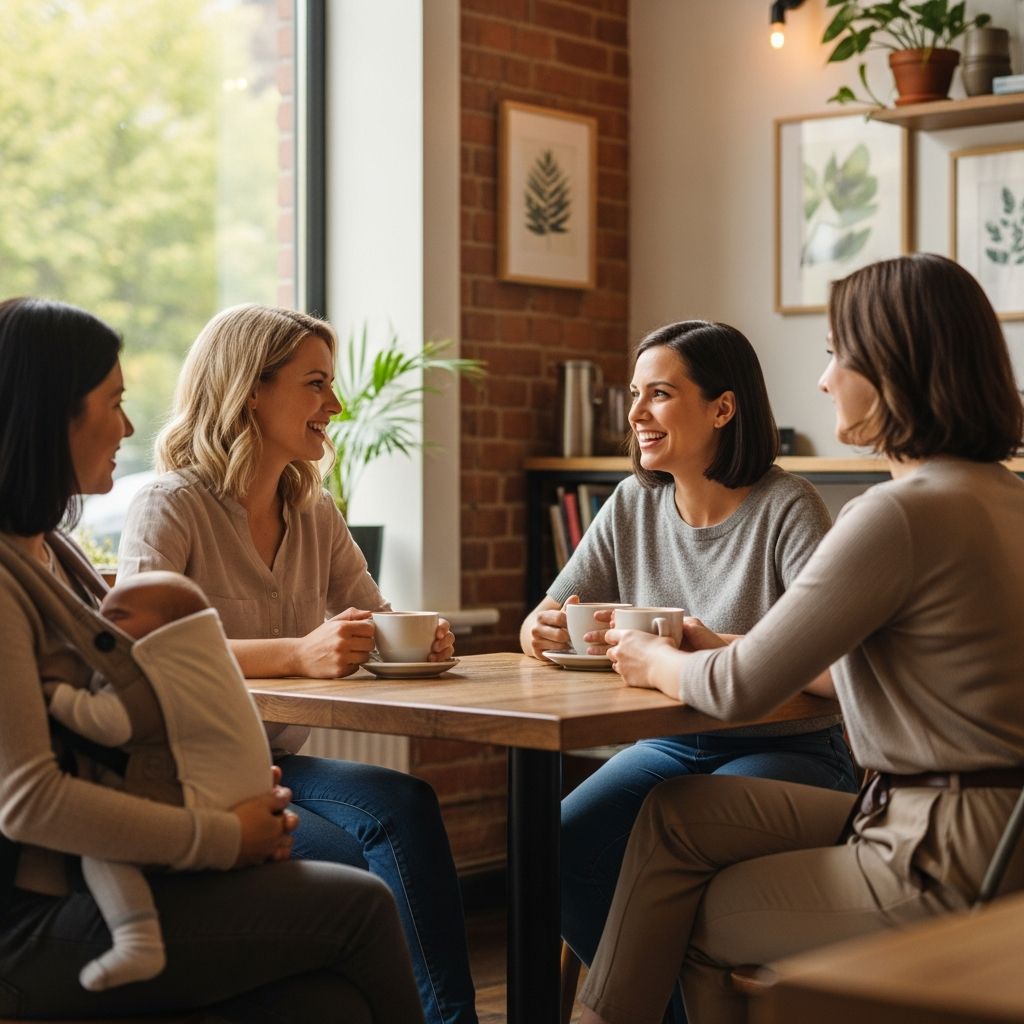
At its core, a strong maternal support network comprises individuals united by the shared experience of parenthood. These connections operate on a fundamentally different level than typical friendships because they are built upon mutual recognition of life’s most challenging and rewarding role. When mothers come together, they bring not judgment but empathy, not competition but collaboration, and not isolation but genuine camaraderie rooted in understanding.
The formation of these networks happens both organically and intentionally. Some mothers naturally gravitate toward each other at school events, playground encounters, or community activities. Others deliberately seek out groups and organizations designed specifically to facilitate maternal connections. Regardless of how these friendships begin, the foundation remains the same: a mutual acknowledgment that parenthood is complex, rewarding, sometimes overwhelming, and infinitely better when shared with compassionate companions.
The Psychological and Emotional Benefits of Maternal Bonds
Research consistently demonstrates that mothers with strong social support networks experience better mental health outcomes, reduced anxiety and depression rates, and greater overall life satisfaction. The act of sharing parenting challenges with someone who genuinely understands creates a unique therapeutic effect that cannot be replicated through professional counseling alone. When a mother articulates her fears about her child’s development or confesses her frustration with bedtime routines to another mother, she receives not clinical advice but human validation.
These connections provide emotional stabilization during vulnerable moments. Pregnancy, childbirth, sleep deprivation, and the early parenting years present unprecedented emotional challenges. Having a network of mothers who have navigated similar experiences provides both practical reassurance and emotional grounding. The knowledge that other women have felt the same doubts, fears, and overwhelming moments normalizes the emotional rollercoaster of motherhood and reduces the shame and isolation that can accompany these natural feelings.
Practical Support and Knowledge Sharing
Beyond emotional connection, maternal networks serve as invaluable repositories of practical wisdom and shared resources. Experienced mothers offer guidance on everything from managing toddler sleep schedules to navigating school systems, from handling picky eaters to addressing behavioral challenges. This peer-to-peer knowledge transfer happens naturally within supportive groups, where mothers freely share strategies that have worked for their families.
The practical benefits extend beyond advice. Maternal networks create systems of mutual assistance that lighten individual burdens. Mothers help each other with childcare coverage, transportation logistics, meal preparation during difficult periods, and countless other daily necessities. This informal support system reduces stress and creates a sense that no mother is entirely alone in managing household responsibilities.
Creating Spaces for Authentic Connection
Intentional maternal communities deliberately create environments where mothers can show up authentically without pretense. In these spaces, mothers discuss not only their children’s achievements but also their struggles, failures, and moments of doubt. They share stories about losing patience, feeling inadequate, questioning their parenting choices, and experiencing grief over milestones that signal their children’s growing independence.
These authentic connections require trust and safety. Communities built on judgment, comparison, or competitiveness fail to provide the psychological refuge that mothers desperately need. The most effective maternal networks explicitly reject perfectionism and competitive frameworks, instead celebrating the messy, complicated, beautiful reality of motherhood in all its forms.
Diversity Within Maternal Communities
Strong maternal networks recognize and embrace the incredible diversity of motherhood experiences. Mothers come from different cultural backgrounds, socioeconomic circumstances, family structures, and life experiences. Some are single mothers, others are co-parenting, some have blended families, and others are navigating adoption or foster parenting. Mothers of children with special needs, neurodivergent children, or children facing significant health challenges have distinct experiences that deserve specific understanding and support.
Inclusive maternal communities create space for all these variations without hierarchizing different parenting experiences. They recognize that a stay-at-home mother’s challenges differ from a working mother’s, yet both deserve validation and support. They acknowledge that mothers with one child face different dynamics than mothers with large families, and that these differences are neither better nor worse—simply different.
The Role of Digital Communities in Modern Motherhood
Contemporary motherhood has expanded beyond geographical limitations through digital platforms and online communities. Mothers separated by distance can now access support networks that would have been impossible to find in their immediate physical communities. Online forums, social media groups, and virtual meetups create spaces where mothers facing similar challenges can connect instantaneously.
These digital communities provide particular benefits for mothers in isolated locations, those with limited mobility, mothers navigating niche parenting challenges, or those seeking community outside traditional institutional structures. A mother with a rare diagnosis affecting her child, for instance, can find others globally who understand her specific situation. Night-shift working mothers can connect with others managing similar schedules. Mothers of multiples can access targeted support designed around their unique circumstances.
Celebrating the Strength Found in Numbers
One of the most profound aspects of maternal communities is their collective strength. When mothers unite around shared values and mutual support, they create powerful advocacy for family-friendly policies, improved maternal healthcare, workplace flexibility, and systemic support for parents. Individually, mothers might struggle to make their voices heard; collectively, they become a formidable force for meaningful change.
This collective strength extends to personal resilience as well. When a single mother faces overwhelming circumstances, her network rallies around her. When a mother experiences pregnancy loss, postpartum depression, or family tragedy, her community provides practical assistance and emotional support that sustains her through crisis. The knowledge that she is not alone, that others have survived similar circumstances, and that her community stands ready to help provides resilience that individual strength alone cannot generate.
Overcoming Barriers to Connection
Despite the clear benefits of maternal networks, various barriers prevent some mothers from accessing these supportive communities. Logistical challenges like scheduling conflicts, transportation limitations, or childcare complications can prevent regular participation. Cultural or religious differences might make mainstream groups feel unwelcoming or misaligned with personal values. Some mothers experience social anxiety or past relationship trauma that makes vulnerability with new people feel unsafe. Others work demanding jobs that leave little time for community building.
Recognizing these barriers enables communities to adapt and become more accessible. Flexible meeting times, virtual participation options, childcare provision during meetings, and intentional efforts to welcome diverse participants can significantly expand who feels able to participate. When maternal communities actively work to remove these barriers, they multiply the number of mothers who can access these life-changing connections.
The Long-Term Impact of Maternal Friendships
The benefits of strong maternal networks extend far beyond the immediate parenting years. Friendships formed during early motherhood frequently evolve into lifelong relationships that provide support throughout major life transitions. As children grow, mature, and eventually leave home, these maternal connections often remain among the most meaningful relationships in a woman’s life. They have weathered the intensity of the early parenting years together and developed bonds of genuine understanding.
Furthermore, children witness and benefit from their mothers’ strong social connections. Growing up surrounded by a healthy maternal network demonstrates to children the value of community, mutual support, and authentic friendship. These lessons influence how children themselves build relationships and navigate their adult lives.
Cultivating Your Own Maternal Community
Building a supportive maternal network requires intentionality but need not be complicated. Consider these approaches:
- Seek out existing organizations, faith communities, or neighborhood groups where mothers gather
- Initiate your own casual meetups with mothers you meet at parks, schools, or community centers
- Join online communities aligned with your parenting philosophy or family circumstances
- Attend workshops, classes, or events specifically designed for parents
- Start simple conversations with other mothers about shared experiences and challenges
- Be willing to show vulnerability and authenticity to encourage reciprocal openness
Frequently Asked Questions About Maternal Support Networks
Q: What if I’m introverted and uncomfortable with large groups?
A: Maternal support doesn’t require large group participation. One or two close maternal friendships can provide significant benefits. Seek smaller, intentional gatherings or one-on-one connections rather than large community events.
Q: How do I navigate differences in parenting philosophy within my maternal network?
A: Healthy maternal networks embrace diverse parenting approaches while focusing on mutual support rather than judgment. Disagreement about specific practices need not undermine genuine connection and empathy for shared motherhood challenges.
Q: Can online communities provide the same benefits as in-person connections?
A: Yes, though they offer different benefits. Online communities excel at providing accessible support, connecting mothers with niche experiences, and offering flexible participation. Many mothers benefit from combining both online and in-person connections.
Q: What if my local maternal community doesn’t align with my values?
A: Continue exploring other options. Different communities appeal to different mothers. You might find better alignment through faith-based organizations, cultural communities, online groups, or by starting your own gatherings.
Q: How do I maintain maternal friendships as life circumstances change?
A: Strong maternal bonds often naturally evolve with life’s transitions. While meeting frequency might change, genuine connections typically endure through adjusted communication, flexibility about participation, and continued mutual support.
References
- Mom Squad! Harnessing The Powers Of Motherhood And Friendship — Peyton’s Momma. 2024. https://peytonsmomma.com/mom-squad-harnessing-powers-motherhood-friendship/
- The Importance of the Mom Squad — Fairfield County Mom. 2024. https://fairfieldcountymom.com/importance-mom-squad/
- 9 Cute Ways To Celebrate Your Mom Squad Every Month — Little Things. 2024. https://littlethings.com/uncategorized/honor-your-mom-squad
- Embracing the Mommy Squad: Celebrating Motherhood — Lemon8 App. 2024. https://www.lemon8-app.com/@mochamonroe/7401983045148410374