Understanding the Power of Exploration in Early Childhood
Exploration forms the cornerstone of early childhood development, serving as the primary mechanism through which infants and young children learn about themselves and their environment. From the moment of birth, children are inherently driven to discover, investigate, and understand the world around them. This innate curiosity acts as a catalyst for learning, triggering neural pathways that support cognitive growth, motor skill development, and emotional well-being. When parents and caregivers understand the profound importance of exploration, they become better equipped to create environments and opportunities that nurture this natural drive, ultimately laying the groundwork for lifelong learning and healthy development.
The Journey of Sensory Discovery: Birth to Three Months
During the earliest phase of infancy, newborns and young babies engage in what can be described as foundational sensory exploration. Their world is limited primarily to their immediate physical surroundings and their own bodies. Infants spend considerable time moving their arms and legs, discovering the sensations these movements create and gradually understanding that these moving limbs belong to them. Simultaneously, they begin to mouth objects, shake toys to hear sounds, and follow objects with their eyes as they move through their visual field. These seemingly simple activities represent crucial developmental work, as babies are building fundamental connections between their senses and their developing brains. Tummy time becomes particularly important during this phase, as it encourages babies to lift their heads, strengthens neck and shoulder muscles, and provides opportunities for tactile exploration as they press against different textures and surfaces. Caregivers can support this stage by offering various textures to touch, making gentle sounds, and providing safe objects that babies can safely mouth and manipulate.
Independent Play and Motor Milestone Building
As children progress from three months through their second year, they increasingly engage in what researchers call solitary play—extended periods of independent exploration with minimal direct interaction with other children. During this developmental window, children become fascinated with how objects work and what they can do with their bodies. A baby might spend long minutes rolling a ball, watching how it moves, and attempting to retrieve it. Another child might practice standing, walking, and climbing, testing the limits of their emerging physical abilities. This independent exploration is not a sign of social difficulty; rather, it represents healthy cognitive development and the building of self-directed learning patterns. Through solitary play, children develop problem-solving abilities, learn cause-and-effect relationships, and build confidence in their own capabilities. They discover that their actions produce results and that they have some control over their environment. Parents who encourage this type of play by providing safe spaces and age-appropriate materials actually enhance their child’s sense of competence and autonomy, fostering traits that will serve them well throughout their lives.
Language Development Through Natural Curiosity
Around the two-year mark, children’s linguistic abilities begin to flourish, and this expansion in language capacity dramatically changes how they explore and learn. Suddenly, the world becomes filled with questions: “What is this?” “Why does that happen?” “How does it work?” This barrage of inquiries reflects the child’s expanding cognitive capabilities and their desire to categorize and understand their experiences. Parents who respond to these questions with patience and simple explanations reinforce their child’s belief that the world is knowable and that they are capable of understanding it. Language exploration also includes imitation—toddlers mimic the sounds they hear, the words they observe, and the activities they witness. A child might pretend to talk on a phone after watching an adult make calls, or they might sing songs they have heard, both with imperfect renditions that reflect their developmental stage. These linguistic explorations are essential for developing communication skills, expanding vocabulary, and building the foundation for reading and writing that will emerge in later childhood.
Social Exploration: From Observation to Interaction
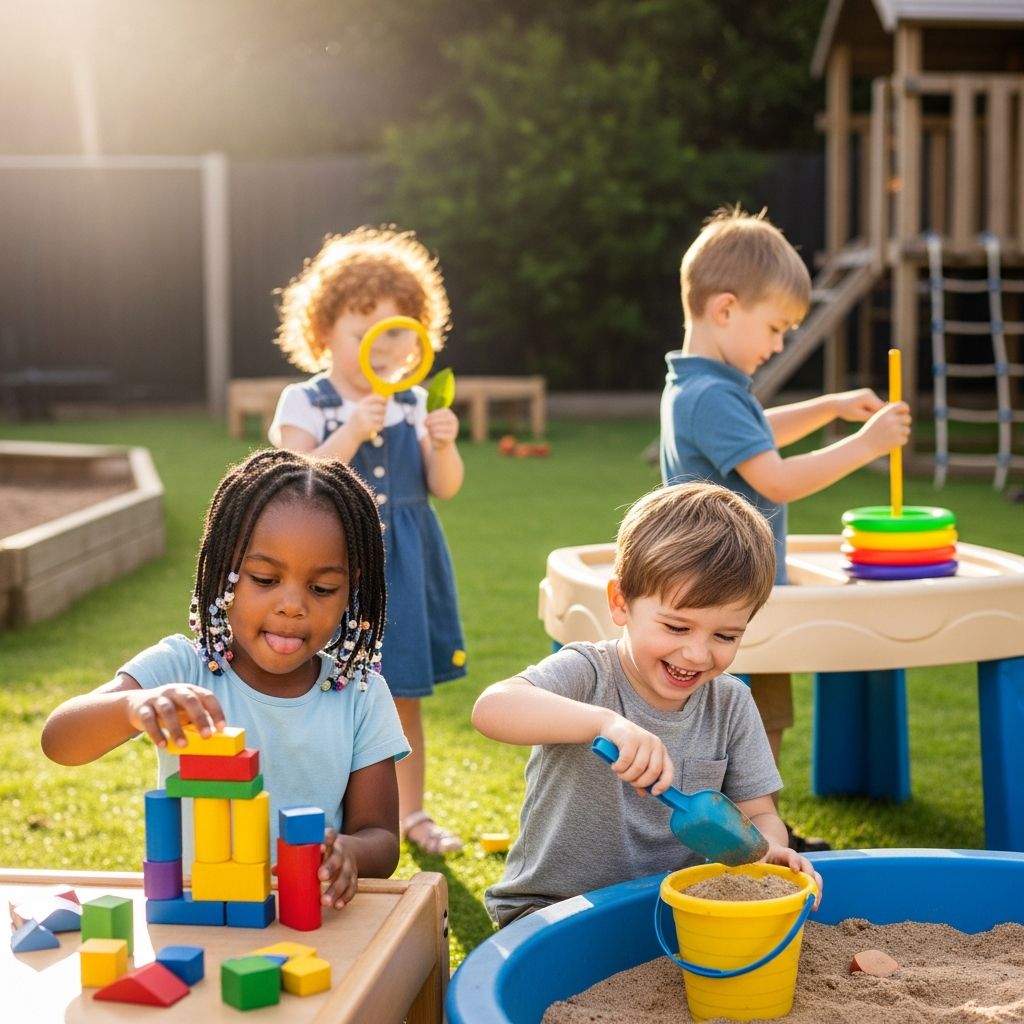
The transition from purely individual play to social interaction unfolds gradually and predictably across the second and third years of life. Initially, around age two, children become increasingly aware that other children exist, and they begin to observe them with fascination. A child might watch another child building with blocks from a distance, studying the actions without attempting to join in. This observational stage, sometimes called onlooker behavior, is a crucial precursor to peer interaction. During this phase, children are absorbing information about social norms, learning how others play, and gathering courage to eventually participate. As children approach and move through their third year, many begin to engage in parallel play—playing alongside other children with similar materials but without direct collaboration. Two children might sit in the same sandbox, each building their own structures, aware of each other’s presence and occasionally exchanging glances or brief vocalizations, but focused primarily on their own creations. This stage represents a significant social advance, as children demonstrate awareness of shared space and the beginning of social consciousness. Gradually, typically around ages three to four, children begin to interact more directly with peers, initiating conversations, sharing observations, and eventually working together toward common goals in cooperative play scenarios.
Creating Rich Environments for Exploration
The physical spaces where children spend their time significantly impact the quantity and quality of their exploratory activities. Effective environments for exploration share several characteristics: they are safe, allowing children to investigate without constant restrictions; they provide variety, offering different textures, shapes, colors, and sounds to stimulate sensory development; and they balance structure with openness, giving children choices while maintaining reasonable boundaries. Natural materials often provide particularly rich opportunities for exploration—grass, dirt, water, sand, and rocks offer endless possibilities for discovery and sensory experience. A cardboard box becomes a fort, a tunnel, or a spaceship. A collection of wooden spoons, plastic containers, and metal pots transforms into instruments, cooking implements, or building materials. Rather than purchasing expensive toys with limited functionality, parents can enhance exploration by providing open-ended materials that children can use in infinite ways. Rotating toys and materials periodically prevents boredom while reducing overwhelming clutter. Additionally, access to both indoor and outdoor spaces for exploration supports different types of learning—outdoor environments encourage larger motor movements and sensory exploration of natural materials, while indoor spaces can be designed to support quieter investigation and imaginative play.
The Role of Caregiver Engagement in Exploration
While independent exploration is essential, the presence and involvement of caring adults significantly enhances the learning potential of exploratory play. When a caregiver sits nearby, observing and occasionally commenting on a child’s activities without taking over, the child experiences both autonomy and connection. Comments like “You’re moving that ball so fast” or “I notice you stacked three blocks” demonstrate that the adult is attending to the child’s efforts and finding them worthy of notice. This attentiveness builds the child’s confidence and motivation to continue exploring. Caregivers also serve as question-answerers and interpretation guides. When a child asks “Why is the sky blue?” or wonders why water goes down the drain, patient explanations at an appropriate level help the child make sense of observations. Additionally, caregivers can extend exploration by introducing new materials, posing gentle questions (“I wonder what would happen if…”), and modeling curiosity themselves. When a parent stops to examine a butterfly or picks up an interesting rock, the message is clear: the world is worth paying attention to, and investigation is valued. This modeling of curiosity and wonder encourages children to adopt similar dispositions toward learning.
Safety Considerations During Exploratory Play
Creating an environment that encourages exploration while maintaining safety requires thoughtful planning and age-appropriate boundaries. During the earliest months, when babies explore primarily through mouthing, caregivers must ensure that all objects within reach are clean, non-toxic, and appropriately sized to prevent choking hazards. Small buttons, coins, batteries, and similar items must be kept well out of reach. As children become mobile through crawling and walking, the environment must be modified to prevent injuries—securing furniture that might tip, covering electrical outlets, gating off stairs, and removing access to cleaning supplies and medications. Safety doesn’t mean eliminating all challenges; rather, it involves selecting challenges appropriate to a child’s developmental level. A two-year-old might climb on a small step stool under supervision, while a nine-month-old would not be ready for this challenge. Outdoor exploration should include attention to hazards such as thorns, insects, or unsafe play structures, while recognizing that minor bumps and scrapes are normal parts of learning. Parents who balance safety with the allowance of reasonable risk actually support the development of healthy risk assessment abilities in their children. Children who are never allowed to experience any discomfort or challenge may become overly cautious, while those who encounter age-appropriate challenges develop confidence in their ability to handle difficulties.
Supporting Different Types of Learners
Children have individual preferences in how they like to explore and learn. Some children are drawn to movement and large motor activity, while others prefer focused, detailed investigation of small objects. Some thrive on sensory exploration through touch and taste, while others are primarily visual or auditory learners. Recognizing and supporting these individual differences honors the child’s personality while ensuring that all children have opportunities to develop across multiple domains. A child who prefers visual investigation might benefit from magnifying glasses, colored water in clear containers, or nature observation journals. A child who loves movement might enjoy obstacle courses, dancing to music, or exploring different ways of moving through spaces. Linguistic children might be encouraged to narrate their explorations or dictate stories about their discoveries, while more solitary children need protection from pressure to constantly play with peers. When caregivers observe and respect their individual child’s natural inclinations, they support both the child’s sense of self and their motivation to continue learning and exploring.
The Connection Between Exploration and Cognitive Development
The relationship between exploration and developing thinking abilities is direct and profound. As children manipulate objects, they develop understanding of physical principles such as gravity, momentum, and cause-and-effect relationships. As they investigate their environment, they build mental categories—learning that dogs and cats are both animals, or that different containers can hold liquids. This process of forming concepts and testing them through continued exploration builds the foundation for logical thinking and problem-solving. Children who are encouraged to explore develop more flexible thinking patterns and greater ability to approach problems from multiple angles. They become more likely to experiment, persist through challenges, and try alternative strategies when initial attempts don’t succeed. These thinking patterns directly support later academic learning, from mathematics to reading comprehension, as well as the resilience and adaptability that support well-being across the lifespan. Thus, providing ample time and space for exploration during the early years is not a luxury or distraction from “real learning”—it is the essential foundation upon which all future learning is built.
Frequently Asked Questions
Q: At what age should I stop supervising my child’s exploration?
A: Supervision should remain consistent throughout early childhood, with the level of hovering gradually decreasing as children demonstrate competence. Even school-age children benefit from knowing that a trusted adult is nearby. The goal is independence with safety, not abandonment. Supervision evolves from constant physical proximity to watchful awareness and periodic check-ins.
Q: How much time should my child spend exploring versus engaging in structured activities?
A: Young children benefit from having more unstructured exploration time than structured activities. A general guideline suggests that most of a young child’s day should allow for free exploration and play, with shorter periods of structured learning. As children grow, the balance gradually shifts, but exploration-based learning remains valuable throughout childhood.
Q: Is it normal for my toddler to refuse to play with other children?
A: Yes, this is completely normal. Children progress through predictable social play stages, and solitary or parallel play is appropriate and healthy for children under three years old. Forcing peer interaction often backfires, while naturally providing opportunities for children to be around peers allows social skills to develop at the child’s own pace.
Q: What types of toys best support exploration?
A: Open-ended materials tend to support exploration more effectively than toys with single, predetermined functions. Items such as blocks, balls, empty containers, scarves, water play materials, and art supplies invite endless possibilities for investigation and creative use. Natural materials like sticks, stones, and leaves are also excellent for exploration.
Q: How can I encourage exploration if my child seems content to stay in one place?
A: Some children are naturally more cautious or sedentary than others, and forcing activity can backfire. Instead, try moving exploration materials closer to the child, offering interesting items to manipulate nearby, or gently taking the child’s hand to explore together. Avoid pressure while consistently modeling curiosity about the world.
References
- Developmental Stages of Play: A Journey of Exploration and Growth — Motivated Learners. 2024. https://motivatedlearners.org/developmental-stages-of-play-a-journey-of-exploration-and-growth/
- How Kids Learn to Play: 6 Stages of Play Development — Pathways.org. 2024. https://pathways.org/kids-learn-play-6-stages-play-development
- Exploration & Curiosity Milestones — Sesame Workshop. 2024. https://sesameworkshop.org/resources/exploration-curiosity-milestones/
- Ages and Stages of Development — California Department of Education. 2024. https://www.cde.ca.gov/sp/cd/re/caqdevelopment.asp
- Principles of Child Development and Learning and Implications — National Association for the Education of Young Children (NAEYC). 2024. https://www.naeyc.org/resources/position-statements/dap/principles