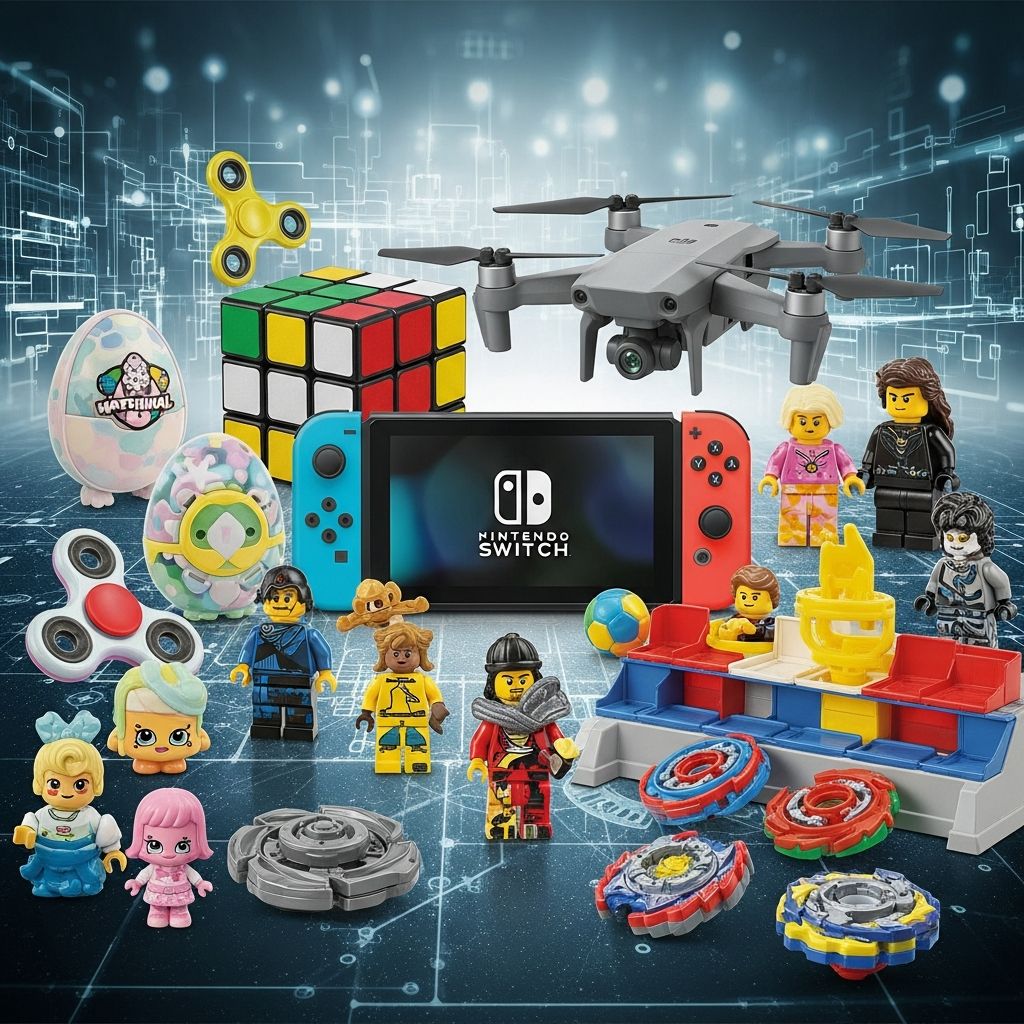
The 2010s were a turning point for toys. It was the first full decade in which kids grew up with smartphones, streaming video, and social media as part of daily life, and their toys changed accordingly. Instead of just plastic figures and board games, children played in worlds that blended physical objects, apps, online communities, and viral trends.
Some toys simply sold well. Others went further: they changed how kids played, how families shopped, and how companies thought about children’s entertainment. This article looks at those transformative toys and trends, using the 2010s as a case study in how culture, technology, and childhood collide.
From Stuff On Shelves To Worlds That Never End
Traditional toys typically have a clear beginning and end: you open the box, build or assemble, then repeat similar play patterns. The 2010s elevated a different idea — toys as open-ended worlds with no obvious finish line.
- Video games that acted more like digital LEGO, letting kids build endlessly.
- Connected robots that could be reprogrammed and reimagined.
- Collectible toys supported by constant streams of online content.
These products reinforced skills like problem-solving and creative experimentation. Studies of sandbox-style play and construction toys suggest that unstructured building and exploration can support spatial reasoning and later STEM achievement in children.
Digital Sandbox Play: Minecraft And Beyond
Few cultural forces in children’s lives were as powerful in the 2010s as open-world sandbox games. The standout example was Minecraft, which turned millions of kids into amateur architects, coders, and storytellers.
While technically a video game, Minecraft functioned more like a digital building kit:
- Kids placed blocky materials to design houses, cities, and machines.
- They experimented with simple logic systems (like redstone) to create doors, traps, and calculators.
- Multiplayer servers gave them shared worlds to explore with friends.
Educators quickly recognized its potential. A classroom-ready version (first known as MinecraftEdu, later Minecraft: Education Edition) was adopted by schools worldwide to teach topics like math, history, and computer science. This move reflected a broader 2010s trend: toys and games that blurred entertainment and education instead of separating them.
Table: How Sandbox Play Changed Expectations
| Old Model of Play | Sandbox Play Model |
|---|---|
| Fixed rules and clear winning conditions | Few rules; kids define their own goals |
| Story set by designer | Stories built by players in shared worlds |
| Play mostly offline and solo or with siblings | Play often online, collaborative, and social |
| Tied to physical objects only | Blend of digital platforms, videos, and merch |
Smart Robots, Coding Toys, And STEM Hype
The 2010s also saw a surge of coding toys and programmable robots aimed at teaching logic and problem-solving skills. Companies framed them as fun introductions to computer science, reflecting broader economic emphasis on digital skills and STEM careers.
Common traits among popular coding and robotic toys included:
- Companion apps that let kids drag and drop colorful blocks of code.
- Physical robots that responded by rolling, lighting up, or making sounds.
- Optional lesson plans and teacher resources for classroom use.
Research suggests that early exposure to computational thinking can help children develop persistence, logic, and creativity. However, the decade also raised critical questions for parents: Were kids genuinely learning, or just tapping buttons on another screen? The best toys tended to invite children to design their own challenges rather than follow rigid sequences.
Nurturing Robots And The Emotional Toy Craze
Not every important 2010s toy focused on coding. Another powerful trend centered on nurturing play with robotic creatures. These toys asked kids to feed, care for, and comfort responsive animals or fantasy beings, combining classic caregiving play with sensors, motors, and firmware.
Key features of these nurturing robots included:
- A dramatic reveal or transformation (for example, something that “hatched” or “learned” to fly).
- Built-in personalities that evolved with continued play.
- Surprise elements, encouraging kids to speculate and collect different variations.
This form of play leaned on the same emotional systems that make kids bond with plush toys, but added lifelike reactions and some unpredictability. Psychologists note that children often use caregiving play to explore empathy, responsibility, and attachment in a safe way.
Viral Collectibles And Manufactured Scarcity
No decade embraced the concept of a toy frenzy like the 2010s. Manufacturers learned to harness social media, influencer culture, and carefully controlled production to turn modest plastic toys into must-have collectibles.
Typical viral collectible toys in the 2010s shared several traits:
- Small size and relatively low price, making impulse buys easy.
- Distinct personalities or themes (animals, fantasy creatures, or quirky mini-figures).
- Packaging that made them visible and shareable on video or in photos.
- Limited editions or short runs to keep demand high and resale markets active.
Parents, meanwhile, found themselves refreshing online stores, standing in lines, or negotiating with resellers. The experience raised important questions about how scarcity, peer pressure, and marketing intersect in children’s culture. Economists have long documented how artificial scarcity can inflate perceived value, especially when the item carries social status among peers.
Blind Boxes, Surprise Eggs, And The Joy Of Not Knowing
One defining experience of 2010s toy shopping was the blind bag or surprise egg. Instead of seeing exactly what they were buying, kids received a sealed container with one mystery toy inside, often part of a broader collection.
This format changed kids’ expectations in several ways:
- Excitement of the reveal: Opening the package became the main event.
- Collectibility: Children tried to complete sets, trading duplicates with friends.
- Endless content: YouTube channels dedicated to unboxing mystery toys attracted billions of views, elevating the act of opening a box into entertainment by itself.
Some child development experts and regulators expressed concern that blind-box mechanics resembled gambling, especially when children could pressure adults for repeat purchases to “try again”. At the same time, many families simply treated them as small, occasional treats, emphasizing the fun of surprise rather than the “gotta catch ’em all” mindset.
Simple Fads, Huge Impact: Fidget Spinners And Slime
Not every influential 2010s toy was digital or high-tech. Some of the decade’s most memorable objects were nearly absurdly simple, yet they dominated playgrounds and classrooms.
Fidget Spinners
Fidget spinners, cheap three-pointed toys that spun around a central bearing, exploded in popularity mid-decade. Their appeal rested on:
- Mesmerizing motion and satisfying tactile feedback.
- Kids’ ability to learn tricks and compare skills.
- Low price and wide availability at convenience stores and online.
Some marketers claimed that fidget spinners could help children with attention difficulties, though scientific evidence was limited and mixed. Many schools ultimately banned them when they became more distraction than aid.
DIY Slime
Slime had existed for decades, but the 2010s turned it into a global craft movement. Powered by Instagram and YouTube, kids watched creators stretch, swirl, and decorate slime in endless variations. Then they made their own at home, often using household ingredients like glue and baking soda.
Why slime mattered:
- It provided a multisensory experience (texture, color, sound) that screens couldn’t match.
- It encouraged experimentation with recipes and ingredients.
- It spawned small businesses: many tweens sold homemade slime online or at school fairs, learning basic entrepreneurship.
Some health agencies cautioned parents about the potential irritant effects of certain slime ingredients if misused, encouraging safe recipes and supervision. Still, the trend showed that analog crafts could thrive in a digital-first decade when amplified by social media.
Licensed Worlds: When Movies And Toys Collide
The 2010s also reinforced the deep connection between blockbuster franchises and toy sales. Major movies and TV shows became year-round toy ecosystems with their own characters, vehicles, and settings.
Key shifts in this period included:
- More rapid release cycles, where toys launched close to or even before films.
- Integrated storytelling, with toys, mobile apps, and spin-off videos reinforcing the same universe.
- Collectible robots and droids that let kids “own” a piece of an onscreen world.
These linked ecosystems reflected a broader media trend in which children navigated stories across platforms — watching a film, playing with a figure, then watching related content online, all centered on the same brand.
Parental Challenges In A Decade Of Hype
As toys grew more connected and more heavily marketed, parents in the 2010s had to navigate new pressures. Managing screens was only part of the equation. Families also had to decide how to respond when a single product became a global obsession.
Common Questions Parents Faced
- Should we buy the season’s hottest toy, or skip the hype entirely?
- How much blind-box or surprise-based buying is healthy?
- What counts as meaningful learning when a toy claims to teach coding or STEM?
- How do we help kids understand marketing, scarcity, and trends?
Experts generally recommend that families focus on play value over popularity, looking for toys that remain engaging after the first week, build some useful skill, or support imaginative, cooperative play. In practice, most households mixed enduring classics (blocks, dolls, puzzles) with at least a few highly hyped items.
Looking Back: What The 2010s Taught Us About Play
When we look back at 2010s toys, a few patterns stand out:
- Kids embraced hybrid experiences that blurred physical and digital boundaries.
- Toys became more social, connecting children through multiplayer games, online videos, and shared collecting cultures.
- Marketing leveraged scarcity and surprise in ways that excited kids but sometimes exhausted parents.
- Even in a screen-saturated decade, simple tactile trends like slime remained powerful.
For today’s parents and toymakers, the legacy of the 2010s is clear: children want agency, creativity, and connection. The most influential toys were the ones that treated kids not as passive consumers but as builders, caretakers, coders, creators, and participants in a larger story.
Frequently Asked Questions (FAQs)
Q1: What made a 2010s toy truly “important” rather than just popular?
An important 2010s toy did more than top sales charts. It either changed how kids played (for example, by merging coding with physical robots), introduced a new business model (like blind-box collecting), or reshaped family and cultural habits, such as turning unboxing into a form of entertainment.
Q2: Were 2010s toys better for learning than previous generations’ toys?
They were different rather than universally better. Some products, especially sandbox-style games and coding robots, supported complex problem-solving and creativity. Others focused more on collectibility and surprise, offering excitement but limited depth. Classic toys like building sets, puzzles, and art supplies remained just as valuable as ever.
Q3: How can parents balance digital and physical toys today?
Many experts suggest emphasizing variety: mixing digital experiences that promote creativity or collaboration with physical toys that encourage movement, fine motor skills, and face-to-face play. Setting clear screen-time boundaries and keeping shared play spaces stocked with analog options can help kids move easily between different kinds of activities.
Q4: Are blind-box and surprise toys harmful?
Occasional blind-box purchases are usually harmless, but constant buying in search of rare items can promote unhealthy spending habits and frustration. Parents can set limits, frame them as occasional treats, and steer kids toward trading and sharing rather than repeated buying.
Q5: What lessons from the 2010s can guide future toy choices?
When considering new toys, it helps to ask: Will this still be interesting in a month? Does it invite my child to create, build, care, or solve problems? Does it encourage connection, either with family or friends? The 2010s showed that the toys that endure tend to answer “yes” to at least one of those questions.
References
- Taking play seriously: children’s play and early childhood education — Hirsh-Pasek, Golinkoff & Eyer, in Play=Learning, Oxford University Press. 2009-01-15. https://global.oup.com/academic/product/play-learning-9780195382716
- Block play performance and mathematics in kindergarten and first grade — Wolfgang, Stannard & Jones, Journal of Research in Childhood Education. 2001-03-01. https://doi.org/10.1080/02568540109594958
- Minecraft: Education Edition — Microsoft Education (official product page). 2023-09-01 (accessed). https://education.minecraft.net
- Developing early computational thinking with educational robotics — Bers, Current Opinion in Behavioral Sciences. 2018-04-01. https://doi.org/10.1016/j.cobeha.2018.02.003
- The power of play: A pediatric role in enhancing development in young children — Yogman et al., American Academy of Pediatrics. 2018-09-01. https://doi.org/10.1542/peds.2018-2058
- The market for toys: An economic analysis of fads and fashions — Waldman, Journal of Economic Perspectives. 2019-06-01. https://doi.org/10.1257/jep.33.2.225
- Loot boxes in online games and their effect on consumers, in particular young consumers — European Parliament Research Service Briefing. 2022-10-18. https://www.europarl.europa.eu/thinktank/en/document/EPRS_BRI(2022)733557
- Fidget spinners, attention and children: what does the science say? — Mayo Clinic Staff. 2018-05-10. https://www.mayoclinic.org/healthy-lifestyle/childrens-health/expert-answers/fidget-spinners/faq-20459253
- Borax in slime: Health and safety information — U.S. National Capital Poison Center. 2017-08-15. https://www.poison.org/articles/borax