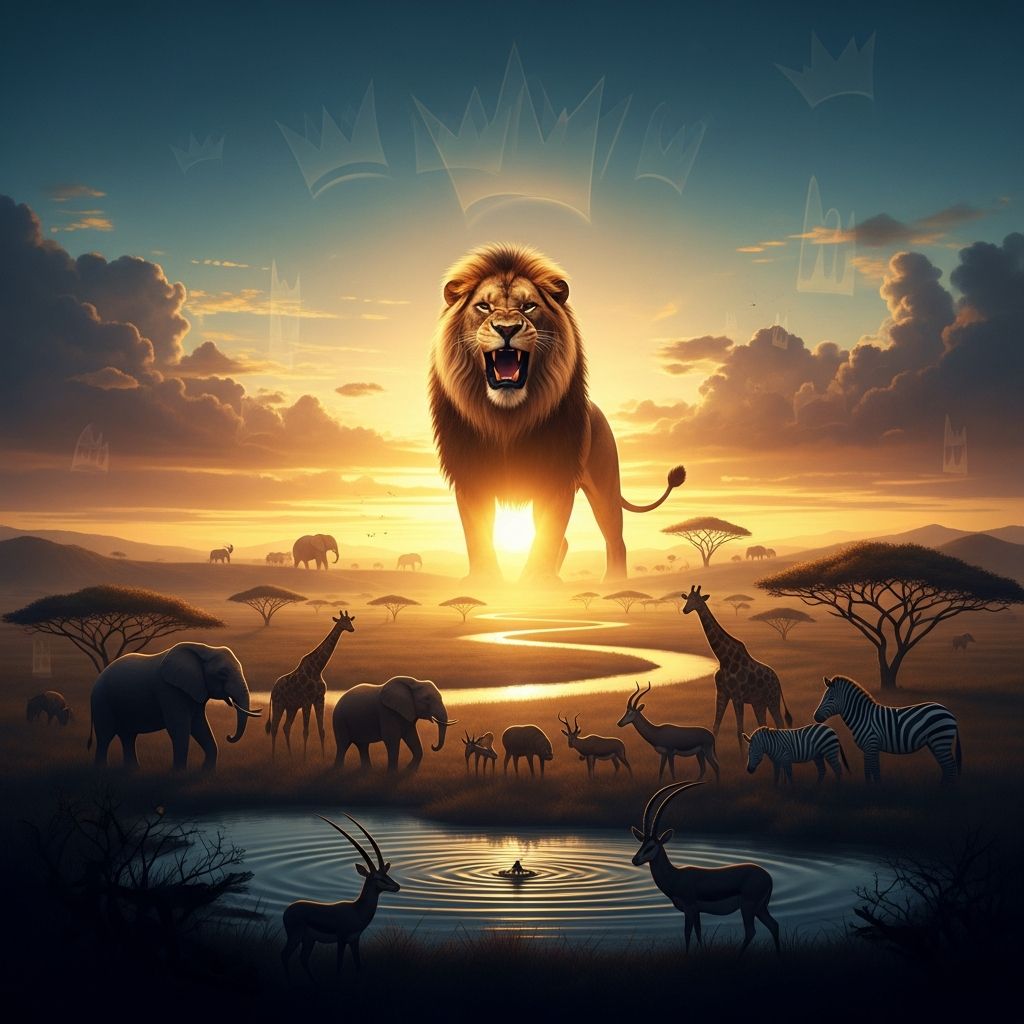
The first minutes of The Lion King are among the most recognizable in film history: a wise mandrill hoists a lion cub above a sea of animals as the sun rises over the savanna. This brief sequence, often reduced to jokes and memes, carries a surprising amount of cultural, biological, and moral meaning when you look more closely.
This article explores what is really going on in that memorable monkey-and-lion moment: how it uses real animal behavior, how it bends nature into myth, and what it suggests about leadership, destiny, and the way we humans talk about power.
Why This Single Scene Matters So Much
Rafiki lifting Simba is more than a cute introduction. It works on several levels at once:
- Story launch: It introduces the future king, Simba, and his place in the royal hierarchy.
- World-building: It establishes the Pride Lands as a coherent society with rituals and expectations.
- Moral framing: It quietly tells the audience that some animals rule and others accept that rule as natural.
- Emotional imprint: It attaches awe, hope, and beauty to a specific vision of power and succession.
Because this is the very first impression the film gives, it shapes how viewers—especially children—interpret everything that follows.
Monkeys, Lions, and What Nature Actually Looks Like
The film plays with real African wildlife but rearranges it to fit a human-style monarchy. To see what’s exaggerated and what’s grounded in reality, it helps to compare the story with what biologists know about these animals.
| Aspect | On Screen | In Real Life |
|---|---|---|
| Lion society | One clear king rules all animals. | Lions live in prides with related females and a small coalition of males; they do not rule other species. |
| Monkeys/mandrills | Rafiki performs a ritual and blesses the cub. | Mandrills live in social groups and show complex behavior, but they do not act as priests to lions. |
| Predator–prey relations | Prey animals voluntarily bow to their predator king. | Prey typically avoid predators; stable ecosystems depend on complex food webs rather than political allegiance. |
Ecologists describe real ecosystems as networks of energy and interactions, not as carefully ordered kingdoms under one noble ruler. The opening scene is not biology; it is a human political fantasy painted onto the savanna.
Rafiki the Mandrill: More Than a Comic Side Character
For many viewers, Rafiki is simply “the funny monkey.” But the opening scene shows him as something more specific: a combination of priest, elder, and mystic. His role raises important questions about how films borrow from, and sometimes flatten, non-Western spiritual traditions.
What Rafiki Represents in the Story
- Spiritual authority: He is the only one who performs a recognizable ritual—marking Simba and presenting him to the world.
- Advisor, not ruler: He has influence over kings but no formal power of his own.
- Keeper of memory: Later in the film, he guides Simba back to his past and to his responsibilities.
Media scholars often describe this kind of figure as a “wise guide” character who gives a hero insight rather than weapons.
The “Mystic Guide” Trope and Its Limits
Rafiki also fits into a broader pattern where a character coded as Indigenous or traditionally spiritual appears mainly to help a more central hero grow. Critics of film and television argue that such roles can indirectly suggest that some cultures exist only to support the journeys of others.
In the opening scene, Rafiki’s deep knowledge and ritual power are real within the story, but they are ultimately directed toward confirming Simba’s status, not toward reshaping the political order or questioning who should rule.
Simba in the Sky: Destiny, Bloodlines, and Chosen Ones
The whole ceremony is built to make one point very clear: this baby matters more than everyone else here. The film leans into the idea of destiny and noble blood in several ways.
- Physical height: Rafiki climbs Pride Rock to lift Simba, literally placing him above every other creature in the frame.
- Collective submission: Every animal bows, silently accepting that this cub will one day sit at the top of the social pyramid.
- Visual framing: The sun breaks the horizon as Simba is presented, echoing religious imagery where light accompanies revelation or divine favor.
Human societies have long used ceremonies—coronations, baptisms, investitures—to tell a community that a leader has been chosen and that this choice is more than just politics: it is fate. Historians of monarchy note that rituals like this often mix religion and governance so thoroughly that questioning the ruler can feel like questioning the gods themselves.
The Circle of Life vs. The Reality of Nature
The film’s famous opening song explains its worldview: every creature has a place in a balanced “circle of life.” That phrase is comforting, but it simplifies real ecosystems and can slide into questionable ideas if we are not careful.
How Real Ecosystems Stay in Balance
Ecologists describe nature in terms of food chains and food webs, where energy moves from plants to herbivores to predators, and back into the soil through decomposers like insects and fungi. Predators such as lions help keep herbivore populations in check, which can actually protect plant life and maintain habitats.
This is not a perfect circle but a constantly shifting network. Droughts, disease outbreaks, and human activities can all disrupt this balance, sometimes for decades.
When “Nature” Gets Used to Justify Inequality
Outside the movie theater, people sometimes point to animals to argue that human hierarchies are natural—saying, for example, that “the strongest survive” or that some groups are “born to lead.” Social scientists and philosophers have repeatedly warned against this move, known as the naturalistic fallacy—confusing what exists in nature with what ought to exist in human society.
Human rights frameworks, including international agreements and national constitutions, rest on the idea that humans must not be treated like expendable animals, even when it might be efficient or convenient to do so. The opening of The Lion King turns the savanna into a moral lesson, but viewers need to remember that the lesson is a human construction, not a wildlife documentary.
A Visual Lesson in Power: Who Stands Where
Even without dialogue, the staging of the ceremony teaches children (and adults) who matters and who does not. The positioning of bodies on screen functions as a quiet map of importance.
- Center and top: Simba, Rafiki, and the royal lions occupy the highest ground and the center of most frames.
- Edges and bottom: Smaller animals crowd the outskirts, stacked visually to show that they are many but individually insignificant.
- Motion: The crowd flows toward Pride Rock, not away from it, suggesting that authority pulls others in rather than pushing them back.
Film scholars often note that repeated exposure to such images can normalize the idea that some beings are “naturally” at the center of attention and decision-making. Because the opening is so joyful and beautifully rendered, this hierarchy can feel more inevitable than it actually is.
Why a Monkey-Lion Duo Works So Well Emotionally
On a more intuitive level, the scene endures because the pairing of a playful-looking primate and a regal baby predator taps into several universal emotional triggers:
- Protectiveness: Infant mammals, with their large eyes and small bodies, reliably trigger nurturing responses in humans; psychologists sometimes call these features “baby schema.”
- Trust in elders: Rafiki handles Simba gently and confidently, echoing the image of a grandparent blessing a child.
- Communal joy: The crowd of animals cheering and bowing evokes weddings, graduations, and other shared celebrations.
By combining these elements, the film makes it easy to accept the idea that Simba is worthy of everyone’s hopes before he has done anything at all.
What Parents and Viewers Can Talk About After Watching
Because this scene is so iconic, it offers a useful starting point for conversations with kids and teens about how stories work and what they imply. Here are a few ideas:
- Ask who gets to be on the rock: Who is shown close to Simba, and who is far away? How might the story feel if another animal were lifted instead?
- Discuss real animal behavior: How do lions and other animals really live in the wild? Looking at a wildlife documentary or a conservation website can help kids see the difference between myth and biology.
- Question the idea of “born leaders”: In their own lives, who leads and why? Is it always about family, or can effort and kindness matter more?
- Notice spiritual symbols: What does Rafiki’s ritual remind them of—religious services, family customs, something else?
These simple questions can help turn passive viewing into active thinking, without taking away the magic of the film.
Frequently Asked Questions (FAQs)
Is Rafiki a real monkey species?
Rafiki is based on a mandrill, a large primate related to baboons that lives in the rainforests of Central Africa. Mandrills have distinctive colorful faces and are known for complex social behavior, but they do not perform blessings for lions in the wild.
Do lions actually rule other animals like a king?
No. In real ecosystems, lions are top predators but they do not act as political rulers. They hunt prey species and compete with other predators such as hyenas. Ecologists describe these relationships in terms of food webs and population dynamics, not kingdoms.
Is the opening ceremony realistic in any way?
The specific gathering of many species for a royal presentation is invented, but the film borrows real landscapes, real animal designs, and basic predator–prey relationships. It then rearranges them into a human-style ritual to tell a clear story about destiny and leadership.
Why do so many people find this scene emotional?
The sequence combines a rising sun, powerful music, a vulnerable baby animal, and a loving community response. Psychologists note that images of infants and communal celebration are particularly effective at triggering empathy and a sense of belonging in viewers.
Should we worry about the messages this scene sends about power?
The scene does present monarchy and rigid hierarchy as beautiful and natural, which can be worth discussing. Rather than avoiding the film, many educators and parents use it as a way to talk about how stories turn complex realities—such as politics, nature, and spirituality—into simple, memorable images.
References
- Predators and Their Prey — U.S. National Park Service. 2022-03-15. https://www.nps.gov/articles/predators-and-their-prey.htm
- Mandrill (Mandrillus sphinx) — Smithsonian’s National Zoo & Conservation Biology Institute. 2021-09-10. https://nationalzoo.si.edu/animals/mandrill
- Teaching Children Media Literacy — American Academy of Pediatrics. 2016-11-01. https://publications.aap.org/pediatrics/article/138/5/e20162591/60513/Media-and-Young-Minds
- Light and Symbolism in Film — British Film Institute. 2019-05-20. https://www.bfi.org.uk/
- Royal Ceremonies and Political Legitimacy — Royal Household / The Royal Family. 2020-02-01. https://www.royal.uk/
- The Naturalistic Fallacy and Ethics — Stanford Encyclopedia of Philosophy. 2019-07-16. https://plato.stanford.edu/entries/naturalistic-fallacy/
- Kindchenschema and Cutest Baby Faces — Ethology, Springer. 2011-02-01. https://link.springer.com/article/10.1007/s10164-010-0244-4