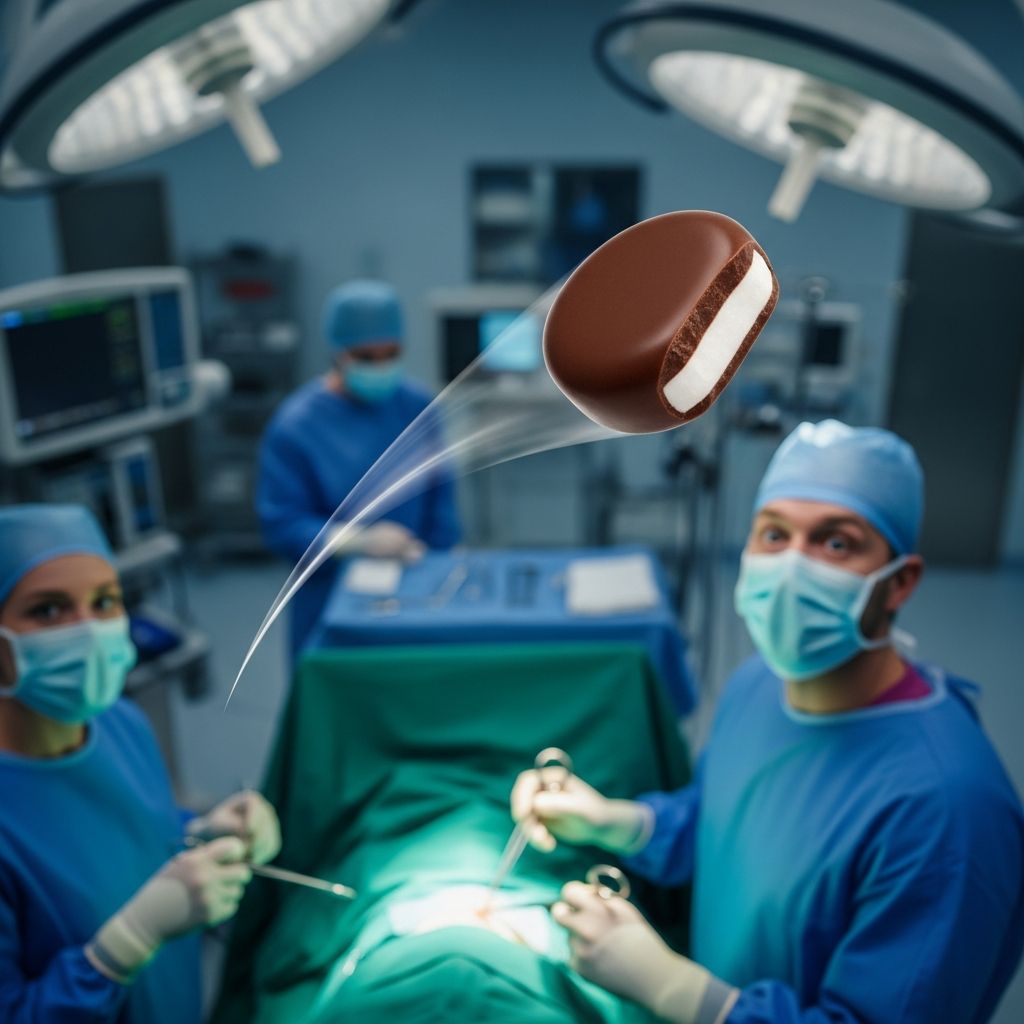
Among Seinfeld episodes, few images are as instantly recognizable as a small piece of chocolate-mint candy tumbling in slow motion toward an open surgical field. That surreal visual, from the episode commonly known as “The Junior Mint”, helped transform an already successful sitcom into something even stranger, bolder, and more culturally enduring.
Why This One Episode Still Matters
At first glance, the episode’s premise sounds almost too ridiculous: two spectators in an operating theater lose control of their candy, and the mishap somehow becomes a life-changing—and possibly life-saving—surgical accident. Yet this blend of dark humor, casual cruelty, and corporate candy sets the tone for how far Seinfeld was willing to push its universe of selfish, oblivious New Yorkers.
What keeps the episode relevant is not just the gag itself, but the way it collides everyday consumer culture with life-or-death medical drama. Candy, operating rooms, nameless girlfriends, and weight-related vanity all share screen time, creating a half-hour that feels both grounded and absurd in the same breath.
The Story Beneath The Candy Gag
Like most Seinfeld installments, this episode is really several smaller, interlocking stories. A comedian dates a woman whose name he cannot remember, an ex-girlfriend reconnects with a former partner now hospitalized for surgery, and a scheming friend tries to profit from the possible death of an acquaintance. The candy dropped in the operating room is only the visual centerpiece.
What makes the episode distinct is how these plots converge around the hospital. Romantic anxiety, financial opportunism, body image, and medical risk are all present in the same setting, and the candy functions as the literal object that binds them. Without that small chocolate-mint, these stories could have stayed disconnected; with it, they collide in a single, unforgettable moment.
Comedy On The Edge Of Bad Taste
The humor in this story walks a deliberate line between playful and callous. Viewers watch characters make flippant remarks about major surgery, speculate about profiting from a potential tragedy, and judge an ex-partner’s body with brutal honesty. These choices might feel abrasive by today’s standards, but they sharpen the show’s core thesis: these characters are often thoughtless, and that thoughtlessness is where the comedy lives.
The sequence in the operating theater in particular embodies this edge. Instead of treating the surgery with reverence, the characters behave like they are at a sporting event, complete with snacks, chatter, and casual distractions. The flying candy is the punchline, but the build-up—treating a medical procedure as entertainment—is the real joke.
The High-Wire Act Of Writing ‘The Junior Mint’
Designing a story in which confectionery ends up inside a patient required a writer willing to risk being perceived as completely out of touch with the show’s usual style. The writer behind the teleplay reportedly worried the premise might be too outlandish, fearing that the series’ slice-of-life tone might be overwhelmed by such an overtly cartoonish gag. That anxiety echoes a wider question writers still face: how far can a grounded comedy push into absurd territory before the world of the show breaks?
In this case, the gamble paid off. The episode proved that Seinfeld could stretch its reality without snapping it. The fictional New York of the series could now plausibly contain a man walking around unknowingly with mint-filled candy sewn into his abdomen, and fans accepted it as part of the show’s lore rather than a jump-the-shark moment.
Casting, Chemistry, And The Power Of The Operating Theater
The success of the central gag depends on the chemistry between the characters in the viewing gallery. The impulsive neighbor functions as the relentless instigator, constantly pushing the more cautious comedian into situations he would rather avoid. Their banter, timing, and physical interplay transform what could have been a slapstick throwaway into a performance that feels organic to the series.
The surgical team and the patient, by contrast, must embody seriousness to make the joke work. The more sincere and professional the medical staff appear, the more shocking it becomes when a piece of candy infiltrates their controlled, sterile environment. That contrast—goofball spectators versus composed surgeons—is the engine that powers the scene’s tension.
A Candy Company’s Big Decision
Few television episodes raise as many questions about brand cooperation as this one. A candy manufacturer had to decide whether its product would be comfortable sharing screen time with exposed organs and infection scares. On one hand, the candy is the butt of a twisted joke; on the other, the script offers lines praising the treat’s taste, and audiences walk away remembering the brand far more vividly than a standard commercial would allow.
This decision illustrates a broader truth about product placement: sometimes the most memorable screen appearances come from highly unconventional contexts. Instead of a glossy ad, the candy becomes an active participant in the story, associated with both danger and delight. While traditional marketers might balk at such a pairing, it etched the brand into pop culture history.
| Aspect | Typical TV Commercial | Seinfeld Episode |
|---|---|---|
| Context | Bright, idealized, consequence-free snacking | Serious surgery, operating theater chaos |
| Role of the Candy | Passive object being promoted | Active plot device altering the story |
| Brand Message | Simple enjoyment, light indulgence | Memorable weirdness, mixed with compliments about taste |
| Viewer Takeaway | Short-lived desire to buy | Long-term association with an iconic sitcom moment |
The Name Joke That Fans Still Quote
While the candy stunt is the headline, the episode also built a smaller, equally sticky joke around the mystery of a girlfriend’s name. The comedian’s desperate attempt to deduce a name that allegedly rhymes with a part of the female anatomy turns into one of the show’s most quoted punchlines. The final revelation lands with extra force because viewers have been invited to play the guessing game alongside the characters.
What makes this naming storyline fascinating from a production standpoint is that it famously incorporated real-time audience participation. A suggestion from the studio crowd influenced which name ultimately made it into the episode, a rare case of live feedback reshaping a scripted moment at the last second. The finished scene now stands as a testament to the sometimes porous boundary between performers and audience in multi-camera sitcoms.
How A York Peppermint Patty Became A Junior Mint
One of the great ironies of the episode is that the candy most viewers remember was not the candy actually filmed for the slow-motion shot. The production team reportedly discovered that a real Junior Mint was simply too small to capture cleanly as it flipped through the air, even with careful camera work. To solve this, they swapped in a larger, visually similar peppermint patty, giving the camera something substantial to track.
This practical adjustment involved another layer of movie magic: reversing the footage in post-production. Instead of filming the candy falling downward into the body, the crew captured it moving upward and later inverted the shot, creating the illusion of a perfectly timed plunge. The result is a visual that remains sharp in viewers’ minds, even as the behind-the-scenes sleight of hand stays mostly invisible.
Performance, Awards, And Lasting Recognition
The episode’s success was not just conceptual; it was also a showcase for the physical comedy skills of the neighbor character’s actor. The exaggerated hand motions, fumbled candy box, and exaggerated reactions helped earn industry recognition, including an Emmy win tied to this period of the series. Audiences weren’t only laughing at the idea of candy in a spleen—they were laughing at the way that idea was physically brought to life.
That recognition highlights how ensemble comedy depends on more than clever dialogue. Timing, posture, facial expressions, and even how someone holds a cardboard candy box can elevate a joke from amusing to iconic. In this episode, the performers turned a prop into a piece of TV history.
Ethics, Empathy, And Laughing At The Patient
Viewed through a modern lens, the episode invites questions about what topics are fair game for comedy. The characters mock a man’s body size, treat major surgery as entertainment, and experience little visible guilt when their candy mishap endangers someone’s health. These choices are consistent with the show’s long-standing portrayal of its core four as self-absorbed, but they can feel different to audiences more attuned to body positivity and medical trauma.
Yet the discomfort is part of the episode’s design. By pushing viewers to laugh at something they might simultaneously find troubling, the story walks the fine line between satire and cruelty. The fact that the candy appears to improve the patient’s outcome only deepens the irony, complicating any simple moral reading of the plot.
How ‘The Junior Mint’ Influenced TV Product Placement
Long before social media influencers unboxed snacks on camera, Seinfeld was experimenting with how real-world products could integrate into fictional narratives. This episode in particular set a template for using brand names not just as background dressing, but as story engines. The candy is talked about, handled, argued over, and finally, catastrophically dropped, making it the axis of the episode.
Subsequent shows took note. Later comedies and dramas have created plotlines around breakfast cereals, fast-food chains, and tech gadgets, often blurring the line between parody and promotion. In that sense, the flying mint scene feels like an early blueprint for a much larger television trend where brands and stories become increasingly intertwined.
Fun Facts Worth Dropping Into Conversation
- The slow-motion candy shot uses a much larger piece of chocolate than the audience is meant to believe, swapped in purely for visibility on camera.
- The girlfriend’s name reveal was directly shaped by audience suggestions during the taping, giving viewers an unusual fingerprint on a finished script.
- Despite the candy mishap and infection scare, the patient in the episode ultimately improves, leading a doctor character to hint at mysterious help from above.
- The episode sits in the show’s early-middle years, a stretch when Seinfeld was moving from cult success to outright cultural juggernaut.
Frequently Asked Questions About ‘The Junior Mint’
Was an actual Junior Mint used in the surgery shot?
No. For the dramatic slow-motion sequence, the production relied on a larger mint candy so the camera could easily track its movement, while viewers were still meant to perceive it as the smaller brand-name treat.
Did the candy company pay for this product placement?
Reports from people associated with the show indicate that there was no traditional paid arrangement for the candy’s inclusion. Instead, the writers and producers simply found the specific brand funnier and more vivid than a generic stand-in.
Why was the girlfriend’s name such a big deal?
The main character’s inability to remember his girlfriend’s name created a sustained guessing game that engaged both the studio audience and viewers at home. The final punchline, hinging on rhyme, became one of the series’ most memorable reveals.
Did this episode influence later medical comedies?
While it’s hard to draw a straight causal line, the episode is often cited in discussions of how sitcoms handle hospitals and surgery with irreverence. Its mix of casual spectatorship, serious stakes, and absurd mishaps can be seen echoed in later medical-adjacent comedies.
Is ‘The Junior Mint’ considered one of the best Seinfeld episodes?
Critical and fan rankings frequently place it near the top tier of Seinfeld installments. The combination of physical comedy, verbal jokes, product placement daring, and an unforgettable visual gag gives it enduring rewatch value.
Why This Candy Mishap Still Resonates
Decades after its original broadcast, the image of a mint spinning toward a surgical wound continues to define how many people remember Seinfeld. The episode captures the series at a moment when it was confident enough to take wild swings, yet grounded enough to keep the characters recognizably themselves. That balance between everyday awkwardness and outrageous plotting is what makes the story feel both uniquely strange and quintessentially Seinfeld.
In the end, the legacy of the episode is more than a cheap laugh about candy in the OR. It is a reminder that bold creative choices, carefully executed, can turn a single joke into a landmark of television history—and that sometimes, all it takes is one misplaced snack to change everything.