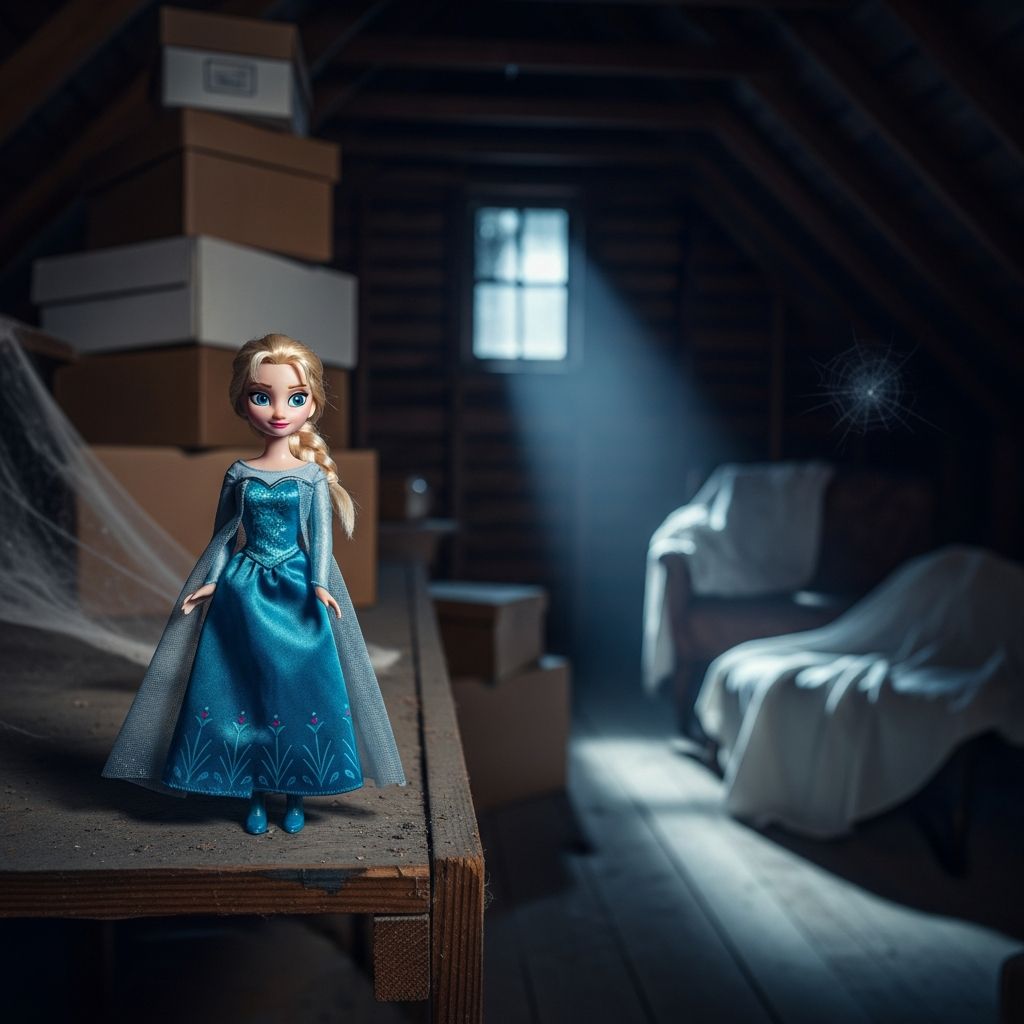
In late 2019 and early 2020, a Texas family’s simple attempt to declutter their home turned into an internet legend when their child’s beloved Frozen Elsa doll allegedly began reappearing after being thrown away—more than once. The story quickly spread across parenting sites, entertainment outlets, and social media, where it was labeled everything from a glitchy toy fiasco to a full-blown haunting.
This article takes that bizarre saga as inspiration to explore what actually happened, why people become so captivated by haunted toy stories, and how parents can respond when a harmless plaything suddenly feels a little too creepy. Rather than re-telling the source word-for-word, it uses the core events as a jumping-off point to discuss technology, belief, fear, and the powerful emotions wrapped up in childhood objects.
The Family, the Doll, and the First Signs of Weirdness
The family at the center of the story lives in Texas and has a daughter who, like millions of kids around the world, grew up adoring Elsa from Disney’s Frozen. Around 2013, the girl received an Elsa doll that could speak familiar movie phrases and sing the character’s signature song when a button was pressed.
For about two years, the doll functioned as expected and spoke in English, matching its main target market. Then, without the parents changing any settings, the doll reportedly began alternating between English and Spanish, which was unusual enough that the mother remembered it specifically.
- The Elsa doll was a talking and singing toy tied to the popularity of Frozen.
- After a couple of years, it started unexpectedly mixing English and Spanish phrases.
- The family did not actively modify the doll’s language settings before these changes began.
Over time, sightings of strange behavior reportedly escalated: the doll seemed to trigger sound even when switched off and ultimately became something the family no longer wanted in the house. Combined with its age, wear, and the daughter’s fading interest, that odd behavior set the stage for what came next—an attempt to simply throw the toy away.
Thrown Out, But Not Gone
The first disposal of the doll was fairly mundane: as part of making space before Christmas, the parents cleared out old, worn toys and put the Elsa doll in the household trash. It had marker scribbles, years of use, and was no longer a favorite; by all practical measures, it was ready for retirement.
Weeks later, though, the family says they discovered the same doll inside a storage bench in their living room, a space they rarely opened and would not have checked if they had not been looking for something else that had gone missing. Their children denied pulling the toy from the trash, and the mother believed them, since digging through outdoor garbage bags did not match their typical behavior.
- The doll was initially thrown away outside with the regular household trash.
- It later reappeared in a closed furniture bench inside the living room.
- The children claimed they had not retrieved it from the trash, leaving the parents unsettled.
At this point, the story had taken a turn from mildly odd to distinctly creepy. The parents began to weigh rational possibilities—misplaced memory, a forgotten retrieval, or someone playing a prank—against the deep unease that came from facing a toy they believed they had successfully discarded. The mother decided that if they were going to throw the doll away again, they would need to be much more thorough.
Double-Bagging a ‘Haunted’ Toy
For the doll’s second trip to the trash, the parents escalated their efforts in a way that reads almost like a scene from a low-budget horror movie. The toy was reportedly wrapped tightly in its own garbage bag, then sealed inside another bag already filled with other waste, and placed at the bottom of the outdoor trash can beneath several additional bags.
The family then rolled the can to the curb, and the local garbage truck collected the trash on schedule, seemingly taking the doll away for good. With the doll now presumably at a landfill, the family left town for a trip, comforted by the thought that the unsettling toy was finally gone.
| Attempt | Method | Outcome |
|---|---|---|
| First disposal | Placed doll in regular trash with other discarded toys. | Weeks later, doll discovered inside a bench in the living room. |
| Second disposal | Double-bagged, placed at bottom of full trash can, collected by garbage truck. | Later reappeared in the backyard with no bags around it. |
| Final removal | Boxed and shipped to an adult friend in another state, no return address. | Doll became a novelty decoration on the friend’s vehicle grille. |
Yet, the story did not end there. After they returned home, the couple’s daughter reportedly told her mother she had seen the Elsa doll again—this time, out in the backyard with no sign of the layers of trash bags that had previously cocooned it. The doll itself carried distinctive marker marks from years of play, which convinced the mother that it was the exact same toy and not a replacement.
Haunted Doll or Elaborate Prank?
From a rational standpoint, a reappearing doll sounds like a prank or a misunderstanding, and many online commenters suggested that hypothesis once the mother shared her story publicly. The mother acknowledged that the prank theory was the most logical explanation, but she also described being unable to figure out who would go to the trouble of fishing the doll out of collected trash or sneaking into the backyard to place it there.
On the other hand, the string of events—unexpected language changes, sound triggering when supposedly off, and the doll turning up in improbable locations—also fit the narrative beats of a modern ghost story. As the tale made its way across websites dedicated to parenting, pop culture, and even paranormal topics, the label of a “haunted” Elsa doll stuck and gave the narrative an instantly shareable hook.
- Skeptics pointed to practical explanations like pranks or electronic glitches.
- Believers and horror fans leaned into the idea of a possessed or haunted object.
- Either way, the uncanny details made the story irresistible fodder for social media and news outlets.
Intriguingly, the least comforting rational alternative to a haunting is the thought that a real person might have gone to great lengths to move the doll around without the family’s knowledge. For many parents, the notion of an unknown intruder is more disturbing than a supernatural theory, which may be one reason the “haunted toy” frame feels psychologically safer, even if it is less plausible.
Why Haunted Toy Stories Capture Parents’ Imaginations
Stories about possessed dolls and cursed toys are nothing new; from antique porcelain figurines to mass-produced action figures, objects linked to children have long been a staple of horror fiction and urban legend. What distinguishes the Elsa doll narrative is how it merges classic ghost-story elements with modern parenting life and recognizable pop culture icons.
Several factors make tales like this particularly sticky in the minds of parents:
- Emotional attachment: Children form powerful bonds with certain toys, so any strange behavior attached to those objects feels especially charged.
- Domestic vulnerability: The idea that something in the safe space of home could act unpredictably undermines a parent’s sense of control.
- Familiarity of the brand: A globally known character like Elsa gives the story instant recognizability and amplifies the creep factor when the character behaves “wrong.”
- Technology’s quirks: Modern toys often contain electronics, sensors, and multiple modes, creating more opportunities for glitches that seem eerie in the right context.
At the same time, viral stories such as this one provide a shared experience parents can joke about online, half-laughing and half-shuddering at the thought of a doll that refuses to leave. In that sense, haunted toy narratives become a pressure valve for real anxieties about parenting, safety, and the rapid spread of technology into the most intimate corners of family life.
How the Internet Turned a Local Mystery into a Viral Legend
The mother originally described the saga of the Elsa doll in social media posts, which then caught the attention of parenting-focused outlets and mainstream entertainment websites. As each site re-told the account in its own voice—usually emphasizing the “haunted” angle—the story morphed into a small-scale internet phenomenon.
Coverage tended to highlight the same key beats: the language changes, the first and second trash disposals, the backyard reappearance, and, finally, the decision to send the doll far away to prevent any more surprise visits. That last detail gave writers a satisfying ending: the doll was reportedly mailed to a friend in Minnesota, who strapped it to the front of his vehicle as a joking nod to its supposed supernatural resilience.
- Social media posts were the original source of the tale.
- Multiple parenting and pop culture websites picked up the story and emphasized its creepiness.
- The doll’s relocation to another state served as a natural narrative “final chapter.”
Once a story like this gains traction, it often gets repeated in listicles, podcasts, and compilations of strange news. Over time, that repetition can make the line between firsthand account, journalistic summary, and urban legend increasingly blurry, especially when audiences primarily encounter the tale as a headline about a haunted doll that “refuses to let it go.”
Technology, Glitches, and the Illusion of Intent
Behind the spooky framing lies a more mundane reality: many interactive toys mix simple electronics with mass manufacturing, which can lead to unpredictable behavior as components age. Bilingual chips may switch languages, speakers can trigger with residual charge, and poorly labeled mode switches can convince owners that something impossible is happening.
Humans are wired to assign intention to unexpected events, especially when those events occur in emotionally charged contexts such as watching over a child’s favorite playthings. A toy that chirps in an empty room at night or seems to change its language on its own invites a narrative explanation, whether that story involves malfunctioning circuits or mischievous spirits.
- Electronic toys can behave oddly as batteries drain or components degrade.
- Users sometimes misunderstand how multi-language or multi-mode systems are configured.
- Our brains naturally seek stories to explain any pattern that feels unsettling or out of place.
In the Elsa case, the overlapping factors of bilingual audio, long-term use, and inconsistent sound triggered at unexpected times created the perfect storm for a haunting narrative. Whether or not anyone believes in the supernatural, the story demonstrates how easily everyday technology can take on a life of its own in the imagination.
Practical Tips for Parents Dealing With Creepy Toys
Regardless of the underlying cause, once a toy feels eerie, parents still have to manage both their own reactions and their child’s feelings. The Elsa story offers a chance to consider some level-headed steps families can take when a beloved object seems to cross the line from charming to unsettling.
- Start with simple checks. Remove the batteries, test switches and settings, and confirm whether the toy behaves normally under controlled conditions before deciding it is truly strange.
- Talk to your child. Ask how they feel about the toy and whether it scares or comforts them; their emotional response should guide what happens next.
- Offer alternatives. If a toy is giving off bad vibes, involve your child in picking a replacement so that discarding it does not feel like a punishment.
- Control the narrative. Frame any unusual behavior in age-appropriate language—perhaps as a silly glitch—rather than amplifying the fear.
- Respect your own instincts. If an object truly unsettles you, it is reasonable to remove it; parental peace of mind is a valid priority.
Some parents might even choose to turn a mildly creepy scenario into a family in-joke, using humor to defuse tension and show kids that strange things do not necessarily mean something dangerous. Others prefer a quiet exit, giving the toy a one-way trip out of the house without dramatizing the process.
Ethical Storytelling: Kids, Privacy, and Viral Fame
Another dimension of the Elsa doll saga is how a personal family experience became a widely discussed story involving a little girl’s toy. Although the narrative centers largely on the parents’ reactions, media coverage inevitably introduced the child to public attention, even if she was not fully identifiable.
Parents who share similar anecdotes online—whether about creepy dolls, dangerous pranks, or embarrassing mishaps—face a delicate balance between wanting to connect with other adults and preserving their children’s privacy. The Elsa example illustrates how quickly a quirky family mystery can be amplified beyond its original audience when it touches on recognizable brands and compelling storytelling tropes.
- Personal posts may travel far once media outlets pick them up.
- Children’s lives can become content, even when the intent is just to vent or share.
- Considering long-term digital footprints is increasingly important for modern families.
Thinking ahead about how a story might be perceived—by strangers now and by your own child years later—can help parents decide how much detail to share when something bizarre happens at home. In some cases, keeping the weirdest chapters within the family may be the kinder choice, even if they would make for irresistible headlines.
Frequently Asked Questions About the ‘Haunted’ Elsa Doll
Did the family ever prove the doll was actually haunted?
No definitive proof of anything supernatural emerged; the story remains an account of strange coincidences and unexplained reappearances described by the family and relayed by media outlets. Many observers view it as either a prank, a misunderstanding, or simply a mystery without a clear answer.
Where is the Elsa doll now?
According to follow-up coverage, the doll was mailed to a friend of the family in Minnesota, who attached it to the front of his vehicle as a kind of mascot. At the time those reports were published, the original family said the toy was roughly 1,500 miles away from their home.
Could the language changes be explained by the toy’s design?
Media reports noted that the doll was marketed as a bilingual toy, which suggests it included both English and Spanish audio from the outset. The family’s concern came from the fact that the language behavior appeared to change over time without any deliberate adjustment of the settings.
Why do stories like this go viral so easily?
They blend familiar characters, spooky overtones, and everyday family life, making them both relatable and exciting to retell. The phrase “haunted Elsa doll” is instantly intriguing and easy to package into headlines, memes, and short social media posts.
Should parents worry if their child’s electronic toy acts strangely?
Most odd behavior from electronic toys can be traced to low batteries, wear and tear, or misunderstood features, so genuine danger is rare. That said, if a toy feels unsettling, parents are justified in removing it and should prioritize their child’s comfort and sense of safety.
A Story That Lives On, Whether or Not the Doll Does
The tale of the Elsa doll that allegedly refused to stay gone sits at the crossroads of folklore, parenting, and the quirks of modern consumer technology. Even if every element has a rational explanation, the narrative’s power lies in how it captures the unease of watching a familiar object defy expectations in the heart of the family home.
In the end, whether one believes in haunted toys or just haunted imaginations, the story serves as a reminder that the simplest items in a child’s bedroom—plastic dolls, blinking lights, prerecorded songs—can become the raw material for legends that spread far beyond the playroom. As long as people love a good eerie tale, the saga of the Elsa doll will continue to be retold, reshaped, and remembered whenever someone hears a toy speak up from an empty room.