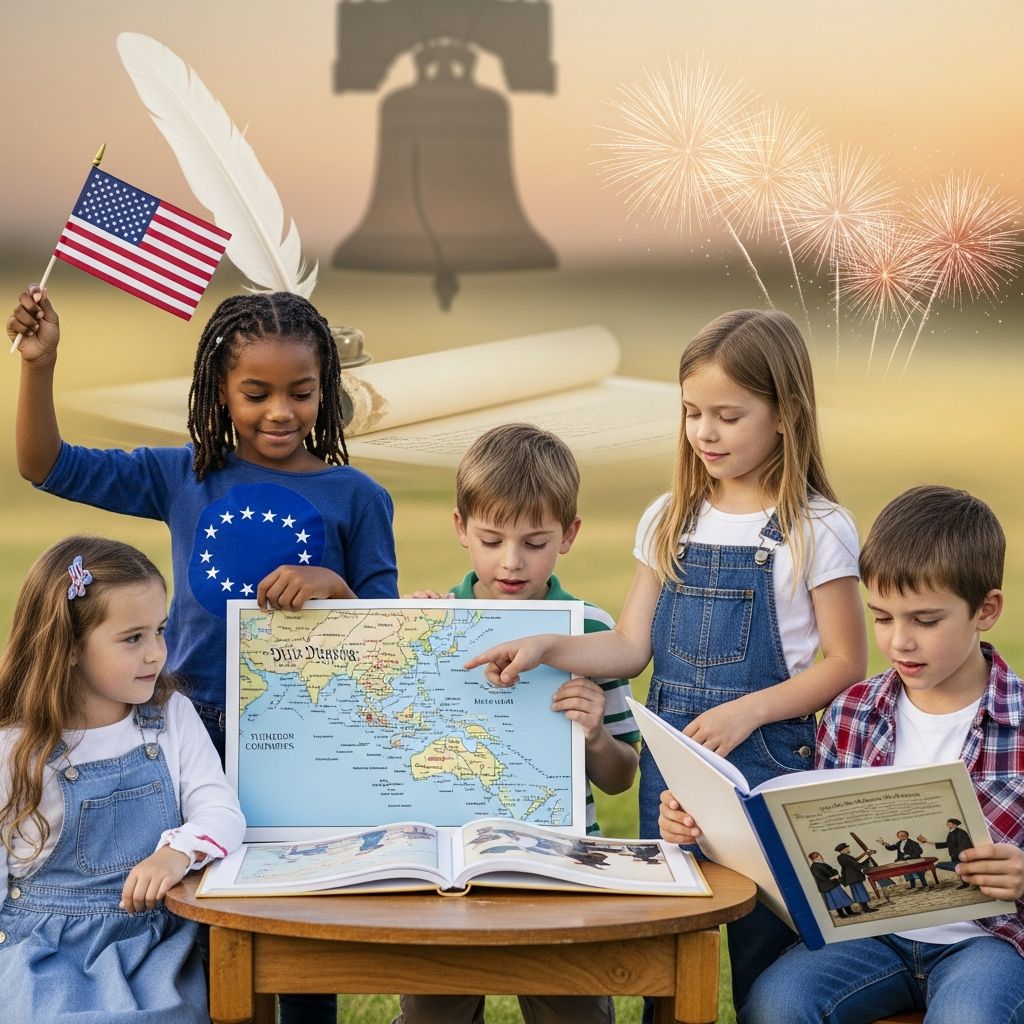
The Birth of American Independence: A Historical Journey
The Fourth of July represents one of the most significant dates in world history, marking the moment when thirteen North American colonies declared their separation from British rule. On this momentous day in 1776, the Continental Congress officially adopted the Declaration of Independence, fundamentally transforming a collection of colonial settlements into the foundation of a new nation. Understanding this pivotal moment helps young people appreciate the values of freedom and self-determination that continue to shape American society today.
The path to independence was not instantaneous. In 1775, when armed conflict between colonial militias and British forces erupted, relatively few colonists genuinely desired complete separation from Great Britain. However, as tensions escalated throughout 1776 and British intransigence became apparent, revolutionary sentiment gained considerable momentum among the colonial leadership and population.
The Road to Revolution: From Tension to Declaration
The groundwork for independence was laid during crucial meetings in Philadelphia. On June 7, 1776, Richard Henry Lee, a delegate from Virginia, presented a motion before the Continental Congress calling for the colonies to declare themselves independent. Between June 11 and June 28, Thomas Jefferson undertook the monumental task of drafting a document that would articulate the philosophical and practical reasons for separation from Britain. This draft underwent careful review and modification by Congress members, who refined the language and clarified the arguments.
The final version was adopted on July 4, 1776, creating an official announcement to the world that thirteen colonies were now united as independent states. This document would become the cornerstone of American political philosophy, asserting that all people possess certain unalienable rights and that governments derive their power from the consent of the governed.
Early Celebrations and Patriotic Festivities
Even before the Revolutionary War concluded, Americans began commemorating their independence with creative and symbolic celebrations. During the summer of 1776, patriotic colonists organized mock funeral processions for King George III, transforming the occasion into a public demonstration of their rejection of monarchy and embrace of liberty. These early commemorations blended political statements with festive entertainment.
The first organized Independence Day celebration took place in Philadelphia on July 4, 1777, while Congress was still actively managing the ongoing war effort. This historic event featured multiple forms of entertainment and public participation:
- Military displays including the firing of cannons in a thirteen-gun salute, honoring the thirteen original colonies
- Boisterous parades with civic leaders and military personnel marching through streets
- Concert performances and musical tributes to independence
- Roaring bonfires illuminating the night sky
- Public readings of the Declaration of Independence, ensuring citizens understood the document’s significance
The tradition of fireworks, now synonymous with Fourth of July celebrations, originated during this 1777 Philadelphia commemoration. The symbolic use of explosives and bright lights resonated with Americans as a powerful metaphor for freedom bursting forth into the world.
Evolution of Independence Day Through American History
As the Revolutionary War progressed toward American victory, Independence Day celebrations evolved from purely patriotic demonstrations into opportunities for national unity. General George Washington recognized the morale-building potential of these observances; in 1778, he famously ordered that his soldiers receive double rations of rum on July 4th as a gesture of celebration and appreciation.
Following the war’s conclusion and the establishment of the new republic, Americans continued honoring July 4th with increasing enthusiasm. However, the celebrations took on different characters depending on political affiliation. By the late eighteenth century, competing political parties—the Federalists and the Democratic-Republicans—held separate Fourth of July festivities in major cities, using the occasion to advance their respective political agendas.
Massachusetts became the first state to officially recognize July 4th as a holiday in 1781, demonstrating the growing importance of Independence Day in the American consciousness. This state-level action preceded federal recognition by nearly a century.
Federal Recognition and Modern Traditions
The United States Congress formally established July 4th as a federal holiday in 1870, giving official national status to a celebration that had already become deeply embedded in American culture. This congressional action reflected the day’s significance and acknowledged the broad public support for commemorating American independence annually.
The recognition of Independence Day as a paid holiday for federal employees came much later, in 1941, ensuring that government workers could fully participate in celebrations without financial penalty. This change demonstrated the nation’s commitment to allowing citizens across all sectors to honor this important national occasion.
Modern Fourth of July celebrations have shifted from their earlier emphasis on political speeches and military demonstrations toward family-oriented leisure activities. Contemporary Independence Day observances typically feature:
- Outdoor barbecues with hamburgers, hot dogs, and chicken as standard menu items
- Family picnics in parks and recreational areas
- Community parades celebrating local heritage and civic pride
- Spectacular fireworks displays at dusk and after sunset
- Patriotic music performances including the national anthem
Remarkable Presidential Connections to Independence Day
American presidential history contains several intriguing connections to July 4th. Most famously, President Calvin Coolidge, the nation’s 30th president, was born on July 4, 1872, making him the only American president to share a birthday with Independence Day itself. This coincidence has made Coolidge a unique figure in presidential annals.
The deaths of two early presidents also occurred on Independence Day anniversaries, adding poignant layers to the holiday’s history. John Adams and Thomas Jefferson, both signers of the Declaration of Independence and later presidents, both died on July 4, 1826—precisely fifty years after the Declaration’s adoption. This remarkable coincidence struck contemporaries as symbolically significant, suggesting divine providence in American affairs.
Another notable presidential connection involves fireworks themselves. President John Adams is credited with envisioning “illuminations”—public displays of light and explosions—as an essential component of Independence Day celebrations. His enthusiasm for this practice helped establish the fireworks tradition that continues to dominate modern celebrations.
Surprising Historical Events Occurring on July 4th
Beyond Independence Day itself, several significant American historical events have coincidentally occurred on July 4th, creating a pattern that reflects the date’s cultural importance:
| Year | Event | Significance |
|---|---|---|
| 1802 | U.S. Military Academy at West Point Opened | Established one of America’s most prestigious military institutions |
| 1803 | Louisiana Purchase Announcement | Doubled the territorial size of the United States |
| 1827 | Slavery Abolition in New York | New York celebrated this achievement with parades and public events |
| 1804 | First Western Independence Day Celebration | Lewis and Clark expedition celebrated near Independence Creek, Kansas |
Cultural Symbols and National Identity
The American flag has emerged as the quintessential symbol of Independence Day, appearing everywhere from home decorations to parade floats and public buildings. The flag’s prominence reflects its representation of the nation’s founding ideals and the sacrifices made to achieve independence.
The national anthem, “The Star-Spangled Banner,” written during the War of 1812 and officially adopted in 1931, has become inseparable from Fourth of July celebrations. The playing of this stirring composition at Independence Day events connects contemporary celebrations to America’s broader military history and patriotic traditions.
Interestingly, July 4th holds significance beyond the United States. In the Philippines, July 4th is observed as Republic Day, commemorating the nation’s independence from American territorial status on July 4, 1946. This shared date reflects the complex historical relationships between nations and demonstrates how independence movements across the globe have been influenced by American ideals.
The Culinary Tradition of July 4th
Food plays an integral role in American Independence Day celebrations, with distinct preferences emerging over decades of tradition. Grilling has become the dominant method for preparing Independence Day meals, representing both practical convenience for large gatherings and symbolic continuity with earlier outdoor celebrations.
The culinary centerpieces of modern July 4th celebrations remain consistent:
- Hamburgers, which offer versatility and broad appeal
- Hot dogs, a quintessentially American food staple
- Grilled chicken, providing a leaner protein option
The consumption of hot dogs on July 4th has reached remarkable proportions. Americans collectively consume approximately 150 million hot dogs annually on Independence Day alone, representing an extraordinary concentration of consumption around this single holiday. This staggering figure demonstrates the degree to which food traditions have become embedded in the celebration’s culture.
Continuity in American Communities
Some American communities have maintained unbroken traditions of Independence Day celebration for over two centuries. Bristol, Rhode Island, hosts the oldest continuous July 4th celebration, with festivities dating back to 1785. This remarkable longevity demonstrates how Independence Day observances have become woven into the fabric of American community identity, persisting through wars, economic challenges, and social transformations.
Following the Civil War, Southern communities played a crucial role in reviving and transforming Independence Day celebrations. Civil War veterans participated in post-war parades that served dual purposes: they publicly demonstrated unity across regional divisions while simultaneously facilitating the psychological and emotional recovery necessary for national reconciliation. These celebrations represented more than mere nostalgia; they functioned as essential mechanisms for rebuilding patriotism and national cohesion.
Understanding Independence Day’s Contemporary Relevance
For young people learning about Independence Day, understanding both its historical roots and modern expressions provides valuable perspective on American values and national identity. The holiday’s evolution from solemn political commemoration to family-centered celebration reflects broader changes in American society, while its core significance—honoring the establishment of self-governance and individual liberty—remains constant.
The Liberty Bell in Philadelphia, the physical embodiment of American independence symbolism, participates in the annual tradition by ringing thirteen times every July 4th, honoring the original colonies and maintaining historical continuity with the founding moment.
Frequently Asked Questions About Independence Day
Q: Why is July 4th specifically chosen as Independence Day?
A: July 4th marks the date when the Continental Congress officially adopted the Declaration of Independence in 1776, formally announcing the thirteen colonies’ separation from British rule and establishing themselves as independent states united in purpose and governance.
Q: What was the Declaration of Independence designed to accomplish?
A: The Declaration articulated the philosophical justification for independence, asserting that governments derive legitimacy from the consent of the governed and that people possess unalienable rights to life, liberty, and the pursuit of happiness. It served as both a domestic rallying document and an international announcement of America’s new status.
Q: When did July 4th become an official federal holiday?
A: Congress established July 4th as a federal holiday in 1870. It subsequently became a paid holiday for federal employees in 1941, allowing government workers to celebrate the day without financial hardship.
Q: How have Independence Day celebrations changed over time?
A: Early celebrations emphasized political significance with speeches, military demonstrations, and public readings of the Declaration. Modern celebrations have evolved to prioritize family gatherings, outdoor recreation, barbecues, and fireworks displays, though the underlying purpose of honoring American independence remains constant.
Q: What role do fireworks play in Independence Day traditions?
A: Fireworks originated as part of the first organized Independence Day celebration in Philadelphia in 1777, with a thirteen-gun cannon salute honoring the original colonies. The practice became symbolic of freedom bursting forth and expanded into the elaborate displays that now characterize modern celebrations.
References
- Independence Day marks the birth of the United States as a new country — Britannica Kids. Accessed 2026. https://kids.britannica.com/kids/article/Independence-Day/400595
- Facts About the Fourth of July — Kids Konnect Educational Resources. Accessed 2026. https://kidskonnect.com/holidays-seasons/fourth-july/
- Interesting Fourth of July Facts for Kids — Country Home Learning Center. Accessed 2026. https://countryhomelearningcenter.com/interesting-fourth-of-july-facts-for-kids/
- 70 Fun and Surprising 4th of July Trivia Facts — Greenlight Learning Center. Accessed 2026. https://greenlight.com/learning-center/fun-facts/4th-of-july-fun-facts
- Fun Facts about Independence Day — Lonestar Kids Dentistry. Accessed 2026. https://lonestarkidsdds.com/fun-facts-about-independence-day/