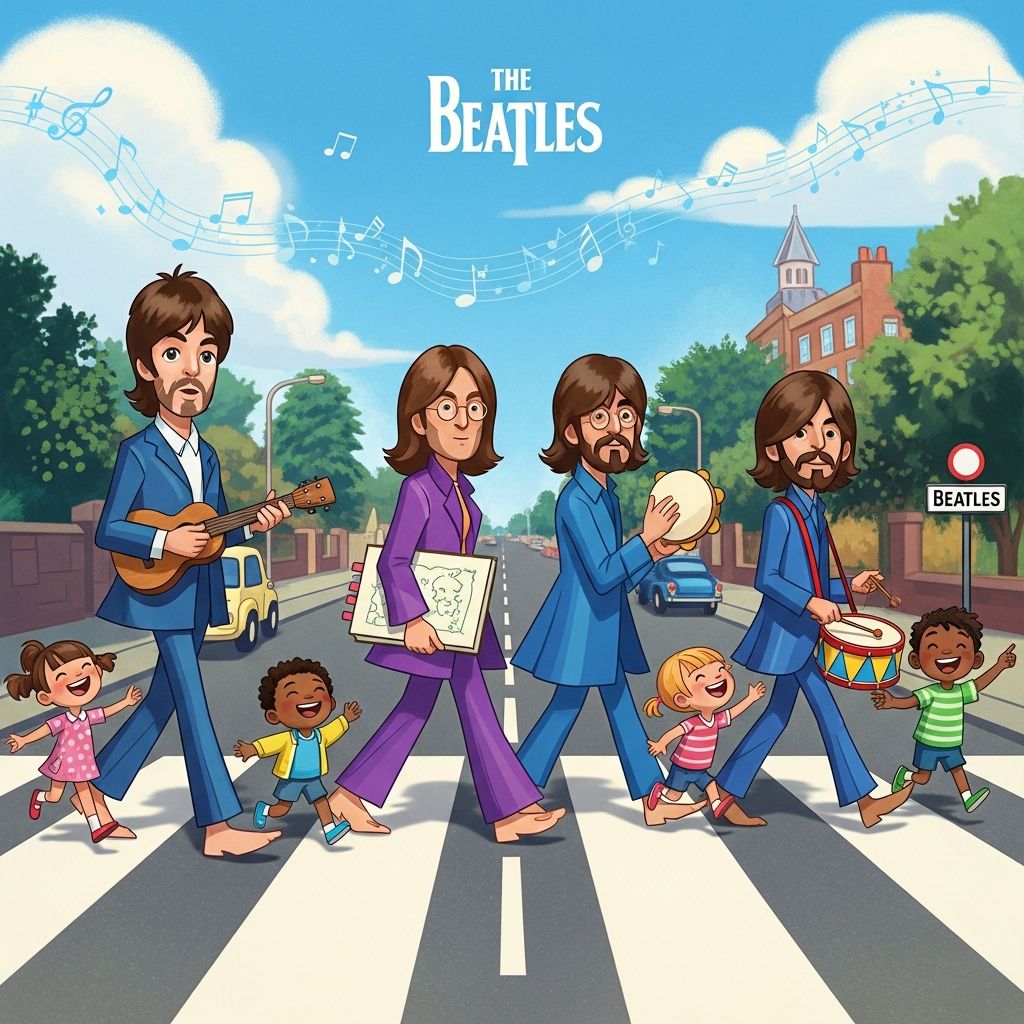
The Beatles recorded one of the most beloved catalogues in popular music, but parents often wonder which albums work best for kids and where to start. This guide reimagines the classic discography as a journey for families, helping you match each album’s mood, complexity, and themes to your child’s age and attention span.
Why The Beatles Still Work for Kids
Even decades after their breakup, The Beatles remain central to popular music and culture. Their core studio albums, released from 1963 to 1970 in the UK, trace an arc from simple rock-and-roll to experimental studio masterpieces. That variety is exactly what makes their music so useful for parents: you can gradually introduce more complex sounds as your child grows.
- Catchy melodies make early tracks easy for kids to sing and remember.
- Clear rhythms help younger children move, dance, and clap along.
- Rich arrangements on later albums engage older kids who are curious about instruments and sounds.
The Core Beatles Albums Parents Should Know
For family listening, it is easiest to focus on the main studio albums The Beatles released in the UK between 1963 and 1970:
| Album | Year | General Vibe | Kid-Friendly Starting Point |
|---|---|---|---|
| Please Please Me | 1963 | Live-in-the-studio energy, early rock & roll | Great for energetic, short sessions |
| With The Beatles | 1963 | More polished, lots of covers | Good second step once kids know the sound |
| A Hard Day’s Night | 1964 | Upbeat, movie soundtrack feel | Excellent all-around family starter |
| Beatles For Sale | 1964 | More introspective, still poppy | For kids ready for some slower songs |
| Help! | 1965 | Soundtrack plus evolving songwriting | Good mix of fun and thoughtful tracks |
| Rubber Soul | 1965 | Folk-rock, more mature themes | Best with older kids or tweens |
| Revolver | 1966 | Highly inventive, psychedelic touches | Curious, music-loving tweens and teens |
| Sgt. Pepper’s Lonely Hearts Club Band | 1967 | Concept album, big studio production | Great for older kids with imagination |
| Magical Mystery Tour | 1967 | Colorful, eclectic, single-heavy | Fun for kids drawn to unusual sounds |
| The Beatles (White Album) | 1968 | Very varied, from gentle to noisy | Pick-and-choose tracks for teens |
| Yellow Submarine | 1969 | Mix of songs and orchestral pieces | Younger kids, especially fans of the title song |
| Abbey Road | 1969 | Polished, mature, famous side-two medley | Family listening with older kids and teens |
| Let It Be | 1970 | Back-to-basics feel mixed with ballads | Reflective listening for older kids |
Age-Based Listening Path: Where to Start
Each child is different, but parents often find it easier to introduce The Beatles in phases based on age and attention span.
Early Childhood: Simple Hooks and Repetition
For toddlers and preschoolers, short tracks, bright melodies, and clear rhythms work best. Development research on music and children highlights that repetition and strong beats support engagement and motor coordination in young kids.
- Best early choices: upbeat, straightforward songs from Please Please Me and A Hard Day’s Night.
- Session tips: play only a few songs at a time, and encourage clapping or dancing rather than passive listening.
- Watch for overload: long or experimental tracks can lose a very young listener’s interest quickly.
Elementary School: Story Songs and Sing-Alongs
Once kids reach school age, they can follow simple narratives, remember lyrics, and handle albums that shift moods. Studies on family music-making suggest that shared singing can strengthen emotional bonding and routine.
- Good albums now: Help!, Beatles For Sale, and Rubber Soul (in small doses) introduce richer ideas without losing melodic appeal.
- Try themed nights: choose a single album for a Sunday afternoon, listen through, and ask kids which songs they remember best.
- Use lyrics: reading along with printed lyrics can support language and reading skills while making songs more memorable.
Tweens and Teens: Full Albums and Big Concepts
Older kids can appreciate the more experimental side of The Beatles, including unconventional song structures, studio effects, and lyrical themes that go beyond romance. Historical overviews of the band’s later work highlight how albums like Revolver and Sgt. Pepper changed rock music by prioritizing the album as a complete artistic statement.
- Ideal albums: Revolver, Sgt. Pepper’s Lonely Hearts Club Band, Magical Mystery Tour, Abbey Road, and selected parts of the White Album.
- Conversation starters: talk about the differences between early and late Beatles songs—what changed in sound, lyrics, and mood.
- Link to history: connect the music to the 1960s cultural context using credible historical sources, which can support school learning.
Energy Levels: Matching Albums to Family Moments
Thinking about the energy level of each album can help you decide when to play what. Some records work well in the car, others as calm background music in the evening.
High-Energy Albums for Playtime and Road Trips
- Please Please Me: recorded largely live in one day, it captures raw excitement and feels like a concert in your living room.
- With The Beatles: more confident and polished, still driven by strong backbeats and simple rock-and-roll arrangements.
- A Hard Day’s Night: nearly wall-to-wall catchy songs from the film era, ideal for car sing-alongs.
Mid-Tempo Mixes for Afternoons
- Help!: a balance of bouncy tracks and more introspective moments; good when kids are playing quietly but still active.
- Beatles For Sale: somewhat moodier, but with enough lively songs to keep younger listeners engaged in short bursts.
- Rubber Soul: more thoughtful and acoustic-driven, better for older kids during reading or homework time.
Reflective and Experimental Albums for Evenings
- Revolver: imaginative production and varied styles invite focused listening rather than background play.
- Sgt. Pepper: functions almost like a short musical; best when the family can sit and experience it together.
- Abbey Road: side two’s linked songs create a satisfying arc that rewards uninterrupted listening.
- Let It Be: slower and more reflective overall, making it suitable for winding down at the end of the day.
Handling Tricky Topics and Noisy Moments
Not every track on every Beatles album is ideal for every child. Some songs are very loud or emotionally intense; others include themes you may want to introduce later. Parents can curate playlists or skip buttons without losing the essence of the albums.
- Volume and texture: a few tracks, especially on the White Album, can be noisy or chaotic for sensitive listeners. Use them selectively for older kids.
- Lyrics and themes: as with any popular music, consider reading lyrics in advance to decide what fits your family values and your child’s maturity.
- Gradual exposure: start with the most melodic and straightforward songs on a given album before exploring the more challenging tracks.
Making Beatles Listening Interactive
Turning listening into an activity—rather than just background sound—helps kids build stronger memories and a deeper connection to the music.
- Create family playlists: let each family member choose a favorite song from an album and explain why.
- Draw what you hear: play instrumental or imaginative tracks and ask kids to draw the scenes or colors the music suggests.
- Compare versions: older kids may enjoy comparing different mixes or live vs. studio recordings, using official releases and documentation.
- Connect to instruments: if a child plays piano, guitar, or another instrument, try simple chord-based Beatles songs as a learning tool.
Suggested First Albums by Goal
| Parent Goal | Recommended Album | Why It Works |
|---|---|---|
| Introduce The Beatles with immediate fun | A Hard Day’s Night | Fast-paced, memorable songs with minimal slow tracks. |
| Background music for weekend play | Please Please Me | Lively but straightforward sound; feels like a live show. |
| Calmer listening for older kids | Rubber Soul | Richer lyrics and acoustic textures without too much noise. |
| Exploring creativity and studio sounds | Revolver | Showcases inventive arrangements and varied song types. |
| One big family event album | Abbey Road | Polished production and a famous closing medley to experience together. |
Frequently Asked Questions (FAQs)
Q: What is the single best Beatles album to start with for most kids?
For many families, A Hard Day’s Night is a strong starting point because it is upbeat, melodic, and relatively consistent in tone, with few tracks that younger children are likely to skip.
Q: Do I need to play the albums in chronological order?
No. Although listening in release order can highlight the band’s artistic growth from 1963 to 1970, most children respond better when you start with the most accessible songs and gradually move toward the more experimental albums.
Q: Are there Beatles albums made specifically for children?
The Beatles did not release dedicated children’s albums. However, songs such as the title track from Yellow Submarine have often been embraced by younger listeners, and parents can easily create child-friendly playlists drawn from the main studio albums.
Q: How long should a Beatles listening session be for young kids?
For toddlers and preschoolers, ten to twenty minutes of focused listening—often just a few songs—is usually enough. Research on music in early childhood suggests that shorter, repeated sessions support engagement better than long, continuous background sound.
Q: Is it worth discussing the historical context of The Beatles with older children?
Yes. For tweens and teens, connecting albums like Revolver and Sgt. Pepper to broader 1960s social and cultural changes can deepen appreciation and support classroom learning about that era.
References
- The Beatles’ albums in order – complete list — BeatlesBible.com. 2024-01-15. https://www.beatlesbible.com/albums/
- The Benefits of Music Education — National Association for Music Education (NAfME). 2023-03-01. https://nafme.org/my-classroom/benefits-music-education/
- 1960s: Music and Social Change — Britannica School. 2022-09-10. https://www.britannica.com/topic/popular-music/Popular-music-and-social-change-in-the-1960s
- The Beatles albums discography — The Beatles / Apple Corps via official discography summary. 2019-09-27. https://www.thebeatles.com/albums
- The Beatles albums in order: Release dates, tracklists and singles — Radio Times. 2023-02-18. https://www.radiotimes.com/audio/the-beatles-albums-release-date/