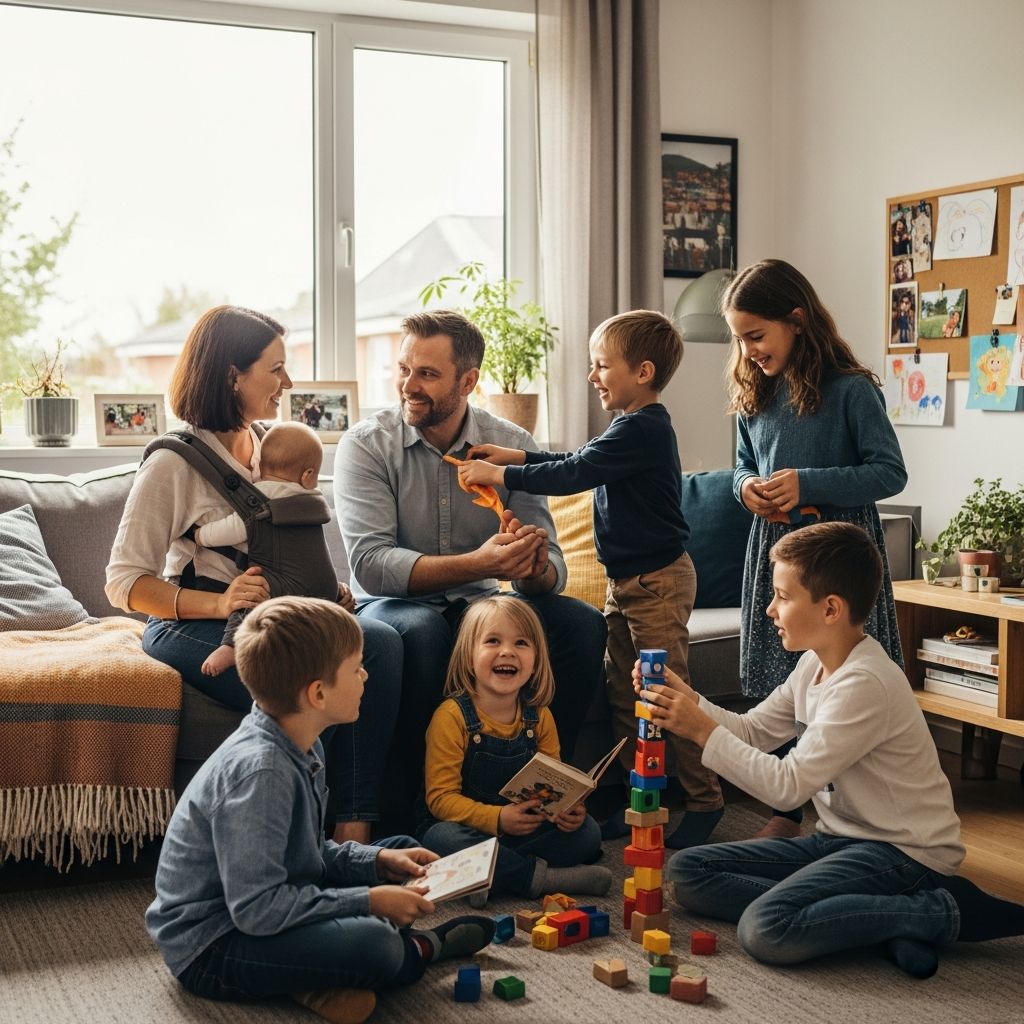
Bringing up five children fundamentally alters the parenting landscape, shifting focus from individual attention to collective harmony and efficiency. Parents often discover a more relaxed approach, deeper family connections, and practical skills honed by necessity.
Embracing a Relaxed Mindset in Large Families
One of the most noticeable shifts when parenting five kids is the evolution toward a calmer, less anxious style of child-rearing. Early parenthood with one or two children frequently involves constant vigilance—checking every milestone, sterilizing every surface, and consulting experts for minor issues. By the time a fifth child arrives, however, experience breeds confidence. Parents recognize that children are resilient, phases pass quickly, and not every hiccup requires intervention.
This mindset reduces stress over trivial matters. Houses become functionally baby-proofed once, standards for tidiness adjust to realistic levels, and decision-making flows intuitively without endless second-guessing. Research supports this adaptation: parents in larger families report lower worry levels about daily parenting challenges, allowing them to savor moments rather than fret. The result is a home where joy overshadows perfectionism.
Sibling Bonds: Built-in Companions for Life
In a family of five, siblings become each other’s primary playmates, teachers, and confidants, creating a rich social environment from infancy. Children rarely face boredom; there’s always someone for games, conversations, or adventures, eliminating the need to seek external entertainment. Older kids naturally mentor younger ones—reading books, helping with homework, or demonstrating life skills like sharing toys or resolving disputes.
- Instant Playmates: No child waits for parental availability; siblings jump into board games, pool splashing, or imaginative play together.
- Mutual Learning: Toddlers pick up phrases, math tricks, or even silly skills like armpit farts from elders, fostering organic education.
- Lifelong Loyalty: Separations highlight strong attachments, as kids express missing each other, building a support network for adulthood.
These dynamics teach empathy and cooperation early. Studies indicate children from larger families develop superior social skills and form more stable adult relationships, less prone to divorce. The protective instincts among siblings—eldest watching over toddlers—create a family safety net.
Teamwork: The Heartbeat of Household Operations
With five children, individual efforts fall short; collective action becomes essential. Chores transform into family rituals, where everyone contributes based on age and ability, making tasks quicker and instilling responsibility. Cleaning, meal prep, and outing preparations turn into group endeavors, with older kids corralling younger ones.
Sharing resources—clothes, toys, electronics—normalizes from day one, curbing entitlement and promoting generosity. Limited gadgets mean negotiation skills sharpen, preparing kids for real-world interactions. This teamwork extends beyond home: large families often secure group discounts for events, amplifying fun.
| Task | Small Family Approach | Large Family (5 Kids) Approach |
|---|---|---|
| Cleaning | Parents handle most | Family assembly line: kids sort by age |
| Getting Ready for Outings | One-by-one herding | Team effort to gather items and load car |
| Sharing Toys/Games | Abundant individual items | Negotiation and turn-taking ingrained |
Such systems build character: older children mature through sacrifice, younger ones gain independence.
Navigating Challenges: Time, Resources, and Individual Attention
Despite perks, parenting five kids presents hurdles. Parental one-on-one time dilutes, potentially impacting cognitive development if not managed. Economic pressures rise; larger families fund fewer college tuitions, affecting offspring’s starts. Space constraints demand creativity—shared rooms teach compromise.
Mothers with higher cognitive skills often reduce work hours post-additional births, leveraging better childcare, yet outcomes vary. Mitigation strategies include prioritizing quality interactions, like individual outings or grocery trips, and community support. Financially, hand-me-downs and bulk buying ease burdens, though planning is key.
Emotional Resilience and Family Joy
Large families cultivate emotional depth. Hugs from little ones combat parental fatigue, loneliness dissolves amid constant interaction. Conflicts build character—fights teach reconciliation, ensuring someone always has your back. Diversity thrives: quiet siblings complement outgoing ones, sparking creativity.
Long-term, adult children share eldercare loads, easing aging parents’ burdens. This interconnectedness fosters admiration for each member’s uniqueness. Parents report deeper life satisfaction, viewing their brood as a blessing despite chaos.
Practical Strategies for Thriving with Five Kids
Success hinges on intentional habits:
- Routine Mastery: Fixed schedules for meals, bedtime, and chores streamline chaos.
- Age-Appropriate Roles: Assign tasks matching abilities to build confidence.
- Quality over Quantity: Short, focused one-on-one moments trump extended sessions.
- Community Leverage: Involve extended family or co-ops for support.
- Lowered Expectations: Embrace mess as creativity’s byproduct.
These adaptations turn potential overwhelm into harmonious living.
Frequently Asked Questions
Does parenting five kids mean less individual attention?
Yes, time per child decreases, but siblings fill gaps with companionship, and strategic parent-child dates maintain bonds.
Are big families more affordable?
Not always—costs rise, but hand-me-downs, sharing, and group efficiencies offset expenses.
Do kids in large families miss out educationally?
Potentially on parental input, but social skills excel, and family teaching compensates if supplemented by good schools.
How do you manage discipline with five kids?
Consistent rules, team accountability, and natural consequences work best, leveraging peer influence.
Is a big family ideal for everyone?
No—personal capacity, finances, and support networks determine fit, but many thrive.
This FAQ section addresses common curiosities, optimizing for searcher intent.
References
- 9 Overlooked Advantages of Having a Big Family — Fun Loving Families. Accessed 2026. https://www.funlovingfamilies.com/advantages-of-having-a-big-family/
- Pros & Cons To Big Families — HomeSweetHomeMaker. 2019-03-14. https://homesweethomemaker.org/2019/03/14/pros-cons-to-big-families/
- For Kids, Large Families Have Pros and Cons — Institute for Family Studies. Accessed 2026. https://ifstudies.org/blog/for-kids-large-families-have-pros-and-cons
- 6 Perks of Having a Big Family (And Why I Love It) — Baby Chick. Accessed 2026. https://www.baby-chick.com/big-family-perks/
- EP 92: Unexpected Benefits of Big Family Living — Loving Life at Home. 2025-08-07. https://lovinglifeathome.com/2025/08/07/benefits-of-big-family-living/
- Living Large: Big Family Perspectives That Can Benefit You — KC Parent. Accessed 2026. https://kcparent.com/living-large-big-family-perspectives-that-can-benefit-you/