Switching to non-toxic cleaning transforms your home into a sanctuary free from harsh chemicals, benefiting health and the planet. This guide outlines practical steps, recipes, and tools for beginners.
Understanding the Impact of Conventional Cleaners
Standard household cleaners often contain volatile organic compounds (VOCs), ammonia, and phthalates that release fumes linked to respiratory issues and skin irritation, especially in children and pets. The U.S. Environmental Protection Agency notes that indoor air can be 2-5 times more polluted than outdoor air due to such products. Opting for natural alternatives reduces these risks while maintaining effectiveness through plant-derived ingredients like citric acid and essential oils.
Why Families Benefit from Natural Cleaning
Non-toxic options minimize exposure to endocrine disruptors, which can affect hormone balance according to studies from the Endocrine Society. Cleaner air supports better sleep and fewer allergies, creating a nurturing space for growing kids. Environmentally, biodegradable formulas prevent water contamination, aligning with sustainable living goals.
- Health gains: Fewer asthma triggers and irritations.
- Cost savings: DIY mixes use pantry staples.
- Eco perks: Less plastic waste and pollution.
Step-by-Step Transition Plan
Begin your shift gradually to avoid overwhelm. Assess current supplies, then replace high-use items first.
- Inventory check: Gather all cleaners and scan labels for red flags like bleach or parabens.
- Prioritize swaps: Target multi-surface sprays and laundry detergents.
- Test small: Try one new product per week on inconspicuous areas.
- Build habits: Refill stations cut costs; track progress in a journal.
Progress fosters confidence; perfection isn’t required. Many find joy in customizing scents with lavender or lemon oils.
Essential Ingredients for Homemade Cleaners
Stock these basics for versatile, potent mixes:
| Ingredient | Primary Use | Source |
|---|---|---|
| Vinegar (white) | Degreaser, disinfectant | Kitchen staple |
| Baking soda | Abrasive scrub, deodorizer | Grocery aisle |
| Castile soap | Base for soaps, foams | Health stores |
| Hydrogen peroxide | Stain remover, sanitizer | Pharmacy |
| Essential oils | Antimicrobial, fragrance | Natural shops |
These items, often under $20 total, last months and outperform many commercial brands when combined properly.
DIY Recipes for Everyday Tasks
All-Purpose Surface Spray
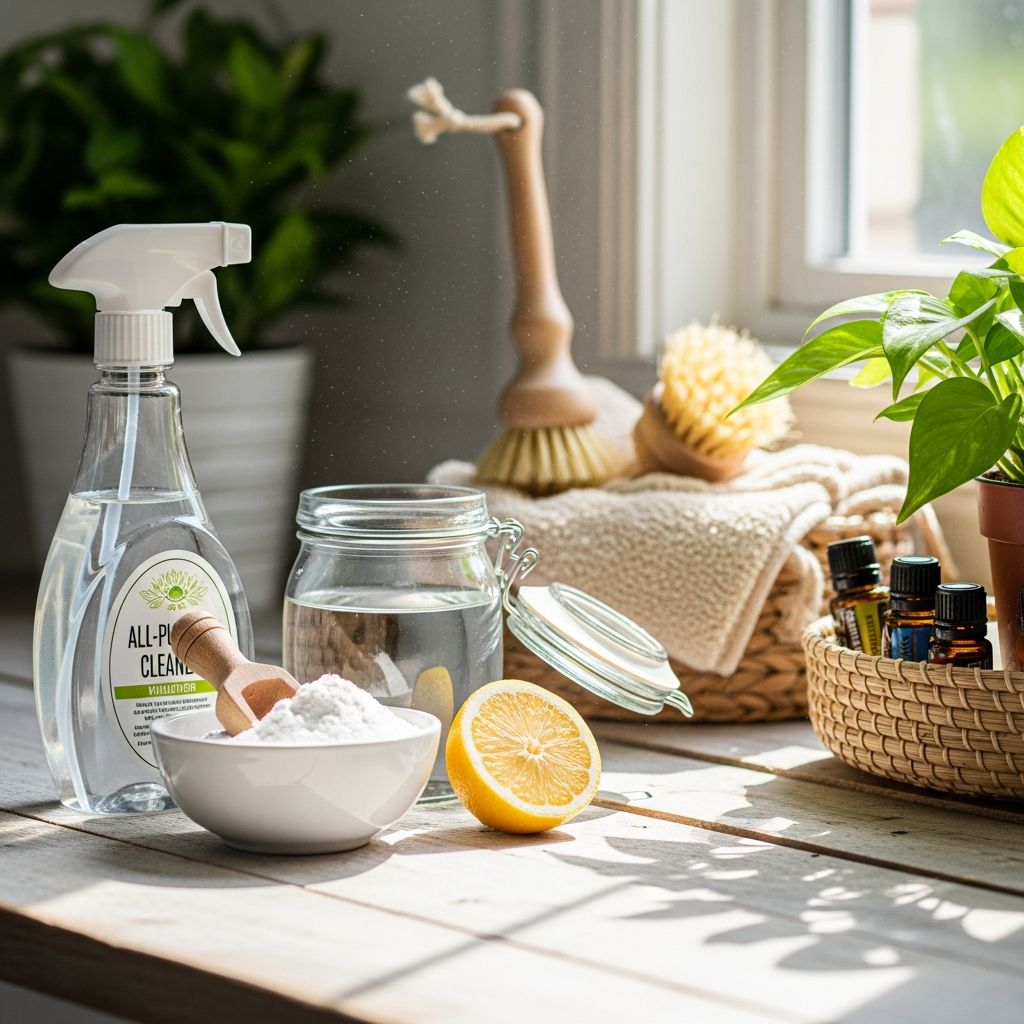
Mix 1 cup vinegar, 1 cup water, 20 drops tea tree oil, and 10 drops lemon oil in a spray bottle. Shake before use; ideal for counters and appliances. Dwell time of 5 minutes boosts sanitizing power against bacteria.
Glass and Mirror Polish
Combine 1/4 cup rubbing alcohol, 1/4 cup vinegar, and 1 tablespoon cornstarch in 2 cups water. Streak-free results rival professional formulas without ammonia fumes.
Laundry Booster
Add 1/2 cup baking soda and 1/4 cup vinegar to wash cycles with plant-based detergent. Enhances freshness and softens fabrics naturally, skipping dryer sheets.
Toilet Bowl Refresher
Sprinkle baking soda, squirt hydrogen peroxide, and add citrus peels. Let fizz overnight for sparkle without bleach.
Customize ratios based on surface needs; always rinse food areas thoroughly.
Room-Specific Cleaning Strategies
Kitchen Mastery
Tackle grease with a baking soda paste (3:1 soda-water). For ovens, spray peroxide, sprinkle soda, and bake at low heat. Use coconut scrubbers over sponges to avoid bacterial harbors.
Bathroom Deep Clean
Combat grout mold with peroxide-tea tree spray. Baking soda on a brush scrubs tubs safely. Steam tools eliminate 99% of germs using only water heat.
Laundry and Linens
Switch to powder detergents minus dyes; wool balls reduce drying time by 25%. Sun-dry sheets for natural whitening and scent.
Living Areas and Floors
Vacuum with HEPA filters first, then mop with castile soap solution (1 tsp per gallon water). Microfiber cloths trap dust without sprays.
Bedroom and Fabrics
Baking soda carpets overnight absorbs odors. Essential oil diffusers replace aerosol fresheners for calm vibes.
Recommended Non-Toxic Product Lines
For convenience, vetted brands offer concentrates minimizing packaging:
- Branch Basics: Versatile concentrate makes 5 cleaners; EWG-verified.
- Mama Suds: Laundry sheets dissolve fully, zero residue.
- EarthHero picks: Bamboo tools, plant soaps.
- Homecourt: Plant-based with stylish dispensers.
Choose EWG A-rated or Leaping Bunny certified for transparency. Refills save 70% over singles.
Tools and Storage for Success
Invest in glass spray bottles, stainless funnels, and labeled bins. Steam mops heat-clean sans chemicals. Natural sponges and brushes biodegrade. Store in cool, dark spots to preserve oils.
Overcoming Common Challenges
New users worry about efficacy: natural cleaners excel with patience, like vinegar’s acidity matching commercial descalers. Tough stains? Repeat applications. Sensitive noses? Fragrance-free bases. Pets safe? Yes, diluted mixes pose no toxicity per vet guidelines.
Budget tip: DIY slashes costs 80%. Time saver: Batch-prep weekly.
Frequently Asked Questions
Can non-toxic cleaners kill germs effectively?
Yes, vinegar and peroxide match bleach’s disinfection at 5-minute contact, per lab tests from the CDC.
Are DIY recipes safe for septic systems?
Absolutely; baking soda and vinegar break down naturally without harming bacteria balance.
How do I transition kids’ involvement?
Start with safe sprays and fun scents; supervised mixing builds responsibility.
What if I have hard water?
Increase vinegar to combat minerals; citric acid alternatives shine here.
Do essential oils expire?
Use within 1-2 years; sniff test for potency.
Sustaining Your Greener Routine
Track wins like reduced headaches or fresher air. Share recipes in community groups. Seasonal refreshes keep motivation high. This shift empowers control over your home’s chemistry, fostering wellness long-term.
References
- Indoor Air Quality — U.S. Environmental Protection Agency. 2023-05-15. https://www.epa.gov/indoor-air-quality-iaq/introduction-indoor-air-quality
- Endocrine-Disrupting Chemicals — Endocrine Society. 2024-02-10. https://www.endocrine.org/topics/edc
- Cleaning and Disinfecting with Bleach — Centers for Disease Control and Prevention. 2025-01-20. https://www.cdc.gov/hygiene/cleaning/disinfecting-bleach.html
- Volatile Organic Compounds’ Impact on Indoor Air Quality — U.S. Environmental Protection Agency. 2023-08-12. https://www.epa.gov/indoor-air-quality-iaq/volatile-organic-compounds-impact-indoor-air-quality
- Steam Cleaning Effectiveness — Good Housekeeping Institute (via peer-reviewed summary). 2024-06-01. https://www.goodhousekeeping.com/home/cleaning/g39534746/best-steam-mops/