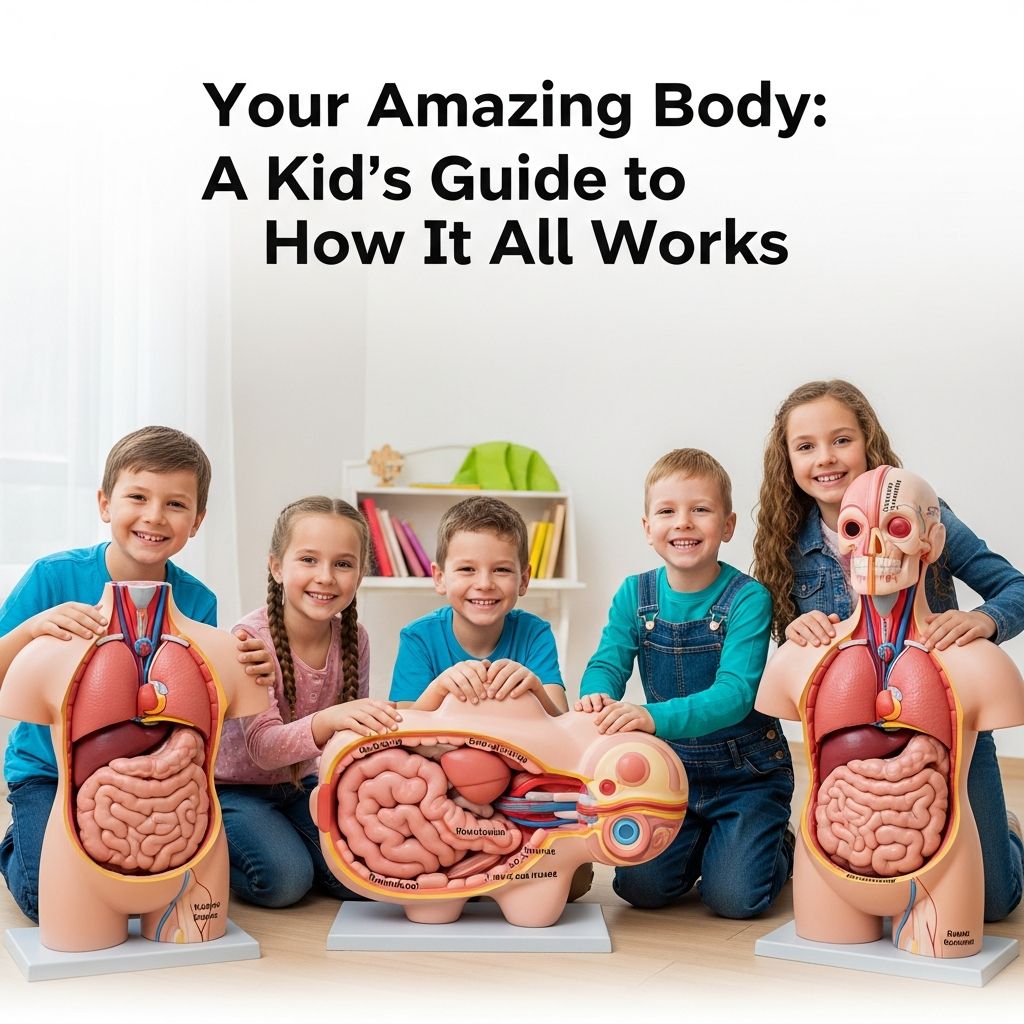
Your body is like the coolest machine you will ever own, and you get to use it every single day. It helps you run at recess, think through tricky math problems, laugh with friends, and sleep after a long, busy day.
This guide walks you through the main parts and systems of your body and shows how they team up to keep you alive, active, and growing. You will also find easy health tips, a quick reference table, and answers to common kid questions.
Big Picture: Your Body as a Team
Even though your body has many different parts, they all work together as one big team. When one part is working hard, other parts step in to support it, just like players on a sports team or characters in a video game.
- Body systems are groups of organs and parts that do a job together, like helping you breathe or move.
- Organs are special body parts such as your heart, lungs, and brain that each have an important job.
- Cells are tiny building blocks that are too small to see without a microscope, but you have trillions of them.
All of these systems are running at the same time, even while you are reading this sentence. You don’t have to think about most of them at all; your body handles them for you automatically.
Your Skeletal System: The Strong Support Frame
Your skeleton is the hard frame inside your body made of bones. It gives your body shape, protects soft organs, and helps you stand, sit, jump, and move in all sorts of ways.
- Your skull protects your brain like a hard helmet.
- Your ribcage acts like armor for your heart and lungs.
- Your backbone (spine) helps you stand tall and bends when you twist and turn.
Bones are not just dry sticks; they are living tissue with blood vessels and a soft center called marrow. Inside the marrow, new blood cells are made, which your body needs every day.
How to Be Kind to Your Bones
- Drink milk or eat foods rich in calcium, like yogurt, cheese, and green leafy vegetables.
- Play active games that include running and jumping to keep bones strong.
- Wear safety gear, such as helmets and pads, during sports and biking to prevent injuries.
Your Muscles: Power for Every Move
Muscles work with your bones to help you move and do almost everything, from blinking to kicking a ball. Some muscles are under your control, and others work on their own to keep you alive.
- Skeletal muscles move your arms, legs, fingers, and face when you decide to do something.
- Heart muscle is a special kind that never rests and keeps pumping blood.
- Smooth muscles are in places like your stomach and intestines, helping to move food along.
When muscles tighten, they pull on bones like ropes pulling on a lever. When they relax, the bones move back, and that is how you wave, walk, and write.
Simple Muscle-Friendly Habits
- Stretch gently before and after exercise to keep muscles flexible.
- Drink water during and after activity, especially when you sweat.
- Eat foods with protein, such as beans, eggs, meat, nuts, and seeds.
The Brain and Nerves: Your Control Center
Your brain is the boss of your body. It stores your memories, lets you learn new things, and sends instructions so that you can move, feel, and react quickly.
- Brain: Controls thinking, memory, emotions, and movement.
- Spinal cord: A thick bundle of nerves that carries messages between your brain and the rest of your body.
- Nerves: Tiny “wires” that spread all over your body to send signals.
If you touch something hot, nerves in your skin send a quick message to your brain. In almost an instant, your brain orders your hand to move away to keep you safe.
Brain Boosting Tips
- Get plenty of sleep so your brain can store memories and refresh.
- Eat a mix of fruits, vegetables, whole grains, and healthy fats.
- Limit screen time and spend time reading, drawing, or playing games that make you think.
The Heart and Blood: Your Inner Delivery Service
Your heart is a strong muscle that works like a pump, pushing blood through tubes called blood vessels. Blood carries oxygen and nutrients all over your body and brings waste back to be removed.
- Arteries carry blood away from the heart filled with oxygen.
- Veins bring blood back to the heart after cells have used the oxygen.
- Capillaries are tiny vessels where oxygen and nutrients move into cells.
Your heart beats all day and night, even when you are asleep. When you play and run, it beats faster to send more oxygen to your muscles.
Keeping Your Heart Happy
- Be active for at least an hour a day by playing tag, biking, swimming, or dancing.
- Avoid too many sugary drinks and snacks; choose water and whole foods more often.
- Do not start smoking or vaping; these can hurt your heart and lungs.
Breathing System: Air In, Air Out
Your breathing system (respiratory system) brings in oxygen and gets rid of a gas called carbon dioxide. Every breath keeps your cells supplied with the oxygen they need to work.
- The nose and mouth let air into your body and filter out some dust and germs.
- The windpipe (trachea) is the main air tube going down into your chest.
- Your lungs hold air and pass oxygen into the blood.
You breathe faster when you exercise because your cells need more oxygen and make more carbon dioxide. Your brain automatically changes your breathing speed to match what your body is doing.
Easy Ways to Protect Your Lungs
- Stay away from smoke and vaping devices; they can damage your lungs.
- Wash your hands regularly to lower the chance of getting colds and infections.
- Spend time outside moving and playing to help your lungs stay strong.
Digestive System: Turning Food into Fuel
Your digestive system helps you break down the food you eat into tiny pieces your body can use. This system gives you energy to move and nutrients to grow and repair.
- Mouth and teeth chop and grind food into smaller bits.
- Stomach mixes food with juices that help break it down more.
- Small intestine is where most nutrients pass into your blood.
- Large intestine takes in water and forms waste to leave your body.
The process may take a day or more from the moment you eat until the leftover waste finally leaves your body. Different foods can digest at different speeds, which is why you might feel full for longer after a big, balanced meal.
Foods That Help You Feel Your Best
- Eat colorful fruits and vegetables for vitamins and fiber.
- Choose whole grains like brown rice, oats, or whole-wheat bread.
- Drink plenty of water to help move food through your system.
Skin, Hair, and Nails: Your Body’s Outer Armor
Your skin is your body’s largest organ, wrapped all around you like a protective suit. Hair and nails are part of this outer system too, helping protect and support your body in different ways.
- Skin keeps germs out, holds body fluids in, and helps control your temperature.
- Hair helps protect your head and provides a little warmth.
- Nails protect the tips of your fingers and toes and help you grab things.
Your skin can sense touch, temperature, and pain. These signals travel along nerves to your brain, helping you avoid harm and enjoy pleasant feelings like a gentle pet or a warm blanket.
Daily Care for Healthy Skin
- Wash your hands often, especially before eating and after using the bathroom.
- Use sunscreen when you are outside to protect from sun damage.
- Keep your nails trimmed and clean to prevent dirt and germs from getting trapped.
Waste Removal: Your Body’s Clean-Up Crew
Your body makes waste all the time as it uses nutrients and energy. Special organs work together to remove this waste so it does not build up and make you sick.
- Kidneys clean your blood and help make urine.
- Bladder stores urine until you are ready to use the bathroom.
- Skin releases some waste through sweat.
- Lungs remove carbon dioxide when you breathe out.
Going to the bathroom regularly, sweating during activity, and taking normal breaths are all part of this important cleaning work.
Body Systems at a Glance
The table below gives you a quick overview of the main body systems, their main jobs, and an example of something you can do to keep each one healthy.
| Body System | Main Job | Kid-Friendly Healthy Habit |
|---|---|---|
| Skeletal | Supports your body, protects organs, helps you stand and move. | Drink milk or eat calcium-rich foods and wear safety gear during sports. |
| Muscular | Moves your body and helps you lift, walk, and play. | Stay active every day and stretch before and after exercise. |
| Nervous (Brain & Nerves) | Controls body actions, thoughts, senses, and reactions. | Get enough sleep and challenge your brain with reading or puzzles. |
| Circulatory (Heart & Blood) | Delivers oxygen and nutrients, carries away waste. | Choose water instead of sugary drinks and play active games. |
| Respiratory | Brings in oxygen and removes carbon dioxide. | Avoid smoke and spend time playing outside in clean air. |
| Digestive | Breaks down food so your body can use nutrients. | Eat fruits, vegetables, and whole grains and chew food well. |
| Skin, Hair & Nails | Protects your body and helps you feel touch and temperature. | Wash regularly, use sunscreen, and keep nails clean and trimmed. |
| Excretory (Waste Removal) | Removes extra water and waste from your body. | Drink enough water and use the bathroom when you need to. |
Everyday Habits That Help Your Whole Body
Many simple daily choices can help every system in your body at once. You do not have to be perfect; small steps add up over time.
- Move often: Try to be active for at least 60 minutes a day with play, sports, or dancing.
- Eat a rainbow: Fill your plate with different colors of fruits and vegetables.
- Drink water: Keep a water bottle nearby and sip throughout the day.
- Sleep enough: Most school-age kids need about 9–12 hours of sleep each night.
- Stay clean: Brush your teeth, wash your hands, and bathe or shower regularly.
Listening to Your Body
Your body sends you signals when something is wrong or when it needs a break. Learning to notice these signs can help you stay healthy and get help when you need it.
- Pain is a warning sign that something may be hurt or irritated.
- Strong tiredness might mean you need sleep, food, water, or a rest from screens.
- Shortness of breath, dizziness, or chest pain are signs to tell an adult right away.
If something feels different from usual and it does not go away, talk with a parent, guardian, school nurse, or another trusted adult. They can help decide if you need to see a doctor.
Frequently Asked Questions (FAQs)
Why does my heart beat faster when I run?
When you run, your muscles use more oxygen and create more waste, so your heart speeds up to bring extra oxygen and carry away the waste more quickly. Once you rest, your heart rate slowly returns to its usual pace.
Is it normal to sweat a lot when I play?
Yes, sweating during exercise or when you are hot is normal. Sweat helps cool your body down, but you should drink water to replace the fluid you lose so you do not get dehydrated.
Why do I get hungry even after a big meal?
Your body uses energy all the time, even when you are resting, so your stomach will eventually empty and signal that it is ready for more food. How quickly you feel hungry again can depend on what you ate, how active you are, and how fast your body digests food.
What happens when I get a cut?
When your skin is cut, your body quickly starts to repair the damage. Blood cells form a clot that turns into a scab, and new skin cells grow underneath until the cut heals.
Why do I need to sleep so much?
Sleep gives your brain and body time to recover from the day. During sleep, your brain organizes memories, your body releases growth hormones, and your immune system gets stronger to help fight off germs.
Final Thoughts: You Only Get One Body
Your body works hard for you every minute of every day, even when you are not paying attention. Learning how it works and how to care for it is one of the best gifts you can give yourself.
You do not need to change everything all at once. Choose one healthy habit to start today—maybe drinking more water, going to bed a little earlier, or taking a walk—and build from there. Over time, those small choices help your amazing body stay strong, smart, and ready for all the adventures in your life.