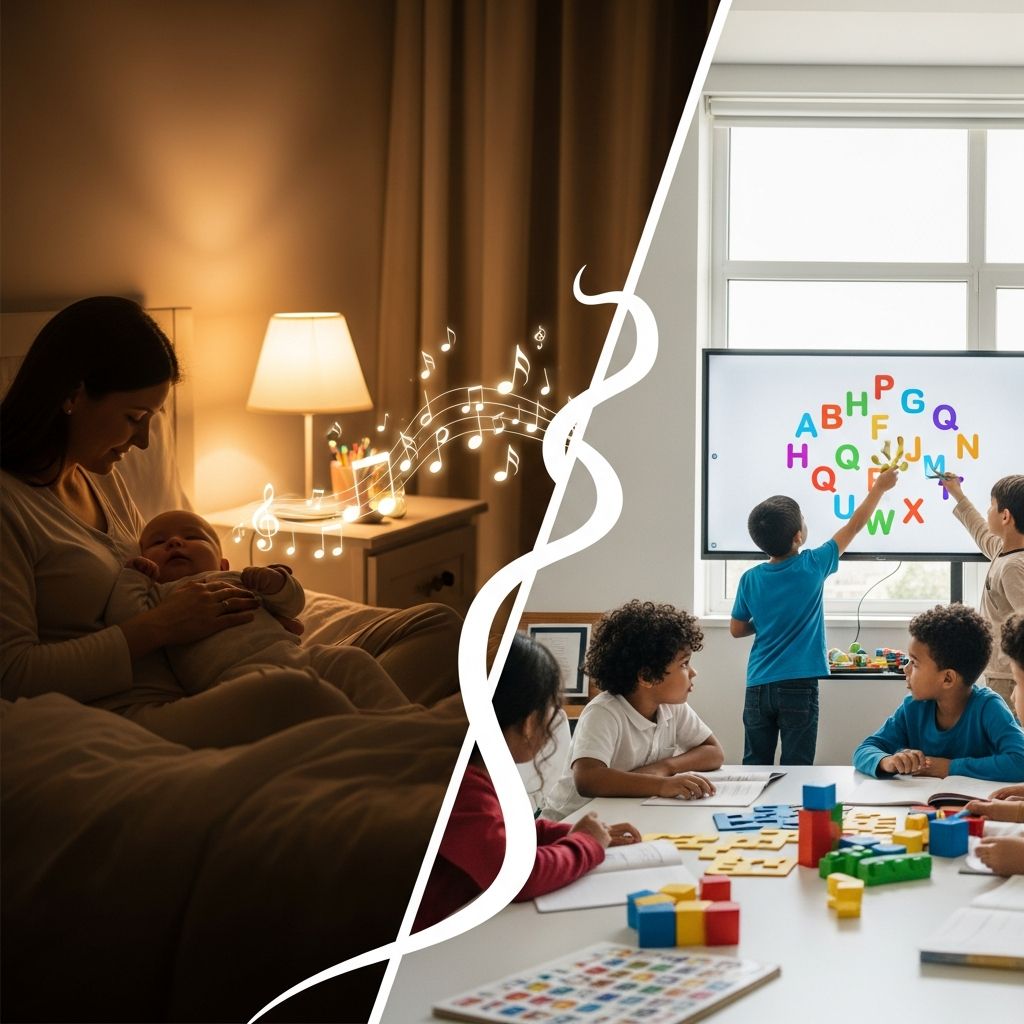
The ABC song feels so familiar that it seems like it has always existed, but its story stretches back centuries and crosses multiple countries and musical traditions.
This article explores how a European melody turned into the world’s favorite alphabet jingle, why it is such a powerful learning tool for children, and how parents can use and adapt it in an age of streaming videos and apps.
The Alphabet Before The Song
Before the ABC song became popular, children often learned the alphabet by reciting long chains of letters in a flat, chant-like voice.
Teachers relied on memorization and repetition without music, which made the process more tedious and harder to remember for many young learners.
A Melody Travels Across Europe
The melody used for the familiar ABC song did not begin as a teaching tool but as a French tune from the 18th century that circulated as popular music.
That melody was later taken up and developed by composers in Central Europe, including Mozart, who created variations that helped spread the tune across musical circles.
How Mozart Fits Into The Story
Mozart worked with this French melody in the late 1700s, writing variations that gave the tune a level of prestige and visibility beyond its folk origins.
Because of Mozart’s version, the melody moved more easily through published music and performance culture, making it available for reuse in different contexts, including children’s songs.
From European Tune To American Classroom
In the early 19th century, American publishers drew from European material when creating music for schools and families, including the melody that would become associated with the alphabet.
A Boston music publisher named Charles Bradlee later applied the alphabet to this tune and copyrighted the piece in 1835 under a long formal title describing it as a German-style air with variations for flute and piano.
The Birth Of “The Alphabet Song”
Bradlee’s 1835 publication transformed a well-known melody into a specific teaching tool by setting the English alphabet to the tune that children now recognize worldwide.
This version gradually spread through songbooks, classrooms, and homes, turning into the standard way many English-speaking children first encounter the order of letters.
Sharing A Tune With Other Nursery Songs
The alphabet song shares its melody with several classic children’s pieces, including the lullaby often known as “Twinkle, Twinkle, Little Star” and another nursery rhyme commonly sung about a black sheep.
Because the same tune appears in multiple beloved songs, children hear and practice its pattern repeatedly in different contexts, which strengthens their familiarity with its rhythm and structure.
Why The ABC Song Sticks In The Brain
Music helps encode information through rhythm, repetition, and predictable patterns, which makes a sung alphabet much easier to remember than a spoken list.
The ABC song uses short musical phrases, clear rhymes, and a simple structure, so children can anticipate what comes next and eventually sing the entire sequence independently.
Key Learning Features Of The ABC Song
- Repetition: The melody and letter sequence repeat often, reinforcing memory through frequent practice.
- Chunking: Letters are grouped into small musical units, so children remember them in segments instead of one long string.
- Rhyme and closure: The ending phrases provide a sense of completion that children look forward to, motivating them to reach the end.
- Emotional tone: The gentle, sing-song quality connects with the comfort of lullabies and play, making learning feel safe and enjoyable.
How The Song Shaped Letter Sounds
The ABC song does more than list letters; it subtly affects how people talk about them, especially the last letter of the alphabet.
Because the final rhyme pairs the pronoun for “me” with the American pronunciation of the last letter, that version of the sound gained extra reinforcement through countless repetitions in childhood.
American “Zee” And Other Pronunciations
| Region | Common Pronunciation Of Z | Influence Of The ABC Song |
|---|---|---|
| United States | “Zee” | The rhyme in the closing line favors this pronunciation and reinforces it in early schooling. |
| Canada (many speakers) | “Zed” | Some children learn alternate versions or switch between pronunciations depending on context and resources. |
| United Kingdom and others | “Zed” | Different alphabet songs and teaching traditions maintain the older pronunciation. |
The ABC Song As A Cultural Export
As English-language media expanded in the 20th century, the ABC song followed books, films, and television shows into classrooms and living rooms around the world.
Today, the melody appears in countless recordings, educational videos, and language-learning apps, often adapted slightly to match local pronunciation and teaching goals.
Modern Variations Kids Hear Today
Contemporary recordings frequently add harmonies, new instrumental backgrounds, or additional lyrics to keep children engaged and to differentiate one version from another.
Some creators alter the pacing or grouping of letters around the busy middle section so children can distinguish the individual sounds more clearly instead of hearing them blur together.
Common Ways Creators Update The Song
- Slowing down tricky clusters like L-M-N-O-P so each letter stands out.
- Adding call-and-response sections where an adult sings and children echo short phrases.
- Introducing claps or motions for selected letters to build physical involvement.
- Incorporating different musical genres, from gentle acoustic versions to energetic pop or hip-hop styles.
How Parents Can Use The ABC Song Effectively
Because the melody is so familiar, parents can turn almost any small moment into an alphabet-learning opportunity by singing or humming the song together.
Short, playful singing sessions throughout the day tend to work better than long, formal lessons, especially for toddlers and preschoolers with limited attention spans.
Simple Ways To Reinforce Learning At Home
- Sing during routines such as handwashing, brushing teeth, or putting toys away to associate letters with everyday life.
- Point to alphabet magnets, books, or posters as each letter is sung so children connect the sound to its shape.
- Pause before certain letters and invite children to fill in the next sound to test and strengthen their recall.
- Switch the focus occasionally by emphasizing only a small group of letters instead of always running through the full set.
Beyond Memorization: Connecting Letters To Language
Knowing the alphabet song does not automatically mean a child understands how letters connect to sounds and words, so parents and educators can extend the song into broader literacy activities.
Linking each letter to associated sounds, simple words, and pictures helps children move from rote memorization to meaningful reading skills.
Activities That Build On The Song
- After singing, choose one letter and brainstorm words that begin with that sound, using toys or pictures as prompts.
- Invite children to draw or color a picture representing a letter sung in the song, then label it together.
- Use the melody to sing simple phonics patterns, such as pairing a letter with a common sound in a short sequence.
Technology, Streaming, And The ABC Boom
Digital platforms now host thousands of versions of the alphabet song, ranging from minimalist recordings to complex animated productions with characters and storylines.
This abundance creates both opportunities and challenges for parents who want to choose versions that support focus and learning rather than overstimulation.
Choosing Helpful ABC Song Videos
- Look for clear, steady vocals that make each letter easy to hear rather than busy sound effects that drown out the alphabet.
- Prefer visuals that highlight letters on screen in sync with the words so children can connect audio and print.
- Check that the pacing allows young children enough time to repeat letters without rushing.
- Use shorter clips and repeat favorites instead of constantly switching to new versions.
Using The ABC Melody In Creative Ways
Because the tune is easy to recognize and reproduce, families and teachers often adapt it to teach other kinds of sequences besides the alphabet.
Simple rewrites can replace letters with numbers, days of the week, or even classroom rules, letting children borrow a familiar musical frame to remember new information.
Alternative Topics You Can Sing
- Numbers in order, such as one through ten or higher, to build counting fluency.
- Days of the week or months of the year as an easy calendar introduction.
- Basic vocabulary in a second language, such as colors or simple greetings.
- Personalized family facts, like names of relatives or important phone numbers, for safety and connection.
Common Myths About The ABC Song
The long history and constant presence of the ABC song have helped create several misconceptions about its origins and purpose.
Understanding what the song does and does not do can help parents use it as one piece of a broader approach to early literacy instead of treating it as a complete solution.
Myth-Busting Table
| Myth | Reality |
|---|---|
| The ABC song was always meant for teaching children. | The melody began as a European tune and only later became an alphabet teaching tool. |
| Mozart invented the alphabet song from scratch. | Mozart wrote variations on the underlying melody, but others later attached the alphabet letters. |
| Once a child knows the song, reading will follow automatically. | The song supports memorization of letter order but must be combined with phonics and other literacy activities. |
| All countries sing the exact same version. | Different regions adapt the tune, lyrics, and pronunciation to fit local languages and traditions. |
FAQs About The ABC Song
Who actually created the ABC song?
The widely recognized version of the ABC song is typically credited to Charles Bradlee, a 19th-century American music publisher who copyrighted an alphabet piece set to a European-style tune in 1835.
He built on a melody with older French and Central European roots, showing how children’s music often grows through collaboration across eras rather than a single invention.
Is the ABC song the same everywhere?
Many languages and regions use a version of the alphabet song that closely resembles the English tune, while others adapt the pattern to match different letters or writing systems.
Pronunciations, extra verses, and visual presentations vary widely, especially in digital media, even when the core melody feels familiar.
At what age should children start learning the ABC song?
Children can be exposed to the ABC song as toddlers, even if they do not yet grasp the idea of letters, because early listening builds comfort and recognition.
More intentional practice with letter names and connections to print usually begins in the preschool years, when children can point, repeat, and recall segments of the song.
Does singing the ABC song too often cause confusion?
Most children enjoy repetition, and frequent singing usually deepens familiarity rather than causing problems, as long as it is paired with other kinds of play and learning.
Confusion is more likely when letters in the middle of the song are rushed together, so parents can slow that section down or emphasize it separately.
How can parents expand beyond the basic song?
Parents can treat the ABC song as a starting point and add letter games, storytelling, drawing, and phonics exercises that connect each symbol to real words and experiences.
Using the familiar melody to introduce related sequences, such as numbers or days, can also help children see patterns in different kinds of information.
A Centuries-Old Tune With A Child-Sized Purpose
The ABC song began as a traveling melody in European music, passed from composers to publishers before settling into its long career as a teaching tool for young children.
Today, it continues to bridge play and learning in nurseries, homes, and classrooms around the world, proving that a simple tune can carry a remarkable amount of history and educational power.