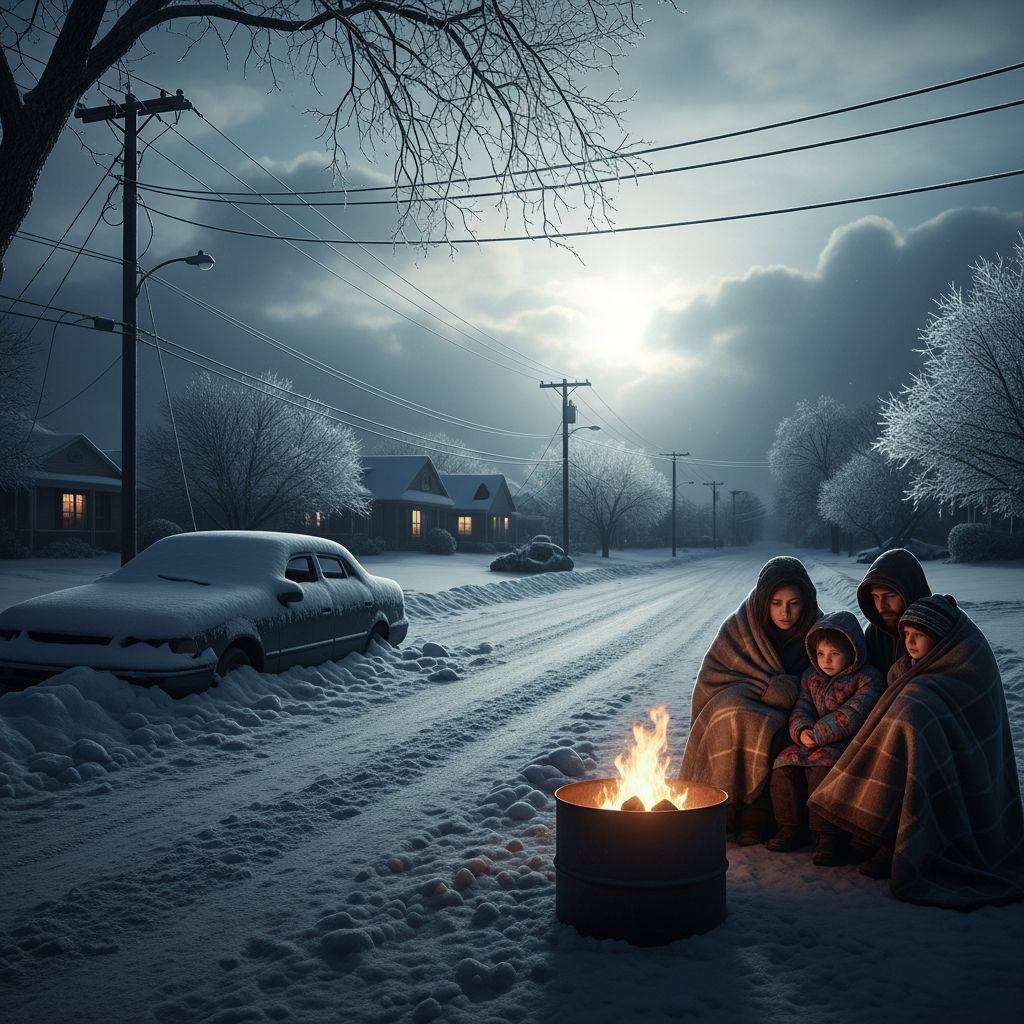
The February 2021 winter storm that gripped Texas stands as one of the most devastating natural disasters in the state’s modern history. Record-breaking cold swept across every county, plunging temperatures below zero and triggering widespread power outages that affected nearly 10 million residents. This event, often called the Great Texas Freeze, exposed vulnerabilities in infrastructure and led to profound human suffering, with an official death toll of 246, though experts believe the true number is significantly higher.
Historical Weather Event Unfolds
From February 11 to 20, 2021, an extraordinary cold air outbreak engulfed Texas, marking the coldest winter storm since 1989. Sleet and freezing rain began on February 11 in the northwest, escalating into Winter Storm Warnings statewide. Central areas like Austin and Waco endured six to nine days of sub-freezing temperatures, shattering records for the longest such streak. Wind chills dropped below zero, and freezing precipitation created hazardous ice on roads, contributing to massive pile-ups, including a fatal 100+ vehicle crash on I-35 in Fort Worth.
Power failures peaked with millions in the dark, unable to heat homes or access water as pipes burst. Grocery shortages followed due to impassable roads and blackouts, compounding the crisis. The storm inflicted over a billion dollars in damages, cementing it as the year’s first billion-dollar disaster.
Official Toll and Hidden Casualties
Texas authorities reported 246 deaths directly linked to the storm, but researchers argue this undercounts the full impact. Only cases where medical examiners explicitly cited the freeze as a factor were included, excluding indirect deaths like those from delayed medical care or stress-related illnesses. For instance, elderly victims like 85-year-old Manjula succumbed to hypothermia without heat in her home; her husband Lalji passed months later, ineligible for the official tally.
| Impact Category | Details | Estimated Scale |
|---|---|---|
| Power Outages | Nearly 10 million affected | Peak on Feb 15-17 |
| Official Deaths | 246 confirmed | Undercount suspected |
| Water Issues | Burst pipes, boil advisories | Statewide |
| Property Damage | Billion-dollar disaster | Entire state |
Personal Survival Ordeals Amid the Chaos
Many Texans faced unimaginable choices as temperatures plummeted. In Fort Worth, Vangregory Grinnon declined a warming shelter to stay with his cat. Snow collapsed his roof, trapping him for three days. Desperate for warmth, he trudged through wet conditions, leading to frostbite. Rescuers airlifted him to a hospital where both legs were amputated below the knee. Grinnon mourned friends who “froze to death on the streets,” now urging others to prioritize shelters.
Five years on, reflections from Abilene highlight community bonds forged in crisis. Resident Pietsek recalled a Buffalo Gap couple who perished from the cold, emphasizing how the event, though tragic, united neighbors.
Elderly and Vulnerable Hit Hardest
The freeze disproportionately affected the elderly and those in care facilities. Cynthia Pierce, a 72-year-old in an Austin assisted living home, had no escape when power failed. Her family assumed she was safe, but on February 17, she was rushed to the ER with hypothermia. Efforts to revive her failed; she slipped away without regaining consciousness, leaving loved ones without farewell. Pierce, an ex-hippie with a vibrant spirit, met an untimely end in a place meant to protect her.
- Key Vulnerabilities: Lack of backup power in facilities, mobility issues preventing evacuation, and delayed emergency responses.
- Common Outcomes: Hypothermia, pneumonia complications, and carbon monoxide poisoning from improper generators.
- Lessons: Facilities must have robust contingency plans, including on-site generators and evacuation protocols.
Children and Families in Peril
Heartbreaking reports emerged of children succumbing to the cold, alongside families resorting to deadly measures for warmth. Carbon monoxide poisonings spiked as desperate residents used generators indoors. The outages prevented boiling water or cooking, exacerbating health risks for the young and ill. Communities saw neighbors sharing scarce resources, but many were isolated without aid.
Infrastructure Failures Amplify Suffering
Texas’s isolated power grid, unprepared for extreme cold, collapsed under demand. Unlike interconnected national grids, it couldn’t import power, leading to rolling blackouts. Water systems froze and burst, leaving cities under boil notices. Transportation halted, stranding supplies and first responders.
Post-storm analyses, like those from Energy Innovation, highlighted the need for weatherization and diversified energy sources to prevent recurrence.
Long-Term Trauma and PTSD Echoes
Survivors grapple with lasting scars. Grinnon experiences PTSD flashbacks as new storms approach, reliving the isolation and loss. Families mourn not just lives lost but missed goodbyes and eroded trust in systems. Five years later, Abilene residents reflect on resilience but warn of complacency.
Community Response and Acts of Heroism
Amid despair, heroism shone. Neighbors broke through iced roads to deliver food, volunteers manned warming centers, and strangers hosted the displaced. These acts underscored Texan grit, turning tragedy into temporary solidarity.
Prevention Strategies for Future Storms
Experts advocate grid hardening, renewable backups, and public education. Key recommendations include:
- Installing home generators with proper ventilation.
- Stocking emergency kits with blankets, non-perishables, and battery radios.
- Supporting policies for weatherized infrastructure.
- Prioritizing vulnerable populations in alerts.
Texas has implemented some reforms, but experts stress ongoing vigilance.
Frequently Asked Questions (FAQs)
What caused the 2021 Texas winter storm disaster?
A historic cold outbreak from Feb 11-20 brought record freezes, overwhelming the power grid and causing outages for millions.
How many died in the Texas freeze?
Officially 246, but likely more due to indirect causes like medical delays.
Why did the power grid fail?
The isolated ERCOT grid lacked winterization; extreme demand and frozen equipment led to blackouts.
Are Texans better prepared now?
Some improvements like weatherization exist, but vulnerabilities remain; personal readiness is crucial.
What should I do in a winter power outage?
Seek shelters, layer clothing, avoid generator fumes, and conserve phone batteries for emergencies.
Reflecting on Resilience
The 2021 freeze tested Texas’s spirit, revealing both frailties and strengths. Personal tales of loss—from amputations to silent passings—humanize statistics, urging collective action for safer tomorrows. As climate patterns shift, these stories serve as stark reminders of preparedness’s vital role.
References
- Texas man recalls surviving 2021 deep freeze as winter storm approaches — CBS News Texas. 2024. https://www.cbsnews.com/texas/news/north-texan-ptsd-2021-deep-freeze-as-winter-storm-approaches/
- Texas has an official death count from the 2021 blackout. The true toll may never be known — Texas Standard. 2021. https://www.texasstandard.org/stories/texas-freeze-winter-storm-2021-death-count/
- The Great Texas Freeze: February 11-20, 2021 — NOAA NCEI. 2021. https://www.ncei.noaa.gov/news/great-texas-freeze-february-2021
- Texan who died in 2021 winter storm was an ex-hippie with a “magical mind” — Texas Tribune. 2022-02-10. https://www.texastribune.org/2022/02/10/texas-winter-storm-deaths-2/
- ‘Some people froze to death’: Texans reflect on the 2021 winter freeze five years later — KTXS. 2026. https://ktxs.com/news/local/some-people-froze-to-death-texans-reflect-on-the-2021-winter-freeze-five-years-later
- Lessons from the Texas Big Freeze — Energy Innovation. 2021-05. https://energyinnovation.org/wp-content/uploads/2021/05/Lessons-from-the-Texas-Big-Freeze.pdf