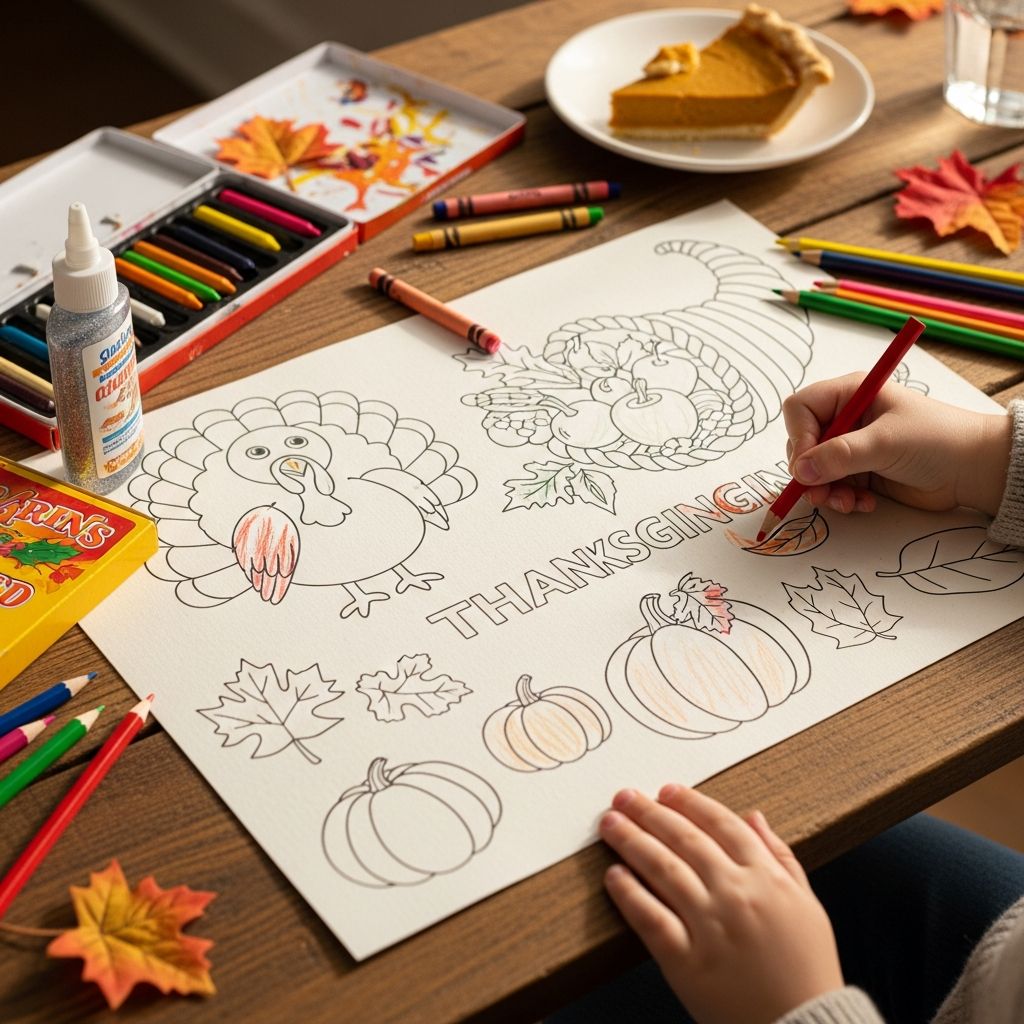
Thanksgiving can be a long, exciting day for children, and a thoughtfully designed activity placemat turns the kids’ table into a space where they can create, play, and reflect on gratitude while the adults finish cooking and conversation.
Why Kids’ Placemats Belong at Thanksgiving
Children experience holidays most vividly through what they can touch, color, and laugh about, which is why an activity placemat is more than just paper on a plate—it is a mini play zone right at their seat. Instead of relying on screens or restless wandering, a placemat helps channel their energy into creativity, curiosity, and thankfulness.
Thoughtfully designed placemats can also support reading, counting, drawing, and social skills without feeling like school, giving kids a sense of ownership at the table while supporting the overall calm and flow of the day.
Planning Your Thanksgiving Kids Placemat
Before you start drawing lines or typing boxes, take a moment to decide what role the placemat should play at your gathering: is it mostly a quiet-time tool, a conversation starter, or a hands-on craft surface? Clarifying this helps you choose the right mix of games, prompts, and open-ended spaces.
Think about the ages of the kids attending as well; toddlers may need large, simple shapes and bold images, while older children can enjoy word games, puzzles, and creative storytelling prompts.
Key Design Questions
- How long do the kids usually sit before or after the meal?
- Are there mixed age groups who might need different challenge levels?
- Do you want activities that involve adults, siblings, or cousins?
- Will children have access to crayons, markers, stickers, or small craft supplies?
Essential Elements of an Engaging Placemat
An engaging Thanksgiving placemat usually blends four types of content: visual coloring areas, simple games, gratitude reflections, and open-ended imagination prompts. The balance among these can be adjusted to match the personality and preferences of your family.
Consider treating the placemat like a miniature magazine page for kids: different zones, each with a clear purpose, allow them to move from one activity to the next without feeling bored or overwhelmed.
| Zone Type | Example Content | Main Benefit |
|---|---|---|
| Coloring area | Seasonal scenes, leaves, friendly turkeys | Calms energy and keeps little hands busy |
| Simple games | Mazes, matching, dot-to-dot | Encourages focus, logic, and fine motor skills |
| Gratitude prompts | “I’m thankful for…” lists and drawings | Helps kids reflect on people and moments they value |
| Conversation starters | Questions kids can ask adults at the table | Builds connection and improves confidence speaking |
Creative Themes for Your Placemat
Instead of a generic fall design, consider choosing a specific theme that can anchor every activity on the page, making the placemat feel cohesive and intentional. A theme also makes it easier for you to brainstorm what to draw, write, and arrange on the page.
Below are original theme ideas you can adapt for your own family or classroom, mixing and matching as needed.
Theme Ideas at a Glance
- The Gratitude Garden: Kids draw and color a garden where every plant represents something they are thankful for.
- Time-Travel Thanksgiving: Activities imagine how people celebrated gratitude in different eras, from past to future.
- Kitchen Crew Adventure: Children become pretend chefs, planning menus, plating food drawings, and solving kitchen-themed puzzles.
- Kindness Quest: Every game or prompt invites kids to notice ways to be kind at the table and beyond.
The Gratitude Garden Placemat Concept
The “Gratitude Garden” concept turns the entire placemat into a whimsical patch of imaginary soil where kids can plant, color, and label things they are thankful for. The central illustration could be a large garden bed or a row of potted plants waiting to be filled in.
Use each plant as a prompt: one might be for a person, another for a place, another for a memory, and another for something small and everyday that usually goes unnoticed.
Sample Gratitude Garden Activities
- Thankful Vines: A vine with blank leaves where kids write or draw one word of gratitude on each leaf.
- Garden Maze: A simple maze guiding a bee or bird to a flower labeled “Thank you.”
- Color Code Gratitude: Create a legend such as “Blue = family, Green = nature, Orange = food” and have kids color each plant according to what they are thankful for.
Time-Travel Thanksgiving Activities
A time-travel theme can appeal to older kids by inviting them to imagine gratitude in different eras, from grandparents’ childhoods to far-off future Thanksgivings. The placemat becomes a playful timeline where they can draw, compare, and craft tiny stories.
This concept works especially well if you have family members from multiple generations at the table, because kids can use their placemat to interview relatives about how holiday traditions have changed over time.
Ideas for Time-Travel Sections
- Then & Now Boxes: Side-by-side rectangles where kids draw what they imagine a Thanksgiving table looked like decades ago versus today.
- Future Feast: A blank futuristic table where kids design their dream Thanksgiving celebration 50 years from now, complete with imaginative foods and decorations.
- Family Story Corner: A small lined box where kids can jot down one short story they hear from an older relative during the meal.
Kitchen Crew Adventure Ideas
Many kids want to help in the kitchen but cannot safely participate in every step of cooking; a “Kitchen Crew Adventure” placemat gives them a pretend chef role while keeping them near the table. This theme transforms common meal elements into playful tasks and games.
You can even give each child a simple paper name tag reading “Junior Chef” to match the placemat and make them feel officially part of the holiday preparations.
Chef-Themed Games
- Menu Match-Up: A matching game where kids draw lines between ingredients and the dishes they might belong to.
- Plate Designer: An empty plate outline where children sketch their ideal Thanksgiving plate, balancing colors and food groups.
- Spice Trail Maze: A maze or path puzzle where a small jar of herbs must reach a pot of soup.
Kindness Quest and Table Manners Fun
Thanksgiving is also a chance to gently reinforce kindness, patience, and manners in a playful way. A “Kindness Quest” theme treats positive behaviors as accomplishments or treasures to discover throughout the meal, rather than as scolding reminders.
When kids are rewarded for noticing and practicing acts of kindness, they are more likely to see the holiday as a time of giving as well as receiving delicious food.
Kindness Quest Ideas
- Kindness Bingo: A small bingo-style grid with items like “shared with a sibling,” “said thank you,” or “complimented the cook.”
- Secret Helper Mission: A list of optional gentle tasks such as passing a dish, offering napkins, or checking if someone needs more water.
- Warm Words Cloud: A speech bubble where kids write a kind sentence they can say to someone at the table.
Age-Appropriate Sections on One Placemat
If your gathering includes toddlers, early readers, and older kids all at one table, design a “layered difficulty” placemat. Place simpler, larger activities around the edges and more detailed challenges toward the center so children can gravitate naturally to what matches their skill level.
Older siblings can also be encouraged to guide younger ones through trickier games, turning the placemat into a shared project rather than an isolated activity.
Ideas for Different Ages
- Toddlers: Big shapes to color, simple matching, and stickers placed in designated spaces.
- Early Readers: Short word hunts, simple mazes, and labeled pictures they can trace.
- Older Kids: Riddles, coded messages, or multi-step drawing prompts with instructions.
Simple DIY Layout Tips
You do not need graphic design software to create a great placemat; a basic word processor, a drawing app, or even a hand-drawn original that you photocopy can all work well. Aim for a clear structure with visual boundaries, such as boxes, circles, or borders, so kids understand where each activity begins and ends.
Leave enough white space for coloring and doodling so the page does not feel too crowded, and remember that little hands need larger shapes and generous room to write.
Layout Checklist
- Use a landscape orientation on standard printer paper.
- Divide the page into 3–5 sections of varying sizes.
- Mix bold headings with small icons or illustrations for quick recognition.
- Leave at least one fully open area for free drawing or extra notes.
Practical Printing and Setup Ideas
Once your design is ready, print on heavier paper or cardstock if possible so that the placemats can handle crayons, markers, and possible spills. If you expect a lot of mess, consider slipping each placemat into a clear plastic sleeve and offering dry-erase markers so kids can reuse the activities throughout the day.
Place a simple art kit at the kids’ table with crayons, colored pencils, and a small cup for sharpenings or broken pieces, and make sure there is enough light so children can see all the details you have created.
Supply Ideas for Each Seat
- A small bundle of crayons or pencils tied with ribbon or twine.
- Optional stickers or washi tape pieces for decorating borders.
- A mini notepad for extra drawings once the placemat is full.
Encouraging Family Conversation Around the Placemat
Beyond quiet entertainment, a well-thought-out placemat can serve as a bridge between generations at the table. Include a few questions or prompts that invite kids to share or ask, turning the paper into a gentle script for meaningful conversations.
This approach can particularly help shy children feel more comfortable speaking up, as the placemat gives them something specific and concrete to discuss.
Conversation Prompt Ideas
- “Ask someone at the table to share a favorite Thanksgiving memory.”
- “Find out what food took the longest to cook this year.”
- “Ask a grown-up what they were thankful for when they were your age.”
Extending the Fun Beyond the Meal
After the plates are cleared, invite kids to cut out small sections of their placemat to turn into mini gratitude cards, bookmarks, or fridge art. This repurposing makes the effort you put into the design last longer than a single meal.
You can also collect all the completed placemats in a folder or binder as a yearly keepsake, watching how children’s drawings, handwriting, and reflections on gratitude change as they grow.
Repurposing Ideas
- Cut out the gratitude section and tape it into a family journal.
- Trim the coloring portion to create a bookmark laminated with clear tape.
- Photograph especially detailed placemats to share with relatives who could not attend.
Frequently Asked Questions
How early should I prepare the kids’ placemats?
It is helpful to finalize and print your designs at least a few days before Thanksgiving so that you can test a sample copy, adjust text size, and ensure your printers and supplies are ready. Preparing ahead also gives you time to customize placemats with children’s names if you want them to double as place cards.
Do I need different placemats for different ages?
Separate versions can be fun, but they are not essential; one layout with varied difficulty is often enough, with more detailed puzzles clustered in one area and simpler coloring or matching on another part of the page. Older children can also help younger ones with tricky activities, which turns the placemat into a cooperative experience.
What if I am not confident in my drawing skills?
You do not need to be an artist to make an engaging placemat; simple shapes, stick figures, and clean lines are more than enough when paired with imaginative prompts and thoughtful questions. Focus on clear instructions and inviting blank spaces, and let the kids bring the beauty and color.
Can these placemats be reused year after year?
You can reuse the same basic structure each year while updating themes, prompts, or illustrations so returning children are pleasantly surprised. Alternatively, turning old placemats into keepsakes preserves the memories, while a fresh design keeps the activity feeling new.
How many activities should fit on one placemat?
Four to six distinct activity areas usually strike a good balance between variety and clarity, leaving plenty of room for coloring and writing. Too many tiny elements can feel crowded and overwhelming, while a smaller set of carefully chosen sections invites deeper engagement.
With a bit of planning and creativity, a Thanksgiving activity placemat can transform the kids’ table into a place of imagination, gratitude, and shared stories—making the holiday richer for every person gathered around the meal.