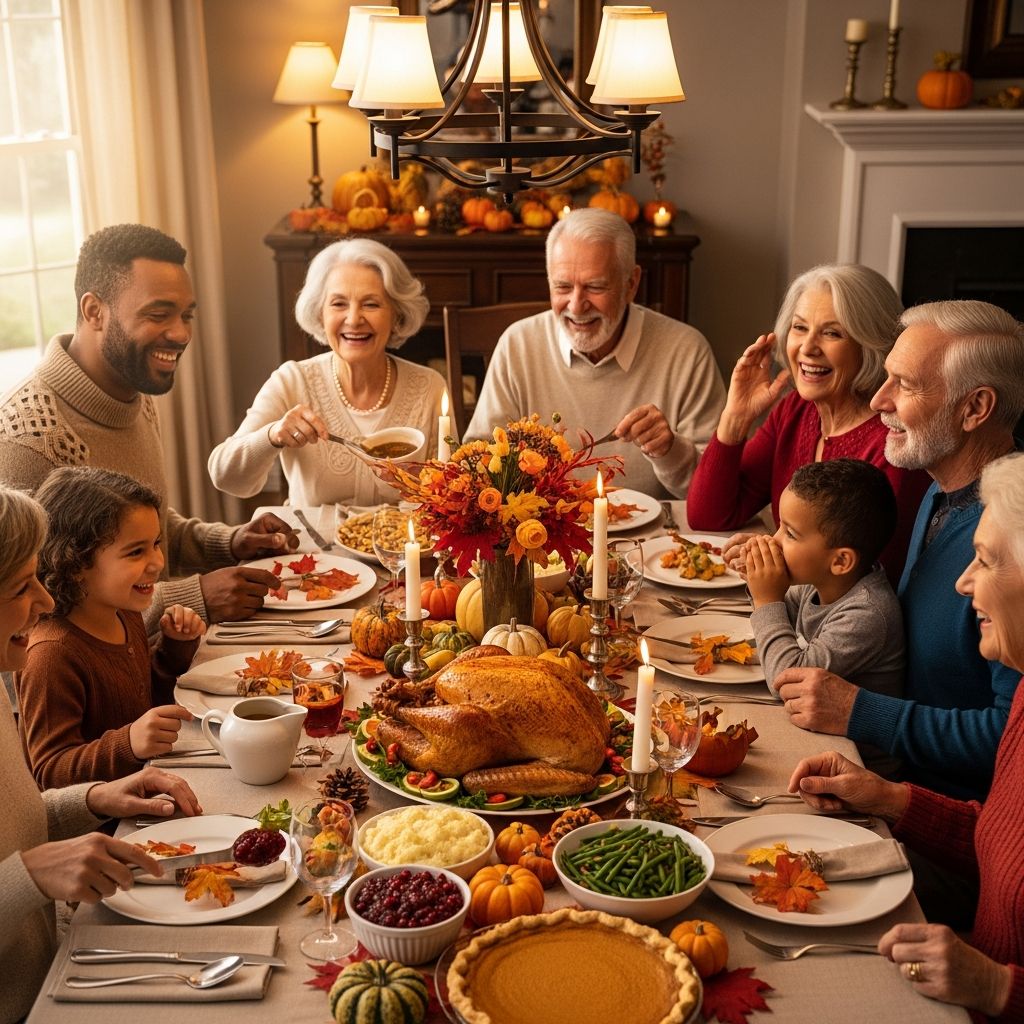
Thanksgiving is more than a big meal; it is a rare moment when family and friends pause together to share food, stories, and gratitude. Bringing humor and warm words of thanks to the table turns a good holiday into a truly memorable one. With a little planning, you can weave jokes, playful traditions, and simple graces into your celebration so that everyone leaves feeling lighter, closer, and genuinely thankful.
Why Humor Belongs at the Thanksgiving Table
Between travel logistics, cooking deadlines, and high expectations, Thanksgiving can easily slide from festive to stressful. A few well-timed jokes or playful one-liners break the tension and remind everyone that the point of the day is connection, not perfection. Laughter literally changes the atmosphere in the room; it softens awkward moments, shortens long waits for food, and helps guests of different ages relax around each other.
Humor also gives shy relatives an easy way to participate in the conversation. Even someone who feels nervous about small talk can read a joke off a card or share a silly pun. When kids see adults laughing with, not at, them, they feel like real contributors to the celebration rather than tagalongs who just have to sit still until dessert.
Designing a Thanksgiving Funny Corner
Instead of dropping jokes randomly throughout the day, consider creating a dedicated “funny corner” or humor moment as part of your Thanksgiving routine. This works especially well when people are arriving, waiting for the turkey to rest, or lingering after dessert. Making humor a small ritual keeps it from feeling forced and gives everyone something specific to look forward to.
- Choose a spot: A side table, a section of the counter, or a coffee table where people tend to congregate.
- Set out a container: A bowl, basket, or mason jar labeled “Pick a Laugh” or “Turkey Giggles.”
- Fill it with joke slips: Print or handwrite short, family-friendly jokes and fold them in half.
- Add pens and blank cards: Invite guests to contribute their own jokes as they arrive.
Because guests naturally drift toward snacks and conversation areas, your funny corner becomes a low-pressure activity that sparks smiles and small group interactions. Young kids can become the unofficial joke readers, which gives them a sense of purpose while adults handle last-minute kitchen tasks.
Categories of Thanksgiving Jokes for Every Age
Not every joke works for every audience, so organizing your humor into a few loose categories helps you pick the right tone. You do not need to be a comedian to make people laugh; simple puns and gentle silliness are often enough. Consider printing a small key on the back of your joke slips or color-coding them for different joke styles.
| Joke Style | Best For | Typical Flavor |
|---|---|---|
| Corny food puns | All ages, especially young kids | Simple wordplay about turkey, pie, stuffing, and vegetables |
| Family-friendly one-liners | Teens and adults | Short, punchy jokes about overeating and holiday chaos |
| Gentle situational jokes | Mixed-age gatherings | Humor about cooking mishaps and household traditions |
| Interactive riddles | Kid-centered tables | Call-and-response questions with silly answers |
| Table games with jokes | Families who like activities | Icebreaker prompts, guessing games, and joke-based challenges |
When you know who will be at your table, you can lean into the categories that match their personalities. Reserved grandparents might prefer gentle puns and wholesome riddles, while a table full of cousins might love rapid-fire one-liners in between bites of mashed potatoes.
Kid-Friendly Jokes That Invite Participation
Children often feel the energy in the room but do not always know how to join the conversation. Putting jokes directly into their hands gives them a role and a voice. Instead of asking kids to sit quietly until the adults are done talking, invite them to be in charge of “laughter breaks” or a joke round between courses.
- Prepare a mini joke book or stack of index cards at the kids’ table.
- Ask each child to pick a favorite joke to share with the whole room.
- Let kids decorate their joke cards with drawings or stickers before the meal.
- Offer a small “Chief Comedian” badge or paper crown to the most enthusiastic sharer.
This kind of participation teaches kids that Thanksgiving is not only about eating what is on their plates but about contributing joy and presence to the group. Even a very shy child may open up after successfully making the table giggle once or twice.
Lighthearted Jokes for Adults (That Stay Family-Friendly)
Adults often appreciate humor that pokes fun at the realities of holiday hosting without drifting into mean-spirited territory. The goal is to laugh together about shared experiences, not to embarrass anyone or stir up old grievances. Focus on topics like the endless mountain of dishes, stuffing preferences, or the annual “Which team is everyone cheering for?” debate.
- Play with the idea of overeating in a gentle way (“Does anyone else feel like the pumpkin pie should come with a safety warning?”).
- Make fun of universal kitchen struggles (“The turkey timer is really just a suspense device for the entire family.”).
- Use light self-deprecation instead of targeting specific relatives.
When in doubt, keep it clean and kind. A joke that comes at someone’s expense might get a quick laugh, but it can leave a lingering sting that overshadows the warmth of the day.
Creative Ways to Share Jokes Around the Table
Reading jokes off a list works, but weaving them creatively into your table setup makes the whole experience more special. With a few simple materials—paper, markers, and tape or string—you can turn your jokes into part of the décor. This also gives guests something fun to look at while they wait for each course.
- Joke place cards: Write each guest’s name on the front of a folded card and a different joke inside. Before the meal starts, invite everyone to read their card aloud.
- Napkin wraps: Print or handwrite jokes on strips of paper and wrap them around rolled napkins with twine.
- Joke garlands: Clip joke cards to a string stretched across a doorway or mantle, letting guests pull one down as they pass.
- Joke dessert toppers: Attach mini joke flags to toothpicks and stick them into slices of pie or cupcakes.
These small touches quietly communicate that thought and care went into the gathering. Even a short, silly riddle feels meaningful when it appears as part of a personalized place setting or a handmade decoration.
Balancing Jokes with Moments of Gratitude
While laughter is powerful, Thanksgiving also carries a deeper purpose: reflecting on what truly matters and giving voice to appreciation. The most satisfying celebrations make room for both: hearty laughter and heartfelt thanks. Neither needs to be long or formal to be meaningful; sincerity matters far more than eloquence.
One effective approach is to alternate between light and reflective moments. For example, you might start with a round of jokes while everyone is still filling their plates, then pause for a simple grace or gratitude ritual before eating. Later, between dinner and dessert, you can return to humor with more jokes or a playful game.
Inclusive Ideas for Saying Grace
Not every family shares the same spiritual or religious background, and that can make the question of saying grace feel delicate. The good news is that an expression of thanks does not have to be tied to a specific tradition. You can create a short, inclusive moment that invites everyone to reflect on gratitude in a way that feels comfortable to them.
- Silent gratitude pause: Invite everyone to hold hands or simply sit quietly for 30 seconds, thinking of one person or thing they are thankful for.
- Rotating leader: Each year, a different person offers a brief word of thanks. Children can participate with help from an adult.
- Group reading: Print a short, non-denominational message of gratitude and have everyone read a line in turn.
- Object prompt: Pass a small decorative item around the table; whoever holds it names one thing they appreciate before passing it on.
Keeping the moment brief, clear, and kind helps even skeptical or anxious guests relax. The aim is not to deliver a speech but to create a shared pause in which everyone acknowledges the good in front of them.
Writing Your Own Simple Thanksgiving Grace
If you would like to offer a spoken grace but are unsure what to say, think in terms of three parts: noticing, thanking, and hoping. You do not need poetic language; clear, simple sentences often feel the most genuine. Consider jotting a few bullet points before the meal so you do not feel pressured to improvise on the spot.
- Notice: Mention something specific about the day: the effort put into cooking, the people who traveled, or the fact that you are able to gather at all.
- Thank: Express appreciation for both the food and the people present. If appropriate, you may also express gratitude to a higher power in language that fits your beliefs.
- Hope: Offer a short wish or hope for the coming year—health, peace, connection, or support through challenges.
By keeping these three pieces in mind, you can step into the role of host or leader with confidence. Guests typically remember the warmth of your tone and the emotion behind the words, not whether every sentence flowed perfectly.
Conversation Starters that Blend Humor and Gratitude
Some guests love center-stage attention; others would rather blend into the background. Conversation prompts that mix light fun with meaningful reflection give everyone a way to participate at their comfort level. You can slip these prompts into your humor jar or place them in a separate bowl marked “Talk Starters.”
- “What is one small, silly thing you are thankful for this year?”
- “If your favorite Thanksgiving food could talk, what would it brag about?”
- “Share a funny or surprising Thanksgiving memory from any year.”
- “Who taught you something this year that you are grateful for, and what was it?”
- “If you could invite any fictional character to this meal, who would it be and why?”
These prompts keep the mood light while still steering conversation toward connection and appreciation. They also prevent the table from sliding into heated topics that can derail an otherwise lovely evening.
Printable and DIY Ideas for Busy Hosts
When time is tight, the idea of crafting place cards, joke jars, and conversation prompts can feel overwhelming. Focus on simple, low-effort options that still create a sense of thoughtfulness. You do not have to make everything from scratch to give your table a personal touch.
- Use plain index cards instead of fancy cardstock; kids can decorate them with crayons.
- Print jokes and prompts in a basic font and cut them into strips with regular scissors.
- Repurpose jars or mugs you already own as containers for jokes or gratitude notes.
- Ask one or two willing guests to take charge of the humor elements while you focus on food.
Delegating these creative tasks can even become part of the tradition. A craft-loving teen or artistic friend might happily claim ownership of “joke design” every year, freeing you to enjoy the results without adding to your to-do list.
Handling Differing Senses of Humor Gracefully
Every family includes a wide range of personalities and boundaries. What one person finds hilarious may feel uncomfortable or confusing to someone else. Planning ahead for this diversity helps you keep the overall tone warm and respectful, even when jokes miss the mark.
- Privately set a basic guideline: no insults about appearance, politics, or painful past events.
- Gently steer the conversation away from a joke that falls flat instead of dwelling on it.
- Offer alternative roles—such as reading conversation prompts or helping serve food—to guests who dislike telling jokes but still want to contribute.
Remember that the goal of humor at Thanksgiving is not to impress anyone with perfect comedic timing. It is to build a shared sense of ease and belonging so that everyone feels welcome at the table.
Capturing and Carrying Forward the Joy
Once you introduce jokes and graces into your Thanksgiving routine, you may find that people look forward to them just as much as the favorite side dishes. Consider preserving some of that joy so you can revisit it and build on it year after year. A small amount of intentional record-keeping can turn one fun experiment into a beloved tradition.
- Save particularly successful joke cards and tuck them into an envelope or box labeled “Thanksgiving Laughs.”
- Jot down especially touching or funny moments in a simple notebook kept with your holiday decorations.
- Invite guests to sign the back of a joke or gratitude card they shared, turning it into a tiny time capsule.
Over time, you will build a library of memories that reflects both the playful and tender sides of your gatherings. Looking back at these notes each year can help you appreciate how your circle of loved ones grows, changes, and continues to show up for one another.
FAQs About Thanksgiving Jokes and Graces
Are jokes appropriate if my family is very traditional?
Yes, as long as the humor stays respectful and matches your family’s comfort level. You can start with gentle puns or one or two short jokes, then adjust in future years based on how people respond.
What if someone does not want to participate in the joke or gratitude activities?
Participation should always be optional. Offer chances to listen, smile, or simply enjoy the food without pressure to speak; a welcoming atmosphere matters more than having every person take a turn.
How many jokes is too many?
A few jokes per course or a single dedicated “joke round” is usually enough. When humor begins to dominate every moment, it can crowd out meaningful conversation and reflection.
Can children lead the grace?
Children can absolutely help lead grace if they are willing, especially if you coach them with a simple, short message. This can be a powerful way to teach them about gratitude and give them a proud memory of contributing to the day.
How do I handle a joke that accidentally hurts someone’s feelings?
If a joke lands badly, a brief acknowledgment and sincere, calm apology usually helps. Then gently guide the conversation elsewhere, modeling that people’s feelings matter more than a punchline.