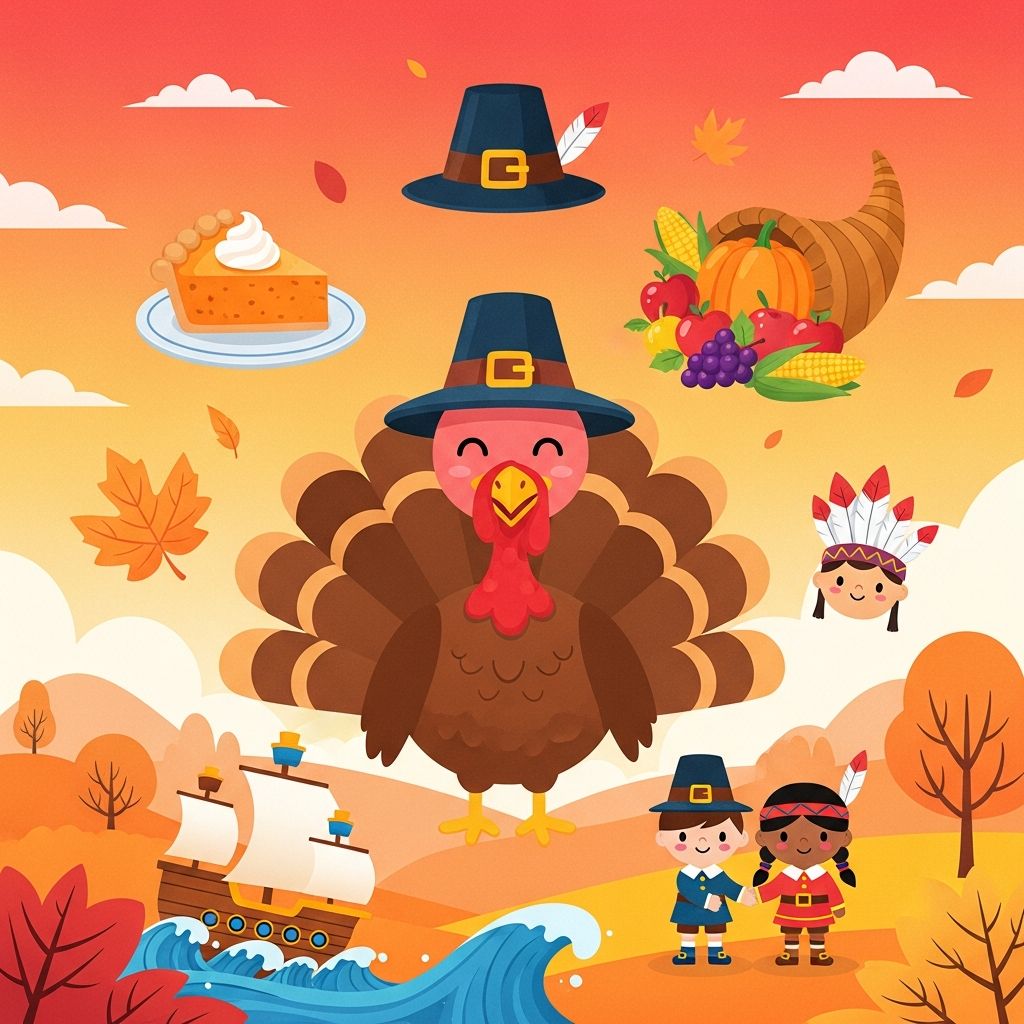
Thanksgiving brings families together for feasts, gratitude, and stories from history. Kids love uncovering surprising details about this holiday, from its origins in early American settlements to today’s parades and games. This article dives into kid-friendly trivia, helping children grasp the event’s significance while sparking curiosity about the past.
Discovering the Origins of the 1621 Harvest Celebration
The story of Thanksgiving starts with English settlers known as Pilgrims who sailed to America on the Mayflower, arriving in late 1620 at Plymouth, Massachusetts. Facing a harsh winter, only half survived. In 1621, after a successful harvest, they held a three-day event with local Wampanoag people, marking an early moment of sharing and alliance.
- The gathering likely happened in late September or early October, not November, as a celebration of abundant crops after months of hardship.
- Around 50 Pilgrims, including about 25 children, joined roughly 90 Wampanoag guests, creating a lively mix of colonists and Native Americans.
- Activities included feasting, games like races, and even military displays with firearms, blending joy and security.
This wasn’t called ‘Thanksgiving’ then; that term often meant days of prayer. Instead, it was a secular harvest festival highlighting cooperation between groups.
Key Figures Who Shaped Early Interactions
Squanto, a Patuxet man who spoke English after time in Europe, played a vital role. He taught Pilgrims to plant corn, catch eels, and navigate relations with tribes, aiding their survival. Wampanoag leader Massasoit forged a peace treaty, leading to the shared meal where his people contributed five deer.
| Figure | Role | Contribution |
|---|---|---|
| Squanto | Patuxet Native | Taught farming and fishing techniques |
| Massasoit | Wampanoag Sachem | Brought deer and ensured peace |
| William Bradford | Pilgrim Governor | Organized the harvest event |
These alliances were crucial amid challenges like the ‘Great Dying’ epidemic that had weakened Wampanoag villages the prior year.
What Was Really on the First Feast Table?
Modern meals feature turkey and pie, but the 1621 menu differed. No potatoes, as they weren’t yet common in New England, and likely no pumpkin pie without refined sugar or butter.
- Seafood dominated: mussels, lobster, eel, fish, and clams from abundant coastal waters.
- Venison from deer, plus birds like duck or goose, and local veggies such as onions, beans, squash, and carrots.
- Cranberries appeared, used by Natives for dye or pemmican, not sauce.
Historians note only a few Pilgrim women attended, busy with daily tasks, making the event male-heavy.
Evolution into a National Holiday
Early U.S. leaders proclaimed thanksgivings sporadically. George Washington set one on October 3, 1789, for national unity. Sarah Josepha Hale, author of ‘Mary Had a Little Lamb,’ campaigned for 17 years via letters to presidents. Abraham Lincoln proclaimed it a national holiday in 1863 amid Civil War, fixing it annually.
In 1941, Congress standardized it as the fourth Thursday in November for consistency. Earlier, Spanish settlers in St. Augustine, Florida, held a 1565 Mass and feast, sometimes called the first U.S. Thanksgiving.
Modern Traditions That Kids Love
The Iconic Macy’s Parade
Starting in 1924 as a Christmas event, the Macy’s Thanksgiving Day Parade became a holiday staple. Giant balloons, floats, bands, and performers draw millions on TV. In 1993, Sonic the Hedgehog debuted as the first video game balloon, though winds caused issues.
Turkey Pardons and Football Frenzy
Presidents pardon turkeys since at least 1989 officially, with roots possibly in Lincoln’s era. The National Turkey Federation presents live birds annually. Football kicked off in 1876 with Yale vs. Princeton, now featuring NFL games like Detroit Lions.
- Turkey trots: Races before feasts keep families active.
- Desserts evolved: Pumpkin pie gained popularity in the 1800s.
Surprising Thanksgiving Tidbits
Native Americans used cranberries creatively beyond food. No forks at the first feast; people used knives and hands. Plymouth Rock, mythically central, wasn’t noted in 1621 accounts.
| Myth | Fact |
|---|---|
| Turkey was main dish | Seafood and venison starred |
| Women dominated cooking | Few women present |
| November date | Fall harvest timing |
Activities to Bring Facts to Life
Make learning hands-on:
- Harvest crafts: Draw 1621 menus with squash and fish.
- Storytelling: Act out Squanto teaching corn planting.
- Games: Play Native-inspired races or Pilgrim games.
- Recipes: Try simple venison or cranberry dishes safely.
These build appreciation for history’s complexities, like survival and cultural exchange.
Frequently Asked Questions
When did the first Thanksgiving occur?
The 1621 event in Plymouth lasted three days in fall, with Pilgrims and Wampanoag sharing after harvest.
Why turkey on Thanksgiving?
Native to North America and plentiful, turkeys became central by the 1800s.
Who made Thanksgiving national?
Sarah Hale advocated; Lincoln proclaimed it in 1863.
What’s the turkey pardon?
Presidents spare presented turkeys, tradition from late 20th century.
Was the first feast like today’s?
No—seafood, no potatoes or pies, focused on fresh harvest goods.
References
- 50 Fun Thanksgiving Facts For Kids (2025 Update) — MKE with Kids. 2025. https://www.mkewithkids.com/post/thanksgiving-facts-for-kids/
- 5 Fun First Thanksgiving Facts (+ Free Historical Recipe PDF) — Treehouse Schoolhouse. N.D. https://treehouseschoolhouse.com/blog/thanksgiving-historical-facts-recipes-for-kids-homeschool-free-pdf
- 33 Thanksgiving Facts Everyone Should Know — We Are Teachers. N.D. https://www.weareteachers.com/thanksgiving-facts/
- Thanksgiving (United States) Facts for Kids — Kiddle. N.D. https://kids.kiddle.co/Thanksgiving_(United_States)
- Thanksgiving – Kids — Britannica Kids. N.D. https://kids.britannica.com/kids/article/Thanksgiving/353852
- Fun Facts for the Kids Table at Thanksgiving — Village Pediatrics Rheumatology. N.D. https://villagepediatricsrheumatology.com/turkey-day-fun-facts/