Understanding Testicular Injuries: A Teen’s Guide to Recognition and Response
Testicular injuries represent a significant health concern for adolescents and young men, particularly those engaged in athletic activities or contact sports. The testicles, housed within the scrotum beneath the penis, are highly sensitive organs containing delicate structures responsible for hormone production and reproductive function. Due to their external positioning and lack of protective bone surrounding them, the testicles remain vulnerable to traumatic injury from blunt force, direct impact, or crushing mechanisms. Understanding how these injuries occur, recognizing their symptoms, and knowing appropriate response measures can help minimize complications and preserve long-term reproductive health.
How Testicular Injuries Develop
Testicular injuries typically result from either blunt force trauma or penetrating wounds to the genital region. Blunt force injuries are the most common type experienced by young men and can occur through various mechanisms. Direct kicks, strikes from sports equipment such as baseballs or hockey pucks, falls onto hard surfaces, or compression against the pubic bone during accidents represent frequent causes of injury. Contact sports including football, hockey, lacrosse, baseball, soccer, rugby, and martial arts carry elevated risk due to the dynamic physical contact involved during competition.
The severity of injury depends on multiple factors including the force of impact, the angle of contact, whether protective equipment was worn, and individual anatomical variations. Some injuries result from single traumatic events, while others may develop gradually from repetitive minor impacts that accumulate over time. Understanding these mechanisms helps young men identify situations requiring protective measures and take preventive action.
Recognizing Immediate Symptoms and Warning Signs
When testicular injury occurs, symptoms typically appear rapidly and unmistakably. The most obvious sign is sudden, intense pain in the scrotum, often accompanied by abdominal discomfort. This pain represents the body’s immediate response to trauma affecting the highly innervated testicular tissue.
Beyond pain, individuals may experience several additional symptoms:
- Nausea and vomiting, particularly common with severe injuries or torsion
- Visible swelling or enlargement of the scrotum
- Bruising or discoloration of the scrotal skin
- Blood in the urine, indicating possible internal bleeding
- Difficulty or pain during urination
- Fever, which may suggest infection has developed
- Sensation that a testicle feels positioned higher than normal or at an unusual angle
- Increased urinary frequency
It is crucial to note that while minor testicular injuries typically produce pain that gradually subsides within an hour, more serious injuries produce persistent or worsening symptoms that demand medical evaluation. Any injury accompanied by severe pain, significant swelling, vomiting, or signs of internal bleeding requires prompt professional assessment.
Immediate Care for Minor Testicular Injuries
When a minor testicular injury occurs, several self-care measures can promote comfort and recovery. The initial response should focus on pain management, reducing inflammation, and supporting the injured area.
Effective immediate care strategies include:
- Pain relief medication: Over-the-counter pain relievers can help manage discomfort. These should be taken according to package directions
- Ice application: Applying wrapped ice packs to the scrotum for 20-30 minutes, three to four times daily as tolerated, reduces inflammation and numbs pain
- Physical support: Wearing supportive underwear such as briefs rather than loose-fitting styles helps stabilize the testicles and reduces movement-related discomfort
- Rest and elevation: Lying down while gently elevating the scrotum with supportive garments facilitates healing and reduces swelling
- Activity modification: Avoiding strenuous activities, heavy lifting, and vigorous exercise for several days prevents re-injury and allows tissues to begin healing
Recovery from minor injuries typically progresses gradually, with pain diminishing over hours to days. However, if symptoms persist beyond a few hours, worsen over time, or are accompanied by vomiting or fever, medical evaluation becomes necessary even if the initial impact seemed relatively minor.
Serious Testicular Injuries Requiring Emergency Care
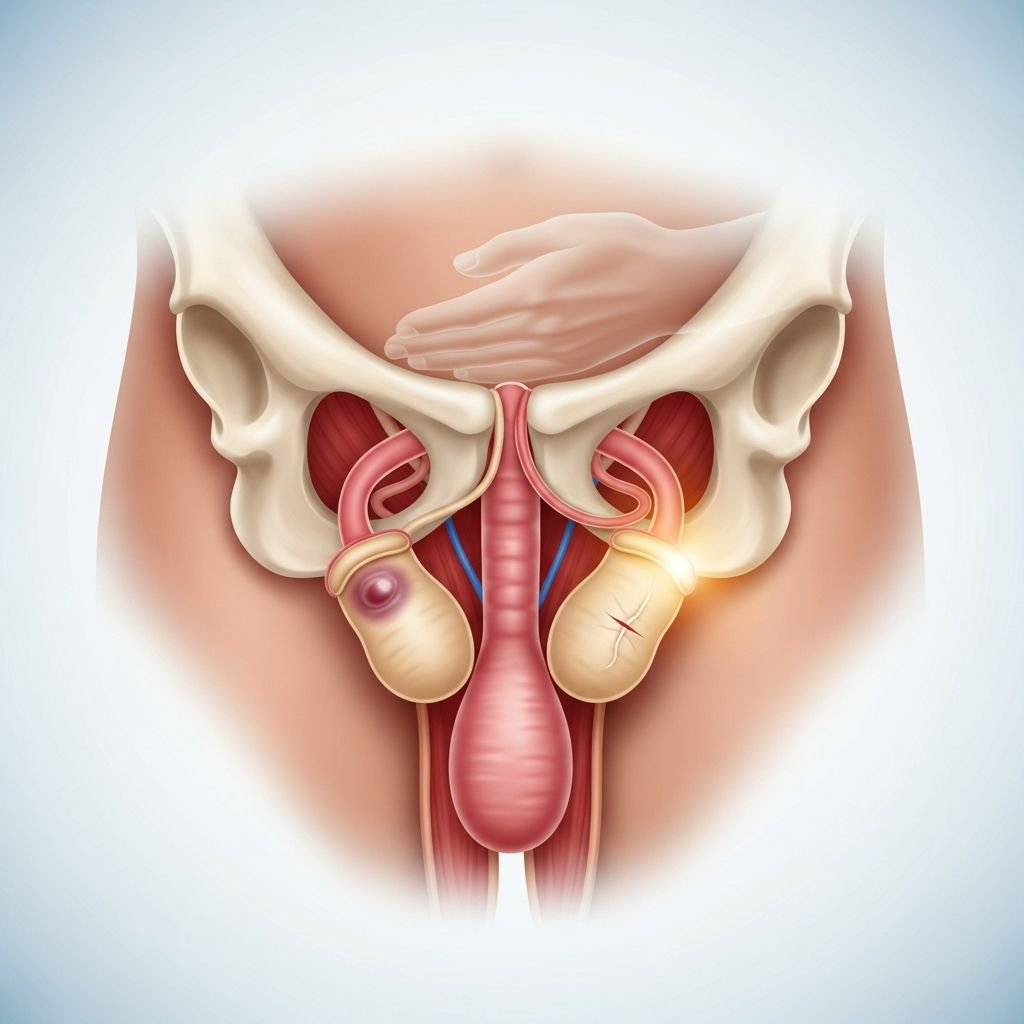
Certain testicular injuries represent medical emergencies demanding immediate professional evaluation and treatment. The most critical of these is testicular torsion, a condition where the spermatic cord—the structure containing blood vessels, nerves, and the vas deferens—twists upon itself. This twisting cuts off blood supply to the testicle, creating a true medical emergency. Testicular torsion most commonly affects adolescents between ages 12 and 18, though it can occur at any age.
Testicular torsion produces unmistakable symptoms including sudden, severe scrotal pain, significant swelling, nausea, vomiting, abdominal pain, and sometimes fever. Young men with torsion often awaken during the night or early morning with acute pain. Importantly, torsion sometimes resolves temporarily when the testicle untwists spontaneously, but surgery is still needed to prevent recurrence. Even if pain subsides without treatment, emergency evaluation is critical because the testicle remains at extreme risk for permanent damage.
Another serious injury type is testicular rupture, a rare but severe condition occurring when forceful direct blows or crushing forces cause the testicular tissue to tear. This injury results in bleeding inside the scrotum and produces extreme pain, significant swelling, nausea, and vomiting. Surgical repair is necessary to preserve testicular function.
Additional serious injuries include hematocele (blood clots from ruptured blood vessels within the scrotum), degloving injuries (where scrotal skin is torn away), and infections resulting from penetrating wounds or animal bites. Each of these conditions demands professional evaluation and treatment to prevent lasting complications.
Seek emergency medical care immediately if experiencing sudden or severe testicle pain, persistent swelling that does not decrease after rest and ice, vomiting, fever, blood in urine, or pain accompanied by inability to urinate.
Medical Evaluation and Diagnostic Approaches
When presenting to medical facilities, healthcare providers conduct thorough physical examinations to assess the extent of injury. Doctors carefully palpate the testicles and scrotum, noting swelling, bruising, tenderness, and any deformities. They also evaluate abdominal pain and assess overall symptom patterns.
Advanced imaging frequently supports clinical diagnosis. Color Doppler ultrasound represents the primary imaging tool for testicular injuries, allowing providers to visualize testicular blood flow and identify structural abnormalities. This non-invasive imaging helps determine whether surgical exploration is necessary. Sometimes surgeons proceed directly to surgical exploration when testicular torsion is suspected, as prompt intervention may be more important than diagnostic delays.
Treatment Options for Various Injury Types
Treatment approaches vary significantly based on injury severity and type. For minor injuries with normal imaging results and intact blood flow, conservative management suffices. This includes pain medication, ice therapy, supportive underwear, and activity restriction. Recovery typically progresses over several days to weeks.
Moderate injuries involving inflammation of the epididymis (the structure storing sperm) or mild infections may require antibiotics and supportive care. Epididymitis—inflammation or infection of the epididymis—responds to antibiotic therapy along with rest and scrotal elevation.
Serious injuries demand surgical intervention. Testicular torsion requires emergency surgery to untwist the spermatic cord and restore blood flow. Testicular rupture requires surgical repair to preserve the testicle. Hematoceles sometimes resolve as the body reabsorbs blood, but surgery may be needed for large clots. Degloving injuries and penetrating wounds almost always require surgical repair.
It is important to note that men can maintain normal fertility and sexual function with a single healthy testicle, so testicular loss does not necessarily prevent future fatherhood.
Preventing Testicular Injuries Through Protective Measures
Since testicular injuries are often preventable, protective strategies deserve serious consideration, particularly for young men participating in contact or collision sports. Athletic protective cups specifically designed for testicular protection are highly effective in preventing trauma. These devices should be worn during participation in sports with significant injury risk including football, hockey, lacrosse, baseball, soccer, rugby, boxing, and mixed martial arts.
Proper cup selection and fit ensures maximum protection. Cups should be appropriately sized for individual anatomy and worn consistently during all practices and competitions. Many athletes initially resist wearing protective equipment due to discomfort, but modern designs have improved significantly in breathability and comfort while maintaining protective effectiveness.
Beyond athletic protection, general safety awareness helps prevent accidental injuries. This includes being cautious during physical activities, maintaining awareness of surroundings to avoid falls, and following proper techniques in sports to minimize collision risks.
Long-Term Health Considerations and Recovery
Most testicular injuries, when treated appropriately, result in full recovery without lasting health consequences. Minor injuries typically heal completely within days to weeks with conservative care. Even more serious injuries that require surgery often preserve testicular function when treated promptly.
However, delayed treatment or severe untreated injuries can result in permanent testicular damage, including loss of reproductive function or hormonal abnormalities. This underscores the importance of seeking medical evaluation for any significant testicular injury rather than assuming self-recovery will occur.
Young men who experience testicular injuries should follow medical advice regarding activity restrictions and recovery timelines. Returning to sports or strenuous activities too quickly can re-injure healing tissues. Most healthcare providers recommend waiting until pain-free movement is possible and swelling has substantially resolved before resuming full activity, typically requiring one to several weeks depending on injury severity.
Frequently Asked Questions About Testicular Injuries
How long does pain from a minor testicular injury usually last?
Minor testicular injury pain typically subsides gradually within an hour of injury, though some soreness may persist for several hours. If pain is still severe after an hour or worsens over time, medical evaluation is recommended as this may indicate a more serious injury.
Is it normal to feel nauseous after testicular injury?
Mild nausea can occur with testicular injuries due to pain and nerve stimulation. However, vomiting or persistent nausea may indicate a more serious injury like torsion and warrants medical evaluation.
Can testicular injuries affect fertility?
Most testicular injuries treated appropriately do not affect fertility. Even loss of one testicle does not prevent reproduction since the remaining testicle can produce sufficient sperm. However, serious untreated injuries or infections could potentially impact reproductive function.
Should I apply heat or cold to a testicular injury?
Cold (ice packs) is recommended immediately after injury to reduce swelling and pain. Apply ice for 20-30 minutes at a time, allowing the skin to warm between applications. Avoid applying ice directly to skin; wrap it in cloth first.
When is surgical treatment necessary for testicular injuries?
Surgery is needed for testicular torsion (a medical emergency), testicular rupture, significant hematoceles, degloving injuries, and penetrating wounds. Most minor contusions can be managed conservatively with rest and ice.
What protective equipment is most effective for preventing testicular injuries?
Athletic protective cups designed specifically for testicular protection are the most effective prevention method. Cups must fit properly and be worn consistently during all sports practices and competitions, particularly in contact sports like football, hockey, and lacrosse.
References
- Testicular Pain: 10 Possible Causes — Oregon Urology Institute. Accessed January 2026. https://oregonurology.com/testicular-pain-10-possible-causes/
- Testicular Injuries: Causes and Treatments — WebMD. https://www.webmd.com/men/testicle-injuries
- Testicle Injuries and Conditions — Better Health Channel, State Government of Victoria, Australia. https://www.betterhealth.vic.gov.au/health/conditionsandtreatments/testicle-injuries-and-conditions
- Testicular Torsion: Symptoms & Causes — Mayo Clinic. https://www.mayoclinic.org/diseases-conditions/testicular-torsion/symptoms-causes/syc-20378270
- Swollen or Painful Testicle — Healthdirect, Australian Government Department of Health. https://www.healthdirect.gov.au/swollen-or-painful-testicle
- Testicular Trauma — Sports Medicine Today. https://www.sportsmedtoday.com/testicular-trauma-va-164.htm
- Testicular Injuries (for Teens) — Nemours KidsHealth. https://kidshealth.org/en/teens/testicular-injuries.html
- Testicular Trauma: Symptoms — Urology Care Foundation. https://www.urologyhealth.org/urology-a-z/t/testicular-trauma