Recognizing Temporal Lobe Epilepsy in Young Patients
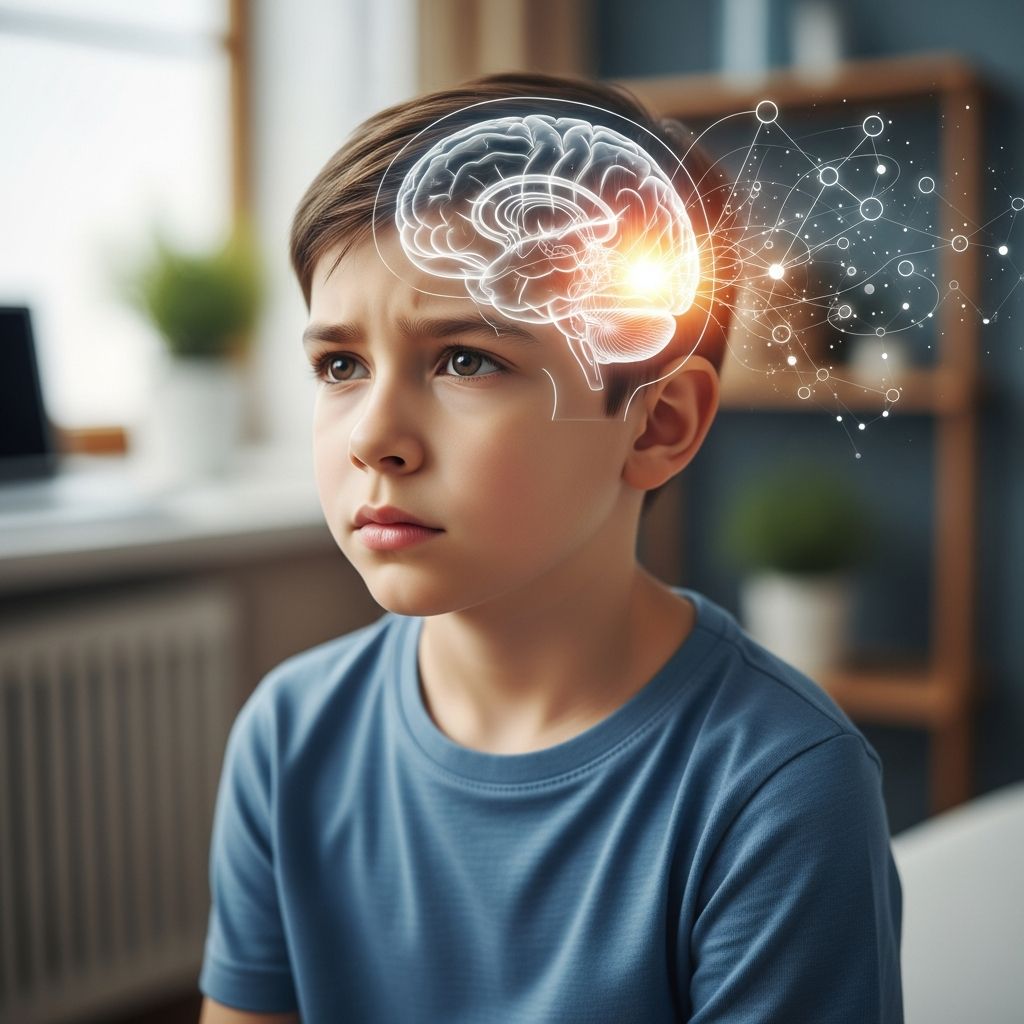
Temporal lobe epilepsy (TLE) represents one of the most prevalent focal seizure disorders affecting children and adolescents worldwide. The temporal lobes, located on the sides of the brain near the ears, play crucial roles in processing emotions, memories, and sensory information. When abnormal electrical activity develops in these regions, it can trigger distinctive seizure patterns that differ significantly from other types of epilepsy. Understanding the specific characteristics of temporal lobe involvement in pediatric populations is essential for early identification and appropriate intervention.
How Temporal Lobe Epilepsy Manifests in Children
The presentation of TLE in children often begins with what specialists call an “aura”—a warning sensation that precedes the actual seizure. These initial feelings are often emotionally or perceptually based, reflecting the temporal lobe’s involvement with emotional processing and memory formation. Children may experience a rising sensation in the abdomen, unusual tastes or smells, or sudden emotional states such as fear or an overwhelming sense of joy.
As the seizure progresses, children typically exhibit automatisms—repetitive, purposeless movements that appear almost reflexive in nature. These may include lip smacking, chewing motions, swallowing, or picking at clothing or the air. During this phase, affected children often appear unaware of their surroundings and may seem confused or distant. A characteristic “glazed” or “far-away” look frequently accompanies these episodes. Most individual seizures in TLE last between 30 seconds to two minutes, though this duration can vary.
The post-seizure period, known as the postictal phase, brings its own set of challenges. Children may experience confusion, difficulty with speech, memory gaps regarding the seizure itself, and significant fatigue. Some children report depression or emotional changes following seizures. These postictal symptoms can persist for minutes to hours, affecting the child’s ability to return immediately to normal activities.
Distinctive Features of Mesial Temporal Lobe Involvement
Mesial temporal lobe epilepsy (MTLE) affects the inner structures of the temporal lobe, particularly the hippocampus, which is crucial for memory formation and processing. This form represents the most common type of temporal lobe epilepsy in both children and adults. The symptoms in MTLE often include vivid auras and a characteristic loss of awareness during seizures, distinguishing it from other focal seizure types.
Children with MTLE frequently experience specific warning signs before seizures begin, including déjà vu (an eerie sensation of having experienced something before) or jamais vu (feeling that familiar people or places are unfamiliar). These memory-related phenomena directly reflect the seizure’s origin in memory-processing brain regions. Additionally, some children report autonomic symptoms such as unusual heart sensations, changes in breathing patterns, or gastrointestinal discomfort during the aura phase.
Understanding the Causes and Risk Factors
The etiology of temporal lobe epilepsy varies considerably among affected children. Mesial temporal sclerosis, a condition involving scarring and shrinkage of the hippocampus and surrounding structures, represents one of the most common identifiable causes. In many cases, mesial temporal sclerosis develops following prolonged febrile seizures (seizures triggered by fever) in early childhood, though the exact mechanism linking these early seizures to later structural changes remains incompletely understood.
Beyond structural changes in the brain tissue itself, multiple other factors can precipitate temporal lobe seizures in children:
- Brain infections such as encephalitis or meningitis
- Brain tumors or other space-occupying lesions
- Traumatic brain injuries from accidents or falls
- Vascular malformations or abnormal blood vessel formations
- Stroke or other cerebrovascular events
- Genetic syndromes with epilepsy as a component
- Congenital brain malformations present from birth
In a subset of children, particularly those with familial temporal lobe epilepsy, genetic factors play a dominant role. This form typically follows an autosomal dominant inheritance pattern, meaning a single affected parent can pass the condition to offspring. The genetic mutations responsible for familial TLE often do not require surgery for seizure control, as they typically respond well to antiepileptic medications.
The Diagnostic Process
Accurate diagnosis of temporal lobe epilepsy requires a systematic approach combining clinical observation, neuroimaging, and electrophysiological testing. The diagnostic journey typically begins with a detailed history from parents or caregivers, documenting seizure characteristics, frequency, triggering factors, and any family history of epilepsy.
Electroencephalography (EEG) serves as a fundamental diagnostic tool, recording the brain’s electrical activity through electrodes attached to the scalp. In children with temporal lobe epilepsy, EEG patterns often reveal characteristic findings. Between seizures, physicians may observe temporal spike and sharp-wave discharges or a pattern called TIRDA (temporal intermittent rhythmic delta activity), which consists of rhythmic slow-wave activity localized to the temporal regions. During actual seizures, the EEG may show lateralized activity or, in younger children with immature neural development, patterns that appear more generalized than expected.
Magnetic Resonance Imaging (MRI) provides detailed structural images of the brain, allowing specialists to identify physical causes such as mesial temporal sclerosis, tumors, malformations, or scar tissue. MRI is particularly sensitive for detecting the subtle changes associated with hippocampal sclerosis, making it invaluable for diagnosis and treatment planning.
Computed Tomography (CT) scans offer an alternative imaging approach when MRI is contraindicated or when rapid imaging is necessary. While CT scans provide less detail than MRI, they can reveal gross structural abnormalities and may be the initial imaging study in emergency situations.
Distinguishing Temporal Lobe Epilepsy from Similar Conditions
Several other pediatric epilepsy syndromes can present with temporal lobe characteristics or generate temporal lobe abnormalities on testing, requiring careful differentiation. Landau-Kleffner syndrome, characterized by progressive language regression and acquired auditory agnosia in previously normally developing children, shares some EEG features with TLE but occurs without the typical structural changes seen in mesial temporal sclerosis. Continuous spike-and-wave discharges during sleep (CSWS) typically produce more global cognitive regression and primarily involve frontal regions rather than temporal structures.
An unusual manifestation of temporal lobe seizures more common in children than adults is “abdominal epilepsy,” characterized by severe, colicky abdominal pain accompanied by nausea and vomiting, along with impaired consciousness. These atypical presentations can lead to diagnostic delays, as the gastrointestinal symptoms may prompt investigation for primary abdominal conditions before seizure etiology is considered.
Treatment Approaches and Management Strategies
The cornerstone of TLE management in children involves antiepileptic medications selected based on seizure characteristics, underlying etiology, and individual patient factors. Many children achieve excellent seizure control with appropriate pharmacological therapy alone. However, when medications fail to adequately suppress seizures, surgical intervention may become a consideration.
Surgical options are most commonly pursued in children with mesial temporal sclerosis who demonstrate inadequate response to multiple medication trials. Temporal lobe surgery, often involving selective removal of the affected hippocampus and surrounding structures, has demonstrated high success rates in appropriately selected candidates. The decision to pursue surgery requires careful evaluation of seizure localization, assessment of potential impacts on language and memory, and consideration of the individual child’s circumstances.
Beyond medication and surgery, comprehensive epilepsy management includes lifestyle modifications, safety precautions, and psychosocial support. Parents and caregivers should establish consistent sleep schedules, as sleep deprivation frequently increases seizure susceptibility. Stress reduction and identification of individual seizure triggers can help minimize breakthrough seizures even in well-controlled children.
Age-Related Variations in Presentation and Prognosis
The clinical manifestation of temporal lobe epilepsy varies significantly across different pediatric age groups. Infants and toddlers with temporal lobe pathology often display more prominent motor features than older children, likely due to incomplete brain maturation and developing myelination (the insulation of nerve fibers). The immature limbic system, which is resistant to synchronized abnormal electrical activity, may result in secondary generalization of focal seizures via connections with the thalamus and basal ganglia, producing apparent generalized rather than focal seizure patterns.
Medial temporal lobe epilepsy typically begins around age 10 or 20, though onset can occur at virtually any age. Some children experience their first seizures following a history of febrile seizures or brain injury, while others develop epilepsy without obvious preceding events. Understanding the child’s specific developmental stage at seizure onset helps guide prognostic counseling and treatment selection.
Supporting Children and Families Through Epilepsy Management
A diagnosis of temporal lobe epilepsy significantly impacts not only the affected child but the entire family system. Parents benefit from education about seizure first aid, medication administration, and recognition of warning signs. Clear communication with schools and activity providers about the child’s condition and any necessary precautions promotes safety while maximizing the child’s participation in normal developmental activities.
Psychosocial support becomes increasingly important as children mature and develop awareness of their condition. Adolescents with TLE often benefit from discussion about the condition’s impact on independence, driving privileges, reproductive planning, and future career considerations. Support groups connecting families with similar experiences provide valuable emotional and practical resources.
Frequently Asked Questions
Q: At what age does temporal lobe epilepsy typically start in children?
A: While temporal lobe epilepsy can begin at any age, medial temporal lobe epilepsy most commonly appears around ages 10-20 years. Some children experience earlier onset, particularly if they have had prolonged febrile seizures or brain injuries. Younger children with temporal lobe pathology may present with different symptom patterns than older children.
Q: Can temporal lobe epilepsy be cured?
A: Many children achieve excellent seizure control with antiepileptic medications. For those with inadequate medication response, surgical removal of the affected temporal lobe structures, particularly in mesial temporal sclerosis, can result in seizure freedom. However, ongoing medical management may remain necessary even after successful treatment.
Q: What should I do if my child has a temporal lobe seizure?
A: During a seizure, ensure the child is in a safe environment, place them on their side if possible, and do not restrain movements. Allow the seizure to run its course while monitoring closely. Seek emergency medical attention if the seizure lasts longer than 5 minutes, if multiple seizures occur without recovery between them, or if it is the child’s first seizure.
Q: Is temporal lobe epilepsy inherited?
A: Familial temporal lobe epilepsy, caused by genetic mutations, can be inherited in an autosomal dominant pattern. However, most cases of temporal lobe epilepsy are not inherited and result from structural brain changes, infections, or other acquired causes. A family history of epilepsy may increase risk but does not guarantee development of the condition.
Q: Will my child outgrow temporal lobe epilepsy?
A: The long-term prognosis for TLE varies individually. While some children experience complete seizure remission with treatment, others require ongoing management into adulthood. Early diagnosis, appropriate treatment, and identification of any correctable structural causes improve the likelihood of optimal outcomes.
References
- Temporal Lobe Epilepsy in Children — National Center for Biotechnology Information/PubMed Central. 2012. https://pmc.ncbi.nlm.nih.gov/articles/PMC3420576/
- Temporal Lobe Epilepsies — AboutKidsHealth.ca. 2024. https://www.aboutkidshealth.ca/temporal-lobe-epilepsies
- Temporal Lobe Epilepsy: Causes and Risk Factors — Massachusetts General Hospital. 2024. https://www.massgeneral.org/neurology/treatments-and-services/epilepsy/temporal-lobe-epilepsy
- Mesial Temporal Lobe Epilepsy — Texas Children’s Hospital. 2024. https://www.texaschildrens.org/content/conditions/mesial-temporal-lobe-epilepsy
- Epilepsy in Children — Children’s Hospital Los Angeles. 2024. https://www.chla.org/epilepsy-in-children
- Temporal Lobe Epilepsy: Symptoms and Causes — Mayo Clinic. 2023. https://www.mayoclinic.org/diseases-conditions/temporal-lobe-seizure/symptoms-causes/syc-20378214
- Temporal Lobe Epilepsy (TLE) — Epilepsy.com. 2024. https://www.epilepsy.com/what-is-epilepsy/syndromes/temporal-lobe-epilepsy