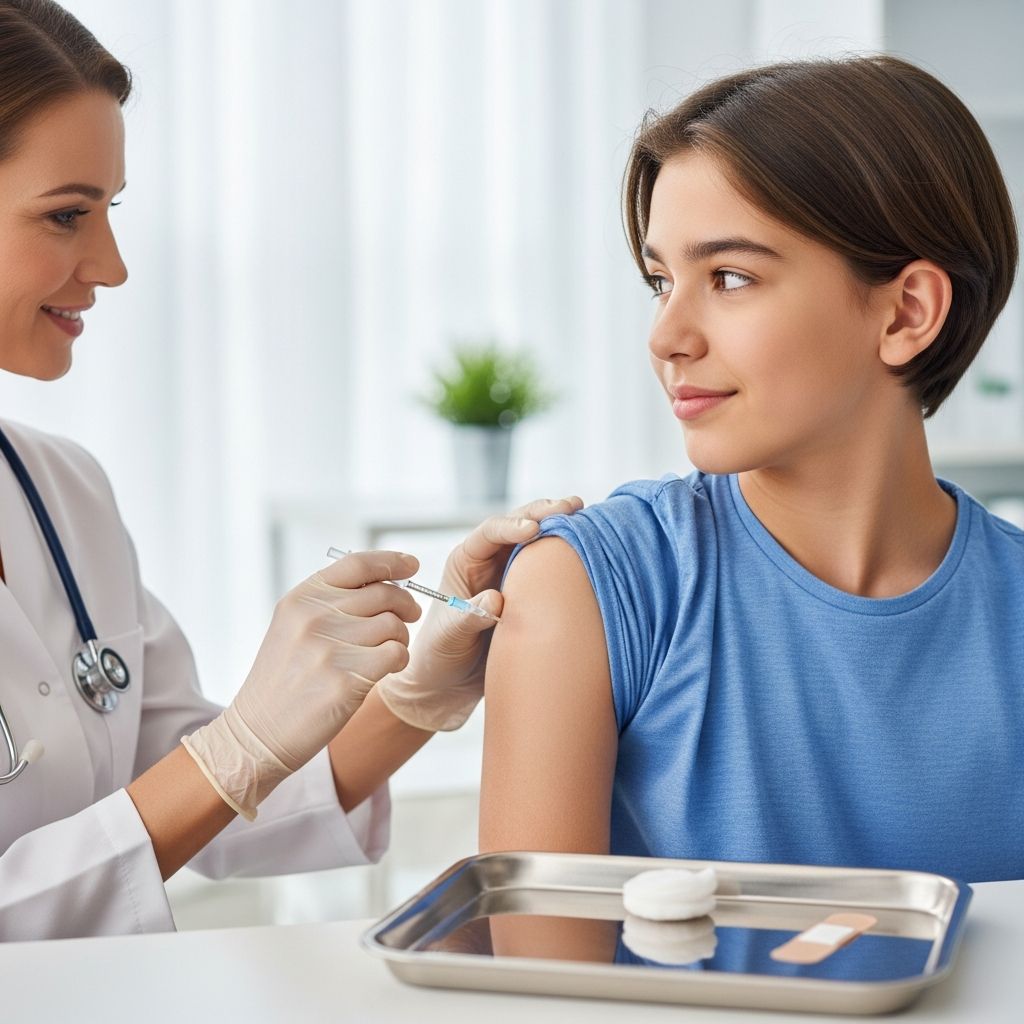
Shots and vaccines are a routine part of growing up, but that does not mean they always feel easy. Many teens worry about needles, pain, or what to expect at an appointment. This guide explains why vaccines matter, what happens when you get a shot, and how to handle nerves so you can walk into the clinic feeling prepared instead of panicked.
Why Vaccines Still Matter in Your Teen Years
Vaccines are not just for little kids. Health experts recommend several important immunizations during the teen years to keep you, your friends, and your family safe from serious infections.[10]
As you get older, your lifestyle changes:
- You spend more time in crowded places like schools, sports events, and jobs.
- You may travel more, including to places where certain diseases are more common.
- Your immune protection from some childhood vaccines can fade over time.
Because of these changes, boosters and new vaccines are recommended in the teen years to keep your immune system ready.
Common Teen Vaccines at a Glance
| Vaccine | What it helps prevent | Why it is important for teens |
|---|---|---|
| Tdap booster | Tetanus, diphtheria, pertussis (whooping cough) | Boosts fading childhood protection and helps prevent spreading whooping cough to babies. |
| HPV vaccine | Human papillomavirus infections that can cause several cancers | Works best when given before exposure to HPV; helps prevent cervical and other cancers later in life.[10] |
| Meningococcal vaccines | Meningitis and blood infections caused by meningococcal bacteria | Teens and young adults have higher risk in group settings like dorms and camps. |
| Flu shot | Seasonal influenza | Recommended every year to cut the risk of serious flu, school absences, and spreading it to others. |
Specific recommendations can vary by country and health system, so it is important to follow the schedule suggested by your doctor, nurse, or local health authority.
How Vaccines Work in Simple Terms
Vaccines train your immune system so it can recognize and fight germs quickly if you are exposed to them later.
In basic steps:
- The vaccine contains a weakened, killed, or tiny piece of the germ, or instructions that help your cells make a harmless piece of it.
- Your immune system spots this as foreign and responds by making antibodies and memory cells.
- Those memory cells stay on standby, sometimes for years.
- When the real germ shows up, your body already knows how to fight it and can respond much faster.
This means you can often avoid getting sick at all, or you may only have a mild case instead of a life-threatening illness.
What to Expect at a Shot Appointment
Knowing what will happen at the clinic can make the whole experience feel less scary. Here is a typical step-by-step outline of a routine visit.
Before the Needle
- Check-in: You or your parent/guardian usually confirm your name, age, and the purpose of the visit.
- Questions about your health: The nurse or doctor may ask about allergies, past reactions to vaccines, medicines you are taking, and how you are feeling that day.
- Vaccine explanation: They will tell you which shot(s) you are getting, what they protect against, and possible common side effects.
During the Shot
- You will be asked to sit or sometimes lie down so you are stable and safe.
- The skin on your arm (or another site) is cleaned with an alcohol wipe.
- The needle is inserted for a few seconds to deliver the vaccine, then removed and covered with cotton or a small bandage.
The entire injection itself generally takes only a moment. Many teens say the anticipation is worse than the feeling of the shot.
Right After the Shot
- You may be asked to wait in the clinic for about 15 minutes so staff can make sure you feel okay before going home.
- You can ask for a record of vaccines you received; keeping a copy (even a photo on your phone) can be helpful for school or travel forms.
Dealing With Fear of Needles
Feeling nervous about shots is common across all ages. Some people worry about the pain. Others feel faint at the sight of a needle or blood. There are practical strategies that can help these fears feel more manageable.
Know Your Triggers
Ask yourself what part feels hardest:
- Looking at the needle
- The idea of pain or not being in control
- The smell of alcohol swabs or the clinic environment
- Memories of a past difficult injection
Once you understand what bothers you most, you can focus on specific coping strategies.
Evidence-Based Calm-Down Techniques
Health organizations recommend simple, non-drug techniques to reduce stress and pain with injections.
- Deep breathing: Slowly breathe in through your nose for a count of four, hold for four, then breathe out through your mouth for a count of six. Repeat several times while you wait.
- Look away: If seeing the needle makes you tense, turn your head and focus on something else in the room or on your phone.
- Distraction: Listen to music, watch a short video, talk to a friend or caregiver, or mentally list your favorite songs, games, or places.
- Muscle relaxation: Keeping the arm receiving the shot relaxed (not stiff) can make the injection less uncomfortable.
- Grounding: Quietly notice five things you can see, four you can touch, three you can hear, two you can smell, and one you can taste. This pulls your focus away from worrying thoughts.
If you have fainted from shots before, tell the nurse; they may suggest lying down or taking extra time so you feel more secure.
How to Get Ready Before Your Appointment
A little planning can make your visit smoother and give you more control over the experience.
- Know which vaccines you are due for: Ask your parent or clinic for your immunization record, or bring any forms your school gave you.
- Wear practical clothing: A short-sleeved shirt or layers that are easy to roll up makes access to your upper arm simple.
- Eat and drink: Having a light meal and water before the appointment may help you feel less lightheaded.
- Plan your questions: Write down anything you want to ask about side effects, safety, or timing of future doses.
- Arrange support: If possible, bring a parent, guardian, or trusted adult who can sit with you if you are anxious.
Talking to Your Health Care Provider
Teens have a right to clear, honest information about their health. Asking questions is not being difficult; it is taking responsibility for your own body.
Questions You Might Want to Ask
- What illnesses does this vaccine protect me from?
- How many doses will I need, and how far apart?
- What are common side effects, and how long do they usually last?
- Are there any reasons someone should not get this vaccine today?
- Can I get this shot at the same time as others, or should they be spaced out?
If something is confusing, ask the provider to explain it in different words. Health communication guides stress that information should be clear, organized, and free of unnecessary jargon so patients can understand their choices.
Normal Side Effects vs. When to Get Help
Like any medicine, vaccines can cause side effects. Most are mild and short-lived. Serious reactions are very rare, but it is important to know what to watch for.
Common, Mild Reactions
These usually appear within a day or two and go away on their own:
- Soreness, redness, or mild swelling where the shot was given
- Feeling tired or having a mild headache
- Low-grade fever or slight chills
- Muscle aches or general “off” feeling
Simple ways to feel better include:
- Moving and gently using the arm rather than keeping it still all day
- Using a cool, clean cloth on the sore area
- Resting and drinking fluids
- Using over-the-counter pain relief if your parent or provider says it is okay and you follow the dose instructions
Signs You Should Call a Doctor or Seek Emergency Care
Get medical help right away if you notice:
- Difficulty breathing, wheezing, or chest tightness
- Swelling of the face, lips, or throat
- A rapid, spreading rash or hives
- Feeling very faint, confused, or like you might pass out and not quickly improving
- High fever, especially if it does not respond to medicine or is combined with stiff neck or severe headache
These could be signs of an allergic or other serious reaction, which needs fast attention.
Balancing Myths, Social Media, and Facts
Teens often see health information on social media long before they hear it from a doctor. Some posts are accurate, but others spread myths and fear. Public health experts encourage checking claims against reliable sources and not relying on single stories or unverified videos.
How to Check if a Claim Is Trustworthy
- Look at the source: Is it an official health site (like a government or major medical organization), a news outlet with strong standards, or a random account?
- Check the date: Health guidance can change as new research appears. Confirm that the information is recent.
- See if multiple credible sources agree: If only one questionable website says something, be cautious.
- Ask a professional: Show the post or article to a doctor, nurse, or school health provider and ask for their view.
Supporting Friends Who Are Nervous About Shots
Many teens go to vaccine appointments with friends, siblings, or classmates. You can make a big difference by being calm and supportive.
- Offer to sit next to them or hold a conversation while they get the shot.
- Avoid teasing or making jokes about pain or fainting, which can increase anxiety.
- Remind them of the benefits, like staying healthy for sports, travel, or hanging out with friends.
- Share coping strategies that work for you, such as breathing exercises or distraction.
A supportive environment can make vaccination a quick, manageable event instead of a major source of stress.
Frequently Asked Questions (FAQs)
What if I am too scared to get a shot?
Tell the nurse or doctor honestly that you are very nervous. They see this a lot and can adjust the process, such as letting you lie down, giving you more time, or walking you through breathing techniques. You can also bring a trusted adult or friend to sit with you.
Can I get more than one vaccine on the same day?
Yes, many vaccines can be given at the same visit, often in different spots on your arms. This is common and considered safe, and it helps you get protected faster with fewer separate appointments.
Will a vaccine make me sick with the disease it prevents?
Vaccines are designed so you do not get the full disease. Some may cause mild symptoms like low fever or tiredness for a short time, which are signs your immune system is responding. They do not give you the actual illness in the way that natural infection does.
Why do I need boosters if I was vaccinated as a kid?
Some vaccines provide strong protection that fades over time. Boosters remind your immune system how to fight certain germs, keeping your protection high during your teen years and into adulthood.
Is it okay to ask for a different day if I am sick when my shot is scheduled?
If you have a mild cold, many vaccines can still be given, but if you have a high fever or feel very unwell, your provider may recommend waiting. Call the clinic and explain your symptoms so they can advise you.
References
- Recommended Child and Adolescent Immunization Schedule — Centers for Disease Control and Prevention. 2024-01-01. https://www.cdc.gov/vaccines/schedules/index.html
- Clinical Guidance for COVID-19 and Other Vaccines — Centers for Disease Control and Prevention. 2023-09-27. https://www.cdc.gov/vaccines/hcp/acip-recs/general-recs/index.html
- Human Papillomavirus (HPV) Vaccination: What Everyone Should Know — Centers for Disease Control and Prevention. 2024-04-15. https://www.cdc.gov/vaccines/vpd/hpv/public/index.html
- Successful Scientific Writing and Publishing: A Step-by-Step Approach — Peer-Reviewed Journal, Preventing Chronic Disease (CDC). 2018-10-18. https://www.cdc.gov/pcd/issues/2018/18_0085.htm
- Public Health Writing Guide — Boston University School of Public Health. 2023-03-27. https://publichealth.charlotte.edu/wp-content/uploads/sites/555/2023/07/BUSPH_Public-Health-Writing-Guide-PHX-3-27-1.pdf
- A Blueprint for Writing Effectively for the Health Care Field — Harvard Medical School. 2022-06-01. https://learn.hms.harvard.edu/insights/all-insights/blueprint-writing-effectively-health-care-field
- Ten Tips for Writing Reliable and Engaging Health Articles — European Journalism Observatory. 2020-01-15. https://en.ejo.ch/ethics-quality/10-ways-to-write-reliable-and-engaging-health-articles-research