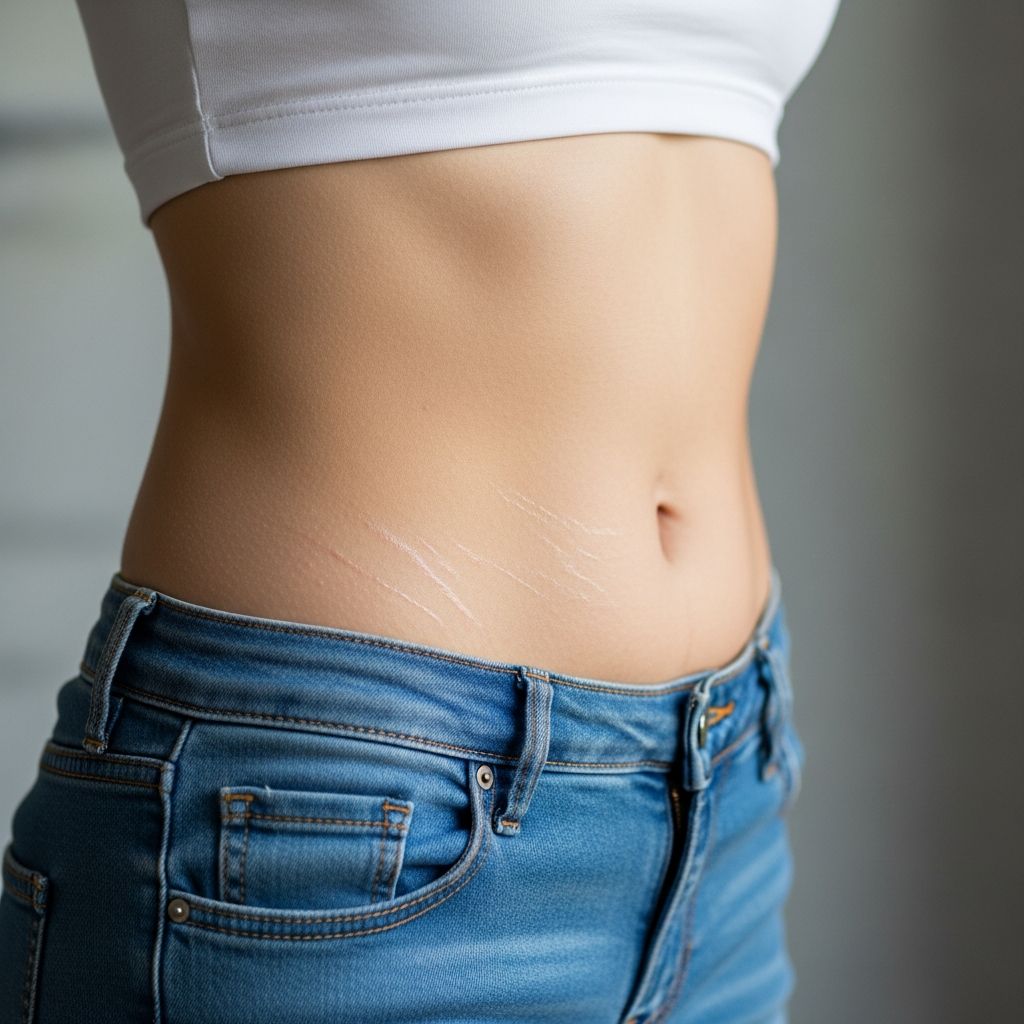
Stretch marks are one of the most common skin changes during the teen years, but many people feel embarrassed or worried when they first see them. This guide explains what stretch marks are, why they show up around puberty, what can help their appearance, and how to stay confident in your body while your skin changes.
What Exactly Are Stretch Marks?
Stretch marks are narrow, streak-like lines that appear when skin stretches more quickly than it can comfortably keep up with. They are not infections, rashes, or a sign that something is dirty or damaged beyond repair; they are simply a visible reminder that the body has grown fast.
At first, stretch marks can look slightly raised and may be red, purple, dark brown, or pink depending on your skin tone. Over time, they usually flatten and fade to a lighter shade than the surrounding skin, becoming less noticeable.
Why Teens Often Get Stretch Marks
The teen years are one of the most common times for stretch marks to appear because the body changes so quickly. Growth spurts, hormonal shifts, and changes in weight and muscle can all make the skin stretch faster than usual.
- Rapid growth in height: Long bones in the legs, arms, and torso lengthen quickly, and the skin has to adapt to a taller frame in a short amount of time.
- Changes in body shape: Hips, chest, thighs, or shoulders may widen or fill out, creating new curves or more muscle bulk.
- Weight changes: Gaining weight or muscle in a short period puts extra tension on the skin’s middle layer.
- Hormonal changes: Hormones can influence how elastic the skin is and how easily it stretches or tears at a microscopic level.
Common Places Teens See Stretch Marks
Stretch marks can appear almost anywhere the skin is asked to stretch quickly, but certain spots are especially common during adolescence.
- Hips and thighs
- Buttocks
- Breasts or chest area
- Lower abdomen (belly)
- Upper arms or shoulders (especially in athletes or bodybuilders)
- Lower back and sides
Having them in any of these areas is normal and does not mean you did something wrong. Different people simply get them in different patterns.
What Stretch Marks Look and Feel Like Over Time
Stretch marks change appearance as time passes. Understanding this can make them feel less scary when they first show up.
| Stage | Typical Appearance | What You Might Notice |
|---|---|---|
| Early stage | Lines may look red, pink, purple, or dark; sometimes slightly raised. | Skin may feel a bit itchy, tight, or sensitive in the area. |
| Middle stage | Color begins to fade; marks flatten and start to blend more with surrounding skin. | Itchiness usually decreases; marks are easier to ignore in everyday life. |
| Later stage | Lines become pale or slightly lighter than your normal skin tone and often look like fine, soft ripples. | Most people stop noticing them unless they look closely or in certain lighting. |
Are Stretch Marks a Health Problem?
For most teens, stretch marks are not a medical problem or a sign of illness. They are usually harmless and do not turn into something dangerous. They do not spread to other people and do not mean your skin is unhealthy or weak overall.
However, in rare cases, very sudden or severe stretch marks can be linked to certain medical conditions or medications. If stretch marks appear very quickly without clear reason, or if you have other symptoms like extreme tiredness, mood changes, or unusual weight gain, it is important to talk with a health professional.
When to Talk to a Doctor
Most of the time, a teen does not need treatment for stretch marks. Still, talking to a health professional can be helpful in some situations. A doctor or nurse can check that everything is normal and explain what options exist if the marks really bother you.
- If stretch marks appear very suddenly in many areas at once.
- If they are accompanied by severe acne, unusual hair growth, or other strong hormonal changes.
- If you use steroid medicines (creams, pills, or inhalers) and notice new marks forming quickly.
- If the appearance of your skin is strongly affecting your mood, sleep, or willingness to go out or participate in activities.
What Helps Stretch Marks Fade?
No method can erase stretch marks completely, but several approaches can make them less noticeable over time. The biggest factor is patience: most stretch marks soften and fade naturally as months and years pass.
Treatments generally focus on supporting collagen (the structural protein in skin), encouraging cell renewal, and helping the marks blend more with the surrounding skin.
Skin Care Habits at Home
Daily habits can help your skin feel more comfortable and may slightly improve the appearance of stretch marks, especially newer ones. While these steps are gentle rather than dramatic, they are simple ways to care for your body.
- Moisturize regularly: Using a plain, fragrance-free lotion, cream, or oil can reduce dryness and itchiness around stretch marks.
- Stay hydrated: Drinking enough fluids supports skin from the inside, helping it remain more supple as it stretches.
- Protect from the sun: Using sunscreen on areas with stretch marks helps prevent the lines from becoming more noticeable due to tanning differences.
- Aim for gradual changes: Rapid weight gain or loss can make marks more likely; slow, steady changes are easier on the skin.
Medical and Professional Treatments
For teens who feel very self-conscious, some families choose to ask a dermatologist about professional treatments. These options are usually reserved for older stretch marks that will not fade as much as someone hopes, or for marks that cause major emotional distress.
- Prescription creams: Some prescription products help the skin renew itself more quickly or support collagen. A dermatologist can explain whether they are appropriate for a teen.
- Laser and light therapies: Certain treatments target color or texture so that stretch marks blend more with nearby skin.
- Other procedures: Techniques like microdermabrasion or microneedling are sometimes used to gently encourage new collagen growth in the area.
These options can be costly, may require multiple sessions, and often provide improvement rather than complete removal. A health professional can help weigh the possible benefits, risks, and timing for someone who is still growing.
What Probably Does Not Help Much
There are many products advertised as miracle cures for stretch marks. It can be frustrating and confusing to sort through them. Many over-the-counter creams and oils have not been proven to create big changes in how stretch marks look.
- Very expensive creams that promise complete removal are often not more effective than basic moisturizers.
- Home “scrub” recipes that are too harsh can irritate the skin and make it feel sore or sensitive.
- Extreme diets or dehydration will not improve stretch marks and can harm overall health.
Gentle care and realistic expectations usually work better than chasing quick fixes. Remember that lighting, clothing, and time often do more to reduce the appearance of stretch marks than any single product.
Can You Prevent Stretch Marks?
Because genetics, hormones, and growth speed play large roles, it is not possible to guarantee that someone will avoid stretch marks entirely. Some people with very similar lifestyles develop many, while others develop almost none.
Still, a few habits can support skin health and possibly lower the risk of very sudden or severe marks:
- Following a balanced eating pattern that includes fruits, vegetables, proteins, and healthy fats.
- Staying active in a way that feels good and supports gradual, steady changes in strength and weight.
- Taking medicines, including steroid creams or pills, exactly as a health professional recommends.
- Using moisturizer on areas that are growing quickly to keep the skin comfortable and less itchy.
Body Image, Social Media, and Stretch Marks
Many teens feel upset when they notice stretch marks because they rarely see them in ads or on screens. Photos are often edited, filtered, or carefully posed so that natural skin lines never appear. This can create the false idea that “normal” skin is perfectly smooth at all times.
In reality, people of all sizes, genders, and fitness levels can have stretch marks—athletes, models, parents, and teens alike. Seeing more unedited photos and talking honestly with trusted friends or adults can help you realize how common these lines really are.
Ways to Feel More Confident With Stretch Marks
Confidence does not require flawless skin. It grows from treating your body with respect and choosing thoughts that are kind rather than harsh. It is possible to dislike certain lines while still accepting your body as a whole.
- Shift the focus: Instead of staring at the marks, think about what your body lets you do—walk, dance, hug, learn, or play.
- Choose comfortable clothing: Wear outfits that make you feel good, whether that means covering stretch marks or not. Comfort and confidence matter more than rules or trends.
- Limit comparison: Unfollow accounts that make you feel bad about your appearance and seek out people who show different, real bodies.
- Talk about it: Sharing your worries with a trusted adult, counselor, or friend often makes them feel smaller and easier to manage.
Supporting a Friend With Stretch Marks
If a friend is feeling embarrassed about their stretch marks, you can make a real difference by how you respond. A kind comment or a listening ear can be far more powerful than any cream or treatment.
- Avoid making jokes or comments about someone’s skin, even if you think you are being playful.
- Remind your friend that stretch marks are a normal part of growing and that you respect them for who they are, not for how their skin looks.
- Encourage them to talk with a health professional if the marks or related body image worries are making them very unhappy.
Healthy Habits for Skin and Overall Well-Being
Stretch marks are only one part of your skin story. Taking care of your whole body helps your skin function well, heal more easily, and feel more comfortable. Even if stretch marks remain, healthy habits support energy, mood, and long-term health.
- Regular movement or exercise that you enjoy, such as walking, dancing, or team sports.
- Enough sleep most nights so your body can repair and grow.
- Limiting smoking, vaping, or other habits that can interfere with blood flow and skin health.
- Washing gently and moisturizing when skin feels dry or tight.
Quick Facts About Teen Stretch Marks
- They are extremely common during puberty and growth spurts.
- They often fade and become less visible over time.
- They are not contagious and usually are not dangerous.
- Complete removal is unlikely, but appearance can sometimes be improved.
- Your worth is not measured by how smooth or line-free your skin is.
FAQs About Teen Stretch Marks
Do only people who are overweight get stretch marks?
No. Stretch marks can appear in people of any size. They are mostly related to how quickly the skin stretches, not just to body weight. Rapid muscle growth, height increases, and normal body changes during puberty can all lead to stretch marks, even in people who are thin or athletic.
Will my stretch marks go away completely?
Stretch marks usually fade a lot with time, but they rarely disappear 100%. As they become lighter and flatter, most people and even close friends will not notice them unless they look closely. Many teens eventually forget they are there.
Can lotions or oils stop stretch marks from forming?
Moisturizers and oils can make skin feel softer and may reduce itching, but they cannot guarantee that stretch marks will not form. Genetics, hormones, and growth speed are powerful factors. Using a basic moisturizer is still helpful for comfort and general skin health.
Is it safe for teens to get laser treatment?
In some cases, doctors use laser or light treatments on teens, but this decision should always be made with a qualified dermatologist. They will consider age, skin type, the stage of the stretch marks, and possible side effects before deciding whether it is a good idea.
Should I hide my stretch marks?
Whether you show or cover your stretch marks is a personal choice. Some people feel more comfortable keeping them covered at first; others feel empowered wearing shorts or swimsuits even with visible marks. Neither choice is wrong. Over time, many teens find that they worry less and feel freer to wear what they like.
Can exercise make stretch marks worse?
Healthy exercise that builds strength gradually is good for your body and usually does not harm your skin. Problems are more likely when someone tries to change their body very quickly, such as extreme weight lifting or crash bulking. Slow, consistent progress is easier on both muscles and skin.
What if my stretch marks really affect how I feel?
If stretch marks make you avoid social events, sports, or activities you used to like, it is important to seek support. Talking with a counselor, therapist, or trusted adult can help you manage strong feelings. In some cases, they may suggest working with both a mental health professional and a dermatologist.
Key Takeaway for Teens
Stretch marks are a normal result of a body that is growing, changing, and becoming more adult. They do not define beauty, strength, or worth. With time, good skin care, and a kinder attitude toward your body, it is possible to feel comfortable in your own skin—even if it includes a few lines that tell the story of how fast you have grown.