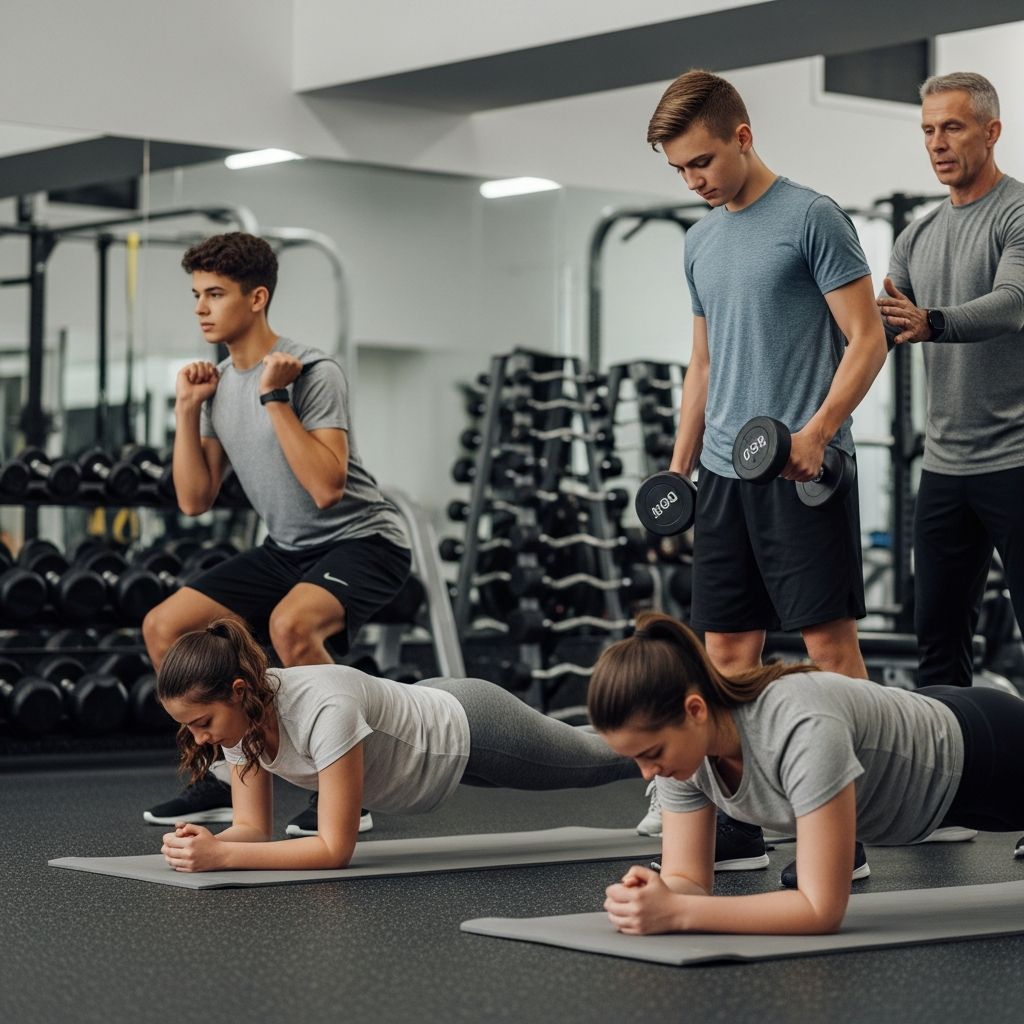
Strength training is not just for bodybuilders or professional athletes. Done correctly, it is a powerful way for teenagers to feel stronger, perform better in sports, and protect their long-term health.
This guide explains how teens can start strength training safely, choose the right exercises, and avoid common mistakes, all while keeping workouts fun and sustainable.
Why Strength Training Matters in Your Teen Years
Your teen years are a major growth phase. The choices you make now can influence your bones, muscles, and overall health for decades.
Key Benefits for Teens
- More muscle strength for daily life and sports, making tasks like carrying a backpack or sprinting in a game easier.
- Stronger bones, which can reduce fracture risk and support healthier bones in adulthood.
- Better joint protection and lower injury risk during sports and physical activities.
- Improved coordination, balance, and body control, especially with multi-joint movements.
- Healthier weight management, blood pressure, and cholesterol levels.
- Higher confidence and a better relationship with your body as you master new skills and notice progress.
How Fast Can Teens Get Stronger?
Research in children and adolescents shows that with a well-designed, supervised program, strength can rise by about 30–50% after 8–12 weeks. Teens who keep training at least two times per week can maintain and gradually improve these gains.
| Time Training | What Many Teens Notice* |
|---|---|
| First 2–3 weeks | Better technique, less soreness, more control with movements. |
| 4–8 weeks | Clear strength gains; everyday tasks and sports feel easier. |
| 8–12+ weeks | Noticeable changes in strength, power, and confidence; some visible muscle changes. |
*These are typical patterns; individual results vary based on effort, sleep, nutrition, and genetics.
Is Strength Training Safe for Teens?
When people picture teens and weights, they sometimes worry about stunted growth or serious injuries. Large medical and sports organizations now agree that supervised, technique-focused strength training is safe for young people.
What the Experts Say
- The American Academy of Pediatrics reports that strength training can increase strength in children and adolescents when done with proper technique and strict supervision.
- Mayo Clinic notes that strength training helps kids and teens strengthen muscles and bones, protect joints, and support healthy weight and blood pressure.
- A review in a medical journal found that most reported injuries in young lifters came from misusing equipment, choosing weights that were too heavy, poor form, or lack of qualified supervision—not from strength training itself.
Essential Safety Rules
- Always learn form first: Start with body weight or very light resistance until you can control every repetition smoothly.
- Use a qualified adult: A coach, physical therapist, or trainer experienced with teens should supervise, especially with free weights.
- No max-out lifts: Avoid trying one-rep maximums. Work with moderate weights you can move for 8–15 controlled reps.
- Warm up before and cool down after every session.
- Stop if you feel pain that is sharp, sudden, or unusual. Soreness is normal; pain is a warning.
Who Can Start Strength Training and When?
Most healthy teens can begin strength training once they can follow instructions and maintain good body control during basic movements like squats, lunges, and push-ups.
Good Signs You Are Ready
- You can stay focused and listen carefully to safety cues.
- You can perform simple movements (like a body-weight squat) without losing balance.
- A doctor has cleared you if you have any medical conditions or past injuries.
Who Should Talk to a Doctor First?
Check with a healthcare provider before starting if you have:
- A heart condition, breathing problems, or uncontrolled high blood pressure.
- Recent bone, joint, or muscle injuries.
- Chronic conditions such as diabetes or neurological disorders.
Types of Strength Training Teens Can Use
Strength training does not have to mean heavy barbells. Many tools can safely build strength when used correctly.
- Body-weight exercises: Push-ups, squats, lunges, planks, step-ups.
- Resistance bands: Elastic bands that provide resistance in multiple directions and are easy on the joints.
- Free weights: Dumbbells, kettlebells, and barbells, used with strict technique and supervision.
- Weight machines: Can help guide movement patterns but must be sized and adjusted properly for a teen’s body.
- Medicine balls: Great for power exercises like throws and rotational movements.
Building a Teen-Friendly Strength Plan
A smart plan balances work and recovery, includes all major muscle groups, and keeps the focus on skill and safety rather than on lifting the heaviest possible weight.
How Often and How Much?
- Frequency: 2–3 non-consecutive days per week of strength training is enough for most teens.
- Sets and reps: 1–3 sets of 8–15 controlled repetitions per exercise.
- Intensity: Choose a weight that feels challenging near the end of the set but still lets you keep perfect form.
- Rest between sets: About 1–3 minutes, depending on how hard the set was.
Sample Full-Body Workout (Twice Weekly)
This is a general example and not a personalized program. Always work with a coach or health professional if possible.
- 5–10 minutes of light cardio (walk, easy bike) + dynamic stretches.
- Lower body
- Body-weight or goblet squats
- Reverse lunges or step-ups
- Upper body push
- Incline or standard push-ups
- Light dumbbell overhead press
- Upper body pull
- Assisted pull-ups or band pull-downs
- Dumbbell or band rows
- Core
- Planks (front and side)
- Dead bug or bird-dog exercises
- 5–10 minutes of easy movement and gentle stretching.
Strength Training and Sports Performance
For teen athletes, strength training can be the difference between feeling average and feeling powerful, fast, and resilient during competition.
How It Helps Young Athletes
- More power and speed for jumping, sprinting, swimming, or throwing.
- Better agility and balance, helping with quick direction changes and stability.
- Lower risk of sports injuries, especially when programs are supervised and focus on technique and appropriate loads.
- Higher endurance when strength work is combined with regular conditioning.
General vs. Sport-Specific Training
| General Strength Work | Sport-Specific Work |
|---|---|
| Focuses on all major muscle groups and movement patterns. | Emphasizes movements and positions used in your sport. |
| Builds a strong foundation for any activity. | Fine-tunes power, speed, and stability for specific skills. |
| Ideal for beginners or off-season training. | Best for in-season or pre-season under a coach’s guidance. |
Avoiding Common Mistakes
Most strength-training problems in teens come from a few predictable errors. Knowing them can help you stay safe and make faster progress.
Missteps to Watch Out For
- Lifting too heavy, too soon: This encourages poor form and raises injury risk.
- Skipping warm-ups: Going straight to heavy lifts with “cold” muscles makes strains more likely.
- Copying unsafe online workouts without supervision or adjustment for your age.
- Ignoring pain just to finish a set or impress friends or teammates.
- Training the same muscles every day, leaving no time for recovery.
Healthy Mindset Tips
- Focus on long-term progress, not quick changes in appearance.
- Use strength training to feel stronger and more capable, not to match someone else’s body.
- Remember that sleep, food, hydration, and stress management all affect your results.
Recovery, Nutrition, and Sleep
Your body gets stronger between workouts, not during them. Recovery habits matter as much as your exercises.
Rest and Recovery
- Leave at least one rest or light day before training the same muscle group again.
- Use light activity (walking, easy cycling, stretching) on days between tough sessions.
- Pay attention to ongoing fatigue, mood changes, or performance drops—these can be signs of overtraining.
Fueling Your Workouts
- Eat regular meals with a mix of carbohydrates, protein, and healthy fats.
- Have a small snack with carbs and protein (for example, yogurt and fruit or a peanut butter sandwich) within a couple of hours after training to support recovery.
- Drink water before, during, and after workouts; use sports drinks only for long or very intense sessions.
Sleep for Strength
Most teens need about 8–10 hours of sleep per night. Growth, muscle repair, and hormone balance all depend heavily on good sleep, especially during adolescence.
Frequently Asked Questions (FAQs)
Will strength training stunt my growth?
Current evidence does not support the idea that properly supervised strength training stunts growth. Most growth plate injuries reported in young lifters are linked to unsafe practices such as using too much weight, poor technique, or lack of supervision, not to the training itself.
Do I have to join a gym to get stronger?
No. Many teens build impressive strength with body-weight exercises, resistance bands, and simple equipment like light dumbbells or a pull-up bar. Gyms can be helpful but are not required if you are consistent and creative.
How many days per week should I train?
For most teens, 2–3 strength sessions per week on non-consecutive days are enough to see meaningful gains and still allow good recovery.
Can strength training help if I do not play sports?
Yes. Strength training can make daily tasks easier, support a healthy weight, improve your posture, and boost confidence even if you never join a team or compete.
Should I use supplements to build muscle faster?
Most teens can make excellent progress without supplements by focusing on balanced meals, enough calories, and regular training. Some products marketed to teens are unnecessary or even unsafe; always talk to a healthcare provider before taking any supplement.
References
- Strength training: OK for kids? — Mayo Clinic Staff. 2023-03-18. https://www.mayoclinic.org/healthy-lifestyle/tween-and-teen-health/in-depth/strength-training/art-20047758
- The Benefits of Strength Training for Young Athletes — University Hospitals. 2024-01-09. https://www.uhhospitals.org/blog/articles/2024/01/the-benefits-of-strength-training-for-young-athletes
- Strength Training for Children and Teens — Nationwide Children’s Hospital. 2020-06-01. https://www.nationwidechildrens.org/specialties/sports-medicine/sports-medicine-articles/strength-training-for-children-can-we-do-that
- Strength Training in Children and Adolescents — Steven J. Faigenbaum & Avery D. Faigenbaum. Sports Health. 2012-09-01. https://www.ncbi.nlm.nih.gov/pmc/articles/PMC3445252/
- Strength Training by Children and Adolescents — American Academy of Pediatrics. Pediatrics. 2008-04-01. https://publications.aap.org/pediatrics/article/121/4/835/70927/Strength-Training-by-Children-and-Adolescents
- Teens and Weightlifting — UW Health. 2017-01-05. https://www.uwhealth.org/news/teens-weightlifting