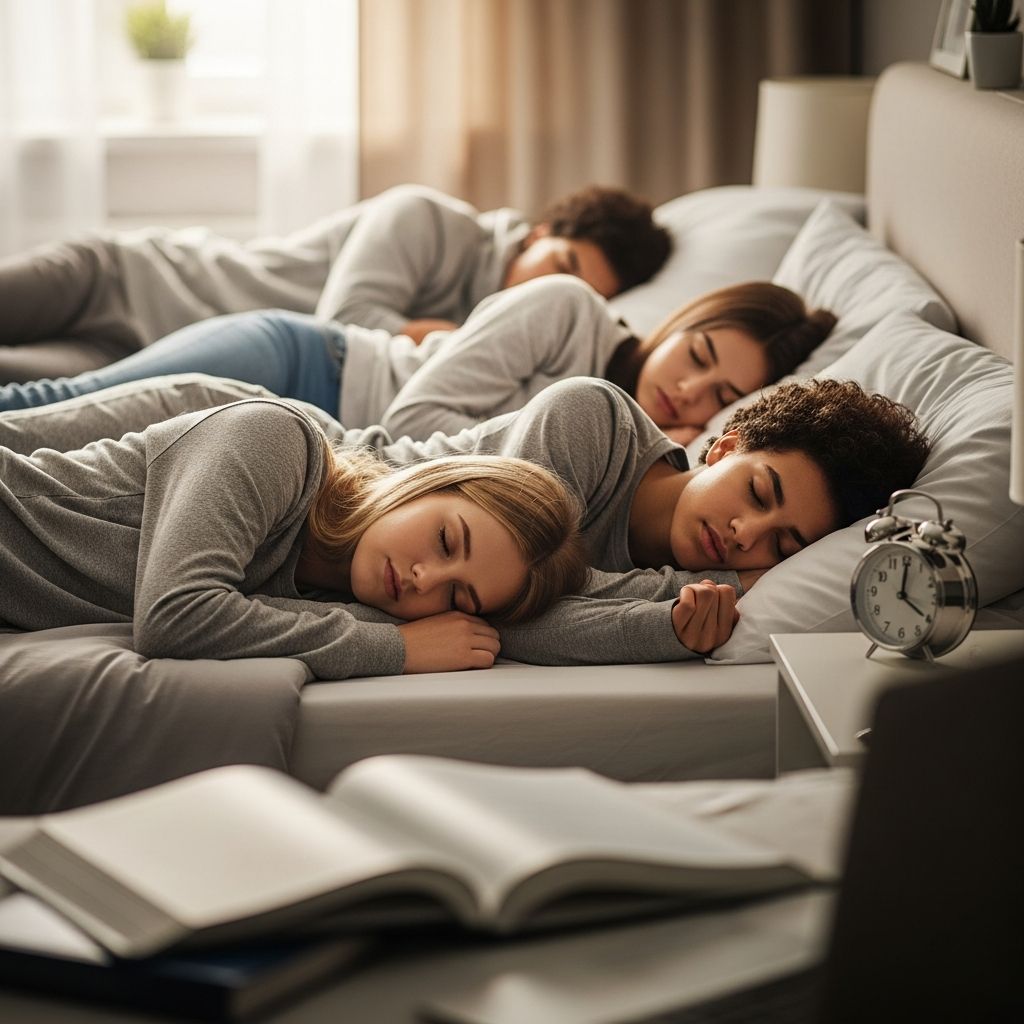
During the teenage years, sleep transforms dramatically due to biological changes, making it harder to wind down early while early mornings loom large. Teens need 8-10 hours nightly for optimal growth, mood, and learning, yet most fall short, leading to fatigue and health risks.
The Biology Behind Late Nights
A key driver of altered teen sleep is the shift in circadian rhythms, the body’s internal 24-hour clock that regulates wakefulness and rest. Puberty triggers a delay in this rhythm, turning early birds into night owls. Research shows that from ages 10 to 17, self-reported bedtimes push later on both weekdays and weekends, with sleep onset delaying progressively until the late teens or early 20s.
This sleep phase delay means teens feel alert longer into the evening and struggle to rise early. For instance, melatonin—the hormone signaling sleep—starts later at night and lingers into morning, clashing with school schedules. Studies confirm a two-hour shift post-puberty: a child sleepy at 9 PM now stays wired until 11 PM, needing later wake-ups to feel refreshed.
Lab experiments reinforce this. When given fixed 10-hour sleep windows, younger kids wake spontaneously after 9+ hours, but pubertal teens sleep the full duration without stirring, showing persistent sleep needs amid delayed timing. These intrinsic changes set the stage for sleep challenges, independent of lifestyle.
How Much Sleep Do Teens Really Need?
| Age Group | Recommended Sleep (Hours) | Common Reality (Hours) |
|---|---|---|
| Children (6-12) | 9-12 | ~10 (stable week/weekend) |
| Teens (13-18) | 8-10 | 7-7.25 (school nights) |
| Adults | 7-9 | N/A |
Teens require more sleep than adults to fuel rapid brain development, physical growth, and hormone regulation—typically 8-10 hours, sometimes up to 11. Yet, surveys reveal fewer than 20% achieve this on school nights, with averages dipping to 7 hours. Weekends offer catch-up, but inconsistency worsens the cycle.
Why Teens Miss Out on Sleep
Beyond biology, external pressures compound the issue. School starts early—often before 8 AM—forcing wake-ups when bodies crave more rest. Homework, though cited often, isn’t the sole culprit; many teens log minimal study time yet stay up late.
- Screens and light: Blue light from phones suppresses melatonin, delaying sleep further.
- Social life: Chats, gaming, and events peak evenings, aligning with peak alertness.
- Caffeine and habits: Energy drinks and irregular routines disrupt natural wind-down.
- Weekend catch-up: Sleeping in shifts rhythms, making Sunday nights sleepless.
Recent polls show teens half as likely to hit 8-10 hours on weekdays versus weekends, highlighting the school-night mismatch.
The Hidden Toll of Sleep Shortfalls
Chronic under-sleep hits hard. Daytime sleepiness surges mid-puberty, impairing focus, memory, and reaction times—risky for driving or sports.
Mood plummets: Insufficient rest elevates depression risk, but weekend recovery sleep buffers this somewhat. Hormonally, sleep loss imbalances appetite controls, spiking hunger for snacks and obesity risk, plus stunting growth via disrupted endocrine function.
Academics suffer too—sleepy teens score lower, miss more school, and face behavior issues. Long-term, poor patterns link to diabetes, heart issues, and mental health struggles.
Practical Fixes for Better Teen Sleep
Align habits with biology for wins. Prioritize consistent schedules, even weekends, to stabilize rhythms.
- Set a fixed bedtime: Aim 8-10 hours before wake-up; dim lights 1 hour prior.
- Screen curfew: No devices 30-60 minutes before bed; use night mode.
- Weekend balance: Limit lie-ins to 1-2 hours; catch-up helps if weekdays fall short.
- Daylight boost: Morning sun advances rhythms; exercise early, not late.
- Wind-down ritual: Reading, stretching, or herbal tea over caffeine post-3 PM.
Schools can help with later starts—evidence shows improved alertness and grades. Parents: Model good sleep, limit evening screens.
Nutrition and Sleep Synergy
Diet ties to rest. Avoid heavy meals or sugar near bed; opt for sleep-promoting foods like bananas (magnesium) or cherries (melatonin). Hydrate daytime, taper evenings to cut disruptions.
Frequently Asked Questions
Can teens safely sleep in on weekends?
Yes—when weekdays yield under 8 hours, extra weekend sleep protects mental health by curbing depression risk, per recent studies. Keep it moderate to avoid Monday grogginess.
Why can’t I fall asleep before midnight?
Your circadian rhythm delays naturally in puberty, peaking alertness later. It’s biology, not laziness—adjust schedules accordingly.
Does caffeine affect teen sleep more?
Absolutely; it blocks sleep signals longer in developing bodies, worsening phase delays.
How does poor sleep impact grades?
It impairs concentration and memory consolidation, leading to lower performance and higher absenteeism.
Are naps helpful for tired teens?
Short 20-30 minute naps before 3 PM recharge without night interference; longer ones disrupt.
Long-Term Strategies for Lifelong Habits
Build resilience beyond teens. Track sleep with journals or apps to spot patterns. Mindfulness or CBT-I (cognitive behavioral therapy for insomnia) tackles chronic issues. Consult doctors for persistent problems—conditions like apnea mimic teen patterns.
Empowerment comes from knowledge: Embrace your night-owl biology, hack the system with routines, and prioritize rest as self-care. Better sleep fuels the vibrant teen life—academics, sports, social vibes—all optimized.
References
- The simplest way teens can protect their mental health — ScienceDaily. 2026-01-06. https://www.sciencedaily.com/releases/2026/01/260106224623.htm
- ADOLESCENT SLEEP PATTERNS AND DAYTIME SLEEPINESS — National Center for Biotechnology Information (NCBI). 2000-01-01 (authoritative foundational research). https://www.ncbi.nlm.nih.gov/books/NBK222804/
- What To Know about Teens and Sleep — National Sleep Foundation. 2024-01-01. https://www.thensf.org/what-to-know-about-teens-and-sleep/
- Sleep in Adolescents — Nationwide Children’s Hospital. N/A. https://www.nationwidechildrens.org/specialties/sleep-disorder-center/sleep-in-adolescents
- Understanding Teenage Sleep Patterns — WWMG. N/A. https://www.wwmedgroup.com/blog/understanding-teenage-sleep-patterns/
- Sleep Problems in Teens — UCLA Health. N/A. https://www.uclahealth.org/medical-services/sleep-disorders/patient-resources/patient-education/sleep-and-teens